About
Do you know what's in YOUR water? Learn about water quality, water quality testing, and water quality testing products that can help you make informed, educated decisions regarding the water treatment options for your home, office, swimming pool... and life.
Contact Us
Got a question about water quality? Want to share a water quality article or water quality article with others?

Visit our Contact Us Page to ask a water quality question or submit water quality information.

RSS Feed
Get the most recent water quality posts and comments by subscribing to the Water Testing Blog RSS Feeds.
Subscribe to RSS! Subscribe to RSS Comments!

Archive for December, 2008

Dec
8

NSF/ANSI Standard for Shower Filtration Systems

Water Testing BlogChlorine, Chlorine Testing, Free Chlorine, Water Filter

NSF/ANSI Standard 177

“Overview: This standard covers point-of-use (POU) shower filtration systems, designed to reduce free available chlorine that may be present in potable water (public or private).” (source)

Dec
7

Difference Between Deionized Water and Distilled Water

Water Testing BlogBacteria, Metals, Water Filter

While not a commonly asked question, this topic has come up in the past so we feel as though it deserves a moment in the water quality spotlight. A quick search on Google turned up the following piece of information which, we think, addresses the matter quite nicely:

“Deionized water is water that has been passed through a column or membrane to remove ions present. If it is of the type used in homes, it is not truly a de-ionizer, removing all ions, but rather an ion exchange column that exchanges polyvalent ions such as Mg++ and Ca++ for Na+ ions. A de-ionizing column will not remove nonionic organic substances from the water.

In contrast, distilled water is actually boiled in a still and the condensate collected and distributed. Distillation removes both ionic and nonionic organic contaminants.” (source)

For the layperson, that last quote basically says properly distilled water will contain neither ionic contaminants (such as metals) nor nonionic contaminants (such as bacteria) while properly deionized water may still contain nonionic contaminants (such as bacteria).

Dec
7

NSF/ANSI Standard for Drinking Water Treatment Units – Health Effects

Water Testing BlogBacteria, Lead, Water Filter

NSF/ANSI Standard 53

“Overview: Standard 53 addresses point-of-use (POU) and point-of-entry (POE) systems designed to reduce specific health-related contaminants, such as Cryptosporidium, Giardia, lead, volatile organic chemicals (VOCs), MTBE (methyl tertiary-butyl ether), that may be present in public or private drinking water.” (source)

Dec
6

Scared by the Water Treatment System Salesperson

Water Testing BlogHome Water Testing, Max Contaminant Level, Reverse Osmosis, Water Filter, Water Quality Testing

So many times we hear horror stories about home owners meeting with local water treatment professionals who use scare tactics to convince them that the water coming into their homes contains items which, unless IMMEDIATELY removed, will kill them, their kids, and most definitely all the plants and pets in the house.

Given that last statement, we have a question:

If you called a carpenter out to your home because you had a small section of uneven drywall in your garage, would you immediately and without hesitation sign up for a very costly and invasive construction process that involved ripping up just about every other room in the house because he/she told you all sorts of scary, frightening ‘facts’ that may or may not really pertain to your situation and you didn’t know any better?

Well the same goes for the matter of deciding whether or not to treat your home’s drinking water. The best decision you can make regarding the purchase, or non-purchase, of a potentially costly water treatment system will come from an educated, informed viewpoint — and the water treatment salesperson’s job is to SELL you a system, not tell you things that may make you not want to buy one… today… right now… right here… sign here, please.

Fact: You can access information about YOUR local water supply online via the United States Environmental Protection Agency for free. The EPA requires municipalities and water suppliers to file regular reports detailing the quality and condition of the water they distribute. Access the EPA’s Local Drinking Water Information online service here.

Fact: The use of simple, at-home drinking water test kits prior to their meeting with water treatment salespeople allows you to at least familiarize yourself with some of the basic terms the salespeople may try to throw at you — and give you the ability possibly ask important, relevant questions about the safety of your drinking water rather than get blindsided with ‘complicated’ sales talk and scientific terminology.

Fact: Getting your water tested by an independent certified water testing laboratory before meeting with water treatment salespeople may save you plenty of unnecessary headaches because your water may not even NEED treatment… so you can go ahead and cancel that appointment.

Fact: Just like when you go to the doctor and he/she tells you something really bad, you have the right to get a second opinion.

So in conclusion, no one should take the advice of a water treatment system salesperson as the gospel. You have options. Use them. It’s your water, your health, and your life!

Dec
6

NSF/ANSI Standard for Drinking Water Distillation Systems

Water Testing BlogArsenic, Arsenic in Water, Metals, Nitrate, Nitrite, Water Filter

NSF/ANSI Standard 62:

“Overview: Standard 62 covers distillation systems designed to reduce specific contaminants, including total arsenic, chromium, mercury, nitrate/nitrite, and microorganisms from public and private water supplies.” (source)

Dec
5

More Information on Fluoride in Drinking Water

Water Testing BlogFluoride

Sorry, folks, but we just cannot help ourselves when it comes to posting articles pertaining to fluoride in drinking water. This topic has many people practically at each other’s throats in the scientific community and in communities just like yours all over the United States.

The establishment media will have to find a new tactic with which to ridicule those who oppose the fluoridation of water after a major new Scientific American report concluded that “Scientific attitudes toward fluoridation may be starting to shift” as new evidence emerges of the poison’s link to disorders affecting teeth, bones, the brain and the thyroid gland, as well as lowering IQ.

“Today almost 60 percent of the U.S. population drinks fluoridated water, including residents of 46 of the nation’s 50 largest cities,” reports Scientific American’s Dan Fagin.

Fagin is an award-wining environmental reporter and Director of New York University’s Science, Health and Environmental Reporting Program. (source)

As always, if you fear the presence of fluoride or any other potential contaminant in your water, get your water tested by a certified water testing laboratory.

Don’t take chances with your health. It’s your water, your health, and your life.

Ineterested in learning more about fluoride filters and other fluoride removal systems?

Dec
5

NSF/ANSI Standard for Drinking Water Treatment Units – Aesthetic Effects

Water Testing BlogFree Chlorine, Total Chlorine, Water Filter

NSF/ANSI Standard 42

“Overview: This standard covers point-of-use (POU) and point-of-entry (POE) systems designed to reduce specific aesthetic or non-health-related contaminants (chlorine, taste and odor, and particulates) that may be present in public or private drinking water.” (source)

Dec
4

Bottled Water Alternatives

Water Testing BlogBottled Water, Water Filter

Recent media coverage of the impact bottled water consumption has made on our environment has sparked a lot of outrage in many of its users… who apparently had never really considered or thought about all the containers they have purchased and discarded over the years until now.

But more importantly it has raised a very important question:

What can consumers use in place of bottled water since they clearly don’t fully trust the tap water readily available to them?

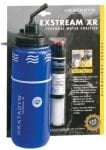
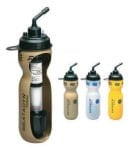
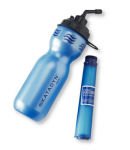
Since the idea of lugging a 5-gallon bottle of purified water around everywhere people go offers quite a few logistical problems, we shall have to seek out another answer… How about travel-size portable water bottles with built-in filtration units? Brilliant!

The links below will take you to affordable, reliable portable water solutions which if used in place of bottled water, should greatly reduce the number of waste products winding up in landfills:

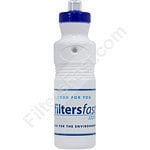
Filters Fast 27oz Filtered Water Bottle

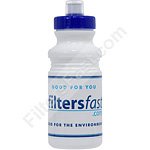
Filters Fast 16oz Filtered Water Bottle

Katadyn Exstream XR Personal Water Bottle Purifier

Katadyn Exstream Personal Water Bottle Purifier

Katadyn Micro Microfilter Water Filter Bottle

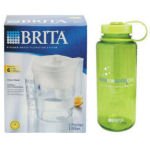
Brita Classic Pitcher w/ Free Nalgene Water Bottle

Dec
4

Safe Storage of Distilled Water at Home

Water Testing BlogBacteria, Bottled Water, Coliform, Ozone, Water Filter

While cruising the Information Superhighway for useful information pertaining to drinking water we recently came across an article posted on TruthOfWater.Com regarding safe storage times for drinking water purified through a home distillation process.

Some commercial bottled water companies use distillation as their drinking water purification method. They then bottle their product and ship it off to retailers in containers marked with super long shelflifes, but can the typical homeowner distill their own water and assume their homebrewed product will stay fresh just as long?

Answer: No, and the article we found explains why.

“Distillation of water is an effective way to ensure most chemical and biological contaminants are left behind. It is an easy and fast way to treat water in your own home for drinking and cooking.

When purchasing store bought bottled water, a reputable manufacturer will ensure that the water is completely disinfected before bottling. Most will add a disinfectant like ozone to the process, because it is a powerful disinfectant. The bottle is then sealed and any remaining ozone quickly converts to oxygen shortly after that. It’s this disinfection/sealing process that allows bottled water to be stored indefinately.

The process you describe will allow for some interaction with the environment in the glass bottle. Because there is no trace disinfectant left in your water, it could leave it open for propagation of bacteria. In this case, you water should be consumed within the same amount of time that food can last in the fridge, within a week or two. Any longer and it could turn stagnant.

If you would like to produce water that would last longer for storage, you could follow a pasteurization technique as you would with producing home canned goods. Using heat on a sealed bottle in the proper technique would ensure any bacteria allowed to enter the bottle is killed, and would allow you for longer storage of your water.” (source)

From the sounds of things, unless water produced through distillation methods will get consumed in a short period of time, its consumers must engage in an involved storage process if they wish to keep a large supply of distilled water on-hand.

Given that information, stocking up on commercially prepared gallon-size (or larger depending upon anticipated usage rate) containers of distilled water may make more sense than attempting to create your own stockpile at home.

Dec
4

Fluoride in Drinking Water Facts

Water Testing BlogFluoride

The last posting we did about fluoride in drinking water seemed to cause a bit of a stir so we did a little more research and came up with the following ‘facts about fluoride‘:

- Fluoride is a waste by-product of the fertilizer and aluminum industry and it’s also a Part II Poison under the UK Poisons Act 1972.

- Fluoride is one of the basic ingredients in both PROZAC (Fluoxetene Hydrochloride) and Sarin nerve gas (Isopropyl-Methyl-Phosphoryl Fluoride).

- USAF Major George R. Jordan testified before Un-American Activity committees of Congress in the 1950′s that in his post as U.S.-Soviet liaison officer, the Soviets openly admitted to “Using the fluoride in the water supplies in their concentration camps, to make the prisoners stupid, docile, and subservient.”

- The first occurrence of fluoridated drinking water on Earth was found in Germany’s Nazi prison camps. The Gestapo had little concern about fluoride’s supposed effect on children’s teeth; their alleged reason for mass-medicating water with sodium fluoride was to sterilize humans and force the people in their concentration camps into calm submission. (Ref. book: “The Crime and Punishment of I.G. Farben” by Joseph Borkin.)

- 97% of western Europe has rejected fluoridated water due to the known health risks, however 10% of Britons drink it and the UK government is trying to fast track the fluoridation of the entire country’s water supply.

- In Germany, Belgium and Luxembourg fluoridation of water was rejected because it was classified as compulsive medication against the subject’s will and therefore violated fundamental human rights.

- In November of 2006, the American Dental Association (ADA) advised that parents should avoid giving babies fluoridated water.

- Sources of fluoride include: fluoride dental products, fluoride pesticides, fluoridated pharmaceuticals, processed foods made with fluoridated water, and tea. (source)

As always, if you fear the presence of fluoride or any other potential contaminant in your water, get your water tested by a certified water testing laboratory.

Don’t take chances with your health. It’s your water, your health, and your life.

Ineterested in learning more about fluoride filters and other fluoride removal systems?