posted by
The Water Test Kit Store: Latest News on Sunday, March 22nd 2015 under: Uncategorized
'Roger' asked, "Can you tell me if its possible to test for 'Combined Chlorines' when using a DPD powder test kit. And what level of combined Chlorines should there be in a pool with 3-4 ppm Chlorine?"
To test for combined chlorine using a DPD method, you:
- Test a sample for free chlorine first using DPD-1
- Test the same sample for total chlorine using DPD-3
- Subtract the free chlorine reading from the total chlorine reading to get the amount of combined chlorine in the water sample
Regarding how much combined chlorine belongs in a swimming pool, ideally you would want NONE, but since we do not live in a perfect world, many pool water experts suggest shocking a swimming pool (with liquid chlorine, powdered chlorine, or a non-chlorine shock treatment) when combined chlorine levels exceed 0.2ppm.
Easiest DPD Testing Method
For the longest time, DPD only came in the form of tablets, powders, liquids, and prepackaged glass units that you had to break as part of the testing process. Each form had definite drawbacks:
- Tablets need crushing before they can dissolve and in cold water or hard water samples the DPD may or may not dissolve completely.
- Powders must get carefully poured into samples and then mixed in so they can dissolve. Not such an easy task when working on-site, outdoors when the wind blows. Then the DPD may or may not dissolve completely depending on the temperature and hardness of the water sample. Oh, and powdered reagents can easilt get into the air and possibly cause respiratory problems for some people.
- Liquid DPD reagents do not have the same problems dissolving in cold or hard samples, but they do introduce other messiness factors and they tend to have much short shelf lived than other forms of DPD.
- Regarding glass ampuoles, well... GLASS. Do we really have to say much more? Plus user must break the glass tips off to dispense the DPD.
So what do we offer as a replacement for the above problematic DPD dispensing methods?
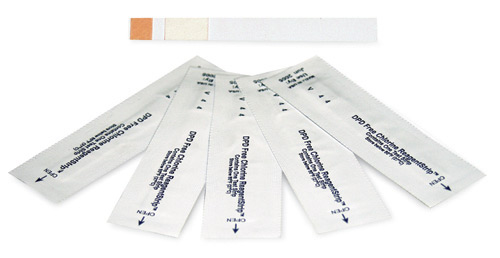
DPD ReagentStrips
No more tablets to crush, powders to spill, glass ampoules to break, or dispensers that can clog and release irritating dust. DPD-1 ReagentStrips contain all the necessary chemical reagents required to test for the presence of oxidizers in a water sample on a pad that instantaneously releases its contents when dipped into a 10 mL water sample.
Simply dip the strip into a 10ml water sample for 20 seconds with back and forth motion, remove, & discard the strip, and immediately read the test sample in your chlorine meter. ReagentStrip DPD-1 performs flawlessly with a wide range of existing meters from manufacturers such as Hach®, LaMotte®, Orion®, WTW®, etc.
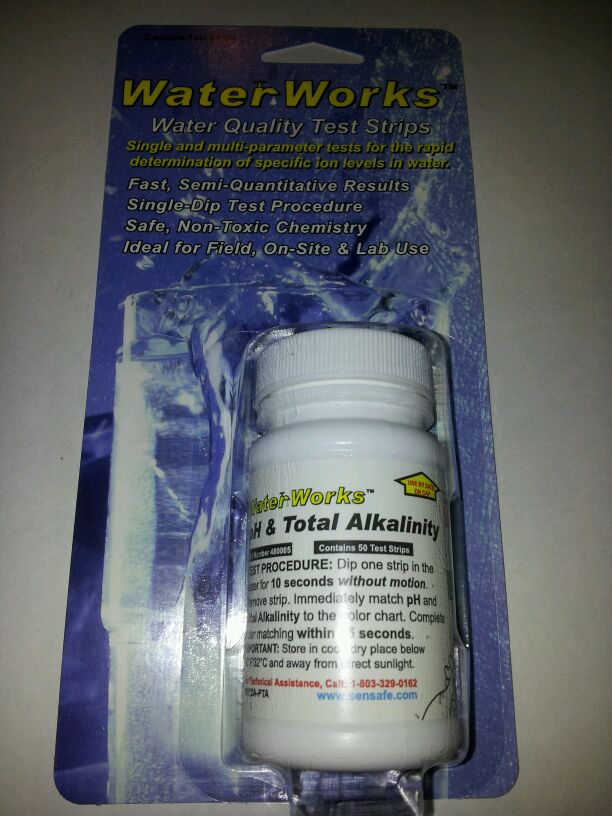
Not interested in fooling around with DPD at all? Then we suggest looking at the WaterWorks 2 Free & Total Chlorine water testing product which tests for both free and total chlorine at the same time, and using the same test strip.