About
Do you know what's in YOUR water? Learn about water quality, water quality testing, and water quality testing products that can help you make informed, educated decisions regarding the water treatment options for your home, office, swimming pool... and life.
Contact Us
Got a question about water quality? Want to share a water quality article or water quality article with others?

Visit our Contact Us Page to ask a water quality question or submit water quality information.

RSS Feed
Get the most recent water quality posts and comments by subscribing to the Water Testing Blog RSS Feeds.
Subscribe to RSS! Subscribe to RSS Comments!

Archive for the ‘Copper’ Category

Dec
1

Question: NSF Certified Water Pitcher Filter?

Water Testing Blogatrazine, Chlorine, Chlorine Testing, Copper, Free Chlorine, mercury, Personal Water Filter, simazine, THM, Total Chlorine, Trihalomethane, Water Filter, Water Quality Testing, Water Testing

We always talk about the benefits of undersink filters, countertop filters and whole house filters because of their tendency to filter out large numbers of unwanted drinking water contaminants very efficiently… and today we’d like to bring to your attention a PUR Water Pitcher Filter that comes with a really nice feature: the NSF Certified Seal.

Oh, and did we also mention you have the option of easily adding subtle, tasty flavors to the purified water it produces?

What importance does NSF Certified have?

Getting back to what really matters when it comes to a water filtration system, the PUR Pitcher Water Filter with PUR Flavor Options has passed independent laboratory testing and certified to NSF Standards for its ability to reduce levels of the following nasty water contaminants (if present to begin with):


PUR Pitcher Water Filter
with PUR Flavor Options (CR-5000)

The PUR Water Filter in this water filter pitcher was successfully tested and certified by NSF International against NSF / ANSI Standards 42 and 53.

No, this filter will not protect your family against EVERY possible drinking water contaminant, but it does offer a decent amount of protection against some truly unpleasant compounds that don’t belong in your water.

Know what contaminants your drinking water contains

The best thing to do before ordering a water filter of ANY size, brand or type… Get your water tested to find out what you need to remove! If you have serious reason to suspect your water contains contaminants, consult with a certified water testing laboratory with proper accreditation. A lab like that will have the equipment and expertise to accurately assess any risks posed by contaminants in your water.

As an example, National Testing Laboratories, a water testing lab certified to perform water testing in pretty much every State in the US, offers three different water testing packages as well as a host of other contaminant-specific tests to the general public.

Click here to view National Testing Laboratories residential water testing packages.

WaterFilters.Net: National Testing Labs 27 Parameter Test Kit
National Testing Labs
27 Parameter Test Kit

WaterFilters.Net: National Testing Labs 83 Parameter Test Kit
National Testing Labs
83 Parameter Test Kit

WaterFilters.Net: National Testing Labs 97 Parameter Test Kit
National Testing Labs
97 Parameter Test Kit

Nov
30

Free Lead in Water Testing in New York City

Water Testing BlogCity Water Test, Copper, Home Water Testing, Lead, Metals, Municipal Water Test, Water Quality Testing

Earlier today we posted an article about free lead in water testing in NYC and since then our comment form has blown up with questions about the program. Below you will find information about the program, its goals, etc. If you want the full story, though, as in the official version as written by officials in New York City, go here now

Lead in Drinking Water from Household Plumbing

Water brought into the City from its reservoir system located upstate has virtually zero lead in it when it reaches the City. The water, however, has the ability to absorb lead from (older lead-containing) solder, certain types of metal fixtures and plumbing found in older buildings.

Copper in water test kit
Copper in your drinking water?

Therefore, if you live in an older building and/or just want to know more about the possibility that your water may contain dangerous, or at the very least no-so-safe levels of lead, then the following links on New York City’s own web site may prove quite useful:

While we certainly DO applaud NYC’s efforts to inform the general public about the potential dangers posed by lead in its drinking water, and also for proving free lead in water testing to NYC residents who request it, we think the idea of advising millions of people to ‘run the faucet for 30 seconds’ will waste a whole lot of water.

On the other hand, the only other option, forcing building owners to convert over their old, lead-laden plumbing over to newer, safer plumbing components, would cost millions upon millions of dollars. Oh, and good luck trying to enforce THAT mandate in a city that size!

Iron in water test kit
Iron in your drinking water?

Hmmm… Quite a dilemma: Wasting millions (billions?) of gallons of perfectly good water (before it got to the City) which we will run out of one day to avoid spending 10′s of millions (billions?) of dollars to replace lead-containing components of an aging infrastructure… or biting the bullet and spending the money.

We dare not comment on that last one any more than we already have! We do not have the answers, but that does not mean we don’t think people need to ponder such dilemmas — as we often do.

So where does the leave New Yorkers?

For right now it leaves them with the heads-up that they need to monitor the quality of their tap water AND, at least for now, a free lead in water testing service they can use to assess the amount of lead in their drinking water.

It ALSO puts them in the same category as the rest of us: Responsible for the Quality of the Water We Use.

For a long time many people believed that only private well owners had sole responsibility for monitoring the quality of the water entering their homes… but obviously we can all now see that the miles of piping that may or may not contain lead — or leaks where unwanted contaminants could get in — presents itself as a noteworthy risk to folks with city/municipal water.

Therefore, we feel that everyone ought to consider testing their tap water from time to time. Unexpected leaks can occur at any time and may go undetected for years as they allow innumerable contaminants to enter the water supply, deplete disinfectant levels, and possibly find a nice place to hang out, grow and create new little contaminants of their own in the water supply.

Wow. The imagery from that last statement made us shudder. We hope it had the same effect on all of you.

Nov
18

Should You Test Your Water If You Have City/Municipal Water?

Water Testing BlogChlorine, Chlorine Testing, City Water Test, Copper, Free Chlorine, Hardness, Home Water Testing, Iron, Lead, manganese, Metals, Total Chlorine, Water Quality Testing, Water Testing

We get asked this a LOT. Quite a few people write in ask things like, “I have city water, but it tastes funny. Should we test it?” or “The water in my town tastes different on different days. Is that a problem?”

Filter Water: All-in-One Water Test Kit
All-in-One Water Test Kit

Filter Water: Water Quality Test Kit
Water Quality Test Kit

In both cases, and so many more, we would suggest getting a test kit such as the Water Quality Test Kit made by SenSafe or the All in One Water Test Kit made by WaterSafe… and doing some preliminary testing of their own.

In most cases people complaining about city water will have problems caused by contaminants such as dissolved metals (i.e. lead, iron, copper, etc.), chlorine content (free and/or total), total hardness (calcium and/or manganese), and/or rotten egg smells caused by dissolved hydrogen sulfide.

If you get unusual or questionable results, definitely seek the services of a certified water testing laboratory; preferably one not affiliated with a water filter system distributor.

What about bacteria?

We also get asked quite often about the likelihood of harmful bacteria showing up in tap water. Despite the efficiency of modern water treatment facilities and the exemplary track records most have when it comes to the quality of the water they produce, one must always remember two things:

1) Accidental machinery malfunctions can occur.

2) City water travels through lots and lots of piping before it gets to your tap… meaning it passes over thousands of joints where leaks in the pipes could allow the introduction of dangerous bacteria.

If you suspect for any reason that your water supply may contain bacteria, although home drinking water test kits work well as screening methods, times like this call for the services of a certified water testing lab.

You local health department can suggest a water testing laboratory in your area or you can use a mail order laboratory such as National Testing Labs.

Oct
14

Water Filter Pitchers and Temperature

Water Testing BlogBacteria, Chlorine, Coliform, Copper, Hardness, Iron, Lead, mercury, Metals, Pesticide, replacement water filter, THM, Water Filter

Everyone loves the taste of fresh, clean filtered drinking water, but not everyone likes their water ice cold or as cold as it gets when stored in a refrigerator. How do we know this? Simple: Martha wrote in and asked,

I’m thinking of getting a water filter pitcher. Must it be kept in the refrigerator in order for the filter to work? I prefer room temp. water.

Thanks, Martha


Hot Water Filter Housings

We knew that hot water posed a problem for certain types of filters and filter housings — hence the need for special hot water filters & housings — and we knew that frozen water would not work all that well, either (obviously!), but as for whether or not a filter would perform all that much differently at room temperature versus the temperature of a refrigerator, we never gave that a whole lot of thought.


Crystal Quest Pitcher Filter

Until now.

Our quick research has determined that water filter pitchers ought to work just as well at room temperature as they would in a refrigerator. We do, however, suspect that one could possibly need to replace the filters more frequently since warmer temperatures in the filter would make an excellent breeding ground for bacteria. We suspect that water pitcher filters that use certain blends of KDF Media may prove more resistant to bacterial growth than filters that do not use KDF Media.

The Crystal Quest Pitcher Water Filter does something that similar products made by other leading water pitcher filter manufacturers do not. It uses a total of FIVE stages of filtration.


Crystal Quest Pitcher
Replacement Filter

  • A one micron sediment pre-filter takes out dirt, rust, sediment and any other large particles.

  • In filter stages 2 & 3… Blends of KDF55 and KDF85 resin media reduce dissolved metals (i.e. iron, mercury, copper, nickel, chromium) and harmful bacteria. As we mentioned before, KDF resin media also has properties which help to prevent the growth of bacteria in the filter.

  • In the fourth stage of filtration a bed of ion exchange resin further reduces heavy metals including lead, copper and aluminum. This stage also reduces water hardness (calcium and magnesium).

  • The fifth stage of filtration contains granulated activated carbon (GAC) reduces chlorine (99.9%), bad taste and odors. It also reduces pesticides and chemicals that science has linked to increased cancer risks in humans (i.e. VOC’s, benzene, TTHMs and toxaphene).
Sep
29

Countertop Nitrate Removal System — Dual Filter

Water Testing Blogatrazine, Chlorine, Copper, Environmental, Ground Water, Hardness, hydrogen sulfide, Iron, Lead, mercury, Metals, Nitrate, Pesticide, replacement water filter, simazine, THM, Water Filter, Water Testing, Well Water

Nitrate Test Strips

We have posted a number of articles about nitrates in drinking water and given a number of links to products that can remove nitrates from drinking water… and today we found out that FilterWater.Com has started carrying a highly effective nitrate removal system made by Crystal Quest that costs less than $150, features a dual filter system containing a total of 7 filtration stages, and qualifies for free shipping.
Do I have nitrates in my drinking water?

Nitrates occur naturally in the environment and may come from any number of sources in nature including, but not limited to, animal waste that filters down into the aquifer. Wells tapping into that aquifer as a source of drinking water then pull the water to the surface where it gets used by the well owner for cooking, drinking, bathing, etc.

What harm can nitrates in drinking water do?

The USEPA summed up the effects of nitrates in drinking in the following ways:

Short-term: Excessive levels of nitrate in drinking water have caused serious illness and sometimes death. The serious illness in infants is due to the conversion of nitrate to nitrite by the body, which can interfere with the oxygen-carrying capacity of the child’s blood. This can be an acute condition in which health deteriorates rapidly over a period of days. Symptoms include shortness of breath and blueness of the skin.” ( source )

Long-term: Nitrates and nitrites have the potential to cause the following effects from a lifetime exposure at levels above the MCL: diuresis, increased starchy deposits and hemorrhaging of the spleen.” ( source )

How can I get rid of nitrates in my water?

We started this posting by saying that Filter Water now carries a dual filter counter top nitrate removal system… so now we figure we ought to tell you a little more about it.

Stage 1 — This product uses as dedicated nitrate removal filter. Water first flows through a nitrate-selective resin cartridge designed to reduce nitrate levels in water by 90 to 95 percent. The cartridge has an expected nitrate capacity of approximately 5500 ppm and owners can regenerate (aka: recharge, flush out, clean) the cartridge using a sodium chloride brine solution when it gets full.

Stages 2 & 7 — Pre and post one-micron filter pads remove suspended particles such as silt, sediment, cyst (Giardia, Cryptosporidium), sand, rust, dirt, and other undissolved matter in the water.

Stages 3 & 4 — Specially formulated beds of copper and zinc (KDF-55D, and KDF-85D) use a process known as oxidation-reduction to exhaust any chlorine in the water and convert iron and hydrogen sulfide into insoluble matter which attaches to the surface of the media. Heavy metals such as lead, mercury, copper, nickel, chromium, cadmium, aluminum, etc. also get removed during stages 3 & 4.

Stage 5 — Ion exchange resins reduce heavy metals such as lead, copper and aluminum further and also reduce water hardness by filtering out magnesium and calcium.

Stage 6 — Granulated Activated Carbon (GAC), a universally recognized and widely used adsorbent for a wide variety of unwanted drinking water contaminants such as chlorine (99.9%), chemicals linked to cancer (i.e. THM’s, benzene) pesticides & herbicides such as atrazine and simazine, insecticides, volatile organic compounds (VOC’s), PCB’s, MTBE’s and hundreds of other chemical contaminants which could possibly exist in your water supply.

Other features of the Dual Filter Nitrate Removal System?

Many people simply do not want to mess around with plumbing under their sink so a unit like the Crystal Quest Dual Filter Nitrate Filter System which requires no plumbing will work out beautifully.

The unit sits quietly next to the sink on the counter top and connects easily to pretty much any standard kitchen faucet. It also comes with a diverter valve which allows people to switch between filtered and unfiltered water with the flip of a switch.

Not digging the stark white appearance of the filter? Don’t worry! You have the option of ordering the unit with a chrome finish if that better suits the decor of your kitchen.

How long will the filters last and what do replacements cost?

The manufacturer estimates that the filters ought to last between 1 and 3 years depending upon the initial quality of source water. Keep in mind, though, that a soaking of the nitrate-specific cartridge in sodium or potassium chloride solution at room temperature will recharge the cartridge for additional use.

  1. Remove cartridge from unit
  2. Immerse the cartridge in a sodium or potassium chloride and room temperature water for a period of 30 minutes
  3. Rinse off and then soak the cartridge for 30 minutes in salt-free water
  4. Shake excess water off of and out of the cartridge
  5. Place the cartridge back in the filter housing
  6. Run through the systems for a period of 5-10 minutes

When it comes time to replace the nitrate-specific filter cartridge it will cost around $50 and the 6-stage filter cartridge will cost about the same.

Sep
28

Question about ORP and Pool Water Testing

Water Testing Blogalkalinity, Bromine, Chlorine, Copper, Iron, Metals, pH, Pool Water, TDS, Water Quality Testing, Water Testing

It struck us as odd that we had not, yet, received an inquiry about ORP (Oxidation Reduction Potential), but that thought will never cross our minds again since ‘Ella’ asked us…

I need to find out about the testerORP/Redox for using at the pool

And finally, what did they have to say?

Could you explain what could be tested at the pool’s water by tested ORP/Redox (ORPTester 10 model)? How often do I have to conduct the tests?

Thank you,

Ella

Thank you, Ella, for bringing up the topic of ORP Meters and what they test. Many people have heard of ORP Meters, but not many understand a whole lot about them.

Rather than get into a discussion about gaining and losing electrons that would bore everyone to tears, we will instead sum up ORP Meters’ usefulness by saying that they measure the effectiveness of oxidizers (i.e. chlorine, bromine, non-chlorine shock, and hydrogen peroxide, etc.) in the water.

For you more technical types out there, in a chemical reaction an oxidizing agent will take electrons away from other compounds/elements in the mixture and a reducing agent will donate electrons to the other compounds/elements.

Many automatic chemical dispensing systems rely upon ORP testing units to determine how much and when to add chemical sanitizers to pools.

Frequency of testing?

Whether it has to do with chlorine testing or testing for pretty much ANY pool water parameter, if your pool falls in the category of ‘public’ you will want to consult with your local health department… as regulations vary by locale.

What testing is required for public pools?

This also varies by location so once again you will want to consult with your local health department.

Oh, and before we forget, some health departments may not recognize ORP testing as a definitive way of measuring sanitizer levels. Also, simply measuring the sanitizer level in a swimming pool will not tell you everything you need to know in order to make sure the water stays safe.

Pool water parameters typically tested?

Sanitizer (i.e. free & total chlorine) levels, pH, total alkalinity, calcium or total hardness, stabilizer (cyanuric acid) levels, TDS, and water metals (i.e. iron & copper).

As we said before, you will want to check with your local health department to see what parameters they want you to test and how often they want you to test them.

Taylor K2006 Test Kit

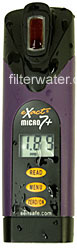
eXact Micro 7+ Pool Testing Meter

Sep
24

Bigger Than a Water Filter Pitcher… and Bigger is Better!

Water Testing BlogChlorine, Copper, Lead, mercury, Personal Water Filter, Water Filter

Recently people have started asking if we knew of any devices that could produce water of the same caliber as water from a Brita Water Pitcher, 3M Filtrete Filter Pitcher or a Culligan Water Pitcher Filter… but in greater quantities.

After a bit of searching we came across a product called the Cuisinart CleanWater Countertop Water Filter (WCH-1000) which uses pretty much the same water filtration technologies as the three pitcher filters mentioned above, but holds 1.5 gallons of water at a time.

Dispensing water at a cool 44 degrees Fahrenheit and also at room temperature, this versatile and convenient counter top water filter holds plenty of water for the entire family… and as soon as the water level drops, simply flip up the top and pour new water through the Cuisinart GF-80 which reduces/removes a number of unwanted drinking water contaminants including Chlorine, Mercury, Cadmium, Lead, Copper, Volatile Organic Compounds (i.e. Benzene and Tetrachloroethylene and Toluene), dirt, sediment, rust, and others.

Depending upon the quality of your source or tap water, the filter in the Cuisinart CleanWater Countertop Water Filter should get changed once every 3 months, or approximately 80 gallons. For more contaminated water, the filter should get changed when tastes and/or odors return to the water when consumed. A reduction in the flow of water through the filter also serves as an indicator that the filter needs changing.
Cost of replacement filters?

A valid concern of many people considering purchasing a water filtration system of ANY kind… How much will replacement filters cost. In the case of the Cuisinart CleanWater Countertop Water Filter, which uses an easily replaced Cuisinart GF-80 Filter, which typically costs less than $20, that concern vanishes in an instant.

Do they make a bigger model?

For those of you with large families, or a very thirsty family, Cuisinart also makes a 2 Gallon CleanWater Countertop Water Filter which, of course, uses the same easily replaced and quite affordable Cuisinart GF-80 Filter.

Test Products: Total Chlorine Test Kit
Test for Chlorine in Water

Test Products: Mercury Test Kit
Test for Mercury in Water

Test Products: Copper Test Kit
Test for Copper in Water

Sep
21

Inexpensive Countertop Fluoride Filter

Water Testing BlogArsenic, Arsenic in Water, Chlorine, Copper, Fluoride, Hardness, hydrogen sulfide, Iron, Lead, mercury, Metals, Pesticide, Water Filter, Water Testing

No Cartridge Fluoride Filter

While the jury has not come back with a decision on whether or not fluoride in drinking water poses a serious health risk to people who drink water spiked with it, if you don’t want it in your water Crystal Quest has recently come out with a convenient, easily installed countertop water filter for fluoride — and many other unwanted potential drinking water contaminants.

Crystal Quest manufactures a product called the Countertop Disposable Single Fluoride Multi PLUS Water Filter System which installs in seconds and effectively removes fluoride AND hundreds of drinking water contaminants — if present in the water to begin with.

Water travels through a series of seven filtration stages in this unit. You will find detailed information on those stages below:

Pre and Post One-Micron Filter Pads: Used in stages 1 and 7, this filtration method removes suspended particles including silt, sediment, cyst (Giardia, Cryptosporidium), sand, rust, dirt, and other undissolved solid matter.

Fluoride Removal Cartridge: Used as the second stage of filtration, water flows through a fine mesh synthetic aluminum oxide absorbent media which has an extremely high affinity for fluoride, lead and arsenic. Through a combination of adsorption and chemical reaction the media effectively removes metals over a wide pH range.

How much fluoride can the filter hold before it needs servicing? The filter will reduce 10ppm feeds to 0.2ppm for a total of 6,000ppm fluoride removed.

KDF Media Bed: The third and fifth stages of filtration feature proprietary blends of high-purity KDF resins (KDF-55D and KDF-85D) which work using electrochemical and spontaneous oxidation-reduction (REDOX) principles. In these stages compounds such as chlorine get neutralized. Laboratory testing has shown that combination KDF/GAC cartridges can remove more than 99% of chlorine from greater than 20,000 gallons of water.

During these stages iron and hydrogen sulfide also get oxidized and become an insoluble substance that attaches to the surface of the media. Additionally, heavy metals such as lead, mercury, copper, nickel, chromium, cadmium, aluminum, and other dissolved metals get removed from the water by an electrochemical process at this point.

Ion Exchange Resin: The fourth stage of filtration uses an ion exchange to further reduce/remove heavy metals such as lead, copper and aluminum. This stage also acts a water softener by reducing calcium and magnesium levels (aka: total hardness) in the water.

Granulated Activated Carbon (GAC): The sixth stage of filtration makes use of granulated activated carbon, a material universally accepted as a highly effective means of eliminating a wide range of unwanted contaminants such as chlorine, potential carcinogens (i.e. THM’s, benzene, etc.), pesticides, herbicides, insecticides, volatile organic compounds (VOC’s), PCB’s, MTBE’s and many more chemical contaminants that may show up in water. Many of these compounds create a ‘bad’ color, taste and/or odor in drinking water, but not all.

Important note regarding carbon filters… Some manufacturers use a lesser grade of carbon, but this filter uses a highly porous, and therefore more useful, carbon derived from coconut shells.

How do I know if I need a water filter like this one?

If you have concerns regarding fluoride in your drinking water, contact your local water department and ask for a copy of the most recent drinking water report. Some water districts have made their annual reports available online so you may want to look on your water district’s web site first.

If your concerns deal with potential water contaminants that may have entered your water supply after it left the water treatment plant — bacteria, lead, heavy metals, etc. — then at-home drinking water test kits like the following may work just fine for you.

WaterFilters.Net: Chlorine, Iron, Nitrates and Hardness Test Kit
Culligan TK-2 Water Test Kit

WaterFilters.Net: WaterSafe All in One Test Kit
WaterSafe All in One Test Kit

WaterFilters.Net: WaterSafe Well Water Test Kit
WaterSafe Well Water Test Kit


WaterFilters.Net: Complete Home Water Test Kit
Complete Home Water Test Kit

WaterFilters.Net: WaterSafe Science Fair Project Kit
WaterSafe Science Project Kit

WaterFilters.Net: Well Drillers Test Kit
Well Drillers Test Kit


WaterFilters.Net: Arsenic in Water Test Kit
Arsenic in Water Test Kit

WaterFilters.Net: Bacteria in Water Test Kit
Bacteria in Water Test Kit

WaterFilters.Net: Water Cooler Bacteria Test Kit
Water Cooler Bacteria Test Kit


WaterFilters.Net: Radon in Water Test Kit
Radon in Water Test Kit


Keep in mind, though, that if you have serious reason to suspect drinking water contamination, you should seek the assistance and expertise of a certified water testing laboratory.

WaterFilters.Net: National Testing Labs 27 Parameter Test Kit
National Testing Labs
27 Parameter Test Kit

WaterFilters.Net: National Testing Labs 83 Parameter Test Kit
National Testing Labs
83 Parameter Test Kit

WaterFilters.Net: National Testing Labs 97 Parameter Test Kit
National Testing Labs
97 Parameter Test Kit

Sep
18

Lead and Copper Testing in Polk County, Georgia

Water Testing BlogCity Water Test, Copper, Home Water Testing, Lead, Metals, Municipal Water Test, Water Quality Testing, Water Testing

Pretty much every State Health Agency has specific rules governing the frequency and volume of lead in water testing and copper in water testing that local (municipal) water departments must follow — or face stiff penalties often accompanied by large fines which continue to accrue until the local water department comes into compliance.

As an example, in the State of Georgia, local water departments must conduct lead in water and copper in water testing in a select number of customer homes every three years.

The Polk County Water Authority will be sending out letters this week to homeowners it wants to participate in its water-testing program, according to an authority official.

Authority Manager Jack Damron said the effort is to get back into compliance with the Georgia Environmental Protection Division.

Polk County is required to submit water samples from inside homes of randomly selected properties every three years. The testing is to monitor lead and copper, according to Damron.

The county missed the last testing period. However, Damron said no fine was issued.

“Our position is the state never sent us the bottles to use,” Damron said, referring to the specific sampling bottles needed.

Damron, who has been in his position for about two months, said the issue is one of testing compliance and not of water pollution.

“If we believed there was a more serious issue with water itself, we would have sent out a different notice,” he said. ( source )

As always we applaud any government agency’s efforts to ensure citizens have safe, clean drinking water. In this case, though, we give only half a clap.

Why only half a clap? Simple: The excuse of ‘the state never sent us the bottles to use’ does not hold much water. Pardon the pun.

Officials in Polk County KNEW testing needed to get done and KNEW, we imagine, the phone number of the State Agency responsible for distributing the required test vessels for the lead and copper testing. For them to say they should absorb no blame for the testing not getting done rubs us the wrong way.
Thankfully (for them) none of us live in Polk County, Georgia… and thankfully the average person has easy access to copper in water test kits and lead in water test kits.

Filter Water: Copper in Water Test
Copper in Water Test

Filter Water: Lead in Water Test
Lead in Water Test

Filter Water: Water Metals
Metals in Water Test

Sep
3

City Employee Gets Probation for Falsifying Water Test Results

Water Testing BlogArsenic in Water, Bacteria, Chlorine Testing, City Water Test, Copper, Fluoride, Hardness, Home Water Test Kits, Home Water Testing, hydrogen sulfide, Iron, Lead, manganese, Pesticide, sensafe, Total Chlorine, Water Quality Testing, Water Test Kit, Water Testing, watersafe

We often get asked if people who have city/town water ought to test their drinking water from time to time. If you live in the city of Edgewood, Iowa, you no longer have to ask that question.

While the Iowa Department of Natural Resources says they do not believe any dangerous water safety issues avoided detection, the fact that a city employee responsible for testing the city’s public drinking water supply on a regular basis purchased only enough supplies for 100 tests — despite claiming to have performed 3,889 water tests between January 2006 and July 2009 — would make just about anyone curious.

A former Edgewood city employee has been sentenced to probation after he admitted that he failed to test the town’s water supply and submitted false reports to the Iowa Department of Natural Resources.

Harris, 43, pleaded guilty in April to one count of making false statements in a matter within the jurisdiction of the Environmental Protection Agency.

In the plea agreement, Harris admitted he sent false monthly reports to the DNR from February 2008 and July 2009. He falsely claimed testing for fluoride, chlorine and manganese. DNR tests showed less chlorine in the water than the 1.5 milligrams per liter required by state law to kill bacteria.

The review found lower-than-acceptable levels of fluoride, which reduces tooth decay, and manganese oxide, which helps remove cancer-causing radium from the water. Residents in the eastern Iowa town were not exposed to any short- or long-term health risks, a DNR officer said.

The DNR originally alleged that Harris claimed to have done 3,889 water tests between January 2006 and July 2009, but bought enough material for only 100 tests. Harris resigned in August 2009.

The investigation began after some residents complained about declining water quality. ( source )

OK, now having read that, does the statement, “DNR tests showed less chlorine in the water than the 1.5 milligrams per liter required by state law to kill bacteria.” make you feel… safe?

How about “The investigation began after some residents complained about declining water quality.” Does that give you any sense of security?

Can individuals test their city/town/tap water?

Of course they can! While only certified water testing laboratories can give the absolute last word on the safety and potability of drinking water, at-home drinking water test kits from companies like SenSafe and WaterSafe allow the average homeowner to test critical water parameters on their own, whenever they want, and for little money.

What water parameters should homeowners test?

Given the number of possible drinking water contaminants, the average homeowner would find it difficult (and expensive!) to test for them all… but as a general rule, if typically makes sense for people on city/town/tap water to test for water parameters such as:

Drinking Water Test Kit

  • free chlorine residual
  • total chlorine residual
  • lead in water
  • copper in water
  • iron in water
  • total hardness
  • bacteria in water
  • hydrogen sulfide

Should homeowners with city water test for other things? That all depends on where their water company gets its water. As an example, if the water comes from a well, other potentially harmful water contaminants such as pesticides and arsenic could find their way into the water supply and an ill-equipped water treatment facility may not have the proper technology installed to remove them.

As always, though, if you have serious reason to suspect that your tap water has ‘issues’, seek advice from certified water quality experts. Home water test kits serve as great field tests, but the final word regarding a water supply’s potability should come from a certified water testing laboratory.