
About
Do you know what's in YOUR water? Learn about water quality, water quality testing, and water quality testing products that can help you make informed, educated decisions regarding the water treatment options for your home, office, swimming pool... and life.
Contact Us
Got a question about water quality? Want to share a water quality article or water quality article with others?

Visit our Contact Us Page to ask a water quality question or submit water quality information.

RSS Feed
Get the most recent water quality posts and comments by subscribing to the Water Testing Blog RSS Feeds.
Subscribe to RSS! Subscribe to RSS Comments!

Archive for the ‘Lead’ Category

Jan
3

Chromium in Drinking Water Information

Water Testing BlogArsenic, Chromium, Copper, Environmental, Fluoride, Lead, Metals, Municipal Water Test, Nitrate, Nitrite, Reverse Osmosis, TDS, Water Testing

With all of the recent publicity that chromium has gotten as a result of EWG Reports Finding Chromium in Municipal Water Systems, we figured some of you might want to know a bit more about the health effects of chromium, where chromium comes from, how to test for chromium in drinking water, and most importantly… how to get rid of chromium if detected in one’s drinking water.

  • Chromium will appear in nature in one of three forms: Chromium(0), Chromium(III) or Chromium(VI).

  • Chromium(0) gets used in the production of steel.

  • Chromium(III) and/or Chromium(VI) may appear in compounds used for chrome plating, making dyes and pigments, tanning leather, and preserving wood.

  • Chromium(III) aids the human body in its use of sugar, protein and fat, though health officials suggest not using excessive amounts of dietary supplements containing chromium compounds.

  • Higher levels of chromium(VI) may cause irritation to the lining of the nose, ulcers in the nose, runny nose, and other breathing problems such as asthma, coughing, shortness of breath, and/or wheezing. While both Chromium(III) and Chromium(VI) in air can cause the aforementioned problems, effects occur at much lower concentrations of Chromium(VI) than Chromium(III).

  • Chromium(III) and Chromium(VI) may exist in drinking water and have no associated tastes or odors.

  • If ingested, Chromium(III) compounds tend to have less toxic tendencies and appear to cause fewer health problems than Chromium(VI) which causes anemia, irritation of the stomach, ulcers in the stomach, and ulcers in the small intestine.

  • Some laboratory animals exposed to Chromium(VI) experienced sperm damage and damage to the male reproductive system.

  • Some Chromium(VI) compounds may cause skin ulcers and a percentage of the population have extreme sensitivity to Chromium(VI) and/or Chromium(III) with allergic reactions manifesting themselves as severe redness and swelling of the skin.

  • The Department of Health and Human Services (DHHS), the International Agency for Research on Cancer (IARC), and the EPA have determined that Chromium(VI) compounds are known human carcinogens. ( source )

  • Some developmental effects have been observed in animals exposed to Chromium(VI). ( source )

Regulations, rules and recommendations pertaining to Chromium?

The EPA has determined that exposure to chromium in drinking water at concentrations of 1 mg/L for up to 10 days is not expected to cause any adverse effects in a child. The FDA has determined that the chromium concentration in bottled drinking water should not exceed 1 mg/L. The Occupational Health and Safety Administration (OSHA) has limited workers’ exposure to an average of 0.0005 mg/m3 chromium(VI), 0.5 mg/m3 chromium(III), and 1.0 mg/m3 chromium(0) for an 8-hour workday, 40-hour workweek. ( source )

What NSF/ANSI Standards apply to chromium in drinking water?

Standard 53, Standard 58, and Standard 62.

For more information on the specifics of those NSF/ANSI Standards and others, take a look at the NSF International Web Site. It offers a wealth of information for both the consumer AND water professionals alike.

Pentek, Ametek, US Filter -- RO-3500 Reverse Osmosis Water Filter
RO-3500 Reverse Osmosis Water Filter
NSF/ANSI Standard 58 Certified

Removing chromium from drinking water?

As far as units for the average consumer, pretty much only reverse osmosis makes any sense. One could use a process like distillation, but it has a flow rate that most likely would not meet homeowner needs and a much higher entry cost.

As an example of a reverse osmosis that carries NSF Certification for chromium reduction, you may want to take a look at the Pentek RO-3500 which has a price tag of under $270 and appears to offer a lot of filtering power for the money.

Pentek RO-3500 Reverse Osmosis Water Filters have tested and certified to NSF/ANSI Standard 58 for the reduction of Pentavalent Arsenic (Arsenic V), Barium, Cadmium, Copper, Hexavalent & Trivalent Chromium (Chromium VI & Chromium III), Cyst, Fluoride, Lead, Nitrate/Nitrite, Radium 226/228, Selenium, TDS and Turbidity.

Dec
30

Chromium Found in Drinking Water — Water Systems Not to Blame

Water Testing BlogHome Water Test Kits, Home Water Testing, Lead, mercury, Metals, Municipal Water Test, Reverse Osmosis, sensafe, Water Quality Testing, Water Test Kit, Water Testing

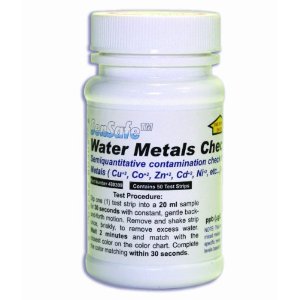
Water Metals (Heavy) Test Kit
Water Metals Test Kit

Ordinarily when a water treatment facility’s product tests positive for too great a concentration of a heavy metal such as lead, copper, iron, mercury, etc. all sorts of people — especially environmental watchdog groups — lay the blame on the doorstep of the water treatment facility.

But not this time. Environmental Working Group (EWG), a lobbying group hailing from Washington, D.C., regards the finding of hexavalent chromium in several public water supplies as a problem, yes, but not necessarily all the fault of local water treatment facilities.

Instead, EWG would like for people to place the blame with the sources of chromium contamination.

Makes perfectly good sense to us. Stopping the flow of pollutants from entering the water supply sure would take a lot of the burden off of water treatment plants and ultimately off of the end user… AKA: All of us in the general public.

A Washington D.C. based environmental group says it’s not trying to put blame on local cities for contamination of hexavalent chromium. A single sample taken an Avion Water Company customer’s tap was one of 35 taken across the country that showed levels in excess of what the State of California is proposing as a public health standard. “This is an upstream pollution problem that needs to be stopped at the source. We need better water source protection and while we do advocate all utilities do their own testing for this and let their all their customers know the results, this doesn’t mean that they’re the ones responsible for the pollution.”

Leanne Brown with the Environmental Working Group says the only consumer level filtering system that can remove this chemical is a reverse osmosis system. Hexavalent chromium can come from manufacturing, pulp mills, and leather tanning. ( source )

So where does that leave average people like us? In the exact same place as before this result… in charge of making sure we have safe, clean drinking water going into our glasses.

Obviously a problem with chromium-6 pollution exists in this country and we, as end users, will not know whether or not we personally have chromium-6 (hexavalent chromium) in our own water supplies unless we perform testing on a periodic basis.

Chromium (Chromate) in Water Test Strips
ITS Part Number: 480047
Chromium in Water Test Kit

How to test for chromium-6 (hexavalent chromium) in your water

As usual, nothing beats laboratory testing of your water by a certified water testing laboratory (i.e. National Testing Labs)… but that does not mean each and every test needs to get shipped off to a lab.

Periodic testing for chromium-6 using at-home drinking water test kits between annual (or more frequent) lab testing provides continual piece of mind and does not cost a fortune.

SenSafe manufactures a simple dip-n-read test strip for hexavalent chromium (chromium-6) that provides results in under 2 minutes… and 50 tests costs somewhere in the neighborhood of around $17.00 (just $0.34 per test!).

Detection Levels for the SenSafe product: 0.1, 0.25, 0.5, 1, 2.5, 5, 10, 25, 50 mg/L (parts per million).

If we found one metal, might there be more?

No one can answer that question honestly… without conducting additional testing. A home or business owner might assume that the presence of chromium or other heavy metals such as lead, mercury, etc. also exist in their water supply, but as we said, without additional testing no one will know for sure.

A good way to test for metals commonly found in drinking water?

If you want a fast and inexpensive testing method for metals in drinking water that will tell you if you have a dissolved metals concentration greater than 10 parts per billion in your water, take a look at the Water Metals Check Test Strips.

While this product will not tell you exactly WHICH metal(s) your water contains, it will allow you to quickly and easily determine whether or not you will want to opt for other, more ion specific testing.

Filter Water: Manganese in Water Test Strips
Test Strips for Manganese

Filter Water: Lead in Water Test Kit
Lead in Water Test Kit

Filter Water: Mercury in Water Test Strips
Mercury in Water Test Strips

Dec
8

Clean Water for Christmas — Brita UltraMax Water Dispenser

Water Testing BlogChlorine, Copper, Lead, Personal Water Filter, Water Filter

Rude family members contribute to a lack of cold, clean drinking water? Apparently so because ‘Kaytee’ has more than a few issues with her greedy, insensitive, water guzzling family.

“My husband and kids have no manners. We live in a place where temperatures hit the high 90′s for a good part of the year and since our tap water pretty much stinks (literally! yuck! so much chlorine!) we bought a Riviera filter by Brita and so far it has worked out GREAT — except that my family can’t seem to figure out how to refill the friggin’ thing so that when I get home I can have a glass of water, too! Do they make a larger pitcher or do I need to go out and get another Riviera and write my name on it?”

Ha ha. We have all grabbed a carton of milk or orange juice out of the fridge only to find that it had no weight and no contents. Now a similar heartbreaking event happens with filtered drinking water? What’s this So annoying! Well, lucky for you some folks at Brita must also have lazy family members because Brita does actually make a larger version of its very popular Riviera model.

The Riviera holds approximately 64 ounces of filtered drinking water at most which makes it kind of heavy when full so rather make a larger pitcher, Brita decided to make an in-fridge water dispenser called the Brita UltraMax Dispenser capable of holding an additional ten full 8-ounce glasses of cold, refreshing filtered drinking water more than its cousin the Riviera.

Filters Fast: Brita Riviera Pitcher Water Filter
Brita Riviera Pitcher Water Filter

Filters Fast: Brita UltraMax Water Dispenser
Brita UltraMax Water Dispenser

What do these Brita filters remove/reduce?

Both the Riviera Pitcher Filter and UltraMax Dispenser use the OB03 Water Filter, a filter certified by the NSF and the Water Quality Association to reduce levels of copper, mercury, cadmium, chlorine, and zinc in drinking water.

What NSF Standards does the Brita OB03 water filter certify to?

A very good question! While cruising around the web we found a number of sites claiming that the Brita OB03 water filter does a number of things… that we could NOT verify on the NSF, WQA or Brita web sites.

Brita OB03 Replacement Water Filters
Brita OB03 Water Filters
NSF/ANSI & WQA Certified

Therefore, we proudly present certification information about the Brita OB03 water filter that we COULD verify:

1) The Brita OB03 water filter has certified to NSF/ANSI Standard Number 53 (Health Effects) for the reduction of Copper, Mercury and Cadmium.

2) The Brita OB03 water filter has certified to NSF/ANSI Standard Number 42 which deals with the reduction of specific aesthetic or non-health-related contaminants (chlorine, taste and odor, and particulates) that may exist in drinking water for the following: Aesthetic chlorine, taste & odor, and zinc.

3) None of the three web sites mentioned earlier say anything about the OB03 having certifications for it’s ability to remove lead or volatile organic compounds (VOC’s).

Nov
30

Free Lead in Water Testing in New York City

Water Testing BlogCity Water Test, Copper, Home Water Testing, Lead, Metals, Municipal Water Test, Water Quality Testing

Earlier today we posted an article about free lead in water testing in NYC and since then our comment form has blown up with questions about the program. Below you will find information about the program, its goals, etc. If you want the full story, though, as in the official version as written by officials in New York City, go here now

Lead in Drinking Water from Household Plumbing

Water brought into the City from its reservoir system located upstate has virtually zero lead in it when it reaches the City. The water, however, has the ability to absorb lead from (older lead-containing) solder, certain types of metal fixtures and plumbing found in older buildings.

Copper in water test kit
Copper in your drinking water?

Therefore, if you live in an older building and/or just want to know more about the possibility that your water may contain dangerous, or at the very least no-so-safe levels of lead, then the following links on New York City’s own web site may prove quite useful:

While we certainly DO applaud NYC’s efforts to inform the general public about the potential dangers posed by lead in its drinking water, and also for proving free lead in water testing to NYC residents who request it, we think the idea of advising millions of people to ‘run the faucet for 30 seconds’ will waste a whole lot of water.

On the other hand, the only other option, forcing building owners to convert over their old, lead-laden plumbing over to newer, safer plumbing components, would cost millions upon millions of dollars. Oh, and good luck trying to enforce THAT mandate in a city that size!

Iron in water test kit
Iron in your drinking water?

Hmmm… Quite a dilemma: Wasting millions (billions?) of gallons of perfectly good water (before it got to the City) which we will run out of one day to avoid spending 10′s of millions (billions?) of dollars to replace lead-containing components of an aging infrastructure… or biting the bullet and spending the money.

We dare not comment on that last one any more than we already have! We do not have the answers, but that does not mean we don’t think people need to ponder such dilemmas — as we often do.

So where does the leave New Yorkers?

For right now it leaves them with the heads-up that they need to monitor the quality of their tap water AND, at least for now, a free lead in water testing service they can use to assess the amount of lead in their drinking water.

It ALSO puts them in the same category as the rest of us: Responsible for the Quality of the Water We Use.

For a long time many people believed that only private well owners had sole responsibility for monitoring the quality of the water entering their homes… but obviously we can all now see that the miles of piping that may or may not contain lead — or leaks where unwanted contaminants could get in — presents itself as a noteworthy risk to folks with city/municipal water.

Therefore, we feel that everyone ought to consider testing their tap water from time to time. Unexpected leaks can occur at any time and may go undetected for years as they allow innumerable contaminants to enter the water supply, deplete disinfectant levels, and possibly find a nice place to hang out, grow and create new little contaminants of their own in the water supply.

Wow. The imagery from that last statement made us shudder. We hope it had the same effect on all of you.

Nov
30

More Lead Found in City Tap Water — New York

Water Testing BlogCity Water Test, Home Water Testing, Lead, Metals, Municipal Water Test, Water Quality Testing, Water Testing

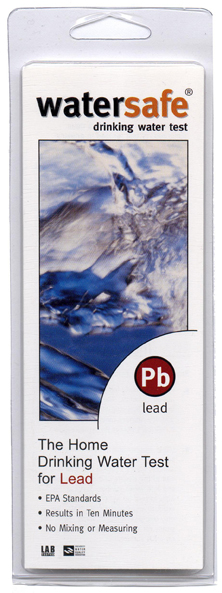
Lead in Water Test Kit

from WaterSafe

Another story about lead in water? Really? Yes. We will keep posting stories about elevated levels of lead in drinking water until we stop finding them. Today’s lead in water story comes to you from New York City.

Apparently the results of random water tests conducted earlier this year revealed that lead levels in water from faucets in buildings known to still contain lead in their plumbing seem to have started leaching higher levels of lead into the water they carry — and that has prompted public health officials in New York City to advise residents to run their water for 30 seconds before collecting any for use.

What does running the water do? Simple: It allows water that has sat in contact with lead service lines or plumbing that possibly contains lead to get flushed out. Water that sits stagnant in the line can pick up metals over time and longer it sits, the more metals it could possibly pick up.

New York City health and environmental officials on Thursday advised residents to run their tap water for at least 30 seconds before drinking or cooking with it after testing showed a rise in the percentage of homes with elevated levels of lead.

The city is required to test for lead in tap water each year under the federal Safe Drinking Water Act. In tests conducted from June to September in homes in older buildings known to have lead in their plumbing, 30 of 222 samples — or about 14 percent — exceeded allowable lead levels.

Last year, only 5.4 percent of the samples had elevated levels, city officials said.

The officials emphasized that the results did not pose a health threat and that lead levels have been in decline since the 1990s. But the federal Environmental Protection Agency, which defines samples above 15 parts per billion as elevated, requires public notification whenever more than 10 percent of the samples exceed that level.

The tests found levels in the range of 16 to 30 parts per billion. ( source )

Did anyone but us catch that?

“The officials emphasized that the results did not pose a health threat and that lead levels have been in decline since the 1990s.” Please tell us WHY that has any relevance to the importance of the current findings and should make people feel better about their tap water containing elevated levels of lead TODAY.

Filters Fast: Water Metals Test
Water Metals Test

from SenSafe

The article mentioned how the USEPA believes lead levels in drinking water at or above 15 parts per billion demand immediate action to avoid cause harm to humans, especially unborn children and young children, if they consume the water. So… please tell us again why levels of lead greater than the EPA’s guideline shouldn’t make people want to run out get their tap water tested right away.

Sorry, Charlie, but if those health and water officials recognize that lead in water can cause irreparable damage, and that the levels of lead recently detected exceed those deemed safe by the United States Environmental Protection Agency, then it makes no sense for them to imply that those elevated lead levels ought not make people nervous.

One good thing: Free Lead in Water Testing in NYC

The same folks who said the elevated levels should not serve as cause for serious alarm have also made lead in water testing available to the public (in New York City)… for free.

Yes, we said, “FREE.” The City of New York has a free lead in water testing program in place (verified: November 29, 2010) for residents concerned that their building’s plumbing may have contributed lead to their tap water.

Click here for more details about NYC’s lead in water testing program.

Nov
26

Dangerous Levels of Lead Found in School’s Brass Valves

Water Testing BlogHardness, Home Water Testing, Lead, manganese, Metals, sensafe, Water Quality Testing, watersafe

Since we started this blog articles about ‘new’ dangers posed by lead in water have come up from time to time… and we have posted articles about them as soon as we became aware of them. Does that make us sensationalists or couriers of messages and news intended to make people cognizant of potential dangers posed by the possibility of lead in their drinking water?

Filters Fast: WaterSafe Lead in Water Test Kit
WaterSafe Lead in Water Test Kit

Filter Water: SenSafe Water Metals Test Kit
SenSafe Water Metals Test Kit

Filters Fast: Manganese in Water Test Kit
Manganese in Water Test Kit

You will have to answer that question for yourself, and while you ponder that query, please also take a moment to think about the possibility that any number of manufacturing errors could possibly result in the improper distribution of lead in brass fittings — as alleged by researchers investigating alarmingly high levels of lead found in water produced by water fountains after technicians took several steps to make them lead-free.

Hidden elements in drinking-water lines can shed large amounts of lead, a toxic heavy metal. And it’s quite legal, even if it does skirt the intent of federal regulations.

University researchers, who uncovered this problem the hard way, have published a case study on the offending hardware in the November issue of the journal of the American Water Works Association.

Lead adds ductility to brass, making it easier to bend or machine into desired shapes. To limit the risk of lead poisoning, U.S. law prohibits new brass plumbing parts in drinking water lines from containing more than 8 percent lead by weight. Yet two shut-off valves containing only about 6.5 percent lead leached toxic amounts of the metal into drinking fountains at the University of North Carolina.

What happened: During manufacturing, the lead did not uniformly distribute throughout the brass, but ended up preferentially settling at or near the surface. As a result, the outside of affected valves—the side visible when looking at a water line (see photo)—slightly exceeded the lead limit. That shouldn’t have posed a health problem, since this surface doesn’t touch water. However, the valves’ interior surface, which does, contained at least 18 percent lead by weight. ( source )

After reading that, and seeing how careful steps taken by knowledgeable people failed to get rid of all the lead in the plumbing of water fountains on a college campus, would you still think us alarmists by giving the topic a few minutes of publicity?

What levels of lead in water pose a danger?

The United States Environmental Protection Agency has ruled that public water systems may not contain more than 15 ppb of dissolved lead and that any system found to have that amount or greater in the water it distributes must take immediate steps to remedy the situation.


Total Hardness
Water Test Kit

While that sounds like a great plan, the fact remains that pretty much all lead found coming out of faucets in people’s homes entered the water at some point after the water left the water treatment facility. Old water service lines, fittings in people’s homes, and older solder used to join pipes all could contribute lead (and other metals) to the water they come in contact with — especially if the water has aggressive tendencies.

Aggressive tendencies? Water can have a bad attitude and start fights? Well, no, but throwing water on someone in a bar or dance club will put them in a bad mood and possibly start a fight.

When we say water has aggressive tendencies, we mean it has low total hardness and/or a low pH; both of which would make the water want to pull elements (metals and other things) out of any surfaces it comes in contact with.

And in conclusion…

Enough evidence exists out there pointing to the fact that dissolved metals in water have a probability of causing health problems that we do not know WHY anyone would not want to test their drinking water (note: tap water and well water can both can contain dangerous concentrations of dissolved metals) for the presence of metals periodically.

Nov
18

Should You Test Your Water If You Have City/Municipal Water?

Water Testing BlogChlorine, Chlorine Testing, City Water Test, Copper, Free Chlorine, Hardness, Home Water Testing, Iron, Lead, manganese, Metals, Total Chlorine, Water Quality Testing, Water Testing

We get asked this a LOT. Quite a few people write in ask things like, “I have city water, but it tastes funny. Should we test it?” or “The water in my town tastes different on different days. Is that a problem?”

Filter Water: All-in-One Water Test Kit
All-in-One Water Test Kit

Filter Water: Water Quality Test Kit
Water Quality Test Kit

In both cases, and so many more, we would suggest getting a test kit such as the Water Quality Test Kit made by SenSafe or the All in One Water Test Kit made by WaterSafe… and doing some preliminary testing of their own.

In most cases people complaining about city water will have problems caused by contaminants such as dissolved metals (i.e. lead, iron, copper, etc.), chlorine content (free and/or total), total hardness (calcium and/or manganese), and/or rotten egg smells caused by dissolved hydrogen sulfide.

If you get unusual or questionable results, definitely seek the services of a certified water testing laboratory; preferably one not affiliated with a water filter system distributor.

What about bacteria?

We also get asked quite often about the likelihood of harmful bacteria showing up in tap water. Despite the efficiency of modern water treatment facilities and the exemplary track records most have when it comes to the quality of the water they produce, one must always remember two things:

1) Accidental machinery malfunctions can occur.

2) City water travels through lots and lots of piping before it gets to your tap… meaning it passes over thousands of joints where leaks in the pipes could allow the introduction of dangerous bacteria.

If you suspect for any reason that your water supply may contain bacteria, although home drinking water test kits work well as screening methods, times like this call for the services of a certified water testing lab.

You local health department can suggest a water testing laboratory in your area or you can use a mail order laboratory such as National Testing Labs.

Nov
8

Do They Make Water Filters for Cholera?

Water Testing BlogBacteria, Chlorine, Lead, Personal Water Filter, Water Filter

After posting the short article on cholera the other day we knew that someone would definitely ask us if we knew of a water filter or water filter technology that could effectively remove cholera from drinking water.

Test for Iodine
Test for Iodine

Test for Iodine
Test for Chlorine

The simplest way to make sure drinking water contains no cholera, bacteria, etc. involves adding the proper/correct amounts of disinfectants such as chlorine or iodine to the water supply. Naturally we suggest contacting the manufacturer of individual disinfectants to get dosage amounts and instructions for use before adding anything to your water!

Then, of course, we suggest testing for chlorine residuals or iodine residuals in the water afterward to make sure you have added the right amount.

Adding disinfectants not an option… Now what?

Doulton W9361122, SS-2 Gravity Fed Filter System
Doulton W9361122
SS-2 Gravity Fed Filter System

In many parts of the world people cannot run out to the store and purchase chemicals like iodine and chlorine. Likewise, after a natural disaster strikes regions of the United States, stores in the affected areas will either have run out of those chemicals or have closed because of the natural disasters.

At times like those a Doulton Gravity Feed Filter utilizing Stearasyl Technology really comes in handy. Doulton gravity fed ceramic filter systems require no power and can provide safe, clean drinking water without the need for chlorine or iodine.

Doulton uses polished stainless steel for the housing of its W9361122 SS Gravity Filter System, making it easy to keep clean, and the size of the unit makes relatively easy to move around and set up. is made from polished stainless steel.

Doulton 7
Doulton 7″ Super Sterasyl
Replacement Ceramic Filter
W9121200/W9121202

To use the unit simply pour water into the top tank and allow the water to pass through (2) two Super Sterasyl 7 Inch Filter Candles. Clean, filtered water gets stored in the bottom tank, ready for use. Dimensions: Top tank holds a little over 2 gallons of untreated water and the bottom tank can hold roughly the same volume of filtered water.

What gets removed from the water? So glad you asked! The manufacturer makes the following claims about its Sterasyl-based water filter product:

  • 99.99% Cysts (i.e. Cryptosporidium, Giardia, etc.)

  • 99.99% Particulates (i.e. Rust & Sediment Creating Turbidity)

  • 99.99% Bacteria (i.e. E. Cholera, E. Coli, Typhoid, Shigella, Klebsiella Terrigena, etc.)

What about NSF Certification?

We predict that one of you will send us an email asking about NSF Standards and the aforementioned Sterasly Technology, so… Yes. Doulton DOES make a Sterasyl-based water filter system that certifies to NSF Standards. In fact, the following Doulton water filter technologies utilizing Sterasyl have certified to NSF Standards:

  • HIP/Sterasyl — Cyst Reduction, Turbidity Reduction, Nominal Particulate Reduction (Class I)

  • HIP/Sterasyl Inline — Cyst Reduction, Turbidity Reduction, Nominal Particulate Reduction (Class I)

  • HIP/Carbosyl — Chlorine Reduction (Aesthetic), Nominal Particulate Reduction (Class I), Taste and Odor Reduction, Cyst Reduction, Turbidity Reduction

  • HIP/Supercarb — Chlorine Reduction (Aesthetic), Nominal Particulate Reduction (Class I), Taste and Odor Reduction, Cyst Reduction, Turbidity Reduction

  • HIP/Supercarb Inline — Chlorine Reduction (Aesthetic), Nominal Particulate Reduction (Class I), Taste and Odor Reduction, Cyst Reduction, Turbidity Reduction

  • HIP/Ultracarb — Chlorine Reduction (Aesthetic), Nominal Particulate Reduction (Class I), Taste and Odor Reduction, Cyst Reduction, Turbidity Reduction, Lead Reduction

  • HIP/Ultracarb Inline — Chlorine Reduction (Aesthetic), Nominal Particulate Reduction (Class I), Taste and Odor Reduction, Cyst Reduction, Turbidity Reduction, Lead Reduction

And in conclusion…

If you have a need or desire to own a gravity fed water purification filter system that pretty much anyone can operate, and you want it to use tried and true technology backed up by research and a whole lot of testing, the Doulton SS2 Filter System (W9361122) definitely deserves further investigation.

Replacement filters for Doulton Water Filters

In an effort to head off an obvious question that we know we will eventually get, below you will find links to several of Doulton’s NSF Certified replacement filters. Please note that none of the filters below will fit the SS2 Gravity System (mentioned above) because it uses a 7″ Sterasyl Filter Candle instead of a 10″ Filter Candle.

Doulton UltraCarb Filter Candle
W9123053

Doulton Ceramic Filter Candle
W9120562

Doulton SuperCarb Replacement Filter
Doulton SuperCarb Filter
W9122021

Nov
2

State Agrees More Testing Needed at Quarry Site

Water Testing BlogArsenic, Arsenic in Water, Arsenic Test, Lead, Pesticide, Water Quality Testing, Water Testing

Water Quality Test Kit
for 15 Different Water Parameters

No one would dare question the belief that industry has a way of making messes and leaving them for others to clean up… or just leaving them and hoping no one ever realizes a mess got made in the first place. Some folks in a New Jersey community believe they have caught a company red-handed at a closed quarry and have asked the State to step in.

Residents and public officials in Basking Ridge, NJ asked the Department of Environmental Protection (DEP) to put pressure on the operators of the closed Millington Quarry on Stonehouse Road because they had evidence which suggested contaminated soil may have gotten trucked into the site over a period of years and used as back fill material.

The DEP issued a letter to Millington Quarry, Inc. and Tilcon New York, Inc. recently stating that it requires additional soil and groundwater testing around the property of the now closed quarry… and they want the testing done in accordance with State approved testing methodologies before the cold weather begins.

Needless to say the DEP’s position pleased the residents and officials in Basking Ridge, NJ.

The Department of Environmental Protection (DEP) has called for additional soil and groundwater testing at the closed Millington Quarry on Stonehouse Road, to the approval of township officials.

Millington Quarry, Inc. and Tilcon New York, Inc., the company that had been quarrying the site before operations ceased last May, were this month informed that the DEP wants further testing at three areas of the quarry where water and soil samples showed a limited presence of contaminants. A letter to the quarry on Oct. 16 called for the quarry to follow the state’s methodology in conducting the additional testing before the onset of cold weather.

The township has been embroiled in a legal dispute with the quarry based on suspicions of contaminated soil being trucked into the property over a period of several years. The soil was used to fill in steeply quarried areas. Random testing of some of those truckloads by a township consultant identified the presence of some contaminants, according to township officials.

David Oster, a section chief with the DEP’s office of Brownfields Remediation & Reuse, wrote in his Oct. 4 letter that the quarry’s limited groundwater investigation into wells on the site had shown elevated levels of arsenic, lead and other volatile chemicals in one well, and arsenic exceeding the DEP’s standards in another.

The letter also reported findings of pesticides and other contaminants in some soil samples that exceed the DEP’s standards for residential and non-residential soil cleanup criteria. The quarry owners have long had plans to eventually sell the closed quarry property for redevelopment with home sites. ( source )

Stories like that make us wonder how many companies have knowingly dumped loads of fill material they knew contained higher than expected and/or allowed levels of contaminants in places — and gotten away with it. On second thought, maybe we don’t really want the answer to that question. It might scare us a lot more than we’d like!

Spot testing pays off in the end?

Of course it does and this story proves it! Without the township hiring a consultant to perform sampling and testing on the loads of material entering the quarry the town would never have gotten the data it used to persuade the DEP to intervene.

Remember: The article said “elevated levels of arsenic, lead and other volatile chemicals in one well, and arsenic exceeding the DEP’s standards in another” which means those potentially hazardous items could have seeped into the local groundwater supply undetected and then found their way into the local population’s drinking water if someone had not stepped up done a little bit of testing.

No one will step and test YOUR water for you, though, if you own a private well… and that means whatever contaminants your well pumps up become your responsibility to detect, report and ultimately get rid of.

Filter Water: Well Driller Standard Test Kit

Well Driller Standard Test Kit tests for Free Chlorine (50 EPA-Approved tests), Ultra Low Total Chlorine (50 tests), Hydrogen Sulfide (50 tests), Total Hardness (50 tests), Iron (50 tests), Nitrates & Nitrites (50 tests), pH (50 tests), Manganese (24 tests), Water Metals (50 tests), Bacteria (1 test)

No matter how you look at it, and regardless of whether you have well water or city water, responsibility for the quality of the water coming out of your faucet rests solely on your shoulders… and if you choose not to test, then you have chosen to blindly accept any contaminants that may or may not have entered your water supply.

Kits like the one on the left will do nothing to help you — and neither will anyone else for that matter — if you don’t keep tabs on the quality of your own water supply!

Want to test for a few more important water quality parameters? If so, then upgrade to the Well Driller Master Test Kit and add 10 Arsenic Tests, 50 Copper Tests, 2 Lead in Water Tests, and 2 Pesticide Tests!

Oct
29

NSF 53 Certified Faucet Filter

Water Testing BlogBacteria, Chlorine Testing, Lead, Water Filter

Yesterday we mentioned that health officials suspected that a college community’s water supply may have gotten contaminated with bacteria (Bacteria Found in College Water Supply) and gave examples of undersink and countertop filters that effectively reduce levels of such as bacteria (i.e. E.Coli, Cholera, Shigella, Salmonella, etc.) cysts (i.e. Giardia, Cryptosporidium, etc.), chlorine, lead, and undissolved particles (i.e. dirt, sand, sediment, etc.)

Filter Water: Lead in Water Test Kit
Lead in Water Test Kit

Filter Water: Free & Total Chlorine Test Kit
Free & Total Chlorine Test Kit

Filter Water: Bacteria in Water Test Kit
Bacteria in Water Test Kit

Today we’d like to bring a very popular Culligan Faucet Filter to your attention — because it certifies and tests to the NSF 53 and will not break the bank in the process!

Culligan FM-15A Faucet Filter
Culligan FM-15A
Faucet Filter

We recently saw the Culligan FM-15A faucet filter in-stock at the Filters Fast web site for under $20 with replacement Culligan FM-15RA Filters priced below $15.

What can this Culligan water filter do for me?

The Culligan Faucet Filter FM15A reportedly produces delicious, filtered drinking water from tap w/in minutes of installation, a process Culligan says requires no tools or plumbing knowledge. As an added bonus, the unit can get installed in both right and left-handed configurations for convenience.

Inner workings of the unit, or the part most people call the filter element (Culligan FM-15RA), reduces much more than most faucet filters which use only granulated activated carbon (GAC). Besides removing bad taste and odor as well as the undesirable taste and odor of chlorine, the Culligan FM15A also reduces sediment, turbidity (cloudiness), atrazine, lindane, particulates (class 1), cryptosporidium cysts and giardia cysts.

So if you want to improve the quality of your water w/o spending a fortune, climbing under your sink to install a filter, or using valuable counter space for a water filter, you will definitely want to take a look at the Culligan FM-15A Faucet Filter!