About
Do you know what's in YOUR water? Learn about water quality, water quality testing, and water quality testing products that can help you make informed, educated decisions regarding the water treatment options for your home, office, swimming pool... and life.
Contact Us
Got a question about water quality? Want to share a water quality article or water quality article with others?

Visit our Contact Us Page to ask a water quality question or submit water quality information.

RSS Feed
Get the most recent water quality posts and comments by subscribing to the Water Testing Blog RSS Feeds.
Subscribe to RSS! Subscribe to RSS Comments!

Archive for the ‘Metals’ Category

Aug
9

Chromium Found in Chicago Water

Water Testing BlogChromium, City Water Test, Metals, Municipal Water Test, Personal Water Filter

We had a feeling that chromium would pop back up in the news again… and this time residents in the Chicago area had the (dis)pleasure of finding out that recent test result showed the presence of an unhealthy level of a heavy metal (chromium) in their water supply.

Chicago’s first round of testing for a toxic metal called hexavalent chromium found that levels in local drinking water are more than 11 times higher than a health standard California adopted last month.

But it could take years before anything is done about chromium contamination in Chicago and scores of other cities, in part because industrial polluters and municipal water utilities are lobbying to block or delay the Obama administration’s move toward national regulations. ( source )

As some of you may recall, we wrote about chromium showing up in drinking water in the past and from the sounds of things we will very likely find ourselves writing about it many more times.

The discovery of hexavalent chromium in drinking water is renewing a debate about dozens of unregulated substances that are showing up in water supplies nationwide. Potential health threats from many of the industrial chemicals, pharmaceutical drugs and herbicides still are being studied, but researchers say there is strong evidence that years of exposure to chromium-contaminated water can cause stomach cancer.

Test results obtained by the Tribune show that treated Lake Michigan water pumped to 7 million people in Chicago and its suburbs contains up to 0.23 parts per billion of the toxic metal, well above an amount that researchers say could increase the long-term risk of cancer. ( source )

For those of you not familiar with the articles previously written about chromium in drinking water on this site, the following links will really come in handy:

We have written more, but the ones above ought to give you a pretty good understanding of the chromium in drinking water situation facing many areas of the United States. Water supplies previously deemed ‘safe’, and we include both municipal and private water supplies in this statement, have come under new scrutiny and many do not measure up to the current quality standards.

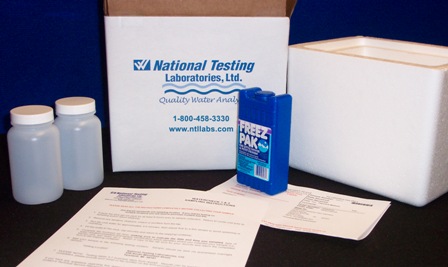
Speaking of tests, can the average person test for chromium in drinking water? Of course they can — but as always the best testing solution comes in the form of analysis by a certified water testing laboratory.

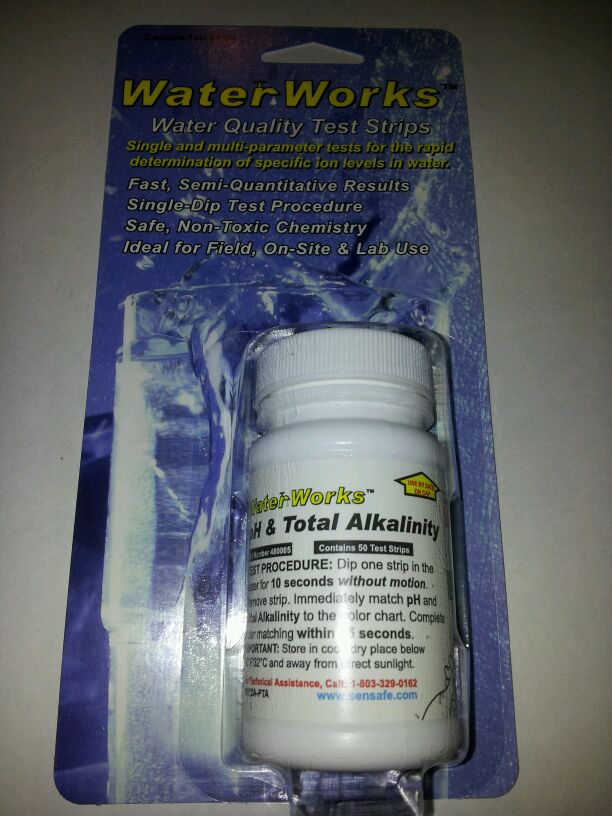
If, however, you would like a fast and easy method to test for the presence of chromium in water, you will definitely want to take a look at the chromium test strips produced by SenSafe/WaterWorks. They make field testing for hexavalent chromium in water a simple and inexpensive process.

Aug
3

Is Demineralized Water Bad for Me?

Water Testing BlogArsenic, Chromium, Copper, Iron, Lead, manganese, Metals, Personal Water Filter, Reverse Osmosis

With so many people in the world out to make a dollar — usually at the expensive of others — it comes as no surprise that a number of companies have tried to find fault with reverse osmosis systems… because they do such a good job of removing contaminants from drinking water.

Pentek RO-3500 Reverse Osmosis Water Filter
Pentek RO-3500
Reverse Osmosis Water Filter
Certified by NSF/ANSI to Standard 58

Apparently some folks believe that water lacking ANY minerals will somehow cause problems for people who consume it as drinking water, cook with it, bathe in it, etc. While somewhat true that water produced by reverse osmosis may have ‘aggressive’ tendencies in certain plumbing situations, we have found that the largest ‘problem’ people have with demineralized reverse osmosis water… is its flat, boring taste and not its lack of minerals.

Water’s ‘taste’ comes from its dissolved minerals content so it stands to reason that without any minerals would also have no ‘taste’ — a problem easily remedied by the use of a remineralizing cartridge after the reverse osmosis system.

Don’t we need minerals in our water for health?

To this day we have not personally found any solid evidence to support the notion that an appreciable amount of necessary dietary elements gets absorbed by the body from drinking water — unless, of course, the water got used to wash down a vitamin or supplement. :P

Test for Metals in Drinking Water
Test for Metals
in Drinking Water

Humans obtain the bulk of nutrients required for healthy living from the foods they eat… EXCEPT when they eat mostly (and too much) fried stuff like this.

Moral of the Story?

Eat healthy and drink clean water… and don’t buy into every ‘health trend’ and health fad’ that flashes on your television screen or in banner ads that pop up on web sites you visit.

The water we drink needs to have unwanted impurities removed. End of story.

If given a choice, we’ll take flat-tasting water over water containing potentially dangerous and/or bothersome levels of dissolved heavy metals (i.e. lead, copper, iron, manganese, chromium, arsenic, etc.) and other junk any day of the week!

May
27

Whole Season’s Worth of Pool Chemicals

Water Testing BlogChlorine, Metals, pH, Pool Water, Test Strip, Water Quality Testing

Given how BUSY most people get during the rest of the year, why would Summer offer them a break in their hectic routine? Therefore it definitely didn’t shock us one bit when ‘Mary12Adam’ wrote in and asked,

“My husnband and I both work 2 jobs and take turns shuffling the kids around to all their school, soccer, band and scout stuff. We don’t have time to run back and forth to the pool store every week for more pool chemicals. Do you know a chemical kit that will last us most if not all summer long?”

We certainly empathize with your situation, Mary, since we have kids, too, and have to create time to do ANYthing other than work, housework and drive them hither and yon.

We typically stock up on chemicals from our local pool supply store early in the season and don’t have to make a trip back until at least 3/4 of the way through the season, though sometimes a bit sooner if we get a lot of rain or have 2 or 20 more social gatherings at the homestead.

Since it sounds like you clearly don’t have a lot of time on your hands, Mary, for going to the pool store even ONCE, we suggest that you look into a pool chemical package like the Chemical Season Supply Kit (Large) from Amerimerc.Com, a leading online retailer of pool chemicals, pool test kits, pool supplies, and, of course, pool toys.

Pool Chemicals Large Package

What does the kit contain? So glad you asked!

  • 50 lb.3in Tablets — Great for day-to-day chlorinating
  • 1 qt. Poly 60 Algaecide — A necessary tool for fending off unwanted algae
  • 1 qt. Conquest Super Rust & Scale — Keep pesky metal stains out of your water
  • 24 x 1 lb. bag Dura Shock — Excellent for shocking & superchlorinating
  • 4 lb. pH Increaser — Effective way to elevate the pH of your pool water
  • 6 lb. pH Reducer — Effective way to decrease the pH of your pool water
  • Aqua Chek Chlorine 3-Way Test Strips — Fastest way to test your pool for vital parameters

Looking for other chemicals and supplies for your swimming pool and want them delivered right to your door? Check out the latest offerings on Amerimerc.Com!

Apr
20

Water Quality in Minnesota (Metals & Fluoride, Too)

Water Testing BlogFluoride, Home Water Testing, Metals, Water Quality Testing, Water Test Kit, Water Testing

Every once in a while we get inquiries about the water quality in specific areas or regions of the country. While we wish we could answer every one of those questions in great detail, we just cannot do so — but links off of the EPA’s Safe Water Web Site probably can.

Water Metals Test Kit

Today’s question comes from Sandy and she asked, “I live in Minnesota. Looking for information as to what’s in our public water supply. Can you recommend a good brand of home test kits for fluoride or other heavy metals?”

We took a quick look at the EPA’s Safe Water Web Site and found that it contained a feature called Safe Drinking Water Search for the State of Minnesota.

On that page you can search for Safe Drinking Water data in the SDWIS database in Envirofacts. You can choose from four possible search options: water system name, county name, population served, and/or system status.

You can access the State of Minnesota’s Drinking Water Program on this page and you will find that organization’s contact information listed below:

Drinking Water Protection Section
Dept. of Health
625 Robert Street North
P.O. Box 64975
St. Paul, MN 55164-0975
Phone: 651-201-4700

Home test kit for metals and fluoride?

A company called Test Country offers a relatively simple test kit for metals and fluoride. Granted you will have to send in the sample to a laboratory for analysis, but not too many other ways exist for homeowners to test for potential drinking water contaminants such as antimony, barium, beryllium, uranium, selenium, fluoride, arsenic, thallium, nickel, copper, iron, manganese, aluminum, zinc, chromium, mercury and lead.

Oh, and the kit also tests the acidity level (pH) of the water sample as well as for any fluoride that may or may not be present in the sample.

Who will perform the water testing?

Glad you asked! These days one has to use caution when selecting a testing service because some ‘water professionals’ lack the official training and credentials to call themselves professionals.

NOT the case with Test Country since they use the services of a CLIA Accredited Laboratory (CLIA ID: 14D0646470, Medical Care Provider No: 148453) that claims to performed millions of comprehensive drinking water tests since 1972.

What if I don’t know how to read the report?

Don’t worry. The Test Country Lab Report won’t blind you with confusing charts, figures and things best left for scientists. Take a look at this sample water test report and see for yourself!

Feb
13

Should I Test for Iron in Pool Fill Water?

Water Testing BlogChlorine, Copper, Iron, Metals, Pool Water, Water Quality Testing

Although MOST of us still have snow on the ground and/or ridiculously cold temperatures outside our windows, some other folks have started to experience weather warm enough to make them start thinking about… testing their pool water.


Taylor Technologies Iron Test Kit
0-2.0 ppm Pool Iron Test
click for more info

‘TommyT’ wrote in and asked, “Due to a bad cover and probably a hole in my liner we will need to add a lot of fill water this Spring. We have a well and know we will need to shock real well come Spring, but will we need to test for things like iron or is that all a bunch of hype about iron and metals ruining pools?”

Definitely NOT a bunch of hype, Tommy. We highly suggest that anyone needing to add water to their pool from a well, or ANY source for that matter, perform a number of tests on the water BEFORE adding chlorine, bromine, etc. If present in the water, minerals like iron and copper will immediately get oxidized by sanitizers ‘drop out of solution’. When that happens, they land on pool fittings, liners, steps/stairs, etc. and could leave permanent stains!

Yeah, sure, we would still suggest adding products like Sea Klear Metal Klear or Jack’s Magic Pink Stuff even after testing, but the testing will let you know if you need a lot of those products or just a normal maintenance dose.

Trust us when we say that the time and money spent testing the water before shocking does not compare to the amount of time and money wasted when people have to clean up stains caused by metals in their pool water!


Aquachek Copper Test Strips


Aquachek Iron Test Strips


Aquachek Silver: 7-in-1

Jan
26

Test Kit for Antimony?

Water Testing BlogHome Water Test Kits, Home Water Testing, Metals, Reverse Osmosis, Testing Devices, Water Quality Testing, Water Test Kit, Water Testing

Recently we received a request for information on a test kit that we had never considered looking for — until now. So naturally, we just HAD to go and see if we could find the test kit.

“Dear Alll, I’m looking for a kit for antimony determination in drinking water to comply with the Italian Standards of 5 microgram/L. Best Regards, Andrea V.”

Wow. Antimony? We told you no one ever asked about a test kit for it before… so as just said, after receiving that inquiry we needed to spend some time doing research before we could answer their question.

The only test kit we located required a person to take a sample and send it off to a laboratory for analysis. See Premium Drinking Water Test Kit on TestCountry.Com for additional information on the only test kit for antimony that we could find… unless you wanted to start your own analytical chemistry lab!

The Premium Drinking Water Test Kit tests for 19 drinking water parameters: Antimony, Arsenic, Beryllium, Copper, Lead, Thallium, Uranium, Barium, Cadmium, Chromium, Mercury, Nickel, Selenium, Aluminum, Iron, Manganese, Zinc, Fluoride, and pH levels.

Where does antimony come from?

From what we read, antimony occurs naturally in the environment as ore deposits in the ground which ground water can erode and pick up as passes over, around or through the deposits.

Industry mines and refines antimony into compounds such as antimony trioxide, a compound commonly used as a flame retardant. Other uses of antimony include batteries, coloring agents (pigments) and in the manufacturing of ceramics and glass.

What harm can antimony cause?

Prolonged exposure to drinking water containing excessive amounts antimony over a number of years may result in elevated blood cholesterol levels and abnormally low blood sugar counts.

Maximum Contaminant Level (MCL) for antimony in drinking water?

Earlier in this posting Andrea mentioned that the Italian Standard allows for a maximum of 5 micrograms/liter. The United States EPA has set the Maximum Contaminant Level for antimony in drinking water at 6 parts per billion, or 6 micrograms per liter.

Why the stricter guidelines in Europe? Not sure, but we suspect that the US will follow suit in due time. That, and we think the US will place greater restrictions on the use and disposal of antimony by industry, too.

Lead in Water Test Kit

Filters Fast: Manganese in Water Test Kit
Manganese in Water Test Kit

Filters Fast: Metals in Water Test Kit
Metals in Water Test Kit

How can a person remove antimony if found in their water supply? According to what we read, one method involves coagulating the metal with a sequestering compound and then filtering out the resultant precipitate.


Pentek RO-3500
Reverse Osmosis System

A method that sounds a whole lot simpler involves using a reverse osmosis filtration system such as the Pentek RO-3500 which, conveniently, has also certified to NSF/ANSI Standard 58 for the reduction of Pentavalent Arsenic, Barium, Cadmium, Copper, Hexavalent & Trivalent Chromium, Cyst, Fluoride, Lead, Nitrate/Nitrite, Radium 226/228, Selenium, TDS and Turbidity.

You can find other reverse osmosis water treatment units on the WaterFilters.Net and FiltersFast.Com web sites.

Jan
13

More Wells Drilled Near Tampa Sinkhole

Water Testing BlogBacteria, Ground Water, Home Water Testing, Metals, Water Quality Testing, Water Testing, Well Water

A recent article ( Hillsborough drilling wells to monitor water quality near sinkhole ) from the Tampa Bay area talked about increased monitoring efforts at a landfill taking place because an unexpected sinkhole made an appearance in the landfill.

Well Water Test Kit
Well Water Test Kit
Good for Multiple Water Sources
or Repeat Testing on Same Source

Officials already had testing wells in place around the landfill, per standard operating procedures, to monitor the quality of groundwater under and the landfill and around its clay containment ‘walls’, but they feared the sinkhole and possibly other, yet undetected abnormalities under or near the landfill may have caused damage to the clay containment ‘walls’ and provided an avenue of escape for potential drinking water contaminants.

By testing the water immediately around the landfill officials hope they will learn far enough in advance of a problem that they will have time to react before contaminated groundwater reaches access water wells servicing surrounding communities.

We always like to hear about efforts to protect community water supplies — especially when they happen before a Court of Law steps in!

What could local residents test for?

WaterFilters.Net: National Testing Labs 97 Parameter Test Kit
National Testing Labs
Certified Water Testing Lab

Honestly, without knowing what kind of landfill the article talked about, we cannot say. We would suspect, though, that occasional TDS, bacteria, pH, and heavy metals testing would work well as a starting point since unusual results of each/any of those tests could indicate a more serious well water pollution problem.

As always, and as we will continue to say until we turn blue in the face, nothing — and we do mean nothing at all — takes the place of water testing performed by a certified drinking water testing laboratory.

If for any reason an at-home drinking water test kit gives reason to suspect contamination, we suggest seeking advice from a qualified water testing laboratory.

Jan
12

Meter to Test Chromium in Water

Water Testing BlogChromium, Home Water Testing, Metals, Testing Devices, Water Quality Testing, Water Test Kit, Water Test Meters, Water Testing

Naturally, with all the discussion about an environmental group finding chromium in municipal water supplies across the United States, someone asked if we knew of a meter that could test for chromium… and not cost a thousand dollars.

eXact Micro 7+ Water Test Kit
Has Ability to Test for Chromium (VI)
w/ Inexpensive Add-On ReagentStrips

No, really. Someone asked us that.

A reader named ‘WetterBetterH2O’ from Iowa asked…

“Do you have a way to test for chromium besides test strips? I don’t like test strips. I want a meter that doesn’t cost a thousand dollars though. Do they make one like that?”

Tell the truth, we’d bet that other people share your dislike, or distrust, of test strips. Although very different from when they first came out, test strips will always get looked at as the ‘least preferred’ testing method due to a few bad brands back in the day.

Having said that, we would now like to direct your attention to the eXact Micro 7+ Water Testing Meter, a multi-parameter water testing meter capable of testing for chromium (VI), also called hexavalent chromium, levels between 0.02 and 4.89 parts per million.

In addition to the affordable cost of the very useful eXact Micro 7+ Meter, which typically costs under $260 for the basic kit, you will need to pick up a bottle of ReagentStrips for Chromium Testing for use with the meter.

Don’t worry, though, because a bottle of 50 Chromium ReagentStrips costs less than $20 — less than $0.40 per test.

Jan
5

Specifics From EWG’s Report on Chromium in Drinking Water

Water Testing BlogChromium, Home Water Testing, Metals, Municipal Water Test, Water Quality Testing, Water Testing

It still shocks us that a heavy metal such as chromium could wind up in the public water supply… and no one (meaning the EPA) has seen fit to prompt municipal water treatment plants to step up testing and/or take steps to reduce chromium levels when detected.

We think that will change now that the Environmental Working Group (EWG) has released the findings of recent tests performed on municipal water supplies around the United States.

The Environmental Working Group (EWG) released a report today stating that at least 31 U.S. cities have tap water that is contaminated with a dangerous chemical known as chromium-6.

According to the Environmental Working Group, chromium-6 is technically deemed cancerous if inhaled. However, the EWG are investigating the extent to which chromium-6 is cancerous when ingested. Water supplies are usually contaminated with chromium-6 by eroding steel and metal plating facilities.

Rebecca Sutton, a senior scientist with EWG and lead author of the study, explained to CNN that there are a significant amount of documented studies showing a positive correlation between contact with chromium-6 and an increased risk of stomach cancer in humans.

As stated in EWG’s report, “Studies in both animals and people show that exposure to [chromium-6] via drinking water leads to elevated chromium levels in tissues, particularly the gastrointestinal tract, blood, liver, kidneys and spleen, and in increased toxicity.”

Opting for bottled water isn’t necessarily a safer choice either because it isn’t guaranteed that there aren’t traces of chromium-6 in it. “There is no legal limit for [chromium-6] in bottled water either, so consumers cannot assume it is free of the contaminant,” stated in the report.

Sutton recommends investing in a quality water filter to protect yourself.

The cities with the highest level of chromium-6 in their tap water are Norman, Oklahoma; Honolulu, Hawaii; and Riverside, California. ( source )

We often get email from ‘unhappy’ readers who claim we exaggerate points and repeat ourselves ourselves ourselves. Oh, well we prefer to think of it as stressing important points and emphasizing them by means of repeated exposure because sometimes a message just doesn’t get fully understood the first time a person hears it.

Chromium (Chromate) in Water Test Strips
ITS Part Number: 480047
Chromium in Water Test Kit

As an example, no matter how many times we tell people they have ultimate responsibility for the quality of their drinking water, a good number of people STILL think some agency in the government goes around testing tap water at private citizens’ homes as a courtesy and warns citizens when their water contains unwanted contaminants that entered the water supply after it left a water treatment facility.

Let us say again that no such branch or division of State, Local or Federal Government exists!

On occasion a water department worker MAY test the water coming out of fire hydrants in your neighborhood but they will not knock on your door and ask if you’d like a free municipal water test. If you want to know what the water at YOUR house or place of business contains, YOU will have to test it or have it tested.

OK, well how do I test for chromium in tap water?

Easiest method for chromium testing: Chromium test strips manufactured by SenSafe detect Chromium (VI) levels down to 0.1 ppm (mg/L).

Jan
3

Chromium in Drinking Water Information

Water Testing BlogArsenic, Chromium, Copper, Environmental, Fluoride, Lead, Metals, Municipal Water Test, Nitrate, Nitrite, Reverse Osmosis, TDS, Water Testing

With all of the recent publicity that chromium has gotten as a result of EWG Reports Finding Chromium in Municipal Water Systems, we figured some of you might want to know a bit more about the health effects of chromium, where chromium comes from, how to test for chromium in drinking water, and most importantly… how to get rid of chromium if detected in one’s drinking water.

  • Chromium will appear in nature in one of three forms: Chromium(0), Chromium(III) or Chromium(VI).

  • Chromium(0) gets used in the production of steel.

  • Chromium(III) and/or Chromium(VI) may appear in compounds used for chrome plating, making dyes and pigments, tanning leather, and preserving wood.

  • Chromium(III) aids the human body in its use of sugar, protein and fat, though health officials suggest not using excessive amounts of dietary supplements containing chromium compounds.

  • Higher levels of chromium(VI) may cause irritation to the lining of the nose, ulcers in the nose, runny nose, and other breathing problems such as asthma, coughing, shortness of breath, and/or wheezing. While both Chromium(III) and Chromium(VI) in air can cause the aforementioned problems, effects occur at much lower concentrations of Chromium(VI) than Chromium(III).

  • Chromium(III) and Chromium(VI) may exist in drinking water and have no associated tastes or odors.

  • If ingested, Chromium(III) compounds tend to have less toxic tendencies and appear to cause fewer health problems than Chromium(VI) which causes anemia, irritation of the stomach, ulcers in the stomach, and ulcers in the small intestine.

  • Some laboratory animals exposed to Chromium(VI) experienced sperm damage and damage to the male reproductive system.

  • Some Chromium(VI) compounds may cause skin ulcers and a percentage of the population have extreme sensitivity to Chromium(VI) and/or Chromium(III) with allergic reactions manifesting themselves as severe redness and swelling of the skin.

  • The Department of Health and Human Services (DHHS), the International Agency for Research on Cancer (IARC), and the EPA have determined that Chromium(VI) compounds are known human carcinogens. ( source )

  • Some developmental effects have been observed in animals exposed to Chromium(VI). ( source )

Regulations, rules and recommendations pertaining to Chromium?

The EPA has determined that exposure to chromium in drinking water at concentrations of 1 mg/L for up to 10 days is not expected to cause any adverse effects in a child. The FDA has determined that the chromium concentration in bottled drinking water should not exceed 1 mg/L. The Occupational Health and Safety Administration (OSHA) has limited workers’ exposure to an average of 0.0005 mg/m3 chromium(VI), 0.5 mg/m3 chromium(III), and 1.0 mg/m3 chromium(0) for an 8-hour workday, 40-hour workweek. ( source )

What NSF/ANSI Standards apply to chromium in drinking water?

Standard 53, Standard 58, and Standard 62.

For more information on the specifics of those NSF/ANSI Standards and others, take a look at the NSF International Web Site. It offers a wealth of information for both the consumer AND water professionals alike.

Pentek, Ametek, US Filter -- RO-3500 Reverse Osmosis Water Filter
RO-3500 Reverse Osmosis Water Filter
NSF/ANSI Standard 58 Certified

Removing chromium from drinking water?

As far as units for the average consumer, pretty much only reverse osmosis makes any sense. One could use a process like distillation, but it has a flow rate that most likely would not meet homeowner needs and a much higher entry cost.

As an example of a reverse osmosis that carries NSF Certification for chromium reduction, you may want to take a look at the Pentek RO-3500 which has a price tag of under $270 and appears to offer a lot of filtering power for the money.

Pentek RO-3500 Reverse Osmosis Water Filters have tested and certified to NSF/ANSI Standard 58 for the reduction of Pentavalent Arsenic (Arsenic V), Barium, Cadmium, Copper, Hexavalent & Trivalent Chromium (Chromium VI & Chromium III), Cyst, Fluoride, Lead, Nitrate/Nitrite, Radium 226/228, Selenium, TDS and Turbidity.