About
Do you know what's in YOUR water? Learn about water quality, water quality testing, and water quality testing products that can help you make informed, educated decisions regarding the water treatment options for your home, office, swimming pool... and life.
Contact Us
Got a question about water quality? Want to share a water quality article or water quality article with others?

Visit our Contact Us Page to ask a water quality question or submit water quality information.

RSS Feed
Get the most recent water quality posts and comments by subscribing to the Water Testing Blog RSS Feeds.
Subscribe to RSS! Subscribe to RSS Comments!

Archive for the ‘Chlorine’ Category

Jul
25

Free Chlorine Levels in Irrigation Water

Water Testing BlogChlorine, Chlorine Testing, Free Chlorine, Total Chlorine, Water Quality Testing, Water Test Kit, Water Testing

Today’s question comes from ‘Mohamed’ who asked, “How much should be the free chlorine in the irrigation water? We are treating sewage water and sending it to farm lands. What is the international standard of the irrigation water in respect to free chlorine?”

WaterWorks 2 Free & Total Chlorine Test Kit

We do not know of an International Standard for free chlorine levels in irrigation water but we do know that most States in the US require wastewater treatment plants to neutralize TOTAL chlorine levels before discharging water into the environment and that wastewater treatment facilities must test for total chlorine residuals in their effluent streams on a regular basis to make sure the chlorine concentrations stay virtually non-existent.

Why worry about chlorine in the environment?

If allowed to enter the environment chlorine can and will effectively kill or damage biological organisms that it comes in contact with. In great enough concentrations chlorine will wipe out all plant life in a body of water as well as any animals or fish in the water.

We use chlorine to render safe (i.e. KILL) biological contaminants in our drinking water and if released into a natural habitat the chlorine will render safe (i.e. KILL) any and all plant an animal life until it loses its effectiveness.

Testing for free & total chlorine?

Whether you prefer test strips, wet chemistry kits or a water testing meter… you have plenty of choices when it comes to testing for both free and total chlorine levels in drinking and treated waste water.

Filter Water: eXact Chlorine Photometer
eXact Chlorine Photometer

Filter Water: EPA Approved Free Chlorine Test Strip
EPA Approved Free Chlorine Test

Pool Center: Taylor Fas - Dpd Titration
Taylor Fas – Dpd Titration

Jul
22

Filter to Remove Chloramines

Water Testing BlogChloramines, Chlorine, Chlorine Testing, Combined Chlorine, Free Chlorine, Personal Water Filter, replacement water filter, Sanitizer, Total Chlorine, Water Filter

Do not let a clever sales pitch or catchy marketing jingle fool you. Many common drinking water filter systems do NOTHING to remove or reduce chloramines in water. They simply lack the technology in their filtration media to do so.

Chloramine Removal Filter

We mentioned this filter (the Pentek ChlorPlus) in the past and now feel the need to mention it again since we continue to receive inquiries from people asking why their water filters fail to remove all of the chlorine smell from their water.

The majority of water filters readily available in the marketplace do NOT remove chloramines, also known as combined chlorine. Most carbon filters remove free chlorine only. It takes a specialized type of filter like the Pentek ChlorPlus to cleanse water of unwanted chloramines.

Does my water contain chloramines?

Whether your municipal water system uses free chlorine or chloramines as its primary sanitizing agent we cannot say, but in either case your water will certainly contain chloramines. Unsure why? Take a look at this brief tutorial on free chlorine, total chlorine and combined chlorine.

That’s just a cartridge… What sort of housing does it go in?

A very keen observation followed by a very good question! The Pentek ChlorPlus filter for chloramine removal fits in most standard sized 10″ (by 2.5″) filter housings including, but not limited to, models manufactured by companies like Pentek, Ametek, US Filter, Bruner, American Plumber, Cuno, Filterite, Keystone, Water Resources and most Harmsco filter housings.

As always before purchasing a replacement cartridge for your water filter system, check, double check and TRIPLE check to make sure your housing will accommodate the filter cartridge you wish to buy!

Jul
12

Opening a Pool Later in the Season

Water Testing BlogChlorine, Pool Water

Not everyone has the opportunity or ability to open their swimming pools right when Summer starts to peek around the corner. Travel plans, work, attending school graduation functions, weddings and a host of other events can quickly fill up a family’s free time… and make opening the pool a waste of time — until it gets REALLY hot out and all those other activities come to a screeching halt!

The questions quickly becomes, “Does opening a pool later in the Summer mean adding different pool chemicals?”

In most cases, no, with the exception of chlorine or your primary sanitizer. Warmer water temperatures may have ‘driven off’ winterizing chemicals and allowed the water to turn some shade of nasty. You may find that you need an extra amount of your sanitizing system’s shock treatment to get your water back to a pristine, clean and clear state.

If you normally require pH, alkalinity and calcium hardness balancing chemicals when you open earlier, you will most likely still need them now. Proper use of algaecides and metal removing chemicals goes with out saying… right?!?


Didn’t see what you needed? Take a look at the pool chemicals section of the Pool Center Web Site for additional pool opening and pool maintenance chemicals.

Jul
2

Chlorine Taste in Refrigerator Water

Water Testing BlogChlorine, Personal Water Filter, Water Filter

For the sake of argument we will assume you have installed some sort of filter on your kitchen sink… and it works perfectly fine for the times when you want water that contains no chlorine taste or smell in cooking water. But what if you want a glass of ice cold water straight from that fancy water dispenser on the front of your refrigerator? What then?

Easy Install Refrigerator Filter

Do they make filters for the water passing through refrigerators? As a matter of fact, yes, they do.

Specifically, we know that a company called Crystal Quest makes an inline refrigerator filter that uses 4 stages of filtration including “post 5-micron filtration for bacteria, rust and sediment removal”, “KDF filtration for 99%+ chlorine removal”, and granulated activated carbon filtration for the removal/reduction of a wide range of organic contaminants, chemicals, pesticides, VOCs (volatile organic chemicals), bad taste, and odor.

Conveniently hooking up to pretty much any standard refrigerator water line, the Crystal Quest Refrigerator Filter makes an excellent addition to any household that wants to have clean tasting water dispensed from its refrigerator cold water tap.

As an added bonus, since this filter hooks in on the intake for the whole refrigerator, ice makers also will produce water using filtered water… meaning ice cubes should taste better, too!

Interested in improving the taste of water going into coffee makers, water coolers and/or drinking fountains? This in-line refrigerator water filter can also can be used on water fountains, water coolers and coffee makers.

How long will this filter last? A very good question! With normal water (i.e. typical municipal water) Crystal Quest says the unit will last for up to 6,00 gallons.

Jul
1

Chlorine Testing Meter for Swimming Pool?

Water Testing BlogChlorine, Chlorine Testing, DPD, DPD Tablets, Free Chlorine, Pool Water, Testing Devices, Total Chlorine, Water Quality Testing, Water Test Meters, Water Testing

As we expected, the number of questions we received recently about swimming pool water has definitely increased. Today’s inquiry comes from a Water Testing Blog reader who hails from Pakistan and he/she asked:

Dear Sir/Madam,
hope you will be fine.i need some information regarding digital chlorine tester for swimming pool water .i read about extech cl200 testing metre.kindly send me the literature and price for it .
thanks
an early response is appreciable
farhan

Now before any of you go and criticize this person’s grammatical skills when typing in English, think more about the person’s commitment to keeping a proper chlorine level in swimming pool and the time it took to submit a question to this site.

ExTech CL200
ExTech CL200 Total Chlorine
Testing Meter for Water

ExTech CL203 ExStik Total Chlorine Test Reagent Tablets
ExTech CL203 Total Chlorine
Test Reagent Tablets

WE commend ‘Farhan’ for his/her efforts and for transcending the language barrier to ask a question about proper chlorine testing in pool water.

On the topic of the “Extech 1200C” for chlorine testing in pool water, we took a look at the ExTech web site and did not find a meter in the chlorine/fluoride in water detection called the ‘Extech 1200C’… so we found ourselves a bit puzzled by your question.

We DID, however, see the ExTech CL200 Chlorine Testing Meter which uses Extech (CL203) Exstik ExTabâ„¢ Chlorine Reagent Tablets, a undoubtedly a proprietary blend of DPD-1 & DPD-3 reagents, to test for ONLY total chlorine concentrations in water.

The obvious problem we see with this meter for pool water testing, despite its USEPA credentials for total chlorine testing (in waste water), deal with the meter’s INability to test for free chlorine concentrations in water.

Proper Pool Water Testing Requires Free AND Total Chlorine Testing!

That heading said it all. Proper pool water care requires both free AND total chlorine testing.

Why? Quite simply, it does little good for the sanitation of a pool to have an in-range total chlorine reading with a very low, or non-existent, free chlorine reading. When that happens the pool contains mostly, if not entirely, chloramines (aka: combined/used chlorine molecules) which possess very little (limited) oxidizing power… and limited oxidizing power means limited sanitizing capabilities.

Improperly sanitized pool water can EASILY become a home in which various bacteria, parasites and viral ‘issues’ which will flourish, breed and infect swimmers if left unchecked.

Repeated Moral of the Story

Invest in a meter that test for both total chlorine concentrations AND free chlorine concentrations.

We suggest using a meter like the eXact Micro 7+ Pool & Spa Meter because it tests for not only free AND total chlorine, but also for Total Alkalinity, Bromine, Calcium Hardness, Copper, Ozone, Permanganate, and pH… all with the same meter!

Earlier we talked about the Extech’s USEPA credentials so naturally we figure you want to know if the eXact Micro 7+ Meter has credentials, too — and it does! When used with DPD chemistry (and the appropriate procedures, of course) the meter qualifies as an EPA Compliant device for testing free an total chlorine in drinking water.

“But Wait! There’s More!” Screamed the Announcer

As an added bonus, the eXact Micro 7+ Pool Meter also has the ability to test for Ammonia, Chloride/Salt, Chlorine Dioxide, Chromium Hexavalent, Cyanuric Acid, Iodine, Iron, Low Range Total Hardness, Manganese, Nitrate, Nitrite, Acid pH, Alkali pH, Potassium, Sulfate, Sulfide, and Turbidity — when operated in ‘% Transmission’ mode with the appropriate eXact Micro 7+ Reagent Strips.

Filter Water: eXact Micro 7+ Pool Testing Meter
eXact Micro 7+ Pool Testing Meter

Filter Water: eXact Micro 7+ ReagentStrips
eXact Micro 7+ ReagentStrips

Jun
30

Question: Do I Need to Add Stain Control Chemicals?

Water Testing BlogChlorine, Pool Water

A common mistake made by new and veteran pool owners alike: Assuming their tap or well water contains no dissolved metals. This mistake often results in the formation of ugly, hard to remove metal stains on pool water surfaces once chlorine shock gets added to the water.

Pool Stain Identification Kit
Find Out What Caused the Stain
With Jack’s Magic Pool Stain Identification Kit

What happened?

Simply put, the metals ‘hooked up’ with chlorine molecules to form insoluble precipitates (solids) that dropped out of solution, landed on surfaces and took up permanent residency.

On an unrelated note, we never thought we’d get to use the term ‘hooked up’ to describe a chemical reaction, but alas, we most certainly just did. One point for us!

Getting rid of pool stains?

Definitely NOT a fun task! Often times getting rid of stains will require multiple applications of pool stain removal chemicals and a LOT of elbow grease. Therefore we suggest NOT getting pool stains in the first place and pool owners have several ways to prevent pool stains at their disposal.

Preventing pool stains caused by metals?

Step number one involves testing source water for dissolved metals with a product such as Water Metals Check. One COULD use a more sophisticated method such as a ‘wet kit’ from Taylor, but those kits require a bit more skill and certainly cost more money.

The Blue Stuff
The Blue Stuff
is Pool Stain Prevention

Don’t get us wrong, though. Taylor Test Kits have a definite place in the world of metals testing. If the Water Metals Check test strips indicate the presence of dissolved metals, some of the Taylor Test Kits will help determine which metal your source water contains.

Step number two involves adding a ‘sequestering compound‘ to your pool water BEFORE adding the initial dose of chlorine shock. The sequestering agent will, in the proper dosage, bind with all dissolved metals in the water and render them incapable of forming precipitates (insoluble solids) with chlorine molecules.

Oh no! I’ve already got stains! Now what?

You, my friend, FIRST need to figure out what insidious metal has invaded your precious pool water using a kit such as the Jack’s Magic Pool Stain ID Kit. Otherwise you may find yourself doing a whole lot more scrubbing than needed and buying far more Pool Stain Treatment Products than needed.

Once you’ve pinpointed the offending metal, select the correct treatment option. Jack’s Magic, an industry leader in the field of preventing and eliminating pool stains makes specialized products designed to remove stains in pools caused by pretty much any metal commonly found in water used to fill swimming pools.

And after the stains are gone?

After you’ve wiped out ugly pool stain caused by the intrusion of dissolved metals, you have NOT finished the job! Now you must figure out how metals got in your pool and eliminate those sources. Next, we suggest the use of something like Jack’s Magic Blue Stuff to help prevent future staining.

Jun
15

Quick Information About Bromine

Water Testing BlogBromine, Chlorine, Pool Water

While the majority of pool owners use some form chlorine to keep their pool water clean and sanitized, a good number of people use bromine tablets or bromine powder in place of chlorine.

As a general rule bromine offers more disinfecting power than chlorine because even its combined/used form (bromamine) still has the power to help keep water safe and clean. Additionally, by shocking once a week w/ an extra dose of bromine pool and spa owners effectively ‘free’ bromine molecules up to return to their assigned task of oxidizing biological contaminants.

Do bromine pools require stabilizer?

Despite bromine’s superior stability in water compared to chlorine, pool experts suggest maintaining a cyanuric acid level between 30 and 60 part per million. Note: As with chlorine, excessively high stabilizer levels can restrict bromine’s ability to do its job effectively.

What form does bromine come in?

Bromine usually comes packaged in tablet or granular form. Most people use tablets in a floater or feeder of some sort for everyday purposes and granular bromine for weekly shock treatments. One may also use granular bromine as a means of establishing a bromine level in fresh water so that it will begin to draw off of bromine tablets in a feeder or floater.

Who sells bromine?

Pretty much EVERY pool and spa store carries bromine in one form or the other, thought usually most will not carry bromine powder in large containers.

As far as online retailers go, we know that In the Swim carries different sizes of bromine tablet pails ranging from 3.5 pounds all the way up to 500 pounds.

In the Swim’s “Americas Strongest Bromine”…

A question you may have at this point: “How do I test for bromine?”

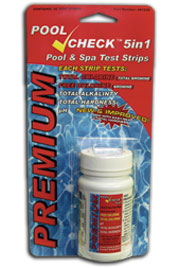
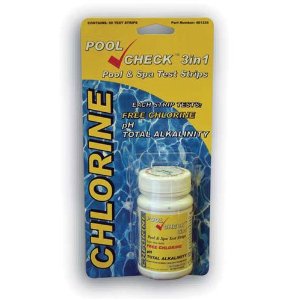
As usual the easiest method involves the use of test strips manufactured by companies like Aquachek or Pool Check. Test strips offer fast, reliable test results without the need for complicated testing procedures or messy powders and liquids.

Amerimerc: Chlorine/Bromine Test Strips
Pool Check Chlorine/Bromine Test Strips

In the Swim: Chlorine/Bromine Test Strips
Aquachek Chlorine/Bromine Test Strips

Jun
14

Question: Why is My Lawn Yellow?

Water Testing BlogChlorine, Chlorine Testing, Free Chlorine, Home Water Testing, Total Chlorine, Water Quality Testing

Today’s question comes from a woman in Illinois named ‘Gretchen246′ who asked a very interesting question… about her lawn.

“Why is my lawn green? A healthy lawn is the sign of a healthy home and my lawn is yellow. Allthe lawns here are yellow and we all fertilize and feed and do all we’resupposed to but the lawns are still yellow. Could it be the water?”

Sad to say, but the little kid in us wants to say, ” Gretchen, your neighborhood needs a leash law to keep wandering dogs from peeing all over your lawns!” Ha ha. Yep. The kid in us has not, yet, grown up all the way… and we hope it never does! :)

On a more serious note, if every lawn in your neighborhood has the same issue (bad grass), then it stands to reason that all of your lawns have at least SOMEthing in common. Typically all yards in a development will share a similar soil type (i.e. composition, pH, etc.), environmental conditions (rainfall, amount of sunlight, etc.) and quality of water used to keep them hydrated.

Since we know very little about soil we will pass on the opportunity to discuss that topic and move in for the kill on a topic we DO know something about: Water. Since you say your lawns stay yellow, a sure sign of a dead or dying lawn, perhaps your lawns don’t particularly care for something in the water?

As our first guess, we cast our vote for chlorine. Most municipal water systems use a form of chlorine to keep biological contaminants from growing in the water and water lines. Once out of the water line, however, chlorine will continue to wage war on biological organism… like the grass in your lawn.

Chlorine in my water?

How do you know if your tap water contains chlorine? Perform a simple test for chlorine using a product such as the WaterWorks 2 Free & Total Chlorine Test Strip. We like this product because it provides reliable test results for both free and total chlorine concentrations in water at the same time and in just a few minutes.

There’s chlorine in my water… Now what?

Well if the chlorine poses a problem (i.e. it kills your grass!) then we heartily suggest removing it from the water you use on your lawn. The products below from Gar’n'Gro should have the ability to help with that task.


Gard’n'Gro Chlorine Removal Filter


Pre-Filter for Gard’n'Gro Filter


Replacement Gard’n'Gro Chlorine Filter


Replacement Gard’n'Gro Pre-Filter

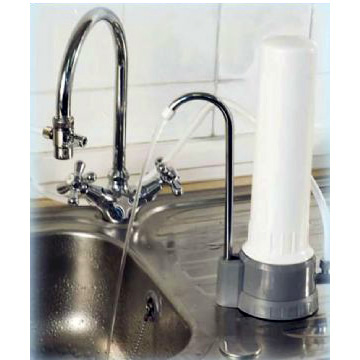
For those interesting removing chlorine from their drinking water, you may want to consider installing a simple, yet effective, faucet filter such as the Crystal Quest W2 in your kitchen.

Jun
13

What Does Cyanuric Acid Do in Pool Water?

Water Testing BlogChlorine, Free Chlorine, Pool Water

Although not often (these days) that we get many questions pertaining to pool water, this one question does tend to get asked at least five or six times a year: “What does cyanuric acid do for pool water?”

Calcium Hypochlorite Powdered Chlorine
Calcium-Based Chlorine Powders & Tablets
Require the Use of Stabilizer Stabilizer

Honestly, cyanuric acid does more for the chlorine in your pool water than it does the pool water itself. As an element in water chlorine LOVES to more or less run wild and leave the water first chance it gets if not controlled (stabilized) by a compound like cyanuric acid.

In the absence of a chlorine stabilizing compound things like sunlight, wind and just plain chlorine’s tendency to ‘off gas’ would make it extremely difficult to maintain a free chlorine residual in pool water. Without a free chlorine residual pool water can easily turn green with algae, become cloudy and most CERTAINLY become a breeding ground for water dwelling bacteria and other pathogens.

Two forms of cyanuric acid?

Back in the day you could only get cyanuric acid as granules that you had to mix in a pail to form a slurry and pour down the skimmer (slowly!) with the pool pump running.

Now, however, you can purchase cyanuric acid as a concentrated liquid… which we can ASSURE you saves a lot of time!

Anyone who has ever had to mix, swirl, pour, mix, swirl, pour, mix, swirl, pour, etc., etc., etc., over and over again for a large pool will know EXACTLY what we mean by that last statement. Pouring too much of the cyanuric acid granules into the skimmer too quickly could result in dangerously high levels of pressure in the filter.

In the Swim: Cyanuric Acid Granules
Cyanuric Acid Granules

In the Swim: Cyanuric Acid Liquid
Cyanuric Acid Pre-Mixed Liquid

Jun
13

Best 3-Inch Tablets for Chlorine Feeders?

Water Testing BlogChlorine, Free Chlorine, Pool Water

We recently got asked for information about the best ‘brand’ of 3-inch chlorine tablets for use in floating chlorinators and chlorine feeder systems and quite honestly we do NOT have an opinion — except that we suggest avoiding using chlorine tablets purchased from large retail chains such as T#rg#t, W#lm#rt, To#s’#'us, K#a#t, etc. if possible.

Will chlorine from those (and other large retail) stores work? Yes, but you will go through more of it faster because it typically has a lower available chlorine content than 3-inch chlorine tablets purchased from pool stores. Why? Last we heard it has something do with the chemical licenses held by large retailers which take into account the ways (and places) in which they store/display chlorine products.

Another thing to consider: Chlorine Stabilizer (cyanuric acid). Most floating chlorinators and chlorine feeder systems do not work properly if you attempt to use non-stabilized chlorine tablets in them. Plus, non-stabilized forms of chlorine tend to volatilize out of the water quickly making it harder to maintain free chlorine residuals in the water.

Also, do NOT use fast/rapid dissolving tablets in chlorine feeder systems. Dangerous situations involving the rapid (no pun intended) formation of dangerous pressure levels in your pool’s plumbing may result!

So… Where can you purchase stabilized 3-inch chlorine tablets that will provide the higher level of available free chlorine? In the Swim carries a quality product that comes in a variety of sizes: