About
Do you know what's in YOUR water? Learn about water quality, water quality testing, and water quality testing products that can help you make informed, educated decisions regarding the water treatment options for your home, office, swimming pool... and life.
Contact Us
Got a question about water quality? Want to share a water quality article or water quality article with others?

Visit our Contact Us Page to ask a water quality question or submit water quality information.

RSS Feed
Get the most recent water quality posts and comments by subscribing to the Water Testing Blog RSS Feeds.
Subscribe to RSS! Subscribe to RSS Comments!

Archive for the ‘Disinfectant’ Category

Oct
13

Swine Flu and Chlorine Testing?

Water Testing BlogBacteria, Child Care Test Strip, Chlorine Testing, Daycare Test Strip, Disinfectant, Free Chlorine, Sanitizer, Water Testing

In so far as we have read, no cases of Swine Flu have resulted from contaminated drinking water… so why the need for an article about Swine Flu on the Water Testing Blog?

Simple: Viruses like influenza can spread when one person sneezes and coughs their nasal discharge and/or saliva (gross!) lands on a surface that other people touch. The germs will then travel to whatever surfaces those people touch… including their own food, eyes, mouth, etc.

Proper use of sanitizing and disinfecting solutions on a regular basis helps to reduce the number of germs hanging out on surfaces and thus reduces the likelihood of people unknowingly picking up germs and accidentally infecting themselves or others with an illness.

Is chlorine bleach an effective sanitizer/disinfectant?

In most cases, yes. Chlorine bleach works quite well as a germ-killing agent on surfaces and as a matter of fact, many states require childcare facilities to use dilute bleach solutions to clean changing table surfaces and other areas where human waste, a known haven for harmful germs and bacteria, may (inadvertantly) come into contact with surfaces.

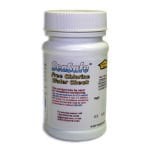
As an example, North Carolina requires childcare workers to wipe down a changing area with a disinfecting bleach solution containing between 500 and 800 parts per million free chlorine after they change each child’s diaper. How do they verify that they have the proper concentration of free chlorine in their disinfecting bleach solution? They test with a product such as the Free Chlorine Water Check Ultra High II test strip.

Perhaps ahead of its time, North Carolina REQUIRES childcare facilities to test the free chlorine levels eachtime thet make new batches of disinfecting solutions (for wiping down bathrooms, changing areas) AND sanitizing solutions (for wiping down tables, chairs, doorknobs, toys, etc.). Making sure each solution contains the proper free chlorine levels before use goes a long way to help prevent the spread of germs, bacteria and illnesses.
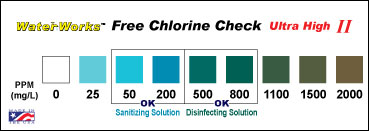
Sanitizing and Disinfecting Solution Test Strips
Sanitizing: 50 – 200ppm Free Chlorine | Disinfecting: 500 – 800ppm Free Chlorine

So what have we learned? Testing the free chlorine levels in cleaning solutions helps to ensure that cleaning efforts accomplish the goal of properly sanitizing and disinfecting surfaces where children and adults can easily pick up germs capable of infecting someone with the common cold, the ‘traditional’ flu, or worse yet, a case of Swine Flu.

Keeping the facilities clean during the flu season is also a consideration, both Shafer and Baeuchle said.

“We regularly sanitize all the toys. After a child has a toy in their mouth, it has to be sanitized,” Shafer said. “We sanitize the tables and chairs on a regular basis in the classrooms.”

Baeuchle said she is asking the school custodians to pay special attention to high frequency areas like water fountains and doorknobs. ( source

Interested in testing the concentration of chlorine bleach sanitizing and disinfecting solutions? You can pick up a Childcare/Daycare Kit which includes (3) bottles of North Carolina Licensed Child Care Association approved test strips, quarter cup and tablespoon measuring devices (for proper on-site metering of the bleach), and a copy of the procedures North Carolina wants child care workers to follow when mixing their sanitizing and disinfection solutions.

north carolina childcare kit

Apr
7

THM’s May Affect Pregnant Women and Their Unborn Children

Water Testing BlogChlorine, Chlorine Testing, City Water Test, Combined Chlorine, DBP, Disinfectant, Disinfection Byproducts, Free Chlorine, HAA5, Haloacetic Acid, Home Water Test Kits, Home Water Testing, Municipal Water Test, THM, Total Chlorine, Trihalomethane, Water Quality Testing, Water Testing

Not many people actually enjoy the taste or smell of chlorinated drinking water, but did you know that recent studies have unofficially linked birth defects to chlorinated drinking water? It seems as though a pregnant woman’s exposure to chlorine byproducts called trihalomethanes (THMs) in drinking water, bath water, etc. may play a part in causing serious health problems for her unborn child:

“Expectant mothers can expose themselves to the higher risk by drinking the water, swimming in chlorinated water, taking a bath or shower, or even by standing close to a boiling kettle, say researchers.

The finding, based on an analysis of nearly 400,000 infants, is the first that links by-products of water chlorination – chemicals known as trihalomethanes, or THMs – to three specific birth defects.

Exposure to high levels of THMs substantially increased the risk of holes in the heart, cleft palate and anencephalus, which results in the absence of a major portion of the brain, skull, and scalp.” ( source )

Most water systems chlorinate the water they provide in an effort to eliminate parasites and bacteria in drinking water which could lead to waterborne ailments and illnesses.

Not sure if your water contains THMs? Maybe the next few statements will help:

  • Public water supplies that use free chlorine as their primary disinfectant (instead of chloramines) may contain THMs. The compounds form when free chlorine molecules lock horns with a biological contaminant during the disinfection process.
  • Public water supplies that use chloramines as their primary disinfectant (instead of free chlorine) typically do not contain THMs. However it should be noted that these water systems do periodically ‘burn’ their water lines with free chlorine in an effort to get rid of any biofilm that has formed and THMs do result from those ‘burn’ sessions.

Still unsure as to whether or not your drinking water may contain THMs? You have three options:

  1. Call your local water authority and ask them if they use free chlorine as the primary disinfectant or chloramines. If so, then your water most likely contains chloramines.
  2. Have your water tested by a certified water testing professional.
  3. Use reliable drinking water test kits for both free chlorine AND total chlorine.
Jun
25

New Information Regarding Tomatoes and Salmonella

Water Testing BlogBacteria, Chlorine, Chlorine Testing, Disinfectant, Food Processing, Free Chlorine, Produce Washing, Sanitizer, Test Strip, Water Quality Testing, Water Test Kit, Water Testing

Tomatoes and salmonella poisoning made the news again and with them came some startling scientific revelations. An article written by Lauran Neergaard (AP Medical Writer) and released/published on June 23, 2008 revealed new information about how tomatoes may possibly trap, carry, and incubate salmonella.

“WASHINGTON – Pick a tomato in the blazing sun and plunge it straight into cold water. If that happened on the way to market, it might be contaminated. Too big of a temperature difference can make a tomato literally suck water inside the fruit through the scar where its stem used to be. If salmonella happens to be lurking on the skin, that’s one way it can penetrate and, if the tomato isn’t eaten right away, have time to multiply.

That doesn’t mean people shouldn’t wash their tomatoes — they should, just probably not in cold water.

But as the Food and Drug Administration investigates the nation’s outbreak of salmonella from tomatoes, the example shows the farm isn’t the only place contamination can occur — and checking things like water quality and temperature control in packing houses and other supply stops is one key to safety.”

This raises the question of what sorts of water quality parameters packing houses should monitor on a regular basis.

Sanitizer and Disinfectant Levels — If the water used to wash, rinse and cleanse the tomatoes contains enough sanitizer, then theoretically no salmonella or other forms of bacterialogical contaminants could survive in the water. No contaminants in the water means no contaminants that a tomato could ‘suck up’ if submerged in cold water.

“Water is an automatic first suspect. Was clean water used to irrigate, mix pesticides sprayed on crops, wash down harvest and processing equipment, and wash field workers’ hands?

Then in packing houses, tomatoes often go straight into a dump tank, flumes of chlorinated water for a first wash. To guard against salmonella washed into the water in turn being sucked into the tomatoes, producers often keep wash-water 10 degrees warmer than the incoming crop, says food-safety scientist Keith Schneider of the University of Florida, also part of FDA’s tomato initiative.

Beyond packing houses, the industry points to cases where suppliers were shipped unwashed, warm tomatoes and dunked them in ice-water baths to firm them for further processing.

Another question: How often does the water have to be changed? Dirt, leaves and other sediment reduce the chlorine’s effectiveness.”

Produce handlers and packing houses could reduce the chances of accidentally passing fresh produce through improperly disinfected wash water by implementing test procedures and protocols which make use of simple, inexpensive chlorine test strips such as SenSafeTM Free Chlorine Water Check, a product approved by the USEPA and by several states for drinking water compliance monitoring.

The manufacturer of this product also has dip-n-read test strips capable of detecting chlorine concentrations as high as 2,000ppm and as low as 0.005ppm.

Jun
10

Leafy Green Marketing Agreement (LGMA) and Water Testing

Water Testing BlogChlorine, Chlorine Testing, Disinfectant, Food Processing, Free Chlorine, Ozone, Peroxide, Produce Washing, Quaternary Ammonia, Sanitizer, Test Strip, Water Quality Testing, Water Test Kit, Water Testing

A while has passed since the last outbreak of a foodborne illness struck and made the news and events like this one have resulted in new policies and regulations for produce handlers, growers, packers, etc. getting created in California. See Leafy Green Marketing Agreement (LGMA) for additional details.

“In 2007 California farmers came together to raise the bar for food safety. As a result the California Leafy Green Products Handler Marketing Agreement (LGMA) was formed. Members of the LGMA are working collaboratively to protect public health by reducing potential sources of contamination in California-grown leafy greens.

To date nearly 120 handlers, representing over 99% of the volume of California leafy greens, have joined the LGMA. These companies have committed themselves to sell products grown in compliance with the food safety practices accepted by the LGMA board. LGMA membership requires verification of compliance with the accepted food safety practices through mandatory government audits. These food safety practices were developed by university and industry scientists, food safety experts and farmers, shippers and processors. California leafy greens are now grown under a unique system that has become a model for leafy green growers in other states.” ( source )

What does any of this have to do with water testing? Quite a bit, actually.

  • All fresh produce gets rinsed several times during processing with water containing some form of disinfectant. At the end of each rinsing stage, the water must used must get tested to make sure it still has a certain amount of residual disinfectant. This helps to ‘guarantee’ the cleanliness of the product.
  • The machinery and equipment (bins, conveyor belts, cutting tools, etc.) used during the processing of the fresh produce must get washed down thoroughly with water containing a certain concentration of sanitizer and then rinsed clean w/ sanitizer-free water until all traces of sanitizer have been removed.
  • Gloves, boots, etc. worn by the staff working in produce packing houses must get sanitized with, and later rinsed clean of, sanitizers.

Commonly used sanitizers and disinfectants in the food preparation/processing industries include chlorine, chlorine dioxide, quaternary ammonia, hydrogen peroxide, and ozone.

Feb
18

Testing for Chlorine in Disinfecting and Sanitizing Solutions

Water Testing BlogChlorine, Daycare Test Strip, Disinfectant, Free Chlorine, Sanitizer, Test Strip, Water Test Kit, Water Testing

As of January 1, 2006, all daycare centers in the State of North Carolina must have the ability to test the chlorine content in both their sanitizing and disinfecting solutions. Previously the law stated that they had to test only the chlorine concentration in their sanitizing solutions.

Child Care Test Strips

Chlorine concentrations in disinfecting solutions have to fall between 500 ppm and 800 ppm free chlorine and the test strips previously used by child care and daycare facilities only had to read free chlorine concentrations in the range of 50 ppm free chlorine to 200 ppm free chlorine.

The daycare/childcare kit containing Free Chlorine Check Ultra High II test strips directly satisfies the requirements and you can now purchase the product online at FilterWater.Com.

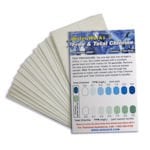
Waterworks(TM) Free Chlorine Check Ultra High II from has an easy-to-read color chart with acceptable chlorine concentration levels and instructions for mixing BOTH chlorine solutions clearly marked on each bottle.

To make life even easier on daycare and child care center operators, they can pick up a Childcare/Daycare Kit which includes (3) bottles of their North Carolina Licensed Child Care Association approved test strips, quarter cup and tablespoon measuring devices (for proper on-site metering of the bleach), and a copy of the procedures North Carolina wants child care workers to follow when mixing their sanitizing and disinfection solutions.

north carolina childcare kit

You can purchase the Childcare Sanitizer/Disinfectant Test Kit online at FilterWater.Com.