About
Do you know what's in YOUR water? Learn about water quality, water quality testing, and water quality testing products that can help you make informed, educated decisions regarding the water treatment options for your home, office, swimming pool... and life.
Contact Us
Got a question about water quality? Want to share a water quality article or water quality article with others?

Visit our Contact Us Page to ask a water quality question or submit water quality information.

RSS Feed
Get the most recent water quality posts and comments by subscribing to the Water Testing Blog RSS Feeds.
Subscribe to RSS! Subscribe to RSS Comments!

Archive for the ‘Ground Water’ Category

Oct
2

How Can I Check to See if My Water Filter is Working?

Water Testing BlogBacteria, Chlorine, Chlorine Testing, Coliform, Combined Chlorine, Ground Water, Hardness, Home Water Test Kits, Home Water Testing, Iron, Lead, mercury, Metals, TDS, Testing Devices, Total Chlorine, Water Quality Testing, Water Test Kit, Water Testing

Anyone that has taken the initiative to install a water filter or water purification device/system in their home deserves a bit of praise… and those that continue to take an interest in the quality of their water after installing a water treatment system deserve even MORE for their efforts.

As an example, ‘J. Mampilly’ from India installed a system and now seeks to determine if he has installed the correct unit. He asked,

I would like to know about how i can confirm the effectiveness of my water purifier. Labs in India that can certify and throw light on the camparative quality of water before and after using a water purifier. Thank You

Unfortunately we do not have familiarity with water testing laboratories in India and cannot directly assist with this situation. We can suggest, however, that you contact your local health department and ask them for a list of certified water testing laboratories in your area.

Coliform Bacteria Test Kit

Before…

In order to know what type of filter or what filtering capabilities you should purchase, invest (yes, we said invest) in a thorough water analysis performed by a qualified water testing laboratory. Here, again, we suggest contacting your local board of health and asking them, for a list of certified drinking water testing labs. Alternatively, or if no labs exist in your immediate vicinity, you can use the services of accredited water testing companies such as National Testing Labs.

No matter what, though, always have your water tested BEFORE deciding on a water treatment system. Oh, and one more thing: Don’t think for one second that a salesperson doing an in-home water test has the same water testing tools or qualifications as a reputable water testing laboratory. Remember: 99% of all salespeople attempt to sell things and not accurately analyze a situation — especially if accurately diagnosing a situation could cost them a sale!

Water Purity Tester
Simple Test Kit for
Total Dissolved Solids

And after!

As ‘J. Mampilly’ has done, we should ALL take an interest in comparing the quality of water that comes out of our water filter systems. Only then will we know if the money we invested in (not spent on!) a quality drinking water filter system performs as expected.

Testing water quality beforehand gives us not only an idea of what we need to filter out of our water, but also a checklist of water quality parameters to monitor post-filtration. Should follow up water testing reveal that these ‘issues’ did not get corrected or suddenly show up months after the installation of a water system, perhaps the water filter has stopped working or never really worked properly in the first place and needs service of some sort.

And in conclusion…

Many people go through life ‘deaf, dumb and blind’ when it comes to the quality of their water — until an (initially) unexplainable health problem pops into their life. Then, and unfortunately sometimes too late, those same people get very interested in the quality of their water and want to punish or otherwise penalize others for allowing them to consume tainted, polluted and/or contaminated drinking water.

Although we feel much sympathy for the victims of poor quality drinking water, most of us here in the United States have the ability to at least once every great while perform basic testing for critical water quality parameters such as heavy metals (i.e. lead, mercury, copper, iron, etc.), coliform bacteria, pesticides (i.e. atrazine and simazine), chlorine levels (free and/or total), total hardness, total dissolved solids, and many others.

Many times the contaminants in a water supply will have no taste, carry no odor and not appear before the naked eye. Only testing will alert you to their presence.

Aug
25

Preparing for a Hurricane — Water Quality Issues

Water Testing BlogEmergency Responder, Environmental, Ground Water, Well Water

Many of you have asked us what to do if (or more like when at this point) a hurricane makes landfall. For questions like that we suggest visiting the National Hurricane Center Web Site’s “Be Prepared” section. It has a ton of useful information on how best to get ready for the arrival of tropical storms and hurricanes.

Features and Specifications of the Doulton SS2 “Pour-Through” Gravity Fed System:

  • High Grade Stainless Steel Construction
  • Requires No External Plumbing
  • Compact and Easy to Operate
  • Easily Converted to the SS-4, a unit which utilizes 4 ceramic filters instead of 2
  • Dimensions: Assembled 8″ x 19″ / Stored 8″ x 13.5″
  • Capacity: 12 GPD (with 2 filters) 24 GPD (with 4 filters)
  • Upper Reservoir Holds 2.11 Gallons (8 liters) Untreated Water
  • Lower Reservoir Holds 2.11 Gallons (8 liters) Treated Water

    With regard to filtering capabilities, the Doulton W9361122, SS-2 Gravity Fed Water Filter reduces:

  • Chlorine by 99.99%
  • Cysts by 99.99%
  • Organic Chemicals by 99.99%
  • Parasites by 99.99%
  • Particulates by 99.99%
  • Pathogenic Bacteria (i.e. E. Coli, Cholera, Typhoid, etc.) by 99.99%
  • Rust & Sediment by 99.99%

  • One thing we know for SURE: If the authorities say, “Evacuate!”, don’t sit around like a lump on a log. Secure your property or properties as best you can (the link above has tips for that) and get out of the storm’s way!

    Too many people think a storm will ‘blow over’ by the time it reached them and that the government is ‘pulling their leg’ when it comes to flood predictions, wind estimates, etc.

    Entire cities have gotten leveled by hurricanes in the past. Don’t think it can’t and/or won’t happen again!

    What if my property gets destroyed and I wasn’t there?

    At least you’re ALIVE. Don’t think for one minute that you and a few family members or close friends pushing as hard as you can against the door to keep Mother Nature out of your home or business will do anything but put you and all those around you in the middle of something SHE intends to destroy — effectively making you and yours the meat filling in a demolished building sandwich.

    Water quality after the hurricane passes?

    Municipal Water: As a general rule of thumb, assume the worst when it comes to water quality after an event such as a hurricane until local health officials give the ‘all clear’ sign… and STILL test your water for contaminants such as bacteria, nitrates, and heavy metals such as copper, lead, iron, chromium, etc.

    Just because the water filtration plant either survived unscathed or received the necessary repairs does not mean the miles of pipes leading to your faucet didn’t suffer damage.

    Well Water: As we have said MANY times in the past and, will probably say several hundred more times in the future, no one but you has responsibility for the quality of the water coming out of your well.

    We suggest not using your well until all flood waters have subsided and the area around your wellhead has dried so you can examine it for signs of water breach.

    If ANY flood water (which definitely contained innumerable drinking water contaminants) seeped into the wellhead area you will definitely want to perform a thorough well disinfection… and for that we always suggest contacting a local water well servicing company or at the very least getting detailed instructions from your local health department.

    Then, even after you get the ‘thumbs up’ sign from a certified water testing laboratory such as National Testing Laboratories which will test your water for a LOT more (noteworthy!) parameters than you can test for on your own, we still suggest performing a battery of simple tests on a regular basis for at least three to six months after the visual aftereffects of a natural disaster have gone away.

    Why continue testing? Simple: Whenever flood waters enter an area and then leave, they leave behind a cornucopia of potentially harmful deposits that will, in time, find their way into bodies of surface water. Those bodies of water, at some point, do interact with, and often times directly affect, of surrounding water sources — despite the fact that drinking water aquifers exist deep in the ground.

    Minute and not-so-minute cracks in the rock formations encasing the aquifers will eventually allow potentially contaminated water from the surface access to the aquifers.

    Moral of the story?

    We wish everyone formerly in the path of, currently getting battered by, and about to get thrashed by Hurricane Irene the best of luck during these extremely difficult times.

    • Weather.Com — Great site for continuously updated Hurricane news.

    • National Hurricane Center — Excellent site created and maintained by the National Weather Service for the purpose of helping people get ready for, and hopefully recover after, a hurricane makes landfall in the United States. On our last visit to this site we noted that they had audio instructions in both English and Spanish.

    • Drinking Water Safety During/After Flooding — Similar to what we wrote above, but still might prove useful.

    Stay safe, play it smart and always have a plan!

    – Water Testing Blog Staff

    Jul
    30

    Free Well Water Testing for Nitrates

    Water Testing BlogGround Water, Home Water Test Kits, Home Water Testing, Nitrate, Nitrite, Water Quality Testing, Water Test Kit, Water Testing, Well Water


    Well Water Test Kit for Iron, Copper, Lead, Bacteria, Pesticides, Nitrates, Nitrites, Chlorine,
    pH and Total Hardness

    We absolutely LOVE posting about free water testing… and this free water testing announcement comes to use from Scott County, Minnesota where the Minnesota Department of Agriculture will offer free nitrate testing for County residents beginning at 8 am this Saturday (7/30/11) at the county Highway Garage at 600 Country Trail E. (located next door to the county hazardous water facility).

    Directions: Take Highway 282 a half-mile west of the intersection of County Road 17, Highway 282 and Highway 13.

    Homeowners should bring at least a half cup of water in a clean plastic or clean glass container. Run the water for five to ten minutes prior to collecting and if you have a water filtration system installed, make sure you take a sample of water both before and after the filtration unit. People with water softeners need only take one sample, though.

    Make sure you refrigerate the sample(s) if you do not intend to go and have them tested right away. Also, make sure all testing gets done within 24 hours of sample collection.

    And… if my well contains nitrates? What then?

    If you test your water for nitrates and find that it does, in fact, contain nitrates, you will most certainly want to have your water tested by a certified water testing laboratory in your area or by a reputable mail-in water testing lab such as National Testing Laboratories to see if any other problems exist.

    Then, using the results of your comprehensive water test, select the correct water filtration system to remove and/or reduce the levels of unwanted drinking water contaminants found in your water.


    Countertop Water Filters


    Under Sink Water Filters


    Whole House Water Filters

    Jul
    21

    NSF/ANSI Standard 53 for VOC Reduction

    Water Testing Blogatrazine, Disinfection Byproducts, Ground Water, simazine, THM, Water Quality Testing, Well Water

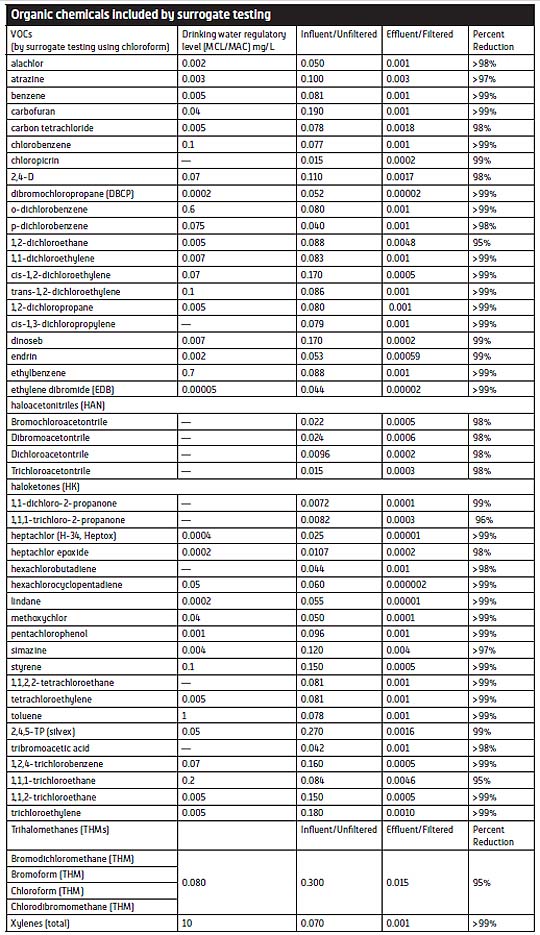
    First off, we’d like to thank each and every one of you that pointed out a glaring omission in our last posting: We failed to list the VOC’s (volatile organic compounds) that water treatment systems bearing NSF/ANSI Standard 53 Certification reduce and/or remove.

    So, without further ado, get ready for a list of chemicals and chemical compounds that call into the VOC category of NSF/ANSI Standard 53:

    alachlor endrin simazine
    atrazine ethylbenzene styrene
    benzene ethylene dibromide (EDB) 1,1,2,2-tetrachloroethane
    carbofuran haloacetonitriles tetrachloroethylene
    carbon tetrachloride bromochloroacetonitrile toluene
    chlorobenzene dibromoacetonitrile 2,4,5-TP(silvex)
    chloropicrin dichloroacetonitrile tribromoacetic acid
    2,4-D trichloroacetonitrile 1,2,4-trichlorobenzene
    dibromochloropropane (DBCP) haloketones 1,1,1-trichloroethane
    o-dichlorobenzene 1,1-dichloro-2-propanone 1,1,2-trichloroethane
    p-dichlorobenzene 1,1,1-trichloro-2-propanone trichloroethylene
    1,2-dichloroethane heptachlor trihalomethanes (TTHM)
    1,1-dichloroethylene heptachlor epoxide (THM) bromodichloromethane
    cis-1,2-dichloroethylene hexachlorobutadiene bromoform
    trans-1,2-dichloroethylene hexachlorocyclopentadiene chlorodibromomethane
    1,2-dichloropropane lindane chloroform
    cis-1,3-dichloropropylene methoxychlor xylenes
    dinoseb pentachlorophenol

    Note: While the NSF/ANSI Standard 53 for VOC Reduction deos specify just 43 compounds, the list above contains extra entries because the Standard considers three ‘families’ of compounds single entries and then goes on to specifically call out the names of individual compounds within those chemical families.

    Where do these things called VOC’s come from?

    The VOC Fairy brings them while you sleep… but not really. On the NSF Web Site we found the following definition which we think does an excellent job of describing the origin of VOC’s:

    “The category of VOC (Volatile Organic Chemical) includes a number of chemicals that are both man-made and naturally occurring. Water from wells and utilities may contain some of these contaminants. Some VOCs are pesticides, herbicides, or insecticides that seep into the ground water after application. Other VOCs enter the water supply through industrial or other waste disposal. This category also includes total trihalomethanes, which are a by-product of chlorination.”

    For those who believe VOC’s cannot get into their water supply because you don’t live in close proximity to industrial complexes or agricultural areas, think again. Once these things enter the environment they, like many other categories of drinking water contaminants, could possibly travel many miles before dissipating to a ‘safe’ level.

    Thanks for the chemistry lesson, but…

    “Why does any of that matter to me?”

    In a nutshell, scientists and health officials have agreed that the presence of any of those chemicals in too high a concentration in water poses a potentially serious health risk to people if they consume the water. Devices that have tested and certified to NSF/ANSI Standard 53 for the reduction of VOC’s must satisfactorily reduce levels of all the chemicals on that list to ‘safe’ levels.

    WaterFilters.Net: NSF/ANSI Standard 53 Inline Refrigerator/Icemaker Water Filter
    Inline Refrigerator/Icemaker Water Filter
    Tested & Certified to NSF/ANSI Standard 53
    for VOC Reduction in Drinking Water

    WaterFilters.Net: NSF/ANSI Standard 53 Under Sink Water Filter
    Under Sink Water Filter
    Tested & Certified to NSF/ANSI Standard 53
    for VOC Reduction in Drinking Water

    Jul
    20

    Does Reverse Osmosis Remove Fracking Chemicals?

    Water Testing BlogEnvironmental, Fracking, Ground Water, Personal Water Filter, Reverse Osmosis, Water Filter, Well Water

    The double meaning of ‘fracking’ in this instance makes us chuckle. It could either serve as a replacement word for a curse word or as an accurate description of the chemicals in question.


    Crystal Quest Thunder 1000M
    Reverse Osmosis, Ultrafiltration
    and 6-Stage Multifilter System

    The other day we received an email inquiry from ‘Wesley’ who asked a question that no one, surprisingly enough, has ever asked: “If drinking water was contaminated by fracking chemicals, would a reverse osmosis remove them and make the water safe to drink? If not, what would remove these chemicals from the water?”

    Very good question! Too bad we don’t have a definitive answer. :(

    Why no definitive answer?

    Quite honestly, until gas companies come clean with the full list of ingredients they put in fracking fluids we will never really know what method of water filtration will work best to remove them. We do know, however, that properly functioning reverse osmosis water filter systems will put a serious dent in the concentrations of commonly found drinking water contaminants… including a number of the compounds currently identified as fracking fluid components.

    Will reverse osmosis save your bacon, if fracking fluid somehow makes its way into your water supply? As of right now we don’t know for sure, but we bet water treated using reverse osmosis will contain far fewer contaminants and we, if given the option, would rather drink the RO (reverse osmosis) water!


    Pentek RO-3500 Reverse Osmosis System

    Please note, however, that as we conducted the research for this blog posting we uncovered something that we did not, previously fully understand… reverse osmosis units on their own do an excellent job of improving water quality by cleansing it of SOME unwanted contaminants potentially found in fracking fluids (i.e. dissolved metals), but a person looking for a water filter certified to remove other common fracking fluid components like VOC’s (volatile organic contaminants) should seriously consider purchasing a unit equipped with pre and/or post filters that scrub the water for VOC’s.

    As an example, of what we just talked about, the Pentek RO-3500 reverse osmosis system has tested and certified to NSF/ANSI to Standard 58 for the reduction of Pentavalent Arsenic, Barium, Cadmium, Copper, Hexavalent & Trivalent Chromium, Cyst, Fluoride, Lead, Nitrate/Nitrite, Radium 226/228, Selenium, TDS and Turbidity in water, but not VOC’s.

    Don’t get the wrong idea about the Pentek RO-3500, though. The reviews we found for the unit speak VOLUMES about its ability to clean up otherwise unpleasant drinking water. It just may not work as well for the purpose of removing fracking fluids from drinking water.

    Pentek US-1500 Chemical/Lead System
    Pentek US-1500 Chemical/Lead System

    So… If not reverse osmosis, then WHAT?

    Again we want to stress that until gas drilling companies must reveal the full list of potential ‘nasties’ they put in fracking fluid, no one will really know the best way to remove fracking fluid from drinking water.

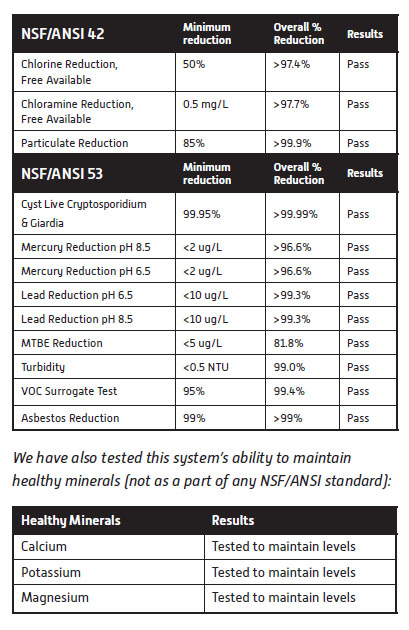
    Having said that, we came across a non-RO unit called the Pentek US-1500 Chemical/Lead System that uses two different types of filters to clean drinking water… and it has tested and certified to NSF/ANSI 53 for the reduction of reduce 43 different VOCs, lead, cysts, mercury, asbestos, chlorine taste and chlorine odor.

    No, the Pentek US-1500 will not filter out the contaminants that a good quality reverse osmosis unit will. . . so we suggest TESTING YOUR WATER before investing in a water filtration unit!

    If you plan to buy a water filter, also plan to have your water tested by a certified drinking water testing laboratory. Whether you choose use a mail order water testing service like National Testing Laboratories or you opt for the services provided by a local laboratory, a water test may keep you from foolishly spending your hard earned money on the wrong type of water filtration system!

    Jul
    5

    Free Testing for Nitrates Drinking Water

    Water Testing BlogGround Water, Home Water Testing, Nitrate, Water Quality Testing, Water Testing, Well Water

    Few words capture the attention of people more easily than the word ‘free’. The very idea of getting something (hopefully of worth) in exchange for absolutely nothing appeals to the deepest, most sincere part of the human soul.


    Picture of Blue Baby Syndrome
    Source: Wikipedia User

    Today we’d like to highlight the free nitrate testing program that will run from July 18 to July 20, 2011 in Douglas County, Minnesota.

    Sponsored by the Minnesota Department of Agriculture and the Douglas County Soil and Water Conservation District, free nitrates in water testing will get offered to residents who bring samples of their well or tap water to the County offices in Alexandria.

    Why test for nitrates?

    For starters, the USEPA has deemed them a health hazard if consumed in too great a quantity — especially for young children and babies.

    A condition known as Blue Baby Syndrome, experts believe, may result when nitrates hinder the ability of hemoglobin to carry oxygen in the bloodstream.

    Reduced amounts of oxygen in the bloodstream can cause developmental problems and could even result in the death.

    ST. PAUL, Minn. – The Minnesota Department of Agriculture (MDA) and Douglas County Soil and Water Conservation District (SWCD) will offer a free nitrate water-testing clinic July 18-20 at the County offices located at 900 Robert Street, Suite 102, in Alexandria. Clinic hours will be 8 a.m. to 5 p.m.

    The clinic is the latest in a series of water-testing clinics sponsored by MDA. Nitrates are the most common contaminants in Minnesota’s groundwater, and in some areas of the state a significant number of wells have high nitrate levels. With that in mind, experts recommend that homeowners who get their drinking water from wells should test their water regularly.

    “Nitrates in drinking water can be a risk to human health,” MDA Commissioner Dave Frederickson said. “Public drinking water supplies are monitored for nitrates, but it’s important for homeowners with private wells to check their water and take action if their water has high nitrates levels.” ( source )

    For those not lucky enough to live in a place offering free nitrate testing, do not fret because everyone has the option of performing at-home testing for nitrates for less than $0.50 per test AND get dependable results in just a few short minutes. The WaterWorks Nitrate/Nitrite Test Strip gives homeowners and water professionals the ability to quickly determine if a Nitrate or Nitrite problem may exist in a body of water.

    Filters to remove nitrates from drinking water?

    Several different styles of filter exist to remove nitrates from drinking water. Depending upon the amount of water you want to filter and the amount of nitrates in your source water, pricing for a simple disposable nitrate removal filter start around $120, pricing for higher capacity undersink nitrate filters start around $125, and pricing for more sophisticated whole house nitrate removal systems starts around $1,370.

    Filter Water: Nitrate Test Strips
    Nitrate Test Strips

    Filter Water: Disposable Nitrate Plus Water Filter
    Disposable Nitrate Plus Water Filter

    Filter Water: Whole House Steel Nitrate Filter
    Whole House Nitrate Filter

    Apr
    27

    Question: My Yard Got Flooded… and So Did My Well. Should I Worry?

    Water Testing BlogGround Water, Home Water Testing, Water Quality Testing, Water Testing, Well Water

    No matter how many times we talk about this topic, we know we will always find another reason to bring it up again. This time a reader named ‘Georgia1969′ had a question about the safety of the water currently in her well… that had apparently become flooded as warmer weather melted some snow in her area and caused flooding in her yard.

    “Spring has treated us bad this year, tho I guess we have gotten lucky in past years since other neighbors have gotten it far worse than us in past years than we did. So anyways our well got covered under water that came in our yard this year. Did that hurt our well? Should it get tested? For what?”

    First thing we can tell you… call your local health department and ask them if they plan on setting up any free or reduced rate water testing services. If not, then definitely call a certified water testing laboratory in your area and have them come out and perform testing on the water coming out of your well — before you drink a single drop of the water it produces!

    It takes only a tiny breach in the well casing or at the top of the well to allow potentially harmful contaminants into your water supply. Also, and this thought often gets overlooked by well owners, what if your well didn’t have ‘problems’ but your neighbor’s well did? Can contaminants creep down their well shaft and get into the water supply you both share?

    We would guess that would all depend on what sort of ‘problems’ your neighbor encountered… and we would also err on the side of caution and have our well water tested as a precautionary measure.

    What do well owners commonly test for in their water?

    In no particular order, and by no means a complete list, many well owners test for potential well/drinking water contaminants such as:

    • Heavy Metals like lead, chromium and mercury frequently make the list due to the fact that science has long since established the risks associated with prolonged consumption of and/or exposure to heavy metals.

    • Arsenic also ranks highly amongst the things well owners will test for on a regular basis. Changes in aquifer levels can have dramatic effects on the amounts of arsenic found in well water depending upon where a person lives.
      If interested in testing your own water for arsenic contamination, take a look at the arsenic test kits manufactured by SenSafe, a brand used by State, Local and Federal Governments as well as disaster relief organizations around the world.

    • Commonly used Pesticides such as atrazine and simazine can easily find their way into flood waters and into a person’s well.

    • Let us not forget our always hazardous friend named Bacteria who lurks around every corner and thrives in flood waters. Think of it this way: All the animals in your neighborhood go to the bathroom outside and all that waste gets swept up in flood waters…. only to later get deposited on everything those waters touched.

      As a matter of fact, water experts suggest testing one’s well for bacteria at least once a year, and preferably more often than that — regardless of whether or not flooding has occurred.

    • Though a lot more common in rural settings, Nitrates and Nitrites can creep into pretty much any well water source under the right conditions.

      Homes with pregnant women, infants and/or small children should keep a vigilant eye on nitrate and nitrate levels due to the harm they can cause in developing young bodies. Look up ‘blue baby syndrome’ in Google for more information on this topic.

    As we said, that list does not include ALL of the things well owners (should) test for on a regular basis, but it does hit some of the high points. If you want a more comprehensive list, contact your local health department and ask them for the results of recent water testing conducted by State agencies.

    Do-it-yourself water test kits for field testing?

    In the past we have spoken highly of the Well Driller Standard and Well Driller Master test kits because of the level of convenience they offer an average homeowner who most likely doesn’t want to mess around with a whole bunch of complicated test procedures and potentially not-so-nice testing reagents found in other kits.

    Our opinion has not changed. We still feel that for the money, these two test kits make well water testing in the field (i.e. at one’s home) something that everyone can, and should, do regularly.

    Do these (or any) home water test kits take the place of testing performed by a certified water testing laboratory? Absolutely not! If in doubt about the quality of your water and/or on a yearly basis we STILL suggest having a lab test one’s well water.


    Well Driller Standard Test Kit


    Well Driller Master Test Kit

    Mar
    16

    Disinfecting a Well After a Flood

    Water Testing BlogBacteria, Chlorine, Free Chlorine, Ground Water, Home Water Testing, Water Quality Testing, Water Testing, Well Water

    Neglecting to disinfect your well after a flood can have dire consequences on your health. In some cases it could even KILL you.

    Rising and swirling flood waters pick up a tremendous amount of waste, debris and other unwanted drinking water contaminants. As those waters recede and dry ground reappears, all of the junk and crud swept up by the flooding gets deposited on all surfaces — including the equipment used to draw fresh drinking water from drinking water wells.

    Taking the time to properly clean and disinfect well equipment after a flood will help to prevent the accidental introduction of flood water contaminants into wells if you have to open the well cap in the future.

    Also, it takes only the slightest breach in the seal of your well head to allow potentially harmful bacteria, dissolved metals, nitrates, nitrites, etc. access to your drinking water supply.

    So, after flooding, or twice a year (as recommended by drinking and well water experts) it makes sense to clean off the well head area thoroughly and disinfect the well itself using some form of chlorine.

    Looking for a quick and dirty disinfection method? Not necessarily the best way to go, but any amount of disinfecting beats performing no disinfecting, right? Right.

    The South Dakota Department of Health suggests allowing a well to spend a minimum of 8 hours in direct contact with water containing at least 50 ppm of free chlorine. From what we read, it would seem as though they would actually prefer people allow a well to sit, undisturbed, with at least 50 ppm of free chlorine for a longer period of time, such as from sundown to sun up. ( source )

    One could use unscented household bleach which contains an average of a little over 5% of hypochlorite solution (remember that free chlorine concentration domes from hypochlorous acid and hypochlorite ions). We cannot stress enough that one should use UNSCENTED bleach for disinfecting a well or other drinking water source!

    As a general rule, health officials suggest adding the following amounts of unscented bleach solution to a well for each 10 feet of water it contains if it has an inner diameter of…

    • 2 inches — add 1/4 ounce of bleach
    • 4 inches — add 3/4 ounce of bleach
    • 6 inches — add 2 ounces of bleach
    • 8 inches — add 3 1/2 ounces of bleach
    • 10 inches — add 5 ounces of bleach
    • 12 inches — add 1 cup of bleach
    • 18 inches — add 2 1/4 cup of bleach
    • 24 inches — add 3 3/4 cup of bleach
    • 36 inches — add 8 3/4 cup of bleach

    Lift the well pump, add the bleach solution, lower the well pump back in place, and allow the treated well to sit for at least 8 hours. Do not turn on any faucets or do anything else that would draw water from the well.

    Once the waiting period has ended, turn on all faucets and allow the water to run until the smell of chlorine has vanished.

    Get the water tested for bacterial contamination within a day of disinfection by a certified water testing lab in your area. After flooding many health departments team up with local labs to provide discounted bacteria in well water testing for local residents.

    We, of course, would suggest having the well’s water tested for other critical water parameters at the same time since regional flooding can certainly have other effects on the quality of water coming from aquifers.

    What about well water disinfection kits?

    For those who would like a bit more instruction and procedure when disinfecting a drinking water well after a flood, or twice a year as suggested by many well water professionals, kits such as the Well Safe Well Sanitizer Pack will work very well.

    This particular well disinfecting kit contains chlorinating pellets, chlorinating granules, and step-by-step instructions to to guide users through the process of treating a well.

    Products like Well Safe have uses down in the body of a well, inside a well’s storage tank, throughout the plumbing between a well and connected buildings, in a cistern sanitation system, etc.

    Moral of the story

    Clean and disinfect/sanitize your well before returning it to use after local flooding!

    Well Safe Well Sanitizer
    Well Safe Well Water Sanitizer Pack

    Earlier we mentioned that a well ought to sit undisturbed with at least 50 ppm of free chlorine and since we get asked this all the time, we will go ahead and tell you how you can test easily for free chlorine levels that high — without fancy (expensive) test equipment or complicated testing procedures.

    For the task of testing higher levels of free chlorine residuals we suggest products like the WaterWorks High Range Free Chlorine Test Kit which has the ability to detect free chlorine concentrations between 0 ppm and 120 ppm in a matter of a few minutes.

    Feb
    25

    Reduced Rates on Water Testing

    Water Testing BlogGround Water, Home Water Testing, Water Quality Testing, Well Water

    As usual it tickles us pink when we hear that a Health Department has taken a pro-active step and offered reduced water testing rates to local residents. Why? Because sometimes the only way we, as budget conscious citizens in a Capitalist society will get up and DO anything… is when we see the words ‘free’, ‘discounted’ and/or ‘sale’.

    In this case the community leaders in a part of Illinois decided to make certified well water testing available to residents right as the snows (hopefully) will begin to start melting.

    The Lake County Health Department/Community Health Center will offer reduced water testing rates in observance of National Ground Water Awareness Week in March. Water samples can be brought to the Lake County Central Permit Facility and Environmental Laboratory, 500 W. Winchester Road in Libertyville between 7:30 a.m. and 4:30 p.m. on weekdays from March 7 through 17. During this time, the normal $16 analysis fee for testing for bacteria and nitrates will be reduced to $10 for well owners.

    “Safe drinking water is something that many take for granted, but every year instances of contaminated drinking water occur in Lake County,” said Irene Pierce, the Health Department’s Executive Director. “The Health Department encourages all users of private wells to take this time to have their drinking water tested, and to test it at least annually to see if it meets the minimum drinking water standards.” ( source )

    Excellent timing! Most people don’t give a second thought to the effects runoff water can have on local drinking water supplies.

    • Runoff water from heavy rains or melting snow causes aquifer levels to rise. When that happens, the aquifer has the opportunity to come in contact with previously undisturbed pockets of underground contaminants.

    • Localized flooding may jeopardize the quality of well water if the well head becomes submerged and flood water seeps down into the well.

    Other possible reasons for concern over well water quality exist as well, but for now we believe those two ought to make well owners curious enough to find out if the Health Department in their own community has made discounted, free, or reduced well testing available.

    Testing our own well water?

    We’ve said it once, we’ve said it a hundred times: It’s your water, your health… and ultimately your LIFE!

    Plenty of do-it-yourself well water test kits exist and you can find a few examples of well water test kits here.

    Filter Water: Well Driller Master
    Well Driller Master

    Filter Water: Drinking Water Test Kit
    Drinking Water Test Kit

    Filter Water: Well Water Test Kit
    Well Water Test Kit

    Feb
    24

    Former Water Taste Test Competition Silver Medalist Drops Out Because of Bacteria in Their Well Water

    Water Testing BlogBacteria, City Water Test, Ground Water

    Think it can’t happen to you? Think your well water, the very same well water that your father’s mother’s great-great grandpappy used to use for his award winning moonshine can’t become contaminated with bacteria?

    So did the folks in Montrose, British Columbia, a region whose tap water had previously won four silver medals in the Berkley Springs International Water Tasting competition, until recent test results showed their untreated municipal water had as much as 6 ppm coliform bacteria per 100 milliliters of water.

    As you will soon read, the amount does not merit widespread panic, but it does give cause for consideration of installing a disinfecting system.

    Montrose pulled its bid for gold in a water tasting competition, after two months of testing revealed village water to be contaminated.

    On Monday, council officially rescinded a motion to participate in the Berkley Springs International Water Tasting competition, a contest that has in past awarded the village four silver medals for its drinking water.

    But two weeks ago, Interior Health released test results that found coliform bacteria in the water supply, prompting council to reconsider its entry in the 2011 competition.

    “We’re planning now to disinfect our wells and disinfect the distribution system and the reservoir storage,” said administrator Kevin Chartres.

    At its highest, the tests found six parts coliform bacteria per 100-millilitre water sample, not a grievous amount but enough to issue a boil-water advisory. ( source )

    So… if an award-winning water supply can fall victim to incidental contamination by bacteria, what makes you so certain your water cannot suffer the same fate?

    From our perspective, we applaud Montrose Health Officials for doing their due diligence and performing routine testing on their water supply in spite of the awards it has won.

    If more people took an active interest in testing the quality of their water we believe companies and organizations responsible for polluting fresh water drinking water supplies would come under a lot more fire from government agencies and either stop their illegal activities or find new, safer ways to dispose of and/or store their chemical byproducts.

    Just our two cents, ya’ know?