About
Do you know what's in YOUR water? Learn about water quality, water quality testing, and water quality testing products that can help you make informed, educated decisions regarding the water treatment options for your home, office, swimming pool... and life.
Contact Us
Got a question about water quality? Want to share a water quality article or water quality article with others?

Visit our Contact Us Page to ask a water quality question or submit water quality information.

RSS Feed
Get the most recent water quality posts and comments by subscribing to the Water Testing Blog RSS Feeds.
Subscribe to RSS! Subscribe to RSS Comments!

Archive for the ‘Hardness’ Category

Sep
29

Countertop Nitrate Removal System — Dual Filter

Water Testing Blogatrazine, Chlorine, Copper, Environmental, Ground Water, Hardness, hydrogen sulfide, Iron, Lead, mercury, Metals, Nitrate, Pesticide, replacement water filter, simazine, THM, Water Filter, Water Testing, Well Water

Nitrate Test Strips

We have posted a number of articles about nitrates in drinking water and given a number of links to products that can remove nitrates from drinking water… and today we found out that FilterWater.Com has started carrying a highly effective nitrate removal system made by Crystal Quest that costs less than $150, features a dual filter system containing a total of 7 filtration stages, and qualifies for free shipping.

Do I have nitrates in my drinking water?

Nitrates occur naturally in the environment and may come from any number of sources in nature including, but not limited to, animal waste that filters down into the aquifer. Wells tapping into that aquifer as a source of drinking water then pull the water to the surface where it gets used by the well owner for cooking, drinking, bathing, etc.

What harm can nitrates in drinking water do?

The USEPA summed up the effects of nitrates in drinking in the following ways:

Short-term: Excessive levels of nitrate in drinking water have caused serious illness and sometimes death. The serious illness in infants is due to the conversion of nitrate to nitrite by the body, which can interfere with the oxygen-carrying capacity of the child’s blood. This can be an acute condition in which health deteriorates rapidly over a period of days. Symptoms include shortness of breath and blueness of the skin.” ( source )

Long-term: Nitrates and nitrites have the potential to cause the following effects from a lifetime exposure at levels above the MCL: diuresis, increased starchy deposits and hemorrhaging of the spleen.” ( source )

How can I get rid of nitrates in my water?

We started this posting by saying that Filter Water now carries a dual filter counter top nitrate removal system… so now we figure we ought to tell you a little more about it.

Stage 1 — This product uses as dedicated nitrate removal filter. Water first flows through a nitrate-selective resin cartridge designed to reduce nitrate levels in water by 90 to 95 percent. The cartridge has an expected nitrate capacity of approximately 5500 ppm and owners can regenerate (aka: recharge, flush out, clean) the cartridge using a sodium chloride brine solution when it gets full.

Stages 2 & 7 — Pre and post one-micron filter pads remove suspended particles such as silt, sediment, cyst (Giardia, Cryptosporidium), sand, rust, dirt, and other undissolved matter in the water.

Stages 3 & 4 — Specially formulated beds of copper and zinc (KDF-55D, and KDF-85D) use a process known as oxidation-reduction to exhaust any chlorine in the water and convert iron and hydrogen sulfide into insoluble matter which attaches to the surface of the media. Heavy metals such as lead, mercury, copper, nickel, chromium, cadmium, aluminum, etc. also get removed during stages 3 & 4.

Stage 5 — Ion exchange resins reduce heavy metals such as lead, copper and aluminum further and also reduce water hardness by filtering out magnesium and calcium.

Stage 6 — Granulated Activated Carbon (GAC), a universally recognized and widely used adsorbent for a wide variety of unwanted drinking water contaminants such as chlorine (99.9%), chemicals linked to cancer (i.e. THM’s, benzene) pesticides & herbicides such as atrazine and simazine, insecticides, volatile organic compounds (VOC’s), PCB’s, MTBE’s and hundreds of other chemical contaminants which could possibly exist in your water supply.

Other features of the Dual Filter Nitrate Removal System?

Many people simply do not want to mess around with plumbing under their sink so a unit like the Crystal Quest Dual Filter Nitrate Filter System which requires no plumbing will work out beautifully.

The unit sits quietly next to the sink on the counter top and connects easily to pretty much any standard kitchen faucet. It also comes with a diverter valve which allows people to switch between filtered and unfiltered water with the flip of a switch.

Not digging the stark white appearance of the filter? Don’t worry! You have the option of ordering the unit with a chrome finish if that better suits the decor of your kitchen.

How long will the filters last and what do replacements cost?

The manufacturer estimates that the filters ought to last between 1 and 3 years depending upon the initial quality of source water. Keep in mind, though, that a soaking of the nitrate-specific cartridge in sodium or potassium chloride solution at room temperature will recharge the cartridge for additional use.

  1. Remove cartridge from unit
  2. Immerse the cartridge in a sodium or potassium chloride and room temperature water for a period of 30 minutes
  3. Rinse off and then soak the cartridge for 30 minutes in salt-free water
  4. Shake excess water off of and out of the cartridge
  5. Place the cartridge back in the filter housing
  6. Run through the systems for a period of 5-10 minutes

When it comes time to replace the nitrate-specific filter cartridge it will cost around $50 and the 6-stage filter cartridge will cost about the same.

Sep
21

Inexpensive Countertop Fluoride Filter

Water Testing BlogArsenic, Arsenic in Water, Chlorine, Copper, Fluoride, Hardness, hydrogen sulfide, Iron, Lead, mercury, Metals, Pesticide, Water Filter, Water Testing

No Cartridge Fluoride Filter

While the jury has not come back with a decision on whether or not fluoride in drinking water poses a serious health risk to people who drink water spiked with it, if you don’t want it in your water Crystal Quest has recently come out with a convenient, easily installed countertop water filter for fluoride — and many other unwanted potential drinking water contaminants.

Crystal Quest manufactures a product called the Countertop Disposable Single Fluoride Multi PLUS Water Filter System which installs in seconds and effectively removes fluoride AND hundreds of drinking water contaminants — if present in the water to begin with.

Water travels through a series of seven filtration stages in this unit. You will find detailed information on those stages below:

Pre and Post One-Micron Filter Pads: Used in stages 1 and 7, this filtration method removes suspended particles including silt, sediment, cyst (Giardia, Cryptosporidium), sand, rust, dirt, and other undissolved solid matter.

Fluoride Removal Cartridge: Used as the second stage of filtration, water flows through a fine mesh synthetic aluminum oxide absorbent media which has an extremely high affinity for fluoride, lead and arsenic. Through a combination of adsorption and chemical reaction the media effectively removes metals over a wide pH range.

How much fluoride can the filter hold before it needs servicing? The filter will reduce 10ppm feeds to 0.2ppm for a total of 6,000ppm fluoride removed.

KDF Media Bed: The third and fifth stages of filtration feature proprietary blends of high-purity KDF resins (KDF-55D and KDF-85D) which work using electrochemical and spontaneous oxidation-reduction (REDOX) principles. In these stages compounds such as chlorine get neutralized. Laboratory testing has shown that combination KDF/GAC cartridges can remove more than 99% of chlorine from greater than 20,000 gallons of water.

During these stages iron and hydrogen sulfide also get oxidized and become an insoluble substance that attaches to the surface of the media. Additionally, heavy metals such as lead, mercury, copper, nickel, chromium, cadmium, aluminum, and other dissolved metals get removed from the water by an electrochemical process at this point.

Ion Exchange Resin: The fourth stage of filtration uses an ion exchange to further reduce/remove heavy metals such as lead, copper and aluminum. This stage also acts a water softener by reducing calcium and magnesium levels (aka: total hardness) in the water.

Granulated Activated Carbon (GAC): The sixth stage of filtration makes use of granulated activated carbon, a material universally accepted as a highly effective means of eliminating a wide range of unwanted contaminants such as chlorine, potential carcinogens (i.e. THM’s, benzene, etc.), pesticides, herbicides, insecticides, volatile organic compounds (VOC’s), PCB’s, MTBE’s and many more chemical contaminants that may show up in water. Many of these compounds create a ‘bad’ color, taste and/or odor in drinking water, but not all.

Important note regarding carbon filters… Some manufacturers use a lesser grade of carbon, but this filter uses a highly porous, and therefore more useful, carbon derived from coconut shells.

How do I know if I need a water filter like this one?

If you have concerns regarding fluoride in your drinking water, contact your local water department and ask for a copy of the most recent drinking water report. Some water districts have made their annual reports available online so you may want to look on your water district’s web site first.

If your concerns deal with potential water contaminants that may have entered your water supply after it left the water treatment plant — bacteria, lead, heavy metals, etc. — then at-home drinking water test kits like the following may work just fine for you.

WaterFilters.Net: Chlorine, Iron, Nitrates and Hardness Test Kit
Culligan TK-2 Water Test Kit

WaterFilters.Net: WaterSafe All in One Test Kit
WaterSafe All in One Test Kit

WaterFilters.Net: WaterSafe Well Water Test Kit
WaterSafe Well Water Test Kit


WaterFilters.Net: Complete Home Water Test Kit
Complete Home Water Test Kit

WaterFilters.Net: WaterSafe Science Fair Project Kit
WaterSafe Science Project Kit

WaterFilters.Net: Well Drillers Test Kit
Well Drillers Test Kit


WaterFilters.Net: Arsenic in Water Test Kit
Arsenic in Water Test Kit

WaterFilters.Net: Bacteria in Water Test Kit
Bacteria in Water Test Kit

WaterFilters.Net: Water Cooler Bacteria Test Kit
Water Cooler Bacteria Test Kit


WaterFilters.Net: Radon in Water Test Kit
Radon in Water Test Kit


Keep in mind, though, that if you have serious reason to suspect drinking water contamination, you should seek the assistance and expertise of a certified water testing laboratory.

WaterFilters.Net: National Testing Labs 27 Parameter Test Kit
National Testing Labs
27 Parameter Test Kit

WaterFilters.Net: National Testing Labs 83 Parameter Test Kit
National Testing Labs
83 Parameter Test Kit

WaterFilters.Net: National Testing Labs 97 Parameter Test Kit
National Testing Labs
97 Parameter Test Kit

Sep
3

City Employee Gets Probation for Falsifying Water Test Results

Water Testing BlogArsenic in Water, Bacteria, Chlorine Testing, City Water Test, Copper, Fluoride, Hardness, Home Water Test Kits, Home Water Testing, hydrogen sulfide, Iron, Lead, manganese, Pesticide, sensafe, Total Chlorine, Water Quality Testing, Water Test Kit, Water Testing, watersafe

We often get asked if people who have city/town water ought to test their drinking water from time to time. If you live in the city of Edgewood, Iowa, you no longer have to ask that question.

While the Iowa Department of Natural Resources says they do not believe any dangerous water safety issues avoided detection, the fact that a city employee responsible for testing the city’s public drinking water supply on a regular basis purchased only enough supplies for 100 tests — despite claiming to have performed 3,889 water tests between January 2006 and July 2009 — would make just about anyone curious.

A former Edgewood city employee has been sentenced to probation after he admitted that he failed to test the town’s water supply and submitted false reports to the Iowa Department of Natural Resources.

Harris, 43, pleaded guilty in April to one count of making false statements in a matter within the jurisdiction of the Environmental Protection Agency.

In the plea agreement, Harris admitted he sent false monthly reports to the DNR from February 2008 and July 2009. He falsely claimed testing for fluoride, chlorine and manganese. DNR tests showed less chlorine in the water than the 1.5 milligrams per liter required by state law to kill bacteria.

The review found lower-than-acceptable levels of fluoride, which reduces tooth decay, and manganese oxide, which helps remove cancer-causing radium from the water. Residents in the eastern Iowa town were not exposed to any short- or long-term health risks, a DNR officer said.

The DNR originally alleged that Harris claimed to have done 3,889 water tests between January 2006 and July 2009, but bought enough material for only 100 tests. Harris resigned in August 2009.

The investigation began after some residents complained about declining water quality. ( source )

OK, now having read that, does the statement, “DNR tests showed less chlorine in the water than the 1.5 milligrams per liter required by state law to kill bacteria.” make you feel… safe?

How about “The investigation began after some residents complained about declining water quality.” Does that give you any sense of security?

Can individuals test their city/town/tap water?

Of course they can! While only certified water testing laboratories can give the absolute last word on the safety and potability of drinking water, at-home drinking water test kits from companies like SenSafe and WaterSafe allow the average homeowner to test critical water parameters on their own, whenever they want, and for little money.

What water parameters should homeowners test?

Given the number of possible drinking water contaminants, the average homeowner would find it difficult (and expensive!) to test for them all… but as a general rule, if typically makes sense for people on city/town/tap water to test for water parameters such as:

Drinking Water Test Kit

  • free chlorine residual
  • total chlorine residual
  • lead in water
  • copper in water
  • iron in water
  • total hardness
  • bacteria in water
  • hydrogen sulfide

Should homeowners with city water test for other things? That all depends on where their water company gets its water. As an example, if the water comes from a well, other potentially harmful water contaminants such as pesticides and arsenic could find their way into the water supply and an ill-equipped water treatment facility may not have the proper technology installed to remove them.

As always, though, if you have serious reason to suspect that your tap water has ‘issues’, seek advice from certified water quality experts. Home water test kits serve as great field tests, but the final word regarding a water supply’s potability should come from a certified water testing laboratory.

Aug
6

Question: Swimming Pool Water Not Holding Chlorine Levels?

Water Testing BlogChlorine, Copper, Hardness, Iron, pH, Pool Water, Water Quality Testing, Water Testing

Ah, yes… a question about a swimming pool not holding its chlorine residual came in recently and we must say that it took longer this year than usual.

Hi – We just got a pool put in (a 24′ round) and it does not hold any chlorine. We pour a gallon in at a time and test the next day and we have almost no chlorine showing up and also our water stays cloudy. What are we doing wrong? Thanks. Annie.

Well, Annie, we will start with the type of chlorine you most likely have: liquid. Sodium hypochlorite works very well as a chlorinating agent, disperses into pool water seamlessly, and has a relatively low cost (usually around $2 per gallon if bought in 5 gallon jugs).

Aside from liquid chlorine’s tendency to bleach any clothing it touches and weigh a lot in those bulky 5 gallon containers, liquid chlorine also lacks any kind of stabilizing compound in its chemical makeup. Without a stabilizer such as cyanuric acid, the chlorine added to a pool via liquid chlorine can readily exit the pool for a number of reasons (i.e direct sunlight, warm water temperatures, etc.)

If you have not already added pool stabilizer (cyanuric acid), you may want to do so pretty soon. We do, of course, suggest you test your pool for cyanuric acid before adding any chemicals… in case some other, more insidious reason exists for your pool not holding a chlorine level.

Unsure as to how you can test pool water for cyanuric acid? You can take water to your local pool store, use a liquid test kit or use something like the 6 Way Pool Check test strip.

Other Chlorine Eaters

By any chance do you have a fair amount of leaves, tree branches, dead animals, dead neighbors, or other debris in the water? If so, the chlorine will act like a human and choose the easiest (biggest) target to attack rather than go after smaller, harder to attack targets. Get the debris out right away.

Don’t Skimp on the Filtration/Circulation

The cloudy water in your pool may come from poor water circulation and/or filtration as well as the low chlorine level you initially inquired about. Until you clear up the water, try running the filter 24 hours a day if you do not already do that.

If after running the filter a full day you do not see an increase in pump pressure on the gauge attached to the filter and/or the strength of the jets pushing water back into the pool has not diminished, you may have filter problems. Now on the other hand, if you DO see increased pressure and diminished return jet strength, backwash the filter and it will begin collecting more junk from your water at a faster rate.

Simplified List of Steps for Annie to Take

Granted we cannot possibly address Annie’s problems completely since we do not know all of the factors affecting her water condition, but the we have personally used slight variations of this advice to help quite a few people clear up their pool water.

  • Remove large debris from pool, if present… especially any dead bodies.

  • Test stabilizer level and adjust if needed by adding cyanuric acid per the instructions given by the chemical’s manufacturer.

  • Test other critical water parameters such as pH, Alkalinity, Copper, Iron, Hardness, etc. and make corrections as needed — per instruction(s), of course.

  • Add more liquid chlorine… roughly 1 gallon per 10,000 gallons of pool water.

  • Run filter 24 hours a day until problem clears up.

  • Backwash filter when necessary to improve filtration and water circulation.

Never hesitate to go in and pester your local pool store employees for pointers, free water testing and advice. They relish the opportunity to snicker behind your back because they cannot believe you cannot figure out what pool chemicals you need… but try not to let that deter you because they know a lot about how to properly maintain pools and generally give good advice!

In the Swim: Cyanuric Acid Test Kit
Cyanuric Acid Test Kit

In the Swim: 6 Way Test Strip w/ Cyanuric Acid Test
6 Way Test Strip w/ Cyanuric Acid Test

Jul
30

Summary of NSF Water Filter Standards

Water Testing BlogArsenic, Bacteria, Chlorine, Hardness, mercury, Metals, THM, Trihalomethane, UV Sterilizer, Water Filter

If we had a nickel for every single time someone asked us what NSF 42, 44, 53, 55, 58, 62 and 177 meant… we’d have a huge pile of nickels and STILL not have enough money for that diamond-plated, gold-encrusted, platinum embossed drinking fountain w/ the GIANT water purification FACTORY attached to it from the other side of the wall.

water filter pitchers

NSF/ANSI Standard 42: Drinking water filtration systems that are certified to this standard remove chlorine and sediment/particles from water for the purpose of improving its look, smell and taste. The design of these filter do NOT lend themselves to the removal or reduction of health-related contaminants.

NSF/ANSI Standard 44: Water treatment systems certified to this standard typically function as cation exchange water softeners designed to reduce or eliminate water hardness (i.e. calcium and/or magnesium). Water filters designed to remove barium and radium may also certify to this standard.

water softeners

NSF/ANSI Standard 53: Water purifiers certifying to this standard have designs that remove health-related contaminants such as waterborne organisms and industrial chemicals. Cryptosporidium, giardia, volatile organic chemicals (VOCs), MTBE (methyl tertiary-butyl ether) and trihalomethane compounds (THMs) fit into one of those categories or the other.

NSF/ANSI Standard 55: Devices rated to this standard function as point of use (POU) or point of entry (POE) ultraviolet microbiological water treatment systems. These water treatment systems feature designs which disinfect microorganisms (such as bacteria and viruses) potentially present in water.

UV Sterilizers

NSF/ANSI Standard 58: Typically one will find reverse osmosis water systems (RO) certified to this standard. Devices in this category will normally have the ability to fully remove organic contaminants, but may only partially remove inorganic compounds and heavy metals.

NSF/ANSI Standard 62: Certified to this standard one will typically find water distillers. The process of distillation removes a wider range of drinking water contaminants than all other methods of drinking water purification. Arsenic, mercury and bacteria all get eliminated through the use of water distillation systems.

shower filters

NSF/ANSI Standard 177: Water filtration units certified to this standard function as shower head filters designed to remove chlorine from water.

Jul
29

Filter Media for Water Softener

Water Testing BlogEnvironmental, Hardness, Iron, replacement water filter

Certified to NSF/ANSI 61 standard, this water softener resin media works for both residential and commercial applications.

How Does the Softener Media Work?

This particular Water Softener Media operates using a widely used cation exchange mechanism like many other resins on the market.

Advantage of This Softener Media?

As a convenience, water softener owners may regenerate this media with either potassium chloride or sodium chloride salt, though use of potassium chloride for the task drastically reduces the amount of sodium content discharged in the softeners’ backwash streams. This matters a lot in states like California which have tried to outlaw water softeners because of their sodium discharges into the environment.

If using sodium chloride to perform media regeneration, backwash must get discharged into a sewer system.

One other perk of this type of media: It also removes up to 4 ppm of iron from the water it treats (if the water contains iron.

Jul
28

Question: How Can I Filter Hot Water?

Water Testing BlogHardness, manganese, Metals, Water Filter, Water Quality Testing, Water Testing

The other day we received an email from ErnieB_121 who had a question about filtering hot water before use in his restaurant.

Hi, I hope you can help me with a problem I’m having in my restaurant. I’m getting ridiculous amounts of buildup clogging the prefilter things on the hot water line of my dishwasher and tell the truth I’m sick of replacing the d#amn things. Not that they cost a lot, but it’s a pain in the #ass to get to them and one day I’m afraid I might strip the fittings and then I’ll REALLY have a problem. So do they make filters for hot water lines? All the filters I’ve seen in stores work for cold water lines only. Thanks. ErnieB_121

Thank you very much, Ernie, for a colorful email. Ha ha. We can totally understand your frustration with having to replace hard-to-reach inline filters.

We believe you may find a filter housing and filter for your application at WaterFilters.Net, an online retailer of commercial and residential water filtration products. When last we checked they carried three different styles of housings for hot water filters and a good assortment of filters to go in them.

One thing you failed to mention Ernie… Where does the residue clogging your lines come from? What does it consist of? Calcium? Iron? Manganese? Radioactive sludge from the planet Mars? Not poking fun at you, just trying to make a point: you need to test your hot water — after it cools — and find out what sort of deposits you have so you can purchase the correct filter for your needs.

The links below will take you to products you may find useful when attempting to determine what contaminant(s) you have in your hot water line:

Filter Water: Total Hardness Test
Total Hardness Test Kit

Filter Water: Manganese Test
Manganese Test Kit

Filter Water: Water Metals Test
Water Metals Test Kit

As with any water quality investigation, if you have reason to suspect contamination of your water supply with potentially harmful compounds and/or chemicals, we highly recommend having your water tested by a certified water testing laboratory such as National Testing Laboratories.

Jul
27

Crystal Quest Replacement Pitcher Filter (CQE-RC)

Water Testing BlogBacteria, Chlorine, Copper, Hardness, Iron, Lead, mercury, Metals, Personal Water Filter, Pesticide, replacement water filter, THM, Trihalomethane, Water Filter

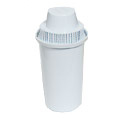
Crystal Quest pitcher replacement filter

Manufacturer: Crystal Quest
Model Number: CQE-RC

4 stages of convenient filtration with a 2,000 gallon capacity.

In stages 1 and 2 KDF55 and KDF85 media reduce iron, mercury, copper, nickel, chromium, other dissolved metals, and harmful bacteria.

Stage 3 features an ion exchange resin that reduces heavy metals (such as lead, copper, aluminum) and lowers water hardness.

The fourth and final stage, a bed of granulated activated carbon (GAC) reduces chlorine by 99.9%, gets rid of bad tastes and odors, reduces pesticides and chemicals that are linked to cancer risks (i.e. benzene, THM’s, toxaphene).

How do you know if you need a water filter?

The answer, quite simply, involves testing your water. You can either test it yourself using a home water testing kit like the Water Quality Test Kit from SenSafe… or you can have a certified water testing laboratory such as National Testing Labs analyze your water.

In cases where homeowners suspect contamination, we always suggest using a certified water testing lab. Better to play it safe than sorry because… It’s your water, your health… and your LIFE!

Jul
20

Water Filter to Remove Tannins

Water Testing BlogHardness, Iron, manganese, Personal Water Filter, Pesticide, Water Filter

The presence of tannins in drinking water can give water a “tangy or tart aftertaste. Some people have also attributed a musty or earthy odor in their water to tannins.” Also, “They normally have a faint yellow to tea-like color, and can cause yellow staining on fabrics, fixtures, china and laundry.” ( source )

For the reasons mentioned above, and possibly a wide range of others, most people would prefer their drinking water not contain tannins. If you find yourself in that category of people, then the whole house water filter for tannin removal ought to pique your interest.

In the first stage water travels through a 20″ sediment cartridge designed to remove sediment, silt, sand and dirt… an action which helps to extend the life of water softeners/filters and helps to prevent damage to control valves and pumps.

In the second stage, water travels through a 1.5 (or 2.0) cubic foot Tannin reducing mineral tank controlled by an Automatic Microprocessor Control valve which regulates the amount of time water spends in the tannin reducing tank. The longer time the water spends in contact with the special ion exchange media, the more effectively the media works to remove naturally occurring organics and organo-metallic complexes

In the third and final stage of filtration water travels through a 20″ solid carbon cartridge designed to remove volatile organic carbon compounds (VOC’s), insecticides, pesticides and industrial solvents.

  • Maximum Removal Capacities: 5ppm Tannins and 40 grains hardness
  • Maximum Iron and Manganese Levels: Combined Manganese and Iron levels must be below 0.2ppm (test for total iron, test for manganese)
  • Filter Life: 1.5 cu.ft – 5-7 years, 2 cu.ft – 7-8 years
  • Conforms to paragraph 21CFR173.25 of the Food Additives Regulations of the F.D.A.
  • Solid 316-Stainless Steel Tank
  • Stainless Steel Bypass Valve
  • 10 Year Warranty on Resin Tank and Brine Tank Assembly
  • 5 Year Warranty on All Computer Monitored Control Valves

For more information on this tannin removal system, click here.

Jul
17

Water Pitcher Filter to Remove Chlorine and Heavy Metals

Water Testing BlogBacteria, Chlorine, Copper, Hardness, Iron, Lead, mercury, Metals, Pesticide, THM, Water Filter, Water Testing

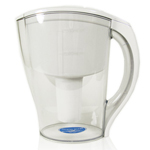
Crystal Quest Pitcher Water Filter
Manufacturer: Crystal Quest
Model Number: Pitcher-Ultimate

Large capacity water pitcher w/ built-in filter provides clean, great-tasting water conveniently chilled and stored in your refrigerator.

Capable of removing more than 99% chlorine from more than 2,000 gallons of water, this large 10-cup (2.5 quarts) pitcher features a slim, space-saving shape that fits neatly in pretty much any refrigerator. Filters have a life expectancy of between 6 and 12 months depending upon water usage rate.

The Crystal Quest Pitcher Water Filter makes use of a high quality 4 filter technology to produce drinking water of superior quality:

  • Stages 1 & 2 — Two types of specialized filtration media (KDF55 and KDF85) greatly reduce and/or eliminate dissolved metals such as iron, mercury, copper, nickel, chromium. Bacteria also gets filtered out at this stage.

  • Stage 3 — Ion exchange resin reduces heavy metals such as lead, copper, and aluminum. Water hardness levels get drastically reduced in this stage as well.

  • Stage 4 — Granulated activated carbon (GAC) reduces chlorine (99.9%), removes bad taste(s) and odor(s), and reduces pesticides and chemicals linked to increased cancer risks (i.e. benzene, TTHMs and toxaphene).

    Need another great reason to consider the Crystal Quest Pitcher Water Filter? Consumer Digest rated it as a best buy for 2 years in a row (2006, 2007).

    Your Cost at FilterWater.Com: Around $25