About
Do you know what's in YOUR water? Learn about water quality, water quality testing, and water quality testing products that can help you make informed, educated decisions regarding the water treatment options for your home, office, swimming pool... and life.
Contact Us
Got a question about water quality? Want to share a water quality article or water quality article with others?

Visit our Contact Us Page to ask a water quality question or submit water quality information.

RSS Feed
Get the most recent water quality posts and comments by subscribing to the Water Testing Blog RSS Feeds.
Subscribe to RSS! Subscribe to RSS Comments!

Archive for the ‘Reverse Osmosis’ Category

Jul
14

Replacement RO Membranes for Commercial Units

Water Testing BlogPersonal Water Filter, replacement water filter, Reverse Osmosis, Water Filter

After our recent posting about commercial reverse osmosis units we expected to receive inquiries about them, but we NEVER expected for so many of you to ask the same question: “What do the replacement RO membranes cost?”

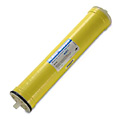
Dow Low Energy Replacement RO Membrane
Low Energy Replacement RO Membrane
Up to 2,400 Gallons per Day

Honestly, we had not pondered that question… until now. Though we checked only one site, it appears as though one may want to do their homework before investing in a commercial reverse osmosis water filter if pinching pennies matters because the RO membranes in the 4,000 gallons per day unit we brought to everyone’s attention uses 4″x40″ filters that cost no less than $290 apiece on the various sites we checked.

We suppose, however, that anyone willing and ready to drop around $5,000 on a high volume water filtration system probably expects to spend a few bucks on the unit’s replacement RO membranes

Thankfully, though, replacement reverse osmosis membrane prices for point-of-use systems for households, small businesses, etc. still cost in the range of $100 or so.

Now that we’ve done a little research, we can definitely say that anyone considering purchasing a reverse osmosis unit should make sure the unit they want to purchase uses a universal size of ro membrane — else face really high replacement costs and/or the risk of not being able to find a replacement at all!

Jul
13

Reverse Osmosis Filter for Commercial Applications

Water Testing BlogPersonal Water Filter, Reverse Osmosis, TDS, Water Filter

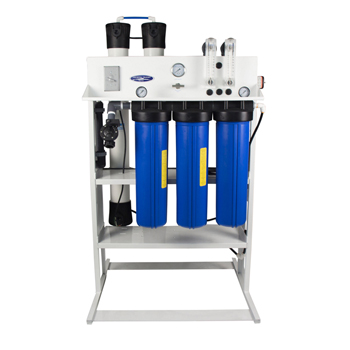
Every once in a while we will get an inquiry from folks interested in water filters for larger, more robust applications… and for those folks we have written today’s post about a reverse osmosis filtration system for commercial applications capable of producing up to 4,000 gallons of highly filtered drinking water a day.

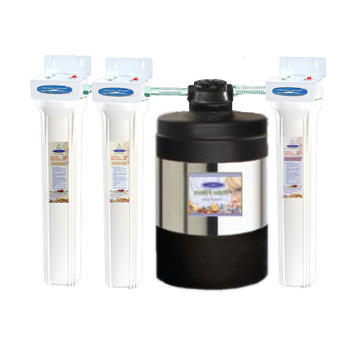
A company we have talked about in the past, Crystal Quest, has come out with a commercial (or whole house) reverse osmosis water filter system that uses (2) two 4″ x 40″ TFC HF1 Membranes, (1) one 4.5″ x 20″ Big White 5 micron sediment filter, (1) one 4.5″ x 20″ Big White 10 micron carbon block filter and, (1) one 4.5″ x 20″ Big White 1 micron sediment filter to effectively filter source water pushed through by a single 1 HP Multistage Goulds Pump and Motor (110/220 Volts AC, 60/50 Hertz).

Neatly packaged on a powder coated (white) aluminum, lightweight frame, this unit also boasts an inline TDS monitoring system so operators can keep a watchful eye on the purity of water produced by the system.

What good does monitoring TDS do?

When operating properly, a reverse osmosis system like the one pictured here, or like smaller, point-of-use versions such as the Crystal Quest Thunder 1000 CP, which combines reverse osmosis and ultrafiltration, will strip water of pretty much any dissolved matter… so if a TDS meter detects dissolved solids in water post-filtration, then something has gone wrong during the filtration process and one or more of the filter elements may need replacing.

If, by chance, your water usage does not require such a high volume of purified water on a daily basis, you may wish to consider the 2,500 gallon commercial reverse osmosis system or, if you just need a system for in-home use, you can find a number of units worth taking a look at on the Filter Water Web Site.

Filter Water: Portable RO Filter
Portable RO Filter

Filter Water: Crystal Quest Thunder 1000
Crystal Quest Thunder 1000

Filter Water: Crystal Quest Thunder 4000
Crystal Quest Thunder 4000

Feb
10

EPA to Regulate Perchlorate in Drinking Water — Finally

Water Testing BlogMunicipal Water Test, Personal Water Filter, Reverse Osmosis, Water Quality Testing, Water Testing

We recently read that the United States Environmental Protection Agency plans to enact new guidelines aimed at monitoring perchlorate levels in drinking water and requiring corrective actions if higher than acceptable levels get detected.

The Environmental Protection Agency (EPA) announced in early February it will be implementing a standard that regulates the amount of perchlorate that can be in drinking water. Perchlorate (a salt derived from perchloric acid) is a man-made and naturally occurring substance that is found in rocket fuel, fireworks, and other combustible products and has been linked to thyroid problems in young children and pregnant women.

Between 2001 and 2005, the EPA monitored drinking water sources in sources all over the United States and found that 153 sources in 26 different states contained perchlorate. In most positive sources, the drinking water was contaminated by improperly disposed rocket fuel and other chemicals at plants, testing sites, and even military bases. ( source )

What prompted the EPA to take closer look at perchlorate in drinking water? According to the EPA’s own web site,

“Scientific research indicates that perchlorate may disrupt the thyroid’s ability to produce hormones that are critical to developing fetuses and infants. Monitoring data show more than 4 percent of public water systems have detected perchlorate and between 5 million and 17 million people may be served drinking water containing perchlorate. The science that has led to this decision has been peer reviewed by independent scientists and public health experts including the National Academy of Sciences. Perchlorate is both a naturally-occurring and man-made chemical that is used in the manufacture of rocket fuel, fireworks, flares and explosives, and may be present in bleach and in some fertilizers. This decision reverses a 2008 preliminary determination by the previous administration, and considers input from almost 39,000 public comments.”

So… How can a person learn if their tap, city and/or municipal water supply contains unacceptable levels of perchlorates? Each year your local water department must make available Consumer Confidence Report that tells consumers what contaminants showed up during routine testing throughout the year and from source(s) it extracted its water.

Removing/Reducing perchlorate levels in drinking water?

As usual, when dealing with a particularly unpleasant drinking water contaminant, water professionals suggest the use of a quality reverse osmosis drinking water system for the job.


Watts 315
Reverse Osmosis System
Meets NSF/ANSI Standard 58


Watts 415
Reverse Osmosis System
Meets NSF/ANSI Standard 58

Watts 525
Reverse Osmosis System
Meets NSF/ANSI Standard 58
Feb
1

Other NSF/ANSI Certified Reverse Osmosis Systems

Water Testing BlogPersonal Water Filter, Reverse Osmosis, Water Filter

Recently we received an email which accused us of having bias when it comes to the reverse osmosis water treatment systems we mention. Apparently we can’t discuss the things we like on our own web site.

Who knew? Certainly not us! Ha ha.

Having said that, in hindsight we do realize that we have done a not-so-great job when it comes to offering up options for NSF/ANSI certified reverse osmosis water treatment systems… so today we’d like to bring a family of three NSF/ANSI certified reverse osmosis systems manufactured by Watts Premier, Inc. to your attention.

The Watts 315, Watts 415 and Watts 525 have all tested and certified to NSF/ANSI Standard 58 for the reduction of Arsenic (Pentavalent), Barium, Cadmium, Chromium (Hexavalent), Chromium (Trivalent), Copper, Cyst, Fluoride, Lead, Radium 226/228, Selenium, Turbidity, and TDS — and each one has a price tag under $300.


Watts 315
Reverse Osmosis System
Meets NSF/ANSI Standard 58


Watts 415
Reverse Osmosis System
Meets NSF/ANSI Standard 58

Watts 525
Reverse Osmosis System
Meets NSF/ANSI Standard 58

The main difference between the three units? From what we can tell the main difference lies in the number of filtration steps in the units:

  • Watts 315 RO System — 3 levels of filtration: 5 micron Sediment Pre Filter 10″. Granular Activated Carbon Block Pre Filter 10″. Extruded Carbon Filter (CTO).

  • Watts 415 RO System — 4 levels of filtration: 5 micron Sediment Filter for suspended solids. Granular Activated Carbon Filter to improve taste and odor while reduce heavy chlorine presence. High Quality TFC Membrane. In-Line Granular Activated Carbon Post Filter to give a final polishing to water for improved taste and odor.

  • Watts 525 RO System — 5 levels of filtration: 5 micron Sediment Filter for suspended solids. Granular Activated Carbon Filter to improve taste and odor while reduce heavy chlorine presence. Carbon Block Pre Filter. High Quality TFC Membrane. In-Line Granular Activated Carbon Post Filter to give a final polishing to water for improved taste and odor.

We hope that by presenting a few more affordable reverse osmosis water filters that have earned NSF Certification (see this page for more details on these units’ NSF qualifications) we have helped a few people become more familiar with the sorts of compounds and potential drinking water contaminants that reverse osmosis systems can reduce/remove.

Jan
31

Fluoride Removal Systems… Unaffordable?

Water Testing BlogFluoride, Reverse Osmosis, Water Filter

The other day we received an inquiry from ‘Margaret M’ regarding the affordability of fluoride removal systems for home use. Seems like every other day we get question about fluoride in drinking water, but we don’t mind. The more questions we get, the more interest in fluoride we know people have.

Although we have not, yet, decided for ourselves how we feel about the fluoridation of public water supplies, we do know that many people have already taken sides and line have already gotten drawn in the sand.

One one hand, some folks believe fluoridation of public water supplies has greatly helped the general public by making teeth more resistant to cavities and decay. On the other hand, with all the other sources of fluoride (i.e. dietary supplements, fluoride toothpaste, etc.) in the general public’s diet these days, some people have unknowingly received potentially unhealthy amounts of exposure to fluoride… and technically, fluoride counts as a toxic compound.


Pentek RO-3500
NSF/ANSI Certified for Fluoride Reduction

Getting back to the point of this article, though, Margaret asked, “I read on About.Com that reverse osmosis systems will remove fluoride from water an that they are too expensive for general use. Is that true?”

Quite honestly, we guess that the information on About.Com got posted a number of years ago when reverse osmosis water filtration systems did cost a small fortune — but those days have come and gone.

Nowadays the average homeowner can pick up an NSF/ANSI Certified point-of-use reverse osmosis water treatment for under $300.

As an example, the Pentek RO-3500 bears the NSF Mark (NSF/ANSI STANDARD 058) for its reduction of Arsenic (Pentavalent), Barium, Cadmium, Copper, Chromium (Hexavalent), Chromium (Trivalent), Cyst, Fluoride, Lead, Nitrate/Nitrite, Radium 226/228, Selenium, TDS, and Turbidity.

It also bears a second NSF Mark (NSF/ANSI STANDARD 042) for reduction of taste, odor and chlorine.

The first step towards choosing a water filter system?

Get your water tested by a certified water testing laboratory such as National Testing Laboratories to see what, if any, unwanted drinking water contaminants your water contains.

Jan
26

Test Kit for Antimony?

Water Testing BlogHome Water Test Kits, Home Water Testing, Metals, Reverse Osmosis, Testing Devices, Water Quality Testing, Water Test Kit, Water Testing

Recently we received a request for information on a test kit that we had never considered looking for — until now. So naturally, we just HAD to go and see if we could find the test kit.

“Dear Alll, I’m looking for a kit for antimony determination in drinking water to comply with the Italian Standards of 5 microgram/L. Best Regards, Andrea V.”

Wow. Antimony? We told you no one ever asked about a test kit for it before… so as just said, after receiving that inquiry we needed to spend some time doing research before we could answer their question.

The only test kit we located required a person to take a sample and send it off to a laboratory for analysis. See Premium Drinking Water Test Kit on TestCountry.Com for additional information on the only test kit for antimony that we could find… unless you wanted to start your own analytical chemistry lab!

The Premium Drinking Water Test Kit tests for 19 drinking water parameters: Antimony, Arsenic, Beryllium, Copper, Lead, Thallium, Uranium, Barium, Cadmium, Chromium, Mercury, Nickel, Selenium, Aluminum, Iron, Manganese, Zinc, Fluoride, and pH levels.

Where does antimony come from?

From what we read, antimony occurs naturally in the environment as ore deposits in the ground which ground water can erode and pick up as passes over, around or through the deposits.

Industry mines and refines antimony into compounds such as antimony trioxide, a compound commonly used as a flame retardant. Other uses of antimony include batteries, coloring agents (pigments) and in the manufacturing of ceramics and glass.

What harm can antimony cause?

Prolonged exposure to drinking water containing excessive amounts antimony over a number of years may result in elevated blood cholesterol levels and abnormally low blood sugar counts.

Maximum Contaminant Level (MCL) for antimony in drinking water?

Earlier in this posting Andrea mentioned that the Italian Standard allows for a maximum of 5 micrograms/liter. The United States EPA has set the Maximum Contaminant Level for antimony in drinking water at 6 parts per billion, or 6 micrograms per liter.

Why the stricter guidelines in Europe? Not sure, but we suspect that the US will follow suit in due time. That, and we think the US will place greater restrictions on the use and disposal of antimony by industry, too.

Lead in Water Test Kit

Filters Fast: Manganese in Water Test Kit
Manganese in Water Test Kit

Filters Fast: Metals in Water Test Kit
Metals in Water Test Kit

How can a person remove antimony if found in their water supply? According to what we read, one method involves coagulating the metal with a sequestering compound and then filtering out the resultant precipitate.


Pentek RO-3500
Reverse Osmosis System

A method that sounds a whole lot simpler involves using a reverse osmosis filtration system such as the Pentek RO-3500 which, conveniently, has also certified to NSF/ANSI Standard 58 for the reduction of Pentavalent Arsenic, Barium, Cadmium, Copper, Hexavalent & Trivalent Chromium, Cyst, Fluoride, Lead, Nitrate/Nitrite, Radium 226/228, Selenium, TDS and Turbidity.

You can find other reverse osmosis water treatment units on the WaterFilters.Net and FiltersFast.Com web sites.

Jan
11

Lower Levels of Fluoride in Drinking Water on the Way?

Water Testing BlogFluoride, Reverse Osmosis, Water Quality Testing, Water Testing

Time for an update about fluoride in drinking water from two different government organizations… The U.S. Department of Health and Human Services and the U.S. Environmental Protection Agency. Therefore, if you have concerns about fluoride in your drinking water, you may want to keep tabs on what happens after this announcement.

  • Government agencies considering lowering recommended level of fluoride from the range of 0.7 to 1.2 mg/L down to 0.7 mg/L.

  • Maximum level allowed in drinking water may also get reduced by the EPA.

  • Americans now exposed to fluoride from numerous sources.

  • The eXact Micro 7+ water testing meter can test for fluoride levels between 0.1 and 1.1 mg/L (ppm) using proven SPADNS chemistry.

Recently the U.S. Department of Health and Human Services and the U.S. Environmental Protection Agency stated publicly that they will soon recommend lowering the maximum amount of fluoride allowed in water to a level that will still give citizens the benefits of reduced tooth decay while hopefully preventing excess exposure to fluoride.

Current guidelines place the maximum allowable levels of fluoride between 0.7 and 1.2 milligrams per liter (mg/L or ppm) and the new recommendation would place that limit at 0.7 milligrams per liter.

Why the alleged need for guideline reform and upper limit reduction? Quite simply, the world has changed and no longer do Americans get their dose of fluoride from only one source. The quote below goes into more detail on that point.

“Today both HHS and EPA are making announcements on fluoride based on the most up to date scientific data,” Pete Silva, EPA assistant administrator for the Office of Water, said in statement. “EPA’s new analysis will help us make sure that people benefit from tooth decay prevention while at the same time avoiding the unwanted health effects from too much fluoride.”

The statement notes that Americans have access to more sources of fluoride than they did when water fluoridation was first introduced in the United States in the 1940s. Water is now one of several sources of fluoride. Other common sources include dental products such as toothpaste and mouth rinses, prescription fluoride supplements, and fluoride applied by dental professionals. Water fluoridation and fluoride toothpaste are largely responsible for the significant decline in tooth decay in the U.S. over the past several decades. ( source )

Will changes, if they occur as a result of these recommendations, have any effect on the lives of most people? No, not really. We will all most likely go on with our lives completely oblivious to the reduction in fluoride levels in our drinking water.

That does not mean, however, that some folks will stop their efforts to get all fluoride removed from drinking water. A certain element exists in our society that despises fluoride in all its forms and wants it vanquished from public water supplies altogether.

Fluoride reduction in drinking water?

If government agencies won’t mandate the removal and/or reduction of fluoride levels in drinking water, and people still want it, home water filters for fluoride reduction do certainly exist. Note that we said fluoride reduction and not fluoride removal.

To our knowledge no water filtration units commonly available to the general public will remove all fluoride from drinking water. Quality water filtration units will, however, bear certification to reduction standards established by organizations such as the NSF, an independent testing organization involved in many areas of quality and safety dealing with consumer goods.

As an example, NSF Standard 58 deals directly with the reduction of specific drinking water contaminants. See below.
NSF/ANSI Standard 58:

“Overview: This standard was developed for point-of-use (POU) reverse osmosis (RO) treatment systems. These systems typically consist of a pre-filter, RO membrane, and post-filter. Standard 58 includes contaminant reduction claims commonly treated using RO, including fluoride, hexavalent and trivalent chromium, total dissolved solids, nitrates, etc. that may be present in public or private drinking water. ( source )

Want an example of an affordable reverse osmosis system that has tested and certified to NSF Standard 58, the Pentek RO-3500 Monitored Reverse Osmosis System reduces for TDS, Fluoride, Turbidity, Lead, Nitrate, Selenium, Arsenic, Copper, Cadmium, Barium, Cyst, and Radium… and has a price tag under 270 dollars.

Jan
3

Chromium in Drinking Water Information

Water Testing BlogArsenic, Chromium, Copper, Environmental, Fluoride, Lead, Metals, Municipal Water Test, Nitrate, Nitrite, Reverse Osmosis, TDS, Water Testing

With all of the recent publicity that chromium has gotten as a result of EWG Reports Finding Chromium in Municipal Water Systems, we figured some of you might want to know a bit more about the health effects of chromium, where chromium comes from, how to test for chromium in drinking water, and most importantly… how to get rid of chromium if detected in one’s drinking water.

  • Chromium will appear in nature in one of three forms: Chromium(0), Chromium(III) or Chromium(VI).

  • Chromium(0) gets used in the production of steel.

  • Chromium(III) and/or Chromium(VI) may appear in compounds used for chrome plating, making dyes and pigments, tanning leather, and preserving wood.

  • Chromium(III) aids the human body in its use of sugar, protein and fat, though health officials suggest not using excessive amounts of dietary supplements containing chromium compounds.

  • Higher levels of chromium(VI) may cause irritation to the lining of the nose, ulcers in the nose, runny nose, and other breathing problems such as asthma, coughing, shortness of breath, and/or wheezing. While both Chromium(III) and Chromium(VI) in air can cause the aforementioned problems, effects occur at much lower concentrations of Chromium(VI) than Chromium(III).

  • Chromium(III) and Chromium(VI) may exist in drinking water and have no associated tastes or odors.

  • If ingested, Chromium(III) compounds tend to have less toxic tendencies and appear to cause fewer health problems than Chromium(VI) which causes anemia, irritation of the stomach, ulcers in the stomach, and ulcers in the small intestine.

  • Some laboratory animals exposed to Chromium(VI) experienced sperm damage and damage to the male reproductive system.

  • Some Chromium(VI) compounds may cause skin ulcers and a percentage of the population have extreme sensitivity to Chromium(VI) and/or Chromium(III) with allergic reactions manifesting themselves as severe redness and swelling of the skin.

  • The Department of Health and Human Services (DHHS), the International Agency for Research on Cancer (IARC), and the EPA have determined that Chromium(VI) compounds are known human carcinogens. ( source )

  • Some developmental effects have been observed in animals exposed to Chromium(VI). ( source )

Regulations, rules and recommendations pertaining to Chromium?

The EPA has determined that exposure to chromium in drinking water at concentrations of 1 mg/L for up to 10 days is not expected to cause any adverse effects in a child. The FDA has determined that the chromium concentration in bottled drinking water should not exceed 1 mg/L. The Occupational Health and Safety Administration (OSHA) has limited workers’ exposure to an average of 0.0005 mg/m3 chromium(VI), 0.5 mg/m3 chromium(III), and 1.0 mg/m3 chromium(0) for an 8-hour workday, 40-hour workweek. ( source )

What NSF/ANSI Standards apply to chromium in drinking water?

Standard 53, Standard 58, and Standard 62.

For more information on the specifics of those NSF/ANSI Standards and others, take a look at the NSF International Web Site. It offers a wealth of information for both the consumer AND water professionals alike.

Pentek, Ametek, US Filter -- RO-3500 Reverse Osmosis Water Filter
RO-3500 Reverse Osmosis Water Filter
NSF/ANSI Standard 58 Certified

Removing chromium from drinking water?

As far as units for the average consumer, pretty much only reverse osmosis makes any sense. One could use a process like distillation, but it has a flow rate that most likely would not meet homeowner needs and a much higher entry cost.

As an example of a reverse osmosis that carries NSF Certification for chromium reduction, you may want to take a look at the Pentek RO-3500 which has a price tag of under $270 and appears to offer a lot of filtering power for the money.

Pentek RO-3500 Reverse Osmosis Water Filters have tested and certified to NSF/ANSI Standard 58 for the reduction of Pentavalent Arsenic (Arsenic V), Barium, Cadmium, Copper, Hexavalent & Trivalent Chromium (Chromium VI & Chromium III), Cyst, Fluoride, Lead, Nitrate/Nitrite, Radium 226/228, Selenium, TDS and Turbidity.

Dec
30

Chromium Found in Drinking Water — Water Systems Not to Blame

Water Testing BlogHome Water Test Kits, Home Water Testing, Lead, mercury, Metals, Municipal Water Test, Reverse Osmosis, sensafe, Water Quality Testing, Water Test Kit, Water Testing

Water Metals (Heavy) Test Kit
Water Metals Test Kit

Ordinarily when a water treatment facility’s product tests positive for too great a concentration of a heavy metal such as lead, copper, iron, mercury, etc. all sorts of people — especially environmental watchdog groups — lay the blame on the doorstep of the water treatment facility.

But not this time. Environmental Working Group (EWG), a lobbying group hailing from Washington, D.C., regards the finding of hexavalent chromium in several public water supplies as a problem, yes, but not necessarily all the fault of local water treatment facilities.

Instead, EWG would like for people to place the blame with the sources of chromium contamination.

Makes perfectly good sense to us. Stopping the flow of pollutants from entering the water supply sure would take a lot of the burden off of water treatment plants and ultimately off of the end user… AKA: All of us in the general public.

A Washington D.C. based environmental group says it’s not trying to put blame on local cities for contamination of hexavalent chromium. A single sample taken an Avion Water Company customer’s tap was one of 35 taken across the country that showed levels in excess of what the State of California is proposing as a public health standard. “This is an upstream pollution problem that needs to be stopped at the source. We need better water source protection and while we do advocate all utilities do their own testing for this and let their all their customers know the results, this doesn’t mean that they’re the ones responsible for the pollution.”

Leanne Brown with the Environmental Working Group says the only consumer level filtering system that can remove this chemical is a reverse osmosis system. Hexavalent chromium can come from manufacturing, pulp mills, and leather tanning. ( source )

So where does that leave average people like us? In the exact same place as before this result… in charge of making sure we have safe, clean drinking water going into our glasses.

Obviously a problem with chromium-6 pollution exists in this country and we, as end users, will not know whether or not we personally have chromium-6 (hexavalent chromium) in our own water supplies unless we perform testing on a periodic basis.

Chromium (Chromate) in Water Test Strips
ITS Part Number: 480047
Chromium in Water Test Kit

How to test for chromium-6 (hexavalent chromium) in your water

As usual, nothing beats laboratory testing of your water by a certified water testing laboratory (i.e. National Testing Labs)… but that does not mean each and every test needs to get shipped off to a lab.

Periodic testing for chromium-6 using at-home drinking water test kits between annual (or more frequent) lab testing provides continual piece of mind and does not cost a fortune.

SenSafe manufactures a simple dip-n-read test strip for hexavalent chromium (chromium-6) that provides results in under 2 minutes… and 50 tests costs somewhere in the neighborhood of around $17.00 (just $0.34 per test!).

Detection Levels for the SenSafe product: 0.1, 0.25, 0.5, 1, 2.5, 5, 10, 25, 50 mg/L (parts per million).

If we found one metal, might there be more?

No one can answer that question honestly… without conducting additional testing. A home or business owner might assume that the presence of chromium or other heavy metals such as lead, mercury, etc. also exist in their water supply, but as we said, without additional testing no one will know for sure.

A good way to test for metals commonly found in drinking water?

If you want a fast and inexpensive testing method for metals in drinking water that will tell you if you have a dissolved metals concentration greater than 10 parts per billion in your water, take a look at the Water Metals Check Test Strips.

While this product will not tell you exactly WHICH metal(s) your water contains, it will allow you to quickly and easily determine whether or not you will want to opt for other, more ion specific testing.

Filter Water: Manganese in Water Test Strips
Test Strips for Manganese

Filter Water: Lead in Water Test Kit
Lead in Water Test Kit

Filter Water: Mercury in Water Test Strips
Mercury in Water Test Strips

Dec
29

Why Do Cities Issue Boil Water Advisories?

Water Testing BlogBacteria, City Water Test, Coliform, Metals, Municipal Water Test, Reverse Osmosis, Water Quality Testing, Water Testing

The other day we received an email from ‘SandraDiDeeYo’ who asked a question we could not believe no one had asked us in the past…

Complete Water Quality Test Kit
Tests for 13 Different Parameters

“The news is full of boil water advisories in my state recently. Maybe I never paid attention before and they were always in the news but since now I am paying attention I want to know why do cities advertise boil water advisories?”

A very good question, indeed, and not one that has a definite set of answers… though we will attempt to give a few reasons anyways explaining why cities might issue boil water advisories.

  1. Water main breaks: Unexpected ruptures in the previously sealed system may allow unwanted bacteria and other contaminants to enter the water supply.

  2. Scheduled water line maintenance: Opening the previously sealed water line for any reason, even for scheduled maintenance, can allow unwanted contaminants access to the water supply.

  3. Pump failures: If a pump or related component fails water pressure in the lines drops. When that happens, back pressure in the water lines could possibly ‘suck’ unwanted contaminants into water supply via small cracks or fissures ordinarily not considered a problem because normal operating pressure expels water out through those openings in the form of small leaks.

    Complete Water Quality Test Kit
    WaterSafe All-in-One Test Kit Tests for
    Bacteria, Lead, Pesticides, Nitrates, Nitrites, Chlorine, pH, and Hardness

  4. Water quality testing reveals contamination: Seemingly an obvious reason, but we mention it to remind everyone that municipal and private water treatment facilities must, by law, perform a set number of tests on the water they distribute each and every day, hour, week and month.

    If a predetermined number of tests come back positive for bacteria the facility must, by law, notify local authorities who will issue a boil water alert until the situation gets remedied.

Having said what we just said, we’d now like to take a moment to thank the dedicated men and women who spend their days monitoring the quality of the drinking water too many people take for granted.

Interested in learning more about the quality of the tap water in YOUR area? Contact you local water treatment facility or health department and ask for the most recent Water Quality Report. By law they have to provide you with a hard copy or the link to where they have the information posted online.

What does boiling the water do?

Quite simply, it kills off any potentially harmful that may have slipped into the water supply on its way to your home or office. Do make sure you bring the water to a full rolling boil before use and make sure you do not leave the water sitting around too long out in the open (unsealed) because boiling will have also removed any disinfectants normally found in your water that provide a buffer against incidental bacteria floating around in the air.

One danger associated with boiling water, aside from the risk of getting scalded or badly burned by hot water, has to do with metals in drinking water. Boiling water concentrates the metals — if present in the source water — so if your water normally contains dissolved metals you may want to consider switching to bottled water instead of boiling your water until the boil water advisory gets lifted.

Interested in removing metals from your drinking water? You may want to consider a reverse osmosis water filtration system.