About
Do you know what's in YOUR water? Learn about water quality, water quality testing, and water quality testing products that can help you make informed, educated decisions regarding the water treatment options for your home, office, swimming pool... and life.
Contact Us
Got a question about water quality? Want to share a water quality article or water quality article with others?

Visit our Contact Us Page to ask a water quality question or submit water quality information.

RSS Feed
Get the most recent water quality posts and comments by subscribing to the Water Testing Blog RSS Feeds.
Subscribe to RSS! Subscribe to RSS Comments!

Archive for the ‘Water Filter’ Category

Nov
30

Increased Prostate Cancer Risk Possibly Linked to Estrogen in the Environment

Water Testing BlogEnvironmental, Personal Water Filter, Reverse Osmosis, Water Filter, Water Quality Testing

A recent study has found a possible link between increased risk of prostate cancer in areas where more women use specific types of birth control — but as usual other recent studies did not find the same correlation.

We feel the importance of the study lies more in how some experts believe people have become overly exposed to estrogen.

Rather than simply stating that the increased estrogen levels come directly from ingestion of birth control medications, the study implied that people re-ingested estrogen that had worked its way out of women on the pill via normal waste channels, wound its way through (or in some cases around) waste water treatment facilities, entered the environment, and finally gotten consumed or absorbed by plants and animals that people then ate as part of their everyday fare.

Removing estrogen from drinking water?

We wish we had better news on this topic, but we must sadly report that we have yet to hear definitively that any one type of water filtration unit does a good job of removing estrogen from drinking water — nor possibly a number of other pharmaceutical byproducts currently entering our water supply every day.

Reverse Osmosis Removes Many Pharmaceutical Residuals

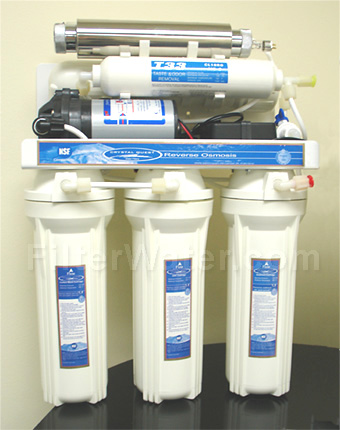
We have, however, seen that some companies tout reverse osmosis as an effective way to remove MANY of those pharmaceutical byproducts, but NOT all — and we would certainly suggest that anyone considering the purchase of a reverse osmosis for the purpose of removing pharmaceutical residuals review the specifications carefully before making an investment.

Moral of the story?

Experts tell us our water supply keeps getting tainted by new things, or possibly by things we could not test for until recently, and the majority of us just sit idly by and say, “Oh well. The government (or someone else) will take care of it.”

Listen folks: The contaminants already exist and just like with soooooo many other ‘newly detected risks’ the responsibility to safeguard one’s self and loved ones will fall squarely on the shoulders of the individual… until those in power agree which bill will do the most good w/o ruining careers of friends, family, etc.

All of us here at Water Testing Blog would love to know if folks in power and/or in big business already have water filtration units installed their homes and offices and/or have their water trucked in from suspected safe sources. How many, if any, will answer that question?

For more specifics on the study, take a look at this page ( Prostate Cancer May be Linked to Birth Control Pills in Water Supply ); one of several we found while doing a search on the topic.

Nov
30

Why Might I Need a Water Filter?

Water Testing BlogEnvironmental, Fracking, Home Water Testing, Metals, Pesticide, Water Filter, Water Quality Testing, Water Testing, Well Water

We get asked this question more times than we care to count… and we don’t mind answering it because at least it means the people asking us have taken an interest in the quality of the water they drink, cook with and use for showering/bathing.

Disposable Water Filter for Nitrates
Easy to Install, No Maintenance
Water Filter for Nitrates and Other
Unwanted Drinking Water Contaminants

Natural Contamination

Contamination of natural bodies of water (including lakes, streams, aquifers and groundwater) can have numerous characteristics and sources. While many believe only ‘big business’ causes water pollution, all humans and animals release waste products that eventually find their way into lakes, rivers, streams, oceans, etc.

Scientists refer to this occurrence as ‘nutrient loading’ and when it happens too often in one location nutrient loading may result in bacterial contamination that eventually becomes detrimental to the environment and harmful to humans who unknowingly consume the water.

Contaminants often included in the list of ‘natural’ contaminants include things such as coliform bacteria, nitrates, nitrites, etc.

Therefore, if your drinking water comes from the ground (i.e. a well) you may have ‘natural’ things to worry about… and even municipal (i.e city, town, etc.) water sources have problems from time to time. Need proof? Ever hear of things called boil water advisories?

Unnatural Contamination

This type of contamination typically comes from accidental or intentional dumping of foreign matter into or too close to a body of water either on the the surface or under the ground.

Water Quality Test Kit
Water Quality Test Kit for
15 Water Quality Parameters

Common sources of groundwater and surface water contamination include improper disposal of industrial waste products, faulty septic tanks and waste water storage or processing equipment, landfills, pesticides and fertilizers.

Many experts believe the practice of hydraulic fracturing certainly belongs in the category of unnatural water contamination and pollution… and, of course, many other experts (who often work for or get funding from gas drilling companies) believe hydraulic fracturing poses no (or extremely limited) risks to the environment.

Thus far OUR opinion falls more in line with the folks who suspect that fracking (the nickname for hydraulic fracturing) may pose risks and that more research needs to get done before we turn the Marcellus Shale Formation under the United States into swiss cheese whose holes we filled with ‘questionable’ fluids containing a host of unknown compounds.

Moral of the Story?

You will NEVER know if your water contains unwanted contaminants UNTIL YOU GET IT TESTED and for that task you have several options: 1) Test for the basics yourself using a drinking water test kit; 2) Have a qualified drinking water laboratory test your water; or 3) test for the basics yourself with a water quality test kit and enlist the services of a qualified water testing lab from the list posted on the EPA’s Safe Water Web Site

Nov
29

BPA Back in the News… and Still in Our Systems

Water Testing BlogEnvironmental, Personal Water Filter, Water Filter

Not too long ago many news outlets contained broadcasts and articles about the presence of BPA, a hormone-disrupting chemical, in plastics and how people, especially pregnant women, should avoid eating out of containers containing BPA.

Today we read an article about a study that found a link between the consumption of canned foods and elevated levels of BPA in humans. According to the study’s findings, people who ate canned soup regularly had much higher levels of BPA in their urine than people who ate soup made with fresh ingredients.

People who ate a serving of canned soup every day for five days had BPA levels of 20.8 micrograms per liter of urine, whereas people who instead ate fresh soup had levels of 1.1 micrograms per liter, according to the study. BPA is found in many canned foods — it is a byproduct of the chemicals used to prevent corrosion.

“We are concerned about the influence of [hormone-disrupting] chemicals on health in general, and BPA is one of them,” Michels told MyHealthNewsDaily.

The study is published online today (Nov. 22) in the Journal of the American Medical Association. ( source )

So there you have it, folks: A good, solid reason to support farmers in your area by purchasing your foods fresh from grocery stores that buy local.

As far as BPA in plastics goes, we will say only that plenty of companies now use BPA-free materials in their containers so the risk of ingesting BPA from plastic containers is one that most of us can easily avoid – if we choose our plastic containers carefully.

Replace older plastic containers

… with newer ones bearing the BPA-Free badge. Oh, and if you routinely use old margarine tubs, cool whip tubs or other plastic tubs (like we do!) you should swap them out for tubs manufactured more recently, too.

And don’t forget to properly recycle the plastic items you decide to get rid of! We don’t want them ending up in landfills where they could possibly leach their BPA content into the environment over time!

Filter Water: BPA-Free Water Filter Pitcher
BPA-Free Water Filter Pitcher

Filter Water: BPA-Free Countertop Triple Water Filter
BPA-Free Countertop Triple Water Filter

Nov
28

Discount Codes for Water Filters

Water Testing BlogPersonal Water Filter, replacement water filter, Water Filter, Water Quality Testing, Water Test Kit, Water Testing

It appears as though even members of the water filter industry want to get in on the Black Friday and Cyber Monday madness. FilterWater.Com currently offers $5 off of purchases of $50 or more and $25 off of purchases of $500 or more.

While not massive discounts on their own, combine either offer with FilterWater.Com‘s offer of free shipping for orders over $99 and the savings really start to add up!

So, if you have previously waited to invest in water test kits, water filter systems or replacement water filters, you may want to start thinking about making that investment again real soon because the discounts will apparently disappear after 11/29/11 (tomorrow!).

countertop water filter
Countertop Water Filter

water test kit
Water Test Kit

shower water filter
Shower Water Filter

Sep
21

Filter Not Removing All Floating Stuff

Water Testing BlogBacteria, Home Water Testing, Personal Water Filter, Water Filter, Water Quality Testing, Water Testing

One danger we all face when purchasing a water filter: It doesn’t remove all the things we want it to remove. Yep, this can definitely happen to people if they do not have a thorough water quality analysis performed prior to purchasing a water filter for their home or place of business.

National Testing Labs Water Test Kit

Today’s question comes to us from someone in NYC (Brooklyn to be more precise) who has apparently installed a water filtration system in their home… but still has ‘floating white stuff’ in their water.

M. Elbaz wrote, “How can i check if water has copeds or bugs or parasytes? I use filter in Brooklyn ans still see white things floating around
Please advise asap”

Quite frankly, this question has a number of possible answers, but from what you have described, one of many situations may have resulted in the floating particulates you described:

  1. You have installed a water filter with too high a porosity rating, meaning the contaminants you want to filter out have too small a size for your filter to remove them.


  2. The installation of your water filtration system requires adjustment because some part of the unit is allowing unfiltered water to bypass the filtering process — or the actual filter itself has started to break down.


  3. Since we don’t know what class of filter you have installed (i.e. undersink, countertop, whole house, etc.) we will just throw this one out there for the heck of it: Often when people install filters that will still allow water to pass though existing faucets they fail to replace the screens in their faucets.

    Studies have shown that screens in faucets, if left unchanged for too long, will tend to collect specific deposits of contaminants in contaminated water — and then potentially release those contaminants into the water stream at a later time.


  4. Floating white particulates make us think more of mineral deposits than parasites, but it should still trigger an alarm that something isn’t quite right. Perhaps, and those kind of goes back to the last bullet point, the lines in your home post-filter have collected mineral deposits over the years and those now appear in your water?

As for your question regarding the possibility that your water contains parasites, bacteria, etc., contact a certified water testing laboratory in your area and have them perform a thorough analysis of your water.

Well Water Test Kit for Homeowners and Professionals
Well Water Test Kit for
Homeowners and Professionals

Steer clear of water treatment companies offering ‘free in-home testing’. Why? Simple: For one, no in-home test kit we have ever found can provide the thoroughness of testing required if you suspect parasites or other unwanted biological contaminants exist in your water supply.

Besides… a person from a water treatment company going to your home has one goal in mind: to make commission off the sale of a (potentially useless or otherwise unqualified) water treatment system.

Need help finding a qualified water testing laboratory in your area? Take a look through the EPA’s listing of State Certified drinking water laboratories. The laboratories on this list have passed rigorous qualification programs designed to weed out labs whose testing programs lack what it takes to accurately and professionally analyze drinking water samples.

Does that mean at-home bacteria test kits such as the WaterWorks™ Bacteria Water Test Kit have no purpose? Nonsense! Periodic testing for coliform bacteria — especially for well owners since no one government agency checks the quality of their water on a regular basis — will always make sense.

Important factors to think about when it comes to deciding when and/or how often to test the quality of your water:

  • For Well Owners: Changes in weather patterns (i.e. excessive rain, long periods without rain, flooding, etc.) can have adverse effects on the quality of water coming out of your well.

  • For City/Municipal Water Customers: Anything can happen to the miles of underground piping between the water treatment facility and no one will ever investigate until people start to get sick.

Performing regular spot checks on your water’s quality may allow you to detect potential problems well in advance of anyone becoming ill.

“It’s your water, your health… and ultimately your LIFE!”

Sep
1

Test Kit for Fluoride

Water Testing BlogeXact Micro 7+ Meter, Fluoride, Home Water Test Kits, Home Water Testing, Personal Water Filter, Testing Devices, Water Filter, Water Quality Testing, Water Test Kit, Water Test Meters, Water Testing

Today’s inquiry came from ‘Bill’ and it seems as though Bill has a bit of a bone to pick with fluoride in his drinking water and wants to do two things, both of which nearly bring tears to our eyes:

  1. Bill wants to test the fluoride level in his water before it goes into his water filter. As awe have said time and time again, without a baseline scan of your water’s quality you will undoubtedly run the risk of selecting the incorrect tools for cleaning up your water.

  2. Then, Bill wants to test the fluoride levels in the water after it leaves his water filter to make sure the filter did its job. Continual monitoring of one’s filtered water quality gives real-time performance data on one’s chosen water improvement device(s).

Enough of our words, though, and let’s here from Bill himself: “I am looking for a fluoride test–I am installing a filter to remove fluoride–and want to know what levelis presecn Please advise–the page on your website says to use the eXact Micro 7+ Water Testing Meter but the product description says nothing about it being used for fluoride”


eXact Micro 7+ Meter
Does Test for Fluoride

None of us here at Water Testing Blog have control over the content posted on the sites of merchants who sell the eXact Micro 7+ water testing meter… but we can assure you that the meter does have the ability to test for fluoride in drinking water.

As a direct result of your inquiry, Bill, we checked on the meter manufacturer’s web site for the current version of the eXact Micro 7+ water testing meter manual and on page 19 of the document you will find instructions on how to use their meter to test fluoride levels in drinking water.

As of 8/17/11, the date contained in the manual’s file name, the eXact Micro 7+ detects levels of fluoride in water as low as 0.1 ppm and as high as 1.1 ppm. As with any test procedure, use of proper dilution techniques would allow for the quantification of higher fluoride levels if needed.

Keep in mind, though, that the basic eXact Micro 7+ kit does not come with the necessary fluoride reagent strips. You will find those, along with many other optional reagentstrips for testing a bunch of other water quality parameters listed on the eXact Micro 7+ ReagentStrip page.

Filter Water: eXact Micro 7+
eXact Micro 7+
Basic Test Kit

Filter Water: eXact Micro 10
eXact Micro 10
Basic Test Kit

Filter Water: National Testing Labs Fluoride Test Kit
National Testing Labs
Fluoride Test Kit

Aug
31

Do They Make Filters for the Hot Water Line?

Water Testing BlogPersonal Water Filter, Water Filter

Today we’d like to address an issue often overlooked by folks looking to install a water filtration system: the quality of water coming out of the hot water tap or going into the washing machine, dishwasher, etc.

Pentek High Temperature Water Filter Housing (P/N 150015)
Pentek High Temperature
Water Filter Housing

Think of it this way: You don’t want water that contains potentially harmful contaminants in your drinking water or water that you cook with so… why would you want it in your bath/shower water or water used to clean your dishes?

At this time we’d like to point out that installing the correct whole house water filter system at the point of entry into one’s home — and therefore before the hot water tank — could certainly eliminate the need for a hot water filter.

Having said that, we’d also like to point out that some older hot water heaters may contribute to the contamination of the water they heat as their internal parts get older and begin to break down and/or corrode.

Types of filters for hot water lines?

For industrial applications where any number of potential water-based liquids need filtering companies make all sorts of highly specialized filters but for the average homeowner we have seen two basic types of hot water filters available: Carbon Block Filters remove chlorine, bad tastes, unpleasant odors and organic chemicals while Sediment filter out dissolved solids and other unwanted particulates.

How do I know if I should install a water filter?

You will never know for sure that you need a water filter, or what filter you should choose, until you have your water tested by a certified drinking water testing laboratory in your area or by a qualified mail-in water testing service such as National Testing Labs.

Aug
27

Quote on Doulton Gravity Fed Water Filter Requested

Water Testing BlogEmergency Responder, Personal Water Filter, Water Filter

Very recently we received an email from ‘Julio N.’ requesting immediate assistance with a water quality situation that may have resulted from Hurricane Irene. Although we won’t reveal his email to the general public (to keep the poor guy from getting spammed to death), something in it made us believe he hails from an area in the Caribbean.

If anyone thinks they have a legitimate offer of assistance to make this fellow, please fill out our online form and we will forward your information along to him.

We need and URGENT quote on 150,000 Doulton W9361122
SS-2 Gravity fet filter system.

Many thanks for response ASAP.

Best regards.

Julio N.

As of right now we know of two companies that carry the Doulton W9361122, SS-2 Gravity Fed Water Filter: Filters Fast (filtersfast.com) and Water Filters (waterfilters.net).

We seriously doubt, though, that either of those companies — or any distribution company has 150,000 units readily available. Therefore, it may make sense for you to contact a representative of the company that manufactures the Doulton SS2: http://www.britishberkefeld.com/.


Doulton 7″ Super Sterasyl
Ceramic Filter
W9121200


Doulton Super Sterasyl
Ceramic Filter Candle 10
DSS-1000


Doulton HIP/DIY
UltraCarb Filter System
HIP/DIY-UC

Aug
1

NSF/ANSI Standard 55 Class A or Class B for Home UV Water Treatment Systems?

Water Testing BlogBacteria, Coliform, Personal Water Filter, UV Sterilizer, Water Filter

Every once in a while we find ourselves faced with a water quality question whose answer we thing we ought to know, but for some reason never had cause to seek out in the past. A reader named ‘Nikelhoss’ recently asked,

“Which part of the nsf ansi standard 55 for ultraviolet water treatment systems applies to home units? Much thanks and thanks for the site, useful stuff on here.”


Trojan UV Max Pro 10, 20 & 30
Tested & Certified to NSF/ANSI Standard 55
for Class A UV Water Treatment Systems

My friends, flattery may not get you everywhere, as the old saying claims, but it will make us blush. Plus we may answer your question faster. Ha ha. :P

Rather than bore you by quoting the official definition of NSF/ANSI Standard 55 for Ultraviolet Microbiological Water Treatment Systems, we would like to point out a simple, yet often overlooked, truth that many people forget when exploring the wide world of water treatment systems for their home or business: Not every system will work for every water quality situation… and then we will provide a very relevant example to illustrate our point.

In the case of ultraviolet water filtration systems, two classes of NSF Certified ultraviolet water filtration systems exist:

But first, let us preface this by saying NSF/ANSI Standard 55 applies only to point-of-use (POU) and point-of-entry (POE) ultraviolet systems not intended for use on public water supplies (i.e. in water treatment facilities).

  • Class A — These ultraviolet water treatment systems must have an ‘intensity & saturation’ rating of at least 40,000 uwsec/cm2 and possess designs that will allow them to disinfect and/or remove microorganisms from contaminated water. Affected contaminants should include bacteria and viruses and the devices should perform in a manner that reduces threats posed by affected to a safe level.

  • Class B — These ultraviolet water treatment systems must have an ‘intensity & saturation’ rating of at least 16,000 uw-sec/cm2 and possess designs that will allow them to provide supplemental bactericidal treatment of water already deemed ‘safe’ by an official (i.e. State or Local) health agency.

So… Which type (class) of ultraviolet water treatment system makes the most sense for home use? That all depends on the source water for the home. If the home has well water and uses no other disinfection method or draws its water from bodies of surface water, we think investing in an NSF/ANSI Standard 55 Class A ultraviolet water treatment system may work out best.

As an example, check out the Trojan UV Max Pro 10, Trojan UV Max Pro 20 or Trojan UV Max Pro 30 on the Trojan UV Water Systems page on WaterFilters.Net.

If, on the other hand, you live in town and have municipal water or use a reverse osmosis system with a large holding tank, we think an NSF/ANSI Standard 55 Class A ultraviolet water treatment system may work out best — though, as always, we suggest testing your tap water for a period of time to establish a water quality baseline (to make certain more sinister bacterial contamination issues do not exist) before investing in a water treatment system designed to serve as a backup disinfection device.

For the purpose of putting a final UV polishing on drinking water previously determined ‘safe’, a device such as those listed on the Water Quality Association’s Gold Seal Certified Class B Disinfection Ultraviolet Water Treatment Systems may work out best, though one could easily still use a Class A unit in a Class B unit’s place — but not the other way around!

Jul
28

Fluoride Filter Systems for Under/Around $200

Water Testing BlogFluoride, Personal Water Filter, Reverse Osmosis, Water Filter

As the debate over fluoride in the public water supply rages on with no apparent end in sight, many people opposed to the idea of fluoridated drinking water have started installing specialized water filtration systems to remove and/or reduce fluoride levels in the water coming out of their faucets.

Crystal Quest Undersink Fluoride Filter
Crystal Quest Under Sink
Fluoride Filter w/ Carbon Block
and 6-Stage ‘MultiFilter’

While attending a birthday party for a young child recently a fellow parent attending the party remarked how the restaurant’s water ‘tasted an awful lot like pool water’ and later ‘that it probably had a ton of fluoride in it, too.’

Several other parents chimed in about the quality of the water of the water at the restaurant and eventually the conversation worked its way around the table until finally some asked if we knew of an inexpensive filter that would remove fluoride and get rid of ‘that nasty chlorine taste’.

Apparently one of our other friends spilled the beans about our interest in water quality at some other gathering we couldn’t attend.

Not wanting to miss the opportunity to share a bit of water quality knowledge with an eager audience, we pulled out the laptop (since the restaurant DID have free wireless service… despite its lousy water!) and visited a few sites that we knew carried water filters to reduce fluoride in drinking water.

Pentek RO-3500 Reverse Osmosis Water Filter
Pentek RO-3500
Reverse Osmosis Water Filter
Certified by NSF/ANSI to Standard 58

One noteworthy thing we noticed right away: Although genuinely interested in improving the taste of their water and having the option of whether or not their families consumed fluoride via tap water, few seemed willing to cross the $200 mark for a system. Whether a sign of economic hardship in average families or an indicator that people really don’t care THAT much about the quality of their water, we do not know and we dare not get too involved in topics like that.

At this point we would like to point out that we had more than enough parents in the restaurant watching the kids play in the ball pits, blast aliens on the video games, etc. that our small little group’s conversation did not in any way jeopardize the safety of any children OR result in the disruption of others’ peaceful enjoyment of the establishment.

So… With THAT declaration out of the way, our searches and discussions brought us to the doorsteps of two products that seemed to meet our audience’s needs: the Undersink Fluoride Filter Triple and Pentek RO-3500 Water Filter System.

Both water filter systems claimed to reduce fluoride levels — and on that note we want inform all of you that pretty much NO fluoride filter we came across totally removed fluoride from drinking water — and so we’ll flip a coin to decide which system we discuss first.

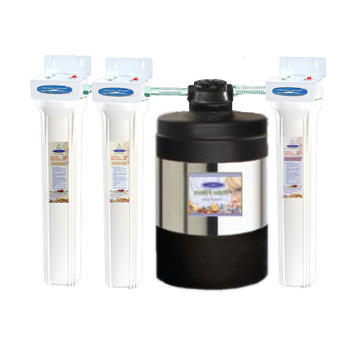
* flip * . . . . . Heads. The Crystal Quest Triple Under Sink Water Filter wins.

Cost: Ringing in at the cash register between $173 and $213 depending upon how long you want the multi-stage filter last. You have the option of 10,000, 20,000 or 30,000 gallons. Last time we checked, Filter Water had the unit available (with all three third cartridge options to choose from) with free shipping in the Continental United States.

Fluoride Reduction: In this unit’s second filter cartridge, water travels through fine-mesh ‘pre-resin media’ (SIR-900) to reduce fluoride below 0.5 ppm. At the same time, this filter also reduces arsenic levels if present.

Other Contaminants: In the first cartridge water passes through a carbon block which removes and/or removes volatile organic compounds (VOC’s), insecticides & pesticides (such as atrazine and simazine), and a number of industrial solvents commonly found in drinking water. Chlorine taste and odor also get reduced in this stage.

Our ‘Final’ Opinion: If you want a simple under sink water filter system that will do a lot to improve the taste and safety of your drinking water, the Crystal Quest Triple Under Sink Filter stands as a solid contender from what we have read. Well worth taking a look at if you want to keep spending down and still reap the rewards and benefits of a fluoride (and other contaminants) water filter.

In closing we’d like to offer the testimony of an actual Crystal Quest Triple Under Sink Filter user:

On 2/16/2011 ‘Lynn’ said, “The Undersink Fluoride Filter is a grand product. With the filter your water goes through a cleaning series of 8 stages to prevent all the harmful government added substances from entering the body. It comes with 3 cartridges two that need to be replaced every 6 months to a year. The filter was simple to install and works wonderfully! I would recommend this filter to all citizens who want ‘Big Brother’ out of their water.” (on FilterWater.Com web site)

And now we shall discuss the Pentek RO-3500 Water Filter System. . .

Cost: Ringing in at the cash register at either $199 and $259 depending upon whether or not you want an electronic monitoring system keeping an eye on the effluent stream (water treated by your unit), this unit packs quite a punch for the money.

For around $200 or $260 dollars homeowners can get their hands on a reverse osmosis water system certified and tested to NSF/ANSI Standard 58 for the following: Arsenic (Pentavalent) Reduction, Barium Reduction, Cadmium Reduction, Copper Reduction, Chromium (Hexavalent) Reduction, Chromium (Trivalent) Reduction, Cyst Reduction, Fluoride Reduction, Lead Reduction, Nitrate/Nitrite Reduction, Radium 226/228 Reduction, Selenium Reduction, TDS Reduction, Turbidity Reduction, Chlorine Reduction – Aesthetic, and Taste & Odor Reduction.

Fluoride Reduction: As stated in the last paragraph, the Pentek RO-3500 Water Filter System has passed rigorous testing by an independent laboratory proven that it’s fluoride reduction capabilities meet the requirements of NSF/ANSI Standard 58.

Other Contaminants: We already discussed how the Pentek RO-3500 has tested and certified to NSF/ANSI Standard 58 for the reduction of a bunch of potentially dangerous and definitely unwanted drinking water contaminants so we won’t bore you with the full list a second time.

Our ‘Final’ Opinion: Before we tell you much we like the benefits this system offers, we do want to mention a few reasons why a reverse osmosis water filter system like the Pentek RO-3500 and others may NOT work well for everyone:

  1. Some people feel they waste water since not all of the water that goes into the system will wind up as usable drinking water and gets discharged as waste.

  2. The water generated by reverse osmosis systems tends to have an aggressive nature.

  3. Reverse osmosis water treatment systems produce ‘flat’ tasting water that some people find a bit unpleasant. Because of that taste many owners of reverse osmosis systems choose to install a simple post-ro re-mineralizing cartridge that adds important minerals for taste and nutrition while also balancing the pH of the water before consumption.

OK, so having said ALL that, we found the Pentek RO-3500′s NSF Certification extremely appealing since it ‘guarantees’ the performance of the unit for at the very least, its ability to reduce concentrations of a known list of contaminants.

Filters Fast: Coliform Bacteria Test Kit
Water Test Kit for Bacteria

Filter Water: Fluoride in Water Test Kit
Fluoride in Water Test Kit

Filter Water: Water Contaminant Test Kit
Water Contaminant Test Kit