About
Do you know what's in YOUR water? Learn about water quality, water quality testing, and water quality testing products that can help you make informed, educated decisions regarding the water treatment options for your home, office, swimming pool... and life.
Contact Us
Got a question about water quality? Want to share a water quality article or water quality article with others?

Visit our Contact Us Page to ask a water quality question or submit water quality information.

RSS Feed
Get the most recent water quality posts and comments by subscribing to the Water Testing Blog RSS Feeds.
Subscribe to RSS! Subscribe to RSS Comments!

Archive for November, 2009

Nov
12

eXact Micro 7+ Replacement Bottles

Water Testing BlogBromine, Chlorine, Chlorine Testing, Copper, DPD, DPD ReagentStrip, eXact Strip DPD, Free Chlorine, Hardness, Ozone, pH, Testing Devices, Total Chlorine, Water Quality Testing, Water Test Meters, Water Testing

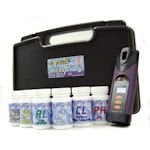
eXact Micro 7+ Water Quality Testing Meter

Looking for a versatile, lightweight, waterproof water quality testing meter? Need an EPA Compliant testing meter for chlorine testing?

Introducing a new photometer using a patented method and technologies that offer faster, safer, easier, and more precise water testing.
The eXact Micro 7+ offers seven modes which provide direct read capabilities for Total Alkalinity, Bromine, Calcium Hardness, Free Chlorine, Total Chlorine, Copper, Ozone, Permanganate, pH, and % Transmission – which allows for testing of an additional 17 parameters.

The eXact Micro 7+ can measure a total of up to 26 parameters and provides EPA Compliant testing method for both Free & Total Chlorine when used with DPD chemistry.

In need of replacement reagentstrip bottles for your eXact Micro 7+ Water Quality Testing Meter?

eXact Micro 7+ pH Test: 486639
eXact Micro 7+
pH Test
486639

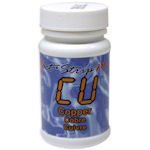
eXact Micro 7+ Copper Test: 486632
eXact Micro 7+
Copper Test
486632

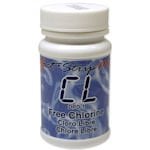
eXact Micro 7+ Free Chlorine: 486637
eXact Micro 7+
Free Chlorine
486637

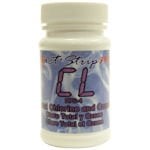
eXact Micro 7+ Total Chlorine: 486670
eXact Micro 7+
Total Chlorine
486670

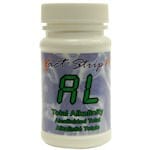
eXact Micro 7+ Total Alkalinity: 486641
eXact Micro 7+
Total Alkalinity
486641

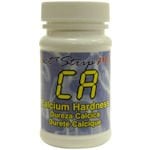
eXact Micro 7+ Calcium Hardness: 486629
eXact Micro 7+
Calcium Hardness
486629

Update — Looking for an easier way to use DPD-1 with your existing chlorine test kit or meter? If it uses as 10 mL sample, then you definitely want to check out DPD-1 ReagentStrips for free chlorine. They mix into solution much quicker, easier and cleanly than DPD powders and DPD tablets and have a much longer shelf life than DPD liquids.

Nov
9

Concern Over Arsenic Levels in Tap Water (Michigan)

Water Testing BlogArsenic, Arsenic in Water, Arsenic Test, Environmental, Ground Water, Metals, Water Quality Testing, Water Testing

We recently came across an article on a TV news station’s web site describing how the Michigan news station had decided to take sample of the local drinking water to a water testing laboratory for testing.

According to the article, residents in the area have a particular interest in finding out if the arsenic levels in their drinking water falls within acceptable Federal guidelines. Apparently local arsenic levels had typically come in around 10ppb to 12ppb and although fine when the EPA deemed arsenic levels below 50ppb acceptable, the EPA’s lowering of the acceptable limit for arsenic in drinking water to 10ppb a few years ago meant some local water systems needed to install remediation devices in order to pass muster.

Now residents want to know if those arsenic removal devices work as planned and ultimately they want to know if they have ‘safe’ water to drink.

MIDLAND, BAY CITY, FLINT, HOWELL — The concerns have been everywhere when it comes to water quality. How clean is the water you cook with and drink? Residents along the Saginaw Bay have long been concerned that river dredging might stir up sediment, leading to water contamination. Over the last five years, Genesee County residents have been concerned over high arsenic levels. One way or another, water quality affects your life.

Most drinking water goes through some form of treatment by the time it reaches your faucet. However, changes in allowable arsenic levels through the years, and the potential for other elements to go undetected led us to see what may be in your drinking water.

NBC25 collected samples from a range of MidMichigan areas including Bay City, Midland and Flint. We took those samples to Water Tech Inc. in Howell to see what you may be putting in your body. ( source )

Unfortunately for us, the news station required its web site visitors to ‘tune in tonight’ for the results of the arsenic testing… and we don’t live in Michigan so we cannot tune in as they suggested. We can, however, make suggestions as to how homeowners can perform simple, at-home testing for arsenic in their drinking water. Keep in mind, though, that no at-home test kit for arsenic should ever take the place water analysis by a certified water testing laboratory.

 Arsenic in Water Test Kit 0, 0.010, 0.025, 0.050, 0.1, 0.2, 0.3, 0.5, 1.0 ppb/cm² (IT-487928) Perform 300 Tests, Results in 12 Minutes   IT-487928    
 Arsenic in Water Test Kit 0, 0.3, 0.7, 1.0, 1.5, 2, 2.5, 3, 3.5, 4, 5, 6, 8, 10, 13, 20 & >20 ppb (481300-5) Perform 5 Tests, Results in 12 Minutes   481300-5    
 Arsenic in Water Test Kit 0, 5, 10, 20, 50, 100, 200 & >500 ppb (481396-2) Perform 2 Tests, Results in 12 Minutes   481396-2    
 Arsenic in Water Test Kit 0, 5, 10, 20, 50, 100, 200 & >500 ppb (481396-5) Perform 5 Tests, Results in 12 Minutes   481396-5    
 Arsenic in Water Test Kit <1, 2, 3, 4, 5, 6, 7, 8, 10, 13, 20, 25, 30, 40, >50, >80, >120, >160 ppb (481303) Perform 50 Tests, Results in 14 Minutes   481303    
 Arsenic in Water Test Kit <1, 2, 3, 4, 5, 6, 7, 8, 10, 13, 20, 25, 30, 40, >50, >80, >120, >160 ppb (481303-5) Perform 5 Tests, Results in 14 Minutes   481303-5    
 Arsenic in Water Test Kit <2, 4, 6, 8, 10, 12, 15, 18, 24, 30, 40, 45 & >50 ppb (481297-2) Perform 2 Tests, Results in 12 Minutes   481297-2    
 Arsenic in Water Test Kit <2, 4, 6, 8, 10, 12, 15, 18, 24, 30, 40, 45 & >50 ppb (481297-I) Perform 50 Tests, Results in 12 Minutes   481297-I    
Nov
7

Legionnaire’s Disease Can Spread Through the Air

Water Testing BlogChlorine, Chlorine Testing, Copper, Disinfectant, Free Chlorine, Metals, Water Quality Testing, Water Testing

While not always fatal, a condition known as Legionnaire’s Disease has taken lives in the past and can, at the very least, make people very ill.

The waterborne Legionella pathogen that causes typically treatable but potentially fatal Legionnaire’s disease is found in domestic drinking water systems, cooling towers, evaporative condensers and decorative fountains. Other contained systems like vehicle washing equipment are also at risk. A May 2008 public Legionnaires’ outbreak was linked to a self-serve carwash in Australia and two Albany, NY bus washing system employees who contracted the illness in August 2007, according to industry trade reports. ( source )

Health officials and scientists often find Legionella pathogens in closed water systems with elevated water temperatures. The higher temperatures make maintaining an adequate disinfectant level in the water very difficult and for that reason certain pathogens can flourish in these environments.

In cases where the water gets converted to a mist by sprinkler systems, produce misters or other devices, the Legionella pathogen can become airborne and have an excellent opportunity to infect a large number of people very rapidly.

Signs of exposure include, but may not be limited to, high fever temperatures and flu-like symptoms. People with suppressed or weakend immune systems tend to become infected faster and often times more seriously than people with healthy immune systems.

What methods exist for preventing the growth and distribution of the Legionella pathogen?

Thermal Heat/Flush – Water temperature raised to as high as 160ºF for up to 30 minutes to sterilize systems. Chemical-free, commonly-used method requires no additional equipment. Labor intensive and can prove ineffective for long-term Legionella infestation management. Can damage older pipes and creates potential for scalding.

Shock (Hyper) Chlorination – Chlorine injected into water distribution system. Initial shock chlorination levels approach 50 ppm, and taper off to create 2ppm to 5ppm chlorine cycle. Chlorine decomposes rapidly at elevated water temperatures; Legionella re-colonization can occur in as little as one to two weeks during continuous chlorination following the shock. Highly corrosive to plumbing (can be offset in part with silicate corrosion control). Places facility employees handle stored chemicals or implement disinfection at risk for exposure to chlorine byproduct Trihalomethane (THMs, linked to several types of cancer).

Chlorine Dioxide – Chlorine Dioxide (CIO2) is EPA-approved for potable water disinfectant use under CFR Par 141-National Primary Drinking Water Regulation. Commonly used in Europe, CIO2 is a gas generated by either chemical or electrolytic means and distributed throughout the water distribution system. The powerful oxidant kills Legionella and other bacteria. CIO2 readily decomposes in drinking water and residuals decrease as water system temperatures rise, making this treatment approach difficult in hot water systems. CIO2 is corrosive to plumbing infrastructure and creates byproducts including chlorate and chlorite; field testing for EPA maximum limits is required.

Copper-Silver Ionization – Latest advance in disinfection methods dissolves and distributes small amounts of copper and silver ions throughout water systems to eradicate bacteria. Continuous eradication metallic ion unit is required. Highly effective in eliminating Legionella, particularly in recirculation hot water systems, according to research and monitoring of hospital-implemented systems by Janet F. Stout, Ph.D., University of Pittsburgh special pathogens laboratory director and an international expert on waterborne pathogens. ( source )

Each Legionella prevention method requires testing on one level or another. Thermometers, high range free chlorine test strips, chlorine dioxide test strips, and/or dissolved copper in water test strips can all play a key part in maintaining a safe, Legionella-free closed water system.

Nov
6

Question: What is EPA Limit for Trihalomethanes in Drinking Water?

Water Testing BlogChlorine, Chlorine Testing, Combined Chlorine, Disinfectant, Disinfection Byproducts, Free Chlorine, Haloacetic Acid, Max Contaminant Level, Sanitizer, THM, Total Chlorine, Trihalomethane, Water Quality Testing, Water Testing

We’d like to thank “Trinity” for asking the following question about trihalomethane levels in drinking water:

“In school we recently learned that chlorine added to drinking water by water treatment facilities reacts with organic contaminants in the water and forms harmful compounds called trihalomethanes. Does the EPA have a guidleine which limits the amount of trihalomethanes are considered safe?” — Trinity in Washington

First of all, we want to clarify something in Trinity’s question: Not all forms of chlorine added by water treatment facilities will cause trihalomethanes to form. Adding ‘free chlorine’ to water containing organinc contaminants will result in the formation of thrihalomethanes while adding ‘combined chlorine’, also referred to as chloramines, to water containing organic contaminants will not.

Unsure of the difference between free chlorine and total chlorine? The following Water Testing Blog postings will help:

Getting back to Trinity’s question, though, prior to 2004 the EPA set the maximum contaminant level (MCL) for trihalomethanes in drinking water at 100 parts per billion (ppb). In 2004 the EPA lowered the MCl for trihalomethanes in drinking water to 80 ppb. ( source )

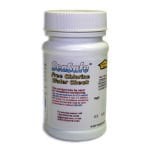
Filters Fast: SenSafe Free Chlorine Water Check
SenSafe Free Chlorine
Water Check

Filters Fast: WaterWorks 2 Free & Total Chlorine Test Strips
WaterWorks 2 Free & Total Chlorine Test Strips

Test
SenSafe Total Chlorine
Water Check

Nov
4

Treated Wastewater Seeps Into Well Water

Water Testing BlogEnvironmental, Ground Water, Home Water Testing, Water Quality Testing, Water Testing, Well Water

Most people like to believe that raw sewage treated by the city will get discharged far, far away from the location where their drinking water comes from. A somewhat recent article posted in a Missouri publication described a real-life situation in Columbia, Missouri where elevated chloride levels in area wells indicated the likely infiltration of treated wastewater into the city’s water supply.

COLUMBIA — Be careful what you drink, because you might be drinking it again.

Chlorides are creeping into Columbia’s water supply wells in the Missouri River bottoms at McBaine, indicating that treated wastewater, once funneled far from the wells, is finding its way back into the city’s supply.

The chlorides themselves aren’t harmful, said Tom O’Connor, an environmental engineer who sits on the city’s Environment and Energy Commission as well as the Water and Light Advisory Board. Columbia’s drinking water currently meets all Environmental Protection Agency standards. However, the presence of chlorides does show that other potentially harmful contaminants, such as pharmaceuticals and other household chemicals, could stay circulating in the water supply. ( source )

If nothing else, the above information should tell anyone who gets their drinking water from a well that they need to test the water quality of their well water periodically.

Things to remember about well water:

+ Periods of heavy rainfall change water table levels and can affect the water quality in your well.

+ Periods of drought change water table levels and can affect the water quality in your well.

+ The addition of new wells to the area increases the demand for water and often changes water table levels.

+ Responsibility for the quality of water coming out of a well lies solely with the well owner.

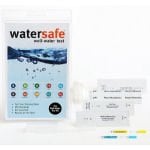
Filters Fast: WaterSafe Well Water Test Kit
WaterSafe Well Water Test Kit

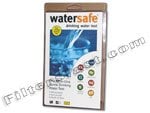
Filters Fast: WaterSafe All-in-One Test Kit
WaterSafe All-in-One Test Kit

Filters Fast: Well Drill Master Kit
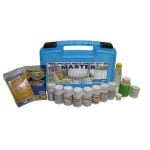
Well Drill Master Kit

Nov
3

You Might Have Arsenic in Your Drinking Water?

Water Testing BlogArsenic in Water, Arsenic Test, Ground Water, Home Water Test Kits, Home Water Testing, Metals, Water Quality Testing, Water Test Kit, Water Testing, Well Water

Once again an article has surfaced that raises the question, “Is there arsenic in your drinking water?” This time the Salisbury Post, a regional newspaper in North Carolina, gives a brief overview of where arsenic comes from and the risks associated with arsenic exposure.

While not the most in-depth article we have ever seen on the topic of arsenic in drinking water, it does hit a lot of high points and cover a lot of important material in a succinct manner.

There may be something lurking in your drinking water that you can’t see, smell or taste and scientists say it could cause diabetes.

The potential danger is arsenic, a metal that naturally occurs in rocks, soil, plants and animals.

Dr. Miroslav Styblo, an associate nutrition professor at UNC Gillings School of Global Public Health, spoke to a group Thursday at Catawba College’s Center for the Environment on the link between arsenic and diabetes.

Styblo, a toxicologist, has been conducting studies in Mexico on whether arsenic in drinking water could be a cause of diabetes.

Exposure to high levels of arsenic in drinking water has been linked to various cancers, including liver and lung, he said. ( source )

For people interested in testing their drinking water for arsenic, we suggest using one of the Arsenic Quick Test Kits. Below we have listed some of their smaller, more affordable field arsenic test kits.

 Arsenic in Water Test Kit <1, 2, 3, 4, 5, 6, 7, 8, 10, 13, 20, 25, 30, 40, >50, >80, >120, >160 ppb (481303-5) Perform 5 Tests, Results in 14 Minutes   481303-5    
 Arsenic in Water Test Kit 0, 5, 10, 20, 50, 100, 200 & >500 ppb (481396-5) Perform 5 Tests, Results in 12 Minutes   481396-5    
 Arsenic in Water Test Kit 0, 0.3, 0.7, 1.0, 1.5, 2, 2.5, 3, 3.5, 4, 5, 6, 8, 10, 13, 20 & >20 ppb (481300-5) Perform 5 Tests, Results in 12 Minutes   481300-5    
 Arsenic in Water Test Kit 0, 5, 10, 20, 50, 100, 200 & >500 ppb (481396-2) Perform 2 Tests, Results in 12 Minutes   481396-2    

More on Arsenic and Testing for Arsenic:

Nov
2

Water Turned Soil Into… Mayonnaise?

Water Testing BlogEnvironmental, Ground Water, Water Testing

It does not take a rocket scientist to realize that water turning once fertile, rich soil into a substance with the consistency of mayonnaise will most likely have some… problems. In this case, the problem came in the form of too much salt allegedly discharged by Coalbed Methane operations.

Roger Muggli has worked his family’s 1,700-acre farm in east Montana almost the entire length of his 61 years, and he considers the nearby Tongue River to be the very lifeblood of his alfalfa and barley crops.

But three years ago, something happened to the river’s water, Muggli said, as routine irrigation began turning the Custer County farm’s once-rich soil the consistency of mayonnaise. The soils could not hold the plant material, he said, and within weeks, large sections of his crops turned yellow and died.

“It looked like this slime had fallen out of the sky,” he said. “I picked up a handful of dirt, and it just squirted all over the place. It was terrifying.”

The culprit was salt in the river water, which when mixed with clay soils turned the cropland into a soggy mush.

Muggli and Montana state regulators believe the high salt content is at least partly the result of deep groundwater extraction by coalbed methane (CBM) operations in neighboring Wyoming — one of the nation’s leading producers of coalbed methane. The water, pumped by the millions of gallons from coal seams to help coax gas to the surface, is then routinely pumped back into the Tongue River and other watersheds by CBM operators, where it indiscriminately mixes with downstream water supplies. ( source )

At this time we do not know of any test methods for… mayonnaise. We do, however know of some testing methods for combustible gases such as methane, butane, propane, etc.

Plug-In Combustible Gas Detector

Pen-Style Portable Combustible Gas Detector

IMPACT Personal Combustible Gas Monitor

All of us here at Water Testing Blog hope something gets done to resolve issues like this for the sake of farmers like Roger Muggli and everyone who depends upon the crops they grow.

Nov
1

Chinese Drywall Gets Insurance Policy… Cancelled!

Water Testing BlogHome Water Testing, hydrogen sulfide, Water Quality Testing, Water Testing

In an earlier posting on Water Testing Blog called Smells Like Sufur… A Rotten Egg Smell we briefly discussed two reasons why a home may smell like rotten eggs:

1) Hydrogen Sulfide Gas Coming From the Water

2) Corrosive, Irritating Sulfuric Fumes Leaching Out of Defective Chinese Drywall

Note: We neglected to cite ‘actual rotten eggs’ or ‘deviled eggs’ as reasons because to our knowledge, most people know what to do if theyr find either of those items in their homes.

Today we bring news of an alarming recent trend which could end up costing some homeowners… their homes!

Many insurance companies brag in their advertisements and commercials how they will stand by a person or comapny’s side in the event of a bad situation. Granted they will more than likely raise the affected parties’ rates afterwards, but they say they will continue to stand by in case another emergency comes along.

Given recent events, as you will soon read, certain insurance companies may need to revise their public promises — or get sued for false advertising!

Thousands of homeowners nationwide who have bought new houses made with defective building materials are finding their hopes dashed and their lives in limbo. Experts warn that cases like the Ivorys’, in which insurers drop policies or send notices of nonrenewal because of tainted Chinese drywall, will become rampant as insurance companies work their way through the hundreds of claims currently in the pipeline.

At least three insurers already have canceled or refused to renew policies after homeowners sought help replacing the bad materials. Because mortgage companies require homeowners to insure their properties, they are then at risk of foreclosure, yet no law prevents the cancellations. ( source )

Now THAT sounds like a bad set of circumstances. Imagine living in a home that desperately needed repairs, filing for help from your insurance company, having your claim denied AND then they drop your policy. Ouch.

We wish all the folks affected by the defective Chinese drywall the best of luck in their efforts to resolve their situations.

In the meantime, anyone who does NOT have defective Chinese drywall that detects a hint of rotten egg odor in their home may want to take a look at the following test kits for hydrogen sulfide in water. While the nose will tell you if you have hydrogen sulfide gas present in your water, you will still need to know how much hydrogen sulfide you have if you want to choose the correct method of water remediation.

hydrogen sulfide test kit for water
Hydrogen Sulfide in Water Test Strips 0, 0.3, 0.5, 1.0, 2.0 ppm (IT-481197-20) Contains 30 Test Strips, Result in 20 Seconds
hydrogen sulfide test kit for water
Hydrogen Sulfide in Water Test Strips 0, 5, 10, 20, 30, 40, 50, 60, 80 ppm (IT-481197-1) Contains 50 Test Strips, Result in 31 Seconds