About
Do you know what's in YOUR water? Learn about water quality, water quality testing, and water quality testing products that can help you make informed, educated decisions regarding the water treatment options for your home, office, swimming pool... and life.
Contact Us
Got a question about water quality? Want to share a water quality article or water quality article with others?

Visit our Contact Us Page to ask a water quality question or submit water quality information.

RSS Feed
Get the most recent water quality posts and comments by subscribing to the Water Testing Blog RSS Feeds.
Subscribe to RSS! Subscribe to RSS Comments!

Archive for the ‘Municipal Water Test’ Category

Dec
13

Water Departments Not Performing Required Testing

Water Testing BlogCity Water Test, Municipal Water Test, TDS, Water Quality Testing, Water Testing


TDS Meter
0 – 9,990 ppm

First of all, we want to say that the total number of offending water departments found to have a chronic history of failing to conduct required water testing numbered… 34 out of around 2,800. For those interested in statistics, that amounts to roughly 1.2 percent of the water departments in the State of Missouri.

“Oh… Well that’s in Missouri. That sort of thing doesn’t happen where I live.”

With recent budget cuts all across the board in pretty much every department of every city government in the country… we find it hard to believe that anyone could not think that some people, somewhere, would attempt to save money by cutting corners.

Jefferson City, Mo. — The Missouri Department of Natural Resources today released a list of 34 drinking water systems in the state that have chronically failed to complete drinking water testing required by state law.

The systems listed have at least three major monitoring violations in a 12-month period. While failing to monitor does not necessarily mean the water is unsafe, routine testing by a facility is a crucial part of maintaining a safe water supply.

The department requires all public water systems to test for bacteria at least once a month to verify these systems are providing safe drinking water to the public. The vast majority of community and non-community public water systems in Missouri comply with all monitoring requirements and meet all drinking water standards. This current list of 34 chronic violators represents only 1.2 percent of the approximately 2,800 public drinking water systems in Missouri.

To view more details on the violators listed, visit the department’s Website at dnr.mo.gov/env/wpp/chronic/index.html.

These systems’ owners have been sent multiple violation notices in addition to certified letters informing them that chronic failure to monitor is unacceptable. ( source )

Do we think people need to immediately stop drinking water from the tap because a few water department here and there decided to cut corners when it came to testing? Absolutely not!

The United States has one of the best, if not THE best, infrastructures for the purification and distribution of safe, clean drinking water in the world. That does NOT mean, however, that problems don’t manifest themselves from time-to-time — as demonstrated by the excerpts above from an article about water testing deficiencies in Missouri over the past 12 months.

Do we think more people need to step up to the plate and take responsibility for making sure the water they drink contains no harmful bacteria? Of course we do! With so many inexpensive and easy-to-use test kits available we see no reason why people — especially private well owners — should not perform periodic testing for basic water quality parameters.


Lead in Water
Test Kit


Pesticides in Water
Test Kit


Free and Total Chlorine
in Water Test Kit

Nov
30

Free Lead in Water Testing in New York City

Water Testing BlogCity Water Test, Copper, Home Water Testing, Lead, Metals, Municipal Water Test, Water Quality Testing

Earlier today we posted an article about free lead in water testing in NYC and since then our comment form has blown up with questions about the program. Below you will find information about the program, its goals, etc. If you want the full story, though, as in the official version as written by officials in New York City, go here now

Lead in Drinking Water from Household Plumbing

Water brought into the City from its reservoir system located upstate has virtually zero lead in it when it reaches the City. The water, however, has the ability to absorb lead from (older lead-containing) solder, certain types of metal fixtures and plumbing found in older buildings.

Copper in water test kit
Copper in your drinking water?

Therefore, if you live in an older building and/or just want to know more about the possibility that your water may contain dangerous, or at the very least no-so-safe levels of lead, then the following links on New York City’s own web site may prove quite useful:

While we certainly DO applaud NYC’s efforts to inform the general public about the potential dangers posed by lead in its drinking water, and also for proving free lead in water testing to NYC residents who request it, we think the idea of advising millions of people to ‘run the faucet for 30 seconds’ will waste a whole lot of water.

On the other hand, the only other option, forcing building owners to convert over their old, lead-laden plumbing over to newer, safer plumbing components, would cost millions upon millions of dollars. Oh, and good luck trying to enforce THAT mandate in a city that size!

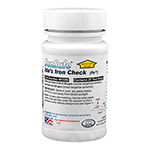
Iron in water test kit
Iron in your drinking water?

Hmmm… Quite a dilemma: Wasting millions (billions?) of gallons of perfectly good water (before it got to the City) which we will run out of one day to avoid spending 10′s of millions (billions?) of dollars to replace lead-containing components of an aging infrastructure… or biting the bullet and spending the money.

We dare not comment on that last one any more than we already have! We do not have the answers, but that does not mean we don’t think people need to ponder such dilemmas — as we often do.

So where does the leave New Yorkers?

For right now it leaves them with the heads-up that they need to monitor the quality of their tap water AND, at least for now, a free lead in water testing service they can use to assess the amount of lead in their drinking water.
It ALSO puts them in the same category as the rest of us: Responsible for the Quality of the Water We Use.

For a long time many people believed that only private well owners had sole responsibility for monitoring the quality of the water entering their homes… but obviously we can all now see that the miles of piping that may or may not contain lead — or leaks where unwanted contaminants could get in — presents itself as a noteworthy risk to folks with city/municipal water.

Therefore, we feel that everyone ought to consider testing their tap water from time to time. Unexpected leaks can occur at any time and may go undetected for years as they allow innumerable contaminants to enter the water supply, deplete disinfectant levels, and possibly find a nice place to hang out, grow and create new little contaminants of their own in the water supply.

Wow. The imagery from that last statement made us shudder. We hope it had the same effect on all of you.

Nov
30

More Lead Found in City Tap Water — New York

Water Testing BlogCity Water Test, Home Water Testing, Lead, Metals, Municipal Water Test, Water Quality Testing, Water Testing

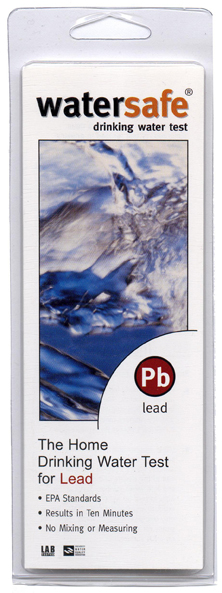
Lead in Water Test Kit

from WaterSafe

Another story about lead in water? Really? Yes. We will keep posting stories about elevated levels of lead in drinking water until we stop finding them. Today’s lead in water story comes to you from New York City.

Apparently the results of random water tests conducted earlier this year revealed that lead levels in water from faucets in buildings known to still contain lead in their plumbing seem to have started leaching higher levels of lead into the water they carry — and that has prompted public health officials in New York City to advise residents to run their water for 30 seconds before collecting any for use.

What does running the water do? Simple: It allows water that has sat in contact with lead service lines or plumbing that possibly contains lead to get flushed out. Water that sits stagnant in the line can pick up metals over time and longer it sits, the more metals it could possibly pick up.

New York City health and environmental officials on Thursday advised residents to run their tap water for at least 30 seconds before drinking or cooking with it after testing showed a rise in the percentage of homes with elevated levels of lead.

The city is required to test for lead in tap water each year under the federal Safe Drinking Water Act. In tests conducted from June to September in homes in older buildings known to have lead in their plumbing, 30 of 222 samples — or about 14 percent — exceeded allowable lead levels.

Last year, only 5.4 percent of the samples had elevated levels, city officials said.

The officials emphasized that the results did not pose a health threat and that lead levels have been in decline since the 1990s. But the federal Environmental Protection Agency, which defines samples above 15 parts per billion as elevated, requires public notification whenever more than 10 percent of the samples exceed that level.

The tests found levels in the range of 16 to 30 parts per billion. ( source )

Did anyone but us catch that?

“The officials emphasized that the results did not pose a health threat and that lead levels have been in decline since the 1990s.” Please tell us WHY that has any relevance to the importance of the current findings and should make people feel better about their tap water containing elevated levels of lead TODAY.

Filters Fast: Water Metals Test
Water Metals Test

from SenSafe

The article mentioned how the USEPA believes lead levels in drinking water at or above 15 parts per billion demand immediate action to avoid cause harm to humans, especially unborn children and young children, if they consume the water. So… please tell us again why levels of lead greater than the EPA’s guideline shouldn’t make people want to run out get their tap water tested right away.

Sorry, Charlie, but if those health and water officials recognize that lead in water can cause irreparable damage, and that the levels of lead recently detected exceed those deemed safe by the United States Environmental Protection Agency, then it makes no sense for them to imply that those elevated lead levels ought not make people nervous.

One good thing: Free Lead in Water Testing in NYC

The same folks who said the elevated levels should not serve as cause for serious alarm have also made lead in water testing available to the public (in New York City)… for free.

Yes, we said, “FREE.” The City of New York has a free lead in water testing program in place (verified: November 29, 2010) for residents concerned that their building’s plumbing may have contributed lead to their tap water.

Click here for more details about NYC’s lead in water testing program.

Nov
21

Boil Water Order in New Orleans Affects 300,000 Residents

Water Testing BlogBacteria, City Water Test, Coliform, Home Water Test Kits, Home Water Testing, Municipal Water Test, Water Quality Testing, Water Test Kit, Water Testing, Well Water

WaterSafe
WaterSafe Bacteria Test Kit

As if the residents of New Orleans had not dealt with enough water-related issues in the past few years, health officials advised residents in the French Quarter and Lower 9th Ward areas to not use their water for any purpose without boiling it first.

Boiling the water will kill off any bacteria which may have grown in the lines of a water treatment facility where recent electrical and mechanical problems resulted in lower than acceptable pressure readings.

When pressure drops, water sits stagnant and as we all know, stagnant water can become a breeding ground for bacteria.

While testing has not detected any bacteria in the water, yet, health officials in New Orleans decided to err on the side of caution and issue a ‘boil water advisory’ to the affected areas rather than risk widespread illness if harmful bacteria did manage to get into the water supply.

NEW ORLEANS (AP) — The most widespread boil-water order since Hurricane Katrina has been issued for the east bank of New Orleans, affecting more than 300,000 people.

Robert Jackson, director of community and intergovernmental relations for the Sewerage and Water Board of New Orleans, told The Associated Press on Saturday that the order was issued after a mechanical and electrical failure at a water treatment plant caused pressure to drop.

He said the order is precautionary, but residents should be prepared to boil all water for cooking and other uses until at least Sunday night. He says no one has been sickened by the water, but officials are still testing the water to ensure no bacteria formed while the pressure was down.

The area includes the city’s French Quarter and Lower 9th Ward areas. ( source )

No matter where you live, and what type of water you have (i.e. tap water or well water), the threat of bacteriological contamination will always exist. More so for people who have well water due to the stringent testing requirements followed by public water treatment facilities, but still, since miles of piping exist between the water plant and most people’s faucets, the risk of accidental contamination does exist for folks on city/municipal water systems.

Coliform Bacteria in Water Test Kit
Coliform Bacteria
in Water Test Kit

Easy ways to test for bacteria in drinking water?

No home drinking water test kit takes the place of testing performed by a certified water testing lab, but spot checking with home drinking water test kit allows homeowners to keep an eye on the quality of their water between lab tests… at an affordable cost.

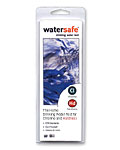
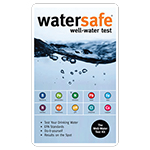
Companies such as WaterSafe and SenSafe manufacture simple test kits for coliform bacteria in drinking water that pretty much anyone can use and get results they can trust.

Nov
12

Water Testing Must Take Place Before Plant Opens

Water Testing BlogCity Water Test, Metals, Municipal Water Test, Water Quality Testing, Water Testing

eXact Chlorine Photometer
for Free & Total Chlorine

Even with all of the technological advances one would find in a water treatment facility these days the fact remains that even the best and most expensive chemical dispensing and chemical monitoring equipment must get calibrated at some point… and technicians use old school chemistry methods to do it.

It seems that test kits using liquid, powder and tablet reagents will most likely never get phased out no matter how advanced and technologically advanced the art of water purification gets.

Companies like Taylor Technologies really like the sound of that, too.

KETCHIKAN — Ketchikan officials hope to start operations at the city’s new water treatment plant within the next month.

Water Division Manager John Kleinegger said state environmental regulators have given the city permission to operate the plant for testing purposes to ensure computers are working correctly.

He said the new treatment program has not yet received the go-ahead from the state. ( source )

What does all of that mean for the folks in Ketchikan, Alaska? Simple. A series of tests performed using very strict protocols will take place before the new water treatment plant can begin processing water and distributing water to the public.

Does water testing stop once the plant goes online?

Absolutely not! State and Federal guidelines require plant operators to perform and document routine testing from the time the plant begins operations to the very last day it pumps out water to the public. To make sure that all required testing gets done, State, Federal and sometimes third party auditors will occasionally drop in to check the records of a water treatment facility. Any discrepancies or peculiar anomalies in a facility’s record keeping can jeopardize the facility’s ability to stay in business… and plant operators know this.

Therefore most take extra precautions to make sure all the t’s get crossed and i’s get dotted in their testing log books.

If all that testing gets done, why should I test my tap/city water?

As we have said many times before, your tap water may leave the water treatment plant wholesome and clean, but it has many miles of (often older) piping to get through before it gets to your faucet.

All that travel through piping (that may have gone into the ground 40 or 100 years ago) whose integrity you have no control over and no ability to monitor leaves plenty of opportunity for water to pick up dissolved metals or other common drinking water contaminants.

Best way to test drinking water?

Experts will disagree on the ‘best way’ to test your drinking water if you choose to do the testing yourself. Some will argue that water testing meters have the accuracy and reliability required for the task, others will say that traditional reagent-based test kits using time tested liquid, tablet and powder reagents provide the most reliable results, and a third group believes the convenience, portability, affordability, and simplicity of water test strips the most useful water testing option.

Filter Water: Water Test Strips
Water Test Strips

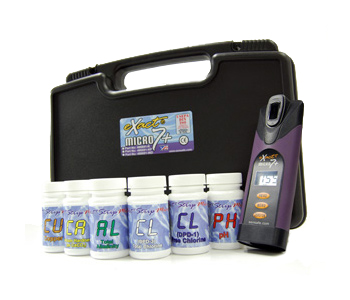
Filter Water: eXact Micro 7+ Meter
eXact Micro 7+ Meter

Taylor Test Kits: FAS-DPD Test Kit
FAS-DPD Test Kit

Experts will agree, though, that the best testing will get performed by an independent certified water testing laboratory such as National Testing Laboratories

Nov
10

Fluoride From Tea and Toothpaste Weakens Bones?

Water Testing BlogCity Water Test, Fluoride, Ground Water, Municipal Water Test

Inline Fluoride Filter for Refrigerators & Ice Makers
Inline Fluoride Filter
for Refrigerators & Ice Makers

According to a study released in a recent online Osteoporosis International edition, fluoride in water plus fluoride from other common sources (tea & toothpaste) can result in serious damage to human bones called skeletal fluorosis.

Sound ridiculous? It did to us as well until we took the time to think about the real point the researchers may have intended to make: We get exposed to potentially harmful compounds like fluoride all the time and from a number of sources we probably never even think about.

In all honesty, we knew about fluoride in toothpaste and the drinking water, but brewed tea? Really? Apparently so. It does make sense, though, since boiling water reduces the amount of water in the kettle/pot — thus increasing the concentrations of certain contaminants (like fluoride and metals) in the remaining water.

NEW YORK, Nov. 1, 2010 /PRNewswire-USNewswire/ — Fluoride consumption from tea and toothpaste damaged a woman’s bones, report researchers in Osteoporosis International published online October 9, 2010.

Fluoride, added to water intending to reduce tooth decay, accumulates in and can weaken bones. To prevent bone damage or skeletal fluorosis, in 1986 EPA set 4mg/L as water fluoride’s maximum-contaminant-level. In 2006, the National Research Council reported that 4 mg/L is too high to protect health. Some brewed teas contain almost twice that concentration.

This case describes a 53-year-old British woman with a broken bone in her foot and abnormally dense bones and badly decayed teeth.

“A striking feature of our case was the very high serum, urine, nail and bone fluoride levels, to our knowledge the highest ever reported in a patient with [skeletal] fluorosis,” the research team writes.

Her standard breakfast tea measured 7.6 mg/L fluoride. She drank six 8-ounce-cups daily, made with low-fluoride water (0.3 mg/L) and therefore 11 milligrams of fluoride daily.

She brushed her teeth 8-10 times a day. “…it is not uncommon to swallow about 25% of the toothpaste applied to the brush,” report the researchers estimating their patient’s fluoride intake from toothbrushing at 4 mg/daily.

Adding 2-3 mg of fluoride from other dietary sources, this woman ingested “a chronic daily dose of 17-18 mg [daily], an amount sufficient to cause the skeletal changes…,” the researchers report. ( source )

This story reminded us of the man who developed an illness as a result of exposure to diacetyl, an additive used in flavoring for microwave popcorn. Why? Because the man ate an unreal number of bags on a daily basis; kind of like the way this woman drank 8 cups of brewed tea a day and brushed her teeth 8 to 10 times a day.

We don’t know too many people who follow either of those people’s dietary and/or hygienic regimen but if we did, we’d probably suggest a few changes… and possibly some therapy. Having said that, though, the presence of fluoride in the water supply does make us wonder what amount the average person ingests on a daily basis.

Why do they add fluoride to the water supply?

Good question! The answer lies in fluoride’s ability to strengthen teeth and inhibit toot decay. Aside from that it serves no purpose — except, of course, to serve as the center of a raging debate where health officials have lined up on BOTH sides and each side has an arsenal of evidence to support its claims.

Do all water systems add fluoride? And if so, how much?

First of all, not all municipal water systems add fluoride to the water they distribute. Furthermore, the ones that do add different amounts depending upon things like water alkalinity and average water temperature. Suggested fluoride in water concentrations range between 0.5 mg/L and 1.2 mg/L since different organizations have different opinions on how much fluoride a water supply ought to contain.

I have well water so I don’t have to worry about fluoride, right?

Completely and totally false! Fluoride occurs naturally in the environment and concentrations in ground water can, in some cases, reach dangerously high levels. As for where naturally occurring fluoride in ground water comes from, “Fluoride is a common constituent of groundwater. Natural sources are connected to various types of rocks and to volcanic activity. Agricultural (use of phosphatic fertilizers) and industrial activities (clays used in ceramic industries or burning of coals) also contribute to high fluoride concentrations in groundwater.” ( source )

Testing drinking water for fluoride?

Although the eXact Micro 7+ Meter has the ability to test for fluoride levels as low as 0.1 mg/L and as high as 1.1 mg/L without the need for dilutions, most people will need to consult with a certified water testing laboratory such as National Testing Laboratories for assistance.

Water filters that will remove fluoride from drinking water?

As a general rule, “Pitcher or faucet-mounted water filters do not alter fluoride; the more-expensive reverse osmosis filters remove 65–95% of fluoride, and distillation filters remove all fluoride.” ( source )

Filter Water: Countertop Fluoride Filter
Countertop Fluoride Filter

Filter Water: Undersink Fluoride Filter
Undersink Fluoride Filter

Filter Water: Whole House Fluoride Filter
Whole House Fluoride Filter

Oct
29

Bacteria Found in College Water Supply

Water Testing BlogBacteria, City Water Test, Coliform, Municipal Water Test, Water Quality Testing, Water Testing

If you think that having city (municipal) water as your source of drinking water will save you from ever having to worry about coliform bacteria — which comes from fecal matter, by the way — think again. Even homes and offices on municipal water systems can have problems with potentially harmful bacteria showing up in their water on rare occasions.

Coliform Bacteria in Water Test Kit
Coliform Bacteria
in Water Test Kit

While very true that numerous safeguards exist within the infrastructures of water treatment and water distribution facilities, accidents can occur and potentially harmful contaminants could find a way into the water supply after it leaves the water department’s capable hands.

Therefore, it does make sense for people on city water supplies to check every once in a while for the presence of bacteria in their water. Again, not because the city made a mistake, but rather because a small crack anywhere in the piping that carries the water from the water treatment facility to their homes could possibly serve as an entry point for dangerous strands of bacteria.

October 22, 2010 — The town of Amherst has issued a “Water Quality Advisory” after three of 22 water samples tested positive for total coliform and E. Coli bacteria today. The town’s water system also supplies the UMass campus.

The samples were taken as a part of routine testing and public health officials are conducting further tests to determine whether a “Boil Water Order” is needed.

Results of the tests and the officials’ decision will become available Saturday afternoon, said a campus alert.

The university has a campus-wide precautionary plan in place if a “Boil Water Order” is called for. The plan will supply members of the campus with bottled water and hand sanitizer as well as instructions on how to minimize any health risks.

More information about the water testing can be found at www.amherstma.gov. ( source )

Occasional reports of bacteria in water remind us that even with all of our great technology, our water public water supplies can sometimes fall victim to contamination. Periodic testing for simple water quality parameters using test kits from companies like WaterSafe and SenSafe put the power of contamination detection in the hands of the people who need it most… the general public.

As always, though, if you already have reason to suspect that you may have unwanted contaminants in your drinking water, defer to the expertise of certified water testing laboratories what have the advanced equipment and skills required to accurately assess the quality and safety of your water supply.

Filters Fast: Doulton Countertop Ceramic Filter
Doulton Countertop Ceramic Filter

Filters Fast: Doulton Undersink Ceramic Filter
Doulton Undersink Ceramic Filter

Filter system for bacteria?

If the addition of a disinfectant stream such as ozone or chlorine does not seem feasible, then one may want to consider using a ceramic filter system like the ones on the left made by Doulton which install quickly and easily in pretty much any home.

Regardless of whether you choose to install a counter top model which will require no fooling around with plumbing or you opt for an undersink model which will install cleanly and neatly beneath your sink, the Doulton line of ceramic water filter systems offer excellent protection against potentially dangerous and/or unpleasant drinking water contaminants such as bacteria (i.e. E.Coli, Cholera, Shigella, Salmonella, etc.) cysts (i.e. Giardia, Cryptosporidium, etc.), chlorine, lead, and undissolved particles (i.e. dirt, sand, sediment, etc.).

When used with the UltraCarb ceramic filter candle, these units test and certify to NSF 42, NSF 53 and World Health Organization Standards.

Part number for the UltraCarb ceramic filter element: W9123053

Looking for a system with a bit more…. bacteria killing power? Or perhaps a water filter system that certifies to the NSF 55 Standard Ultraviolet Microbiological Water Treatment Systems? Take a look at the UV Pure Hallett & Upstream systems listed on the IsoPure Water web site.

Oct
20

Major City Takes Aim at Lead Poisoning in Children

Water Testing BlogCity Water Test, Home Water Testing, Lead, Metals, Municipal Water Test, sensafe, Water Quality Testing, Water Testing, watersafe

It strikes as very odd that in these modern times we still come across reports of lead poisoning on a semi-regular basis, but it still happens.

This time we found a story about Milwaukee, a city that apparently has a problem with lead reaching its population via the public water supply.

Milwaukee is alarmed at the rate of occurrence of childhood lead poisoning in the city, and it is taking steps towards its possible elimination by next year.

Late last year, the city received two federal grants that came up to a total of $6.9 million to be used for programs aimed at the elimination of lead hazards as well as the increase of public awareness on the dangers of lead poisoning. The Health Department is encouraging citizens to have their children tested for the presence of lead three times before the age of three, and eligible properties can apply for assistance for lead removal.

Their concern is understandable. The North Side of Milwaukee has an average lead poisoning rate of 14.1%, which is nine times the national average. The entire city’s lead poisoning rate is 5.9%, still significantly higher than the national average – almost five times.

Aside from government-sponsored efforts, households can also actively participate in the prevention of lead poisoning in children. One easy and doable way of doing it is to ensure that water consumed in the home is lead-free.

Generally, water from reservoirs have been treated and are lead-free upon distribution, but it can still become contaminated through home service pipes and faucets. While water may not be the primary source of lead poisoning, it may contribute to an increase in lead levels in someone who already has lead exposure once ingested. Since water is a resource that households can easily control, it will be beneficial for homes to proactively ensure lead-free water intake.

There are a number of ways to ensure that the family consumes lead-free water. One way is to perform a simple task called “flushing” each morning – basically letting the tap run for about 15 to 30 seconds or until the water gets cold, to ensure that any stagnant water that may have reacted to the pipe as it sat there overnight and may contain lead is flushed out and not used.

Another way is to purchase devices such as reverse osmosis systems or distillation units. To be really safe, families can also choose to not use tap water for drinking and purchase distilled water from reliable water distributors separately. ( source )

So… What can the average person do to find out if they have a problem with lead in their drinking water? Quite simply, they could use a readily available lead in water test kit from WaterSafe, a leading manufacturer of home drinking water test kits.

In a matter of minutes a person can find out if their water contains more than 15ppb of lead, the maximum contaminant level recommended by the United States Environmental Protection Agency.

Testing for exposure to lead?

A person may come into contact with lead in a number of ways. It can show up in the paint used in older buildings, at one point it existed in our gasoline, and, of course, we all know it can show up in our drinking water. With that information in mind, the question quickly becomes how do we find out if we have received too much exposure to lead?

In the past a person had to go and have blood drawn to determine if they had received exposure to lead. Now, however, test kits like LeadConfirm allow people to have their saliva tested and avoid needles.

We find that a very good thing… because we hate needles!

Testing for lead and other metals?

In our experience many other metals besides lead can find their way into the water supply and these days it makes little sense for homeowners not to periodically test their water… if only to err on the side of caution.

Filter Water: Heavy Metals Test Kit
Heavy Metals Test Kit

Filter Water: Mercury Test Kit
Mercury Test Kit

Filter Water: Manganese Test Kit
Manganese Test Kit

Filter Water: Lead Test Kit
Lead Test Kit

Filter Water: Arsenic Test Kit
Arsenic Test Kit

Filter Water: Lead in Paint Test Kit
Lead in Paint Test Kit

You can find more links to metal test kits on Water-Test-Strips.Com

Oct
19

Fluoride Testing Questions — eXact Micro 7+ Meter

Water Testing BlogCity Water Test, Fluoride, Municipal Water Test, Water Quality Testing, Water Test Kit, Water Test Meters, Water Testing

Today we received an inquiry from ‘Tom’ who wanted to know more about, we assume, the eXact Micro 7+ Meter’s fluoride testing ability.

Want to use to determine if a water sample has flouride and is likely city water vs ground water. Site lists lots of chemicals but steers away from Flouride. What is the range of flouride the instrument will detect? Will the presence of other chemicals associated with drinking water efect result? How often is calibration needed and can user complete cal?

eXact Micro 7+ Meter
0.1ppm to 1.1ppm Fluoride Testing

With all of the publicity that fluoride in drinking water has gotten over the years it does not surprise us that we keep getting questions about fluoride in drinking water, its effects on people’s health and how to test for it in drinking water.

Until a few years ago fluoride in water testing required ‘sophisticated’ laboratory glassware and used chemical reagents not readily available to the public. Either that or you needed very expensive laboratory grade equipment and a degree in chemistry to operate it.

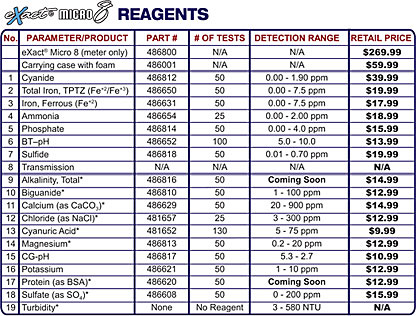
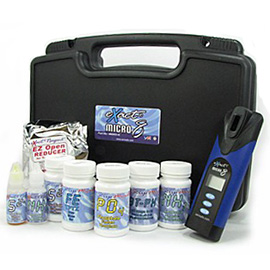
Now, however, companies like Industrial Test Systems, Inc., a US based manufacturer of water quality testing products have come out with hand held meters like the eXact Micro 7+ Water Testing Meter which uses proven SPADNS chemistry to detect levels of fluoride between 0.1 ppm and 1.1 ppm. See page 18 of the eXact Micro 7+ Meter’s Manual for more information or call the meter’s manufacturer at 1-800-861-9712.

How much fluoride does tap water contain?

While concentrations of fluoride in tap water will vary by location, A 1994 World Health Organization expert committee suggested a level of fluoride from 0.5 to 1.0 mg/L (milligrams per litre), depending on climate. ( source )

We would guess that most municipal water supplies fall somewhere in the range specified by the World Health Organization.

Sep
30

Oklahoma Public Water Systems Not Doing a Good Job

Water Testing BlogCity Water Test, Home Water Testing, Municipal Water Test, Water Quality Testing, Water Test Kit, Water Testing

Nitrate Test Strips

While the majority of water systems DO stay in compliance with State and Federal drinking water regulations, sometimes mistakes happen, equipment fails, and/or people get lazy and try to cut corners by not testing as often as they should

When any or all of those things happen the quality of the water might suffer. For that reason State and Federal agencies conduct audits on public water systems to make sure each one has dotted all the i’s and crossed all the t’s on their paperwork and reports.

Every once in a while an audit will turn up some interesting violations and when that happens the information gets released to the public. That happened recently in the State of Oklahoma.

Nearly 140 public water supplies are operating in consistent violation of state and federal drinking water codes, pumping water containing chemicals linked to cancer, infant illness, and damage to the liver and nervous system.

In central Oklahoma, nine public water sites serving about 16,000 customers have orders to resolve environmental compliance issues, records from the state Department of Environmental Quality show.

The department regulates 1,582 public water systems in the state.

“The public has a right to know about the quality of their drinking water,” said department spokeswoman Skylar McElheny. “Some of these things might not hurt them for several decades, but they have the right to know.”

Consent orders are legal agreements between the state and the water system to resolve violations. If the terms of the order aren’t followed, the water system can be fined up to $10,000 per day depending on the violation. ( source )

As you can see, some pretty stiff fines accompany citations of non-compliance — yet instances will STILL occur where appropriate testing and maintenance will not get done.

Checking up on your local water department?

Federal law requires water departments to make their annual water quality reports available to the public. Many have started posting them online for download while others still mail them out upon request.

One thing to always keep in mind: Water travels through miles of water lines before it reaches your home and even though your water department does keep its equipment operating properly and does perform the required testing, lots of things can change about water as it passes through a wide range of pipe types and gets exposed to innumerable places where cracks in the lines could introduce foreign matter such as bacteria and debris.

Therefore it may serve you well to occasionally test the quality of water coming from your tap regardless of how great a job your water does… or doesn’t do.

Filter Water: Chlorine & Hardness Test Kit
Chlorine & Hardness Test Kit

Filter Water: Water Quality Test Kit
Water Quality Test Kit

Filter Water: Well Driller Test Kit
Well Driller Test Kit