About
Do you know what's in YOUR water? Learn about water quality, water quality testing, and water quality testing products that can help you make informed, educated decisions regarding the water treatment options for your home, office, swimming pool... and life.
Contact Us
Got a question about water quality? Want to share a water quality article or water quality article with others?

Visit our Contact Us Page to ask a water quality question or submit water quality information.

RSS Feed
Get the most recent water quality posts and comments by subscribing to the Water Testing Blog RSS Feeds.
Subscribe to RSS! Subscribe to RSS Comments!

Archive for the ‘pH’ Category

Dec
17

Finding a Certified Water Testing Laboratory in…

Water Testing Blogalkalinity, Home Water Testing, Metals, pH, Water Quality Testing, Water Testing

Do you wonder what terrible contaminants may or may not lurk in your water? Have you tried to find a reputable water testing company in your area and had no luck? If so, then you and ‘Joyce B’ should get together for coffee because the two of you have the same trouble right now…

“I have searched for hours. How does one find a water testing company? We live in Northern Colorado and can find no information on this. It’s very frustrating.”

Yes, Joyce, we agree. The internet has become so cluttered with nonsense that finding valuable resources such as reputable water testing companies has turned into a truly annoying adventure.

Thankfully the United States Environmental Protection Agency has put together a way for people to locate certified water testing laboratories in their State of residence. For you, Joyce, the EPA’s web site directed us to the following pdf file which lists State Certified Drinking Water Labs in Colorado.

For all you other folks interested in locating a certified water testing lab in your area, take a look at the EPA’s State Certification Officers for Drinking Water Laboratories. By each name you will find a link to that particular state’s web page with links to its approved drinking water testing laboratories.

Do we have to use a lab to test our water?

We strongly advocate using a certified drinking water testing laboratory in situations where the water has not gotten tested in a long time or people have good reason to suspect contamination of some sort. That does not mean, however, that people ought not perform spot check testing on the quality of their drinking water using at-home drinking water test kits made by reputable companies like SenSafe and WaterSafe because sometimes a drastic change in an easily monitored water quality parameter (i.e. pH, alkalinity, heavy metals, etc.) can indicate the presence of a much larger and potentially much more dangerous problem.

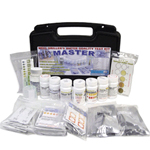
WaterFilters.Net: National Testing Labs 27 Parameter Test Kit
National Testing Labs
27 Parameter Test Kit

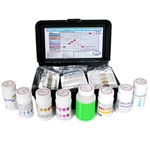
WaterFilters.Net: National Testing Labs 83 Parameter Test Kit
National Testing Labs
83 Parameter Test Kit

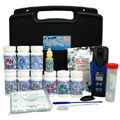
WaterFilters.Net: National Testing Labs 97 Parameter Test Kit
National Testing Labs
97 Parameter Test Kit

Nov
16

Fracking: Financial Benefits Versus Environmental Woes

Water Testing BlogEnvironmental, Fracking, Ground Water, Home Water Testing, Metals, pH, Water Quality Testing, Water Testing, Well Water

When it comes to fracking, the process of using sand water and chemicals to fracture shale containing valuable natural gas, the debate seems to get more and more complicated each time we hear about it.

TDS Meter

Sudden changes in TDS (total dissolved solids) readings in well water may indicate well water contamination by ‘fracking’

Now that the drilling has gone on long enough, people in the affected areas have started to reap some serious financial benefits from the activity and proponents of hydraulic fracturing now say that entire communities would suffer great losses (i.e. get decimated) if companies stopped drilling for natural gas nearby.

Restaurants, stores and other businesses in communities in and around areas where natural gas companies have set up hydraulic fracturing sites have experienced tremendous gains and as pointed out during a recent 60 Minutes broadcast, one community gained over 57,000 jobs.

pH Meter

Sudden changes in pH readings, how acidic or basic the water is, in ground water may indicate that well water has become contaminated by ‘fracking’ fluids

Proponents of fracking tout facts and figures of that nature as additional evidence that fracking presents itself as a win-win situation from all angles.

Opponents view those facts and figures as good, yes, but for how long? As soon as the gas gets extracted or vanishes for an unknown reason, so will the money and so will the jobs. Life will return to normal for the permanents of those small farming communities, right?

Sure… Except for all the drilling equipment and structures left in place because it would cost more to tear them down and truck them elsewhere. Permanent eyesores left for future generations to gaze upon and wonder if any still contain dangerous fluids that may have started seeping into the ground as the equipment sits unattended, uninspected, and without proper maintenance.

HARRISBURG, Pa. — To supporters, it’s a 21st century economic boom that will benefit millions across the Northeast. To critics, it could be this century’s biggest national eco-disaster, tainting water supplies for tens of millions.

Combining a new process of horizontal drilling with fracking, drillers are unlocking vast deposits there and in other formations around the U.S. such as the Barnett Shale in Texas — a boom that could ensure cheap and plentiful natural gas for many years to come for homeowners, factories and power plants.

The drilling frenzy in the Marcellus Shale is also credited with enriching landowners and pumping new life into trucking companies, short-line railroads, quarries and steel-pipe makers, as well as the restaurants and hotels hosting out-of-state drilling crews.

An industry-financed study by Penn State projected that the boom would generate tens of thousands of jobs and hundreds of millions of dollars in state and local taxes in the coming years.

However, the use of fracking is raising pollution concerns across the Northeast.

While the industry maintains that fracking has been proved safe over the decades, homeowners are coming forward with tales of wells producing brown, foul-smelling water or water polluted with methane and chemicals.

In the northeastern Pennsylvania town of Dimock, a hotspot of Marcellus Shale exploration, some residents no longer use their polluted well water and can light their taps on fire because of methane they say seeped into their wells because of drilling. ( source )

Hopefully before this whole fracking thing (that almost sounded rude, right? Ha ha.) goes too far and we place weening ourselves off of OPEC’s oil and wallowing in ‘get rich quick’ wealth over the safety of our drinking water supply… someone will step in and implement some regulations the EPA can enforce.

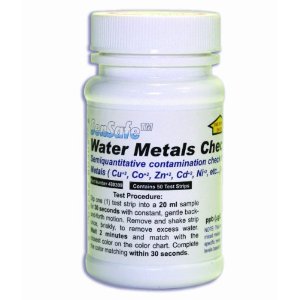
Water Metals Test Kit

The sudden appearance of dissolved metals in well water may indicate that ground water may become by hydraulic fracturing or other forms of subterranean gas/oil collection methods

Some have argued that the government ought to require drilling companies to pay for mandatory third party testing of well water near drilling sites and continue to pay for testing in the affected areas long after their wells have run dry.

Needless to say, the drilling companies have fallen back on their argument that hydraulic fracturing poses no risk to the aquifers through which their boring equipment must pass because of the thick metal casing and cement drilling companies use to insulate surrounding ground from chemicals and compounds used their processes.

They also say that the actual insertion of fracking fluids takes place close to two miles below the surface, more than a mile and half away from the locations of most aquifers.

Our opinion of hydraulic fracturing?

At this point we believe erring on the side of caution makes the most and that allowing hydraulic fracturing, an industry not nearly as regulated as most others that could have serious effects on the environment, to continue unchecked could result in horrifying consequences for millions of people, if not entire vast regions of the country.

Testing of the water around hydraulic fracturing sites (by third party, independent laboratories) and compiling the data will help learn more about the effects of fracking on the environment. We believe that sort of testing and data compilation needs to get done before we let Big Business and our own greed get the best of us — and allow us to accidentally poison our own wells, the very source of our existence.

Oct
7

Manual Testing Required With Automatic Chemical Feeders?

Water Testing BlogChlorine, pH, Pool Water, Water Quality Testing, Water Testing

We received a second inquiry from ‘Michael’ regarding an indoor swimming pool, ORP readings and Taylor Test Kit readings. Details of the email below:

Should a pool be checked daily using The Taylor Kit and Chemtrol unit , while the pool is closed because of a chemical imbalance reading from the Chemtrol unit? The ORP reading was (456), 7.4 Ph, the Taylor Kit reading was .5/? 7.2 Ph Or should we wait a day or so and then check the chlorine levels again and hope the chemical levels have risen back to normal.

Thank you for your service and time, it is greatly appreciated.

First things first: We don’t know of ANYplace where daily testing, if not HOURLY testing, of pool water quality does not get mandated by the local health department… so your question about whether or not you should test water quality daily kind of confuses us.

Regarding the readings taken by the ‘Chemtrol’ unit, we would always suggest performing periodic manual testing just to make sure the sensors in the automatic unit have not gone out of calibration. Chemical dispensing units rely upon the readings taken by the automatic sensors to help them determine how much sanitizer or other water balancing chemical to add. Therefore, keeping an eye on the automatic sensors’ accuracy makes a whole lot of sense!

Waiting a day for levels to stabilize?

Depending upon the strength and efficiency of the pool’s circulation system, you may not have to wait an entire day. As a general rule you can retest the quality of the pool water at any time, but it makes a lot more sense to retest after the water has ‘turned over’ fully after setting the chemical feeder’s levels and/or adding chemicals.

Calcium Hypochlorite Feeder w/ Electronic Controller
Calcium Hypochlorite Feeder w/ Elec Controller

pH Automatic Feed System w/ 15 Gallon Tank

Sep
29

Experts: Test Well Water Before Fracking Begins

Water Testing BlogEnvironmental, Fracking, Ground Water, Home Water Test Kits, Home Water Testing, Metals, pH, TDS, Water Quality Testing, Water Testing, Well Water

As we knew would happen soon, experts in the field of hydraulic fracturing (also called fracking) have made a public statement encouraging land owners to have the quality of their well water tested before allowing hydraulic fracturing to take place near their homes and/or wells.

Two experts on the gas drilling process called hydraulic fracturing, or fracking, told a group of Pennsylvanians that they should have their private well waters tested before any drilling begins near their homes. Neglecting to have such testing performed could lead to problems if fracking contaminates their wells.

According to a report in the Citizen’s Voice, Peter Wulfhorst and Bryan Swistock, educators with Penn State Cooperative Extension, held a seminar in Luzerne County to discuss water quality issues related to fracking. If water contamination occurs within 1,000 of a drilling platform, Pennsylvania law presumes that drilling is the cause. As such, most drillers will volunteer to test wells within that area prior to beginning operations. Wulfhorst and Swistock said property owners should take the drillers up on such offers. Gas companies lose that presumption of guilt if property owners turn water testing down, Citizens Voice said.

The pair also said property owners should pay for their own testing if they can afford it. Such tests should look for barium, chloride, elevated levels of total dissolved solids, the pH factor, and methane. These chemicals are often associated with natural gas drilling. When a property owner commissions such tests, a lab employee or independent consultant should obtain the water samples and keep a copy of the chain-of-custody report.

According to Citizens Voice, Wulfhorst and Swistock also said there are some things property owners should look for after drilling commences that could indicate their well water has become contaminated. Water that “looks like Alka-Seltzer,” could contain methane, or if it leaves red stains it could have high iron levels.

The chemicals that make up that fracking fluid are cause for concern. They may include, among other things, barium, strontium, benzene, glycol-ethers, toluene, 2-(2-methoxyethoxy) ethanol, and nonylphenols. All have been linked to health disorders when human exposure is too high. Thanks to a move by Congress in 2005, fracking is exempt from federal regulation under the Safe Drinking Water Act, so drillers don’t have to disclose what is contained in their fracking fluids. ( source )

So tell us, people… If the gas/oil company offers to perform testing on your well water before they begin fracking, why would you NOT take them up on the offer? The logic behind NOT taking them up on the offer just… isn’t there. In fact, the very idea of NOT taking a valuable service for FREE goes against the very tenets of human nature!

Now don’t get us wrong. If the oil/gas company offers to test the water THEMSELVES and does not SHARE the results — all of the results — with land owners, then land owners should consider having testing done on their own by a licensed, certified water testing service come out to the property, take well water samples, perform testing in an accredited laboratory in accordance with accepted testing procedures, and basically make sure the data obtained from the testing could get introduced in a court of law if needed down the road.

What if land owners have already allowed drilling to begin?

Certified testing can take place at ANY time and the results of that testing will serve as the point against which the results of all future testing will get compared. So again, make sure the testing gets done right the first time!

Can homeowners do any testing on their own?

Of course! The two fracking experts (note: We still chuckle each time we use the word ‘fracking’ in that manner) stated that land owners ought to keep an eye on several basic water parameters. Changes in pH, Total Dissolved Solids (TDS), Iron, and/or Chloride levels may signify that aquifer contamination has occurred and that land owners ought to seriously consider having more in-depth testing of their well water performed.


Chloride Test Kit

pH Test Kit
Water Metals Test Kit

pH Test Kit
pH Test Kit


Total Iron Test Kit

Total Dissolved Solids Tester
TDS Meter

Sep
28

Question about ORP and Pool Water Testing

Water Testing Blogalkalinity, Bromine, Chlorine, Copper, Iron, Metals, pH, Pool Water, TDS, Water Quality Testing, Water Testing

It struck us as odd that we had not, yet, received an inquiry about ORP (Oxidation Reduction Potential), but that thought will never cross our minds again since ‘Ella’ asked us…

I need to find out about the testerORP/Redox for using at the pool

And finally, what did they have to say?

Could you explain what could be tested at the pool’s water by tested ORP/Redox (ORPTester 10 model)? How often do I have to conduct the tests?

Thank you,

Ella

Thank you, Ella, for bringing up the topic of ORP Meters and what they test. Many people have heard of ORP Meters, but not many understand a whole lot about them.

Rather than get into a discussion about gaining and losing electrons that would bore everyone to tears, we will instead sum up ORP Meters’ usefulness by saying that they measure the effectiveness of oxidizers (i.e. chlorine, bromine, non-chlorine shock, and hydrogen peroxide, etc.) in the water.

For you more technical types out there, in a chemical reaction an oxidizing agent will take electrons away from other compounds/elements in the mixture and a reducing agent will donate electrons to the other compounds/elements.

Many automatic chemical dispensing systems rely upon ORP testing units to determine how much and when to add chemical sanitizers to pools.

Frequency of testing?

Whether it has to do with chlorine testing or testing for pretty much ANY pool water parameter, if your pool falls in the category of ‘public’ you will want to consult with your local health department… as regulations vary by locale.

What testing is required for public pools?

This also varies by location so once again you will want to consult with your local health department.

Oh, and before we forget, some health departments may not recognize ORP testing as a definitive way of measuring sanitizer levels. Also, simply measuring the sanitizer level in a swimming pool will not tell you everything you need to know in order to make sure the water stays safe.

Pool water parameters typically tested?

Sanitizer (i.e. free & total chlorine) levels, pH, total alkalinity, calcium or total hardness, stabilizer (cyanuric acid) levels, TDS, and water metals (i.e. iron & copper).

As we said before, you will want to check with your local health department to see what parameters they want you to test and how often they want you to test them.

Taylor K2006 Test Kit

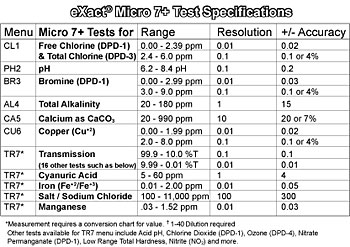
eXact Micro 7+ Pool Testing Meter

Aug
13

ChlorineTests.Com — New Chlorine Testing Web Site

Water Testing BlogChlorine Testing, DPD, DPD Tablets, pH, Test Strip, Testing Devices, Water Quality Testing, Water Test Kit, Water Test Meters, Water Testing

Whether you need a basic test kit for chlorine & pH, a set of easy-to-use chlorine test strips, or an electronic chlorine testing meter, you will find the product to suit your testing needs on ChlorineTests.Com.

You can also find replacement reagents for several different chlorine test kits on ChlorineTests.Com, which naturally means you will find DPD tablets on the site for sure.

chlorine test kits: liquid
Chlorine Test Kits: Liquid

chlorine test strips
Chlorine Test Strips

chlorine testing meters
Chlorine testing Meters

And now for a few basic chlorine testing facts:

  • Test kits containing only OTO as their chlorine testing reagent will test for total chlorine only.

  • Free chlorine testing requires DPD-1. Adding DPD-3 to the sample after adding DPD-1 allows a person to test for total chlorine.

  • The USEPA has set the maximum contaminant level for chlorine in drinking water at 4.0ppm. This limit applies to both free chlorine levels and total chlorine levels.

  • When testing for parameters other than chlorine, some test kits will require the use of chlorine eliminating agents such as sodium thiosulfate before testing can take place.

  • Water containing the same amount of total chlorine as it does has very little or no free chlorine.

  • The difference between the free chlorine level and the total chlorine level equals the chloramine concentration.
Aug
6

Question: Swimming Pool Water Not Holding Chlorine Levels?

Water Testing BlogChlorine, Copper, Hardness, Iron, pH, Pool Water, Water Quality Testing, Water Testing

Ah, yes… a question about a swimming pool not holding its chlorine residual came in recently and we must say that it took longer this year than usual.

Hi – We just got a pool put in (a 24′ round) and it does not hold any chlorine. We pour a gallon in at a time and test the next day and we have almost no chlorine showing up and also our water stays cloudy. What are we doing wrong? Thanks. Annie.
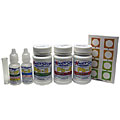
Well, Annie, we will start with the type of chlorine you most likely have: liquid. Sodium hypochlorite works very well as a chlorinating agent, disperses into pool water seamlessly, and has a relatively low cost (usually around $2 per gallon if bought in 5 gallon jugs).
Aside from liquid chlorine’s tendency to bleach any clothing it touches and weigh a lot in those bulky 5 gallon containers, liquid chlorine also lacks any kind of stabilizing compound in its chemical makeup. Without a stabilizer such as cyanuric acid, the chlorine added to a pool via liquid chlorine can readily exit the pool for a number of reasons (i.e direct sunlight, warm water temperatures, etc.)

If you have not already added pool stabilizer (cyanuric acid), you may want to do so pretty soon. We do, of course, suggest you test your pool for cyanuric acid before adding any chemicals… in case some other, more insidious reason exists for your pool not holding a chlorine level.

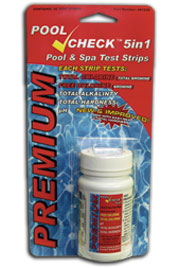
Unsure as to how you can test pool water for cyanuric acid? You can take water to your local pool store, use a liquid test kit or use something like the 6 Way Pool Check test strip.

Other Chlorine Eaters

By any chance do you have a fair amount of leaves, tree branches, dead animals, dead neighbors, or other debris in the water? If so, the chlorine will act like a human and choose the easiest (biggest) target to attack rather than go after smaller, harder to attack targets. Get the debris out right away.

Don’t Skimp on the Filtration/Circulation

The cloudy water in your pool may come from poor water circulation and/or filtration as well as the low chlorine level you initially inquired about. Until you clear up the water, try running the filter 24 hours a day if you do not already do that.

If after running the filter a full day you do not see an increase in pump pressure on the gauge attached to the filter and/or the strength of the jets pushing water back into the pool has not diminished, you may have filter problems. Now on the other hand, if you DO see increased pressure and diminished return jet strength, backwash the filter and it will begin collecting more junk from your water at a faster rate.

Simplified List of Steps for Annie to Take

Granted we cannot possibly address Annie’s problems completely since we do not know all of the factors affecting her water condition, but the we have personally used slight variations of this advice to help quite a few people clear up their pool water.

  • Remove large debris from pool, if present… especially any dead bodies.

  • Test stabilizer level and adjust if needed by adding cyanuric acid per the instructions given by the chemical’s manufacturer.

  • Test other critical water parameters such as pH, Alkalinity, Copper, Iron, Hardness, etc. and make corrections as needed — per instruction(s), of course.

  • Add more liquid chlorine… roughly 1 gallon per 10,000 gallons of pool water.

  • Run filter 24 hours a day until problem clears up.

  • Backwash filter when necessary to improve filtration and water circulation.

Never hesitate to go in and pester your local pool store employees for pointers, free water testing and advice. They relish the opportunity to snicker behind your back because they cannot believe you cannot figure out what pool chemicals you need… but try not to let that deter you because they know a lot about how to properly maintain pools and generally give good advice!

In the Swim: Cyanuric Acid Test Kit
Cyanuric Acid Test Kit

In the Swim: 6 Way Test Strip w/ Cyanuric Acid Test
6 Way Test Strip w/ Cyanuric Acid Test

Jul
21

Big Blue Filter for Iron Reduction (Pentek)

Water Testing Bloghydrogen sulfide, Iron, manganese, Metals, pH, Water Filter, Water Quality Testing, Water Testing

Got a problem w/ iron in your water? If so, you have joined the millions of other folks who have the same problem.

Iron occurs naturally in the environment and as water passes across it in rock formations small amounts of iron dissolve into the water. Over time the amount of iron dissolved into the water can grow to a large amount and in too great a quantity iron in water can result in stains on fixtures, metallic taste, the formation of precipitates which can clog plumbing and filters, etc.

You can find additional information on iron in drinking water on an earlier blog posting… here

For those reasons, and more, most people prefer to filter iron out of their water before using it in their homes, schools and places of business. The Pentek RFFE20-BB Iron Reduction Filter helps people accomplish that goal.

Configured as a 20″x5″ radial flow ‘Big Blue” cartridge, the Pentek RFFE20-BB reduces iron in drinking water and has a genuine Pentek part number of 155263-03. This product effectively removes up to 3 ppm of dissolved iron from water and in doing so reduces the metallic taste caused by iron and reduces orange/brown staining found on sinks, tubs, toilets and other plumbing fixtures.

Size of Filter: 20″ x 5″, w/ actual measurements of 19 3/4″ x 4 7/8″

Optimal pre-filter water conditions:

Using the Pentek RFFE20-BB Iron Reduction Filter to treat water outside of specified limits may result in shortened filter life.

Jul
12

Drinking Water Quality Test Kit on Sale

Water Testing Blogalkalinity, Bacteria, Chlorine, Chlorine Testing, Copper, Free Chlorine, Hardness, Home Water Test Kits, Home Water Testing, hydrogen sulfide, Iron, Lead, Nitrate, Nitrite, Pesticide, pH, sensafe, Test Strip, Total Chlorine, Water Quality Testing, Water Test Kit, Water Testing

Water Quality Test Kit
Water Quality Test Kit for 15 Parameters
Regularly $40, Now Just $32.00

Everyone loves a bargain, right? Well if you have waited to purchase a test kit for drinking water because you could never find one on sale, well, you no longer have a reason to wait.

FilterWater.Com recently dropped the price of Sensafe’s most popular test kit for drinking water quality, an easy-to-use test kit that tests for 15 critical water quality contaminants and does not require users to mix powders, crush tablets, or have a degree in chemistry to figure out the directions.

Considered by some the most complete do-it-yourself Water Quality Test Kit on the market, this water test kit tests up to 2 water sources for 15 critical water quality parameters and allows you to quickly and easily test your drinking water and/or check to see if your water filter does a good job.

In this particular drinking water test kit you will find the only available USEPA Approved Free Chlorine Test Strip as well as color-coded, visual, on the spot tests for 13 other parameters. The bacteria test kit, however, requires 48 hours, just as it does in kits manufactured by all other companies.

Need to test more often?

If so, then should definitely look at contents of the Well Driller Standard and Master test kits which contain a minimum of 25 tests for most parameters and come packed in a convenient, hard plastic carrying cases


Well Driller Master


Well Driller Standard

In total, the Water Quality Test Kit contains the following:

Included with the kit you will receive a chart so that you can compare your results to USEPA recommended levels is included.

And remember…

Despite the great price on this home drinking water test kit, no at-home testing can ever take the place of having a certified water testing laboratory such as National Testing Labs analyze your drinking water if you have serious reason to suspect contamination.

Jun
8

Water Testing Near Gas Drilling Sites

Water Testing BlogEnvironmental, Ground Water, pH, Water Quality Testing, Water Testing, Well Water

Another article has popped up in which an official from an environmental agency has stated that a need exists for testing bodies of water in and around areas where drilling for natural gas will take place. It seems as though the closer the date gets when drilling will begin, the more people become concerned and say, “Hey… We really need to think about our water supply. We have NO idea what this amount of drilling might do to it.”

Jun. 7 — Surface water and water wells near pending natural gas drilling operations should be tested before any drilling starts, Scott Fickbohm, manager of Otsego County’s Soil & Water District, said.

“We need baseline tests if we’re going to be able to show that any changes have occurred,” Fickbohm said Friday.

In his agency, he and one other staff member could work part-time at monitoring surface water in the county, he said. The Soil & Water District does not have the means to test thousands of water wells, “but I’m working on a database to try to let people know where they can get their water tested, and how much it will cost,” he said.

Costs will depend on how comprehensive the tests are. “I’ve heard everything from hundreds to thousands of dollars,” he said.

The state may mandate that drilling firms pay for baseline testing of water wells within a certain distance of a drilling operation, he noted.

Although the state’s rules have yet to be issued, Soil & Water is preparing for its upcoming duties because it cannot wait, Fickbohm said.

“We’re taking our lead from the SRBC,” he said.

The Susquehanna River Basin Commission is monitoring the Susquehanna River in Pennsylvania for conductivity and Ph values because when these values change they may indicate the river is being polluted, he said.

“Conductivity is the presence of ions in the water, and that’s likely to pick up any change in salinity,” he said.

In their quest for shale gas, companies are drilling thousands of feet down into a zone where there are pockets of saline water, Fickbohm said. A change in the river’s saline levels might mean that brackish water from the depths has reached the river, the largest source of fresh water in the Chesapeake Bay. ( source )

Testing for Conductivity

Conductivity testing typically gets done with the use of a conductivity meter. You will find examples of several popular conductivity meters below.

 Product Name  Model   
 Conductivity Meter: Digital 0 to 1999 µS Water Quality Meter (WA300) with Remote Sensor Probe & 36″ Lead   WA300   Conductivity Meter: Digital 0 to 1999 µS Water Quality Meter (WA300) with Remote Sensor Probe & 36" Lead 
 Conductivity Meter: Digital 0 to 1999µS (PWA-301) with Integral Sensor Tip & Protective Cap   PWA-301   Conductivity Meter: Digital 0 to 1999µS (PWA-301) with Integral Sensor Tip & Protective Cap 
 Conductivity Meter: Digital Pen Style 10 to 9990 µS/cm (CO502) ATC with Calibration Solution, Screwdriver & Hard Case   CO502   Conductivity Meter: Digital Pen Style 10 to 9990 µS/cm (CO502) ATC with Calibration Solution, Screwdriver & Hard Case 
 Conductivity TDS Meter: Digital (CDM22CT) with Built-In Thermometer   DCM22CT   Conductivity TDS Meter: Digital (CDM22CT) with Built-In Thermometer 
 Electrical Conductivity EC Meter: Digital 0 to 20.0 EC (EC506) ATC with Calibration Solution, Screwdriver & Hard Case   EC506   Electrical Conductivity EC Meter: Digital 0 to 20.0 EC (EC506) ATC with Calibration Solution, Screwdriver & Hard Case 
 pH/ORP/Temperature Conductivity Combination Digital Water Testing Meter (DPHO1380K) with Software & Carrying Case   DPHO1380K   pH/ORP/Temperature Conductivity Combination Digital Water Testing Meter (DPHO1380K) with Software & Carrying Case 

While this article mentioned conductivity as a means of testing for changes in surface water’s salinity, other testing methods such as TDS meters, salt (chloride) meters and/or chloride test strips may work as well, but their effectiveness, we believe, may get limited by their detection ranges.