About
Do you know what's in YOUR water? Learn about water quality, water quality testing, and water quality testing products that can help you make informed, educated decisions regarding the water treatment options for your home, office, swimming pool... and life.
Contact Us
Got a question about water quality? Want to share a water quality article or water quality article with others?

Visit our Contact Us Page to ask a water quality question or submit water quality information.

RSS Feed
Get the most recent water quality posts and comments by subscribing to the Water Testing Blog RSS Feeds.
Subscribe to RSS! Subscribe to RSS Comments!

Archive for May, 2008

May
15

Chlorine, Bromine and pH Test Kits (NSN Alternate Products)

Water Testing BlogBromine, Chlorine, Chlorine Testing, Free Chlorine, National Stock Number, pH, Test Strip, Total Chlorine, Water Quality Testing, Water Test Kit, Water Testing

Per the request of several men and women currently serving in the United States Armed Forces and other branches of the Unites States Government, we will begin posting possible alternate products for popular (established) NSN’s (National Stock Numbers) related to water quality testing.

NSN: 6630010273914, 6630010440334, 6630010673827 — Chlorine, Bromine and pH Visual Test Kits

  • WaterWorks and SenSafe Test Strips — Simple dip and read test strips for a wide range of parameters. Easier to use than wet kits, longer shelf lives, and much more convenient to carry.
  • eXact EZ Water Quality Testing Meter — EPA Compliant (for free and total chlorine) handheld multi-parameter water quality testing meter. IP67 Waterproof rating.

Note: We have found that the products suggested above meet or exceed the specifications of the original NSN (National Stock Number) item. This does not mean, though, that you may substitute them in place of the item on a Government Contract. We provided the above information as possible sources of water quality testing products for consideration in future Contracts/Bids only.

May
14

Chlorine Testing in Farm and Irrigation Water

Water Testing BlogChlorine, Chlorine Testing, Combined Chlorine, Free Chlorine, Test Strip, Total Chlorine, Water Quality Testing, Water Test Kit, Water Testing

Just as growers of plants must watch over their fields, so must they monitor the chlorine levels in the water they use to irrigate their fields.

Ideally for the farmer, the water going into the ground and/or getting sprayed over his fields should contain as low a disinfectant concentration as possible since chlorine kills more than just microorganisms. In too great a concentration it destroys plantlife as well.

How Can Farmers Monitor Chlorine Levels?

While several methods for testing chlorine levels in farm water exist, and all have merit, the simplest chlorine level testing method for farmers comes in the form of dip-n-read test strips. They require no formal training, cost very little, and give fast, accurate results typically in under a minute. See below for examples of test strips well suited for testing chlorine levels in farm water:

Do Farmers Test for Free Chlorine or Total Chlorine in Farm Water?

Most farmers test for total chlorine in farm/irrigation water. The total chlorine concentration includes the free chlorine residual and the combined chlorine (chloramine) residual. Both free chlorine and combined chlorine can function as oxidizers, though free chlorine typically does work much more effectively.

total chlorine testing in farm water
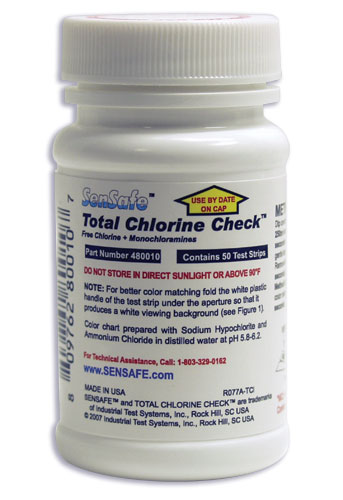
SenSafe Total Chlorine Test Strips (0ppm to 10ppm)

May
14

NGWA.Org and WellOwners.Org Well Testing Recommendations

Water Testing BlogBacteria, Ground Water, Home Water Testing, Water Quality Testing, Water Testing, Well Water

National Ground Water Association (NGWA) recommendations for well water testing, according to WellOwners.Org, suggests that well owners perform testing on their wells at specific times and also at other times for a variety of reasons:

  • Annually for bacteria, nitrates/nitrites, and any contaminants of local concern
  • More frequently than once a year if there is a change in the taste, odor, or appearance of the well water, or if a problem occurs such as a broken well cap or a new contamination source
  • If family members or houseguests have recurrent incidents of gastrointestinal illness
  • If an infant is living in the home
  • To monitor the efficiency and performance of home water treatment equipment

The experts at WellOwners.Org go on to say: “You should also check with your local health or environmental health department for recommendations regarding the type and frequency of testing specific to your location.”

Note: The reasons listed above represent just a few of the possible reasons that might cause a well owner to get the water quality of the water from their well checked. Other reasons exist. The responsibility of making sure well water remains safe for human consumption and use lies with the well owner, not a brief list of reasons like the one above. The Water Testing Blog provides information designed to aid those interested in water testing, not diagnose and troubleshoot every possible water quality issue.

May
13

What are Disinfection Byproducts?

Water Testing BlogChlorine, DBP, HAA5, Haloacetic Acid, THM, Trihalomethane

Most water treatment facilities use some form of oxidizer to keep the water they distribute ‘safe’ for human consumption. While the most prevalent way to disinfect water, use of oxidizers as disinfectants in potable water does come at a cost.

The process by which oxidizers break down organic contaminants generates compunds known as ‘disinfection byproducts’: Trihalomethanes (THM’s), Haloacetic Acids (HAA5), Bromates, and Chlorites.

Trihaloemethanes (THM): chloroform, bromodichloromethane, dibromochloromethane, and bromoform.

“EPA has published the Stage 1 Disinfectants/Disinfection Byproducts Rule to regulate total trihalomethanes (TTHM) at a maximum allowable annual average level of 80 parts per billion. This standard will replace the current standard of a maximum allowable annual average level of 100 parts per billion in December 2001 for large surface water public water systems. The standard will become effective for the first time in December 2003 for small surface water and all ground water systems.” (source)

Haloacetic Acids (HAA5): monochloroacetic acid, dichloroacetic acid, trichloroacetic acid and others.

“EPA has published the Stage 1 Disinfectants/Disinfection Byproducts Rule to regulate HAA5 at 60 parts per billion annual average. This standard will become effective for large surface water public water systems in December 2001 and for small surface water and all ground water public water systems in December 2003.” (source)

Bromate:

“Bromate is a chemical that is formed when ozone used to disinfect drinking water reacts with naturally occurring bromide found in source water. EPA has established the Stage 1 Disinfectants/Disinfection Byproducts Rule to regulate bromate at annual average of 10 parts per billion in drinking water. This standard will become effective for large public water systems by December 2001 and for small surface water and all ground public water systems in December 2003.” (source)

Chlorite:

“Chlorite is a byproduct formed when chlorine dioxide is used to disinfect water. EPA has published the Stage 1 Disinfectants/Disinfection Byproducts Rule to regulate chlorite at a monthly average level of 1 part per million in drinking water. This standard will become effective for large surface water public water systems in December 2001 and for small surface water and all ground water public water systems in December 2003.” (source)

Health officials and medical professionals have studied the effects of disinfection byproducts since the mid 1970′s and have found that in large doses, laboratory animals have developed serious, and sometimes deadly, health conditions. With regard to the effects these compunds have on humans, these same health officials and medical professionals have deterined that the current empirical evidence indicates a potential danger to humans and thus a need for additional research and study.

They also believed that the empirical data had enough merit to warrant restrictions on the amounts of disinfection byproducts in drinking water: Stage 1 Disinfectants/Disinfection Byproducts Rule.

“In sum, EPA believes the weight-of-evidence presented by the available epidemiological studies on chlorinated drinking water and toxicological studies on individual disinfection byproducts support a potential hazard concern and warrant regulatory action at this time such as that taken in the Stage 1 Disinfectants/Disinfection Byproducts Rule.” (source)

May
12

Choosing a Well Water Contractor

Water Testing BlogGround Water, Home Water Testing, Water Quality Testing, Water Testing, Well Water

When choosing a certified well water contractor or certified well water contractor to examine your well for safety and operational issues, you may want to consider someor all of the following criteria before making your final decision:

  • Licensing: Do the well water contractors on your list have valid licenses to perform the work you need or want them to perform?
  • Certifications: Have the well water contractors on your list gone through accredited certification programs with an organization such as the National Ground Water Association (NGWA)?
  • Well Logs: Do the well water contractors on your list keep records of the geological formations their boreholes (in this case holes used for wells) go through?
  • Equipment: How contemporary is their equipment? Do they have the proper equipment to drill in your area or service the type and condition of the well you own?
  • Insurance: Should something go terribly wrong while working on the well on your property, do the contractors on your list carry the right types of insurance coverage and have enough liability and worker’s compensation to protect you?
  • Knowledge of Health/Safety Codes: It makes no sense to hire a well water contractor who lacks sufficient knowledge of the applicable health and safety codes pertaining to wells, well water and the drilling of a well.
  • Reputation: Can the well water contractors on your list provide you with recent, credible references attesting to the quality of service they provide?
  • Written Contract: Will the well water contractors on your list provide you with a written contract up-front which tells you the specific terms and conditions of the work they intend to provide?
  • Stickers: Sounds silly, but do the well water contractors on your list proudly display the membership stickers of the organizations to which they belong on their vehicles? And if so, what years do those stickers say? Current members of organizations like the National Ground Water Association (NGWA) and others typically have access to the latest information on the ground/well water industry, well drilling and well servicing techniques, etc.

While careful consideration of the above criteria will not guarantee the reliability of the well water contractor you choose, it will help weed out many of the less than ethical well water contractors whose business practices could put your family’s saftey at risk.

Remember: It’s your well and your continual responsibility to make sure the water coming out of that well remains balanced, bacteria-free, and safe for consumption.

May
10

Coliform Bacteria Test (NSN Alternate Product)

Water Testing BlogBacteria, National Stock Number, Water Quality Testing, Water Test Kit, Water Testing

Per the request of several men and women currently serving in the United States Armed Forces and other branches of the United States Government, we will begin posting possible alternate products for popular (established) NSN’s (National Stock Numbers) related to water quality testing. 

NSN: 6630013575910 — Presence/Absence Coliform Bacteria Tests

“PLASTIC SNAP-PACK WITH PERFORATIONS, FOR TEARING TO REMOVE POWDERED REAGENT; EACH PACKET IS ADDED TO 100 ML WATER SAMPLE TO DETERMINE THE PRESENCE OR ABSENCE OF COLIFORM IN DRINKING WATER AFTER INCUBATION; UNIT PKG QTY: 20″

Alternative(s):

  • Bacteria Check — 100 mL Presence/Absence test for coliform bacteria which does NOT require incubation. Uses bromcresol purple as the indicator which turns from purple to yellow in the presence of bacteria. 48 hour test time, packaged in sets of 12 single-use tests.

home water well test kit coliform bacteria
Presence/Absence Coliform Bacteria Test Kit

Note: We have found that the products suggested above meet or exceed the specifications of the original NSN item.  This does not mean, though, that they may be substituted in place the item on a Government Contract.  We provided the above information as possible sources of water quality testing products for consideration in future Contracts/Bids only.

May
9

Annual/Yearly Well Water Testing

Water Testing BlogBacteria, Ground Water, Home Water Test Kits, Home Water Testing, Water Quality Testing, Water Test Kit, Water Testing, Well Water

Changes in aquifer levels and the quality of the water they provide occur quite frequently. While not all the changes in those two things prove harmful to humans or damaging to plumbing, equipment and fixtures, experts do suggest having your water professionally tested on an annual basis.

The National Ground Water Association (NGWA) suggests the following:

“NGWA recommends routine annual maintenance checks to ensure the proper operation of the well and prolong its years of service as well as to monitor water quality. NGWA also recommends that you test your water whenever there is a change in taste, odor, or appearance, or when the system is serviced.”

The National Ground Water Association (NGWA) goes on to specify that well owners should try to use only the services of licensed/certified well water contractors.

With regard to the parameters the National Ground Water Association (NGWA) believes a well owner ought to test on a yearly basis, they give the following advice:

“A test of water for coliform bacteria and nitrates, and anything else of local concern. Other typical additional tests are those for iron, manganese, water hardness, sulfides, and other water constituents that cause problems with plumbing, staining, water appearance, and odor. Changes in these constituents also may indicate changes in your well or local ground water. Additional tests may be recommended if water appears cloudy or oily, if bacterial growth is visible on fixtures, or water treatment devices are not working as they should. Check with your water well contractor, state department of natural resources, or local health department for information on local water quality issues.”

How Can I Find a Certified Well Water Contractor in My Area?

Try using the NGWA Certified Well Water Contractor Lookup tool or you can also find a listing of certified water testing labs in your area on the Environmental Protection Agency Safe Water web site.

So Certified Well Water Testing Once a Year is Enough?

Well water testing ought to take place at least once a year and well owners should use professionally certified personnel for that purpose. That does NOT mean, however, that well owners ought to let their guard down the rest of the year.

Owning a well implies responsibility for the quality of the water coming out of the well so well owners may want to consider using simple, do-it-yourself home well water test kits from time-to-time as a secondary means of checking the quality of their well water.

While home well water test kits cannot and should NEVER take the place of the annual testing done by professionally certified well contractors, they do offer well owners additional peace of mind when used in conjunction with professional well water testing.

You can use the following links to find home well water test kits for the following parameters:

home water well test kit coliform bacteria
Home Well Water Coliform Bacteria Test Kit

Well owners may also want to consider using multi-paramater home and well and water test kits such as:
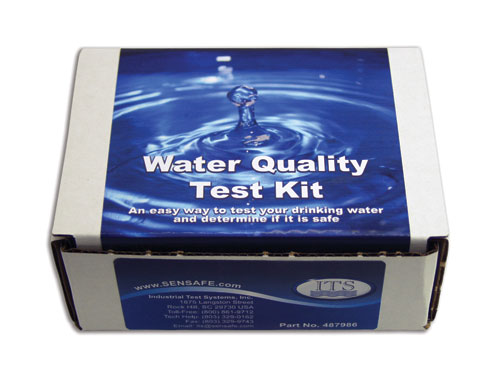
home water test kit for city/municipal water
Home and Well Water Test Kit

To Recap:  The responsibility of making sure the water from your well poses no danger to you or anyone else rests solely in your hands. . . and you DO wash your hands to make sure they’re clean before you eat, so shouldn’t you make sure your well is clean before you drink from it?

May
6

Dangerous Arsenic Levels in Food

Water Testing BlogArsenic, Arsenic in Food, Arsenic in Water, Arsenic Test, Food Processing

Although this blog tries to deal mainly with water quality and matters directly related to water quality testing, the following bit of information about dangerous levels of arsenic in food caught our attention and we felt compelled to post it:

“A lack of regulation means a third of baby rice on sale in the UK contains worryingly high levels of carcinogenic inorganic arsenic, according to researchers.

The study, carried out by scientists from the University of Aberdeen and published this month in the journal Environmental Pollution, said this meant some children could be getting six times the recommended inorganic arsenic for their weight.

The levels detected in some of the samples would be illegal in China, where there are stringent controls in place. But while there are European Union and American regulations for arsenic levels in drinking water, there are currently no laws to direct the amounts of arsenic allowed in food products.

Furthermore, current guidelines on intake are based on outdated research conducted before arsenic was found to be a carcinogen, according to the researchers.

This calls into question the need for am urgent review on the situation.

“It is apparent that inorganic arsenic levels in baby rice should be of concern,” said lead scientist, Andrew Meharg.

Read the full FoodProductionDaily.com story here.”

Pretty frightening stuff. We cannot help but wonder if the methodology used to test arsenic levels in soil with the Arsenic Quick test kit could also work for testing arsenic levels in certain types of foods.

May
6

Digital Chlorine Analyzer (NSN Alternate Products)

Water Testing BlogChlorine, Chlorine Testing, DPD, DPD Powder Pillows, DPD Tablets, Free Chlorine, National Stock Number, Total Chlorine, Water Quality Testing, Water Test Kit, Water Testing

Per the request of several men and women currently serving in the United States Armed Forces and other branches of the United States Government, we will begin posting possible alternate products for popular (established) NSN’s (National Stock Numbers) related to water quality testing.

NSN:  6630014574027 — Digital Chlorine Analyzer

“RUGGED COLORIMETER WITH ADVANCED OPTICAL SYSTEM THAT ELIMINATES STRAY LIGHT ERROR; DIGITAL READOUT DIRECTLY BETWEEN 0-4 PPM WITH A PLUS/MINUS 2% PHOTOMETRIC ACCURACY; READING STABILITY WITHIN 1% OF FINAL VALUE WITHIN 5 SECONDS; MEETS EPA REQUIREMENTS 330.5 FOR DPD COLORIMETER; DIMENSIONS: 7 IN. BY 5 IN. BY 4.5 IN.”

Alternate Product Suggestions:

Note: We have found that the products suggested above meet or exceed the specifications of the original NSN item.  This does not mean, though, that they may be substituted in place the item on a Government Contract.  We provided the above information as possible sources of water quality testing products for consideration in future Contracts/Bids only.

May
5

Testing for Total Chlorine

Water Testing BlogChlorine, Chlorine Testing, Combined Chlorine, DPD, DPD Powder Pillows, DPD Tablets, Test Strip, Total Chlorine, Water Quality Testing, Water Testing

While many water professionals worry about getting chlorine into water and establishing a chlorine residual, other water professionals worry about removing chlorine from water.

  • Example 1: Before water from a well can pass a coliform bacteria test at a certified laboratory and get approved for human consumption it must test as having absolutely no chlorine residual in it.
  • Example 2: Federal, State and Local Environmental Laws/Regulations prohibit the discharging of highly chlorinated water from a wastewater treatment facility or from any other water processing facility. Chlorine, even in low concentrations, poses a serious danger to the ecosystem and the releasing of too large an amount into environment can wipe out the area’s vegetation and animal life very rapidly.

What Type of Chlorine Should One Test For?

Typically speaking, when concerned about the amount of chlorine residual in the discharge from any sort of wastewater treatment facility, most people check for total chlorine. Testing solely for free chlorine would not suffice for environmental purposes because combined chlorine, also called chloramines, can still have harmful effects on the environment despite not having the as great an oxidation potential as free chlorine.

How Can One Test for Low Levels of Total Chlorine?

Test Strips: Quick, easy and cost effective. Test strip methods for chlorine concentration determination offer extreme amounts of convenience and require little or no technical training. Just dip the strip and compare the color of the test area to a color chart. (total chlorine, ultra low total chlorine)

DPD: Typically used in conjunction with a colorimeter, DPD methods for chlorine concentration determination give more precise results than most visual methods, but as stated, they typically require the use of instrumentation (see DPD ReagentStrips, eXact EZ, Chlorometer 1000, eXact Micro 7+). For environmental compliance monitoring and reporting purposes, most government bodies require the use of an EPA Compliant DPD testing method.

Titrations: A time consuming method which typically uses DPD in liquid form and requires a certain amount of laboratory skills. Not very practical for field work. Uses liquid reagents which have a shorter shelf-life than comparable powders, tablets, etc.