About
Do you know what's in YOUR water? Learn about water quality, water quality testing, and water quality testing products that can help you make informed, educated decisions regarding the water treatment options for your home, office, swimming pool... and life.
Contact Us
Got a question about water quality? Want to share a water quality article or water quality article with others?

Visit our Contact Us Page to ask a water quality question or submit water quality information.

RSS Feed
Get the most recent water quality posts and comments by subscribing to the Water Testing Blog RSS Feeds.
Subscribe to RSS! Subscribe to RSS Comments!

Archive for September, 2009

Sep
20

Bacteria in Shower Heads Can Kill You?

Water Testing BlogBacteria, Hardness, Home Water Test Kits, Home Water Testing, Metals, Water Filter, Water Quality Testing, Water Testing

Did we get your attention with that title? We hope so because the news we have for you about the potential for human suffering your shower head can cause will… most likely have no effect on your life.

The latest panic-inducing study, conducted by researchers at the University of Colorado, Boulder and released today, looked at 45 showerheads from across the United States. The researchers found that each showerhead was home to, on average, several billion microbes per square centimeter—pretty gross considering that tap water usually contains 90 percent less bacteria per liter. ( source )

So let’s get right down to figuring out whether or not you ought to panic over the recent bacteria in shower heads study. In a word, “NO.”

If you’re otherwise healthy, chances are that a grody showerhead won’t be your downfall. In fact, very few people have probably ever died of—or gotten sick from—showerhead microbes. ( source )

Sounds pretty scary hearing that your shower head may harbor all sorts of nasty bacteria. Thankfully the results of this study will mean as much to the average person as the results of the bacteria on flip-flops and bacteria on keyboards studies.

The dangers presented by bacteria in a person’s shower head really ought not cause a person to run out and replace their shower head — unless they have contaminated source water to begin with.

How does a person know if they have contaminated source water?

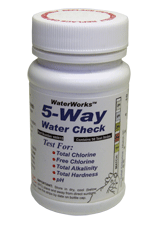
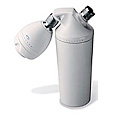
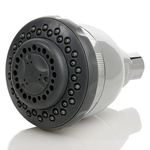
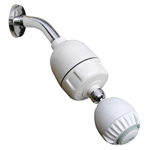
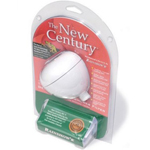
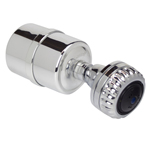
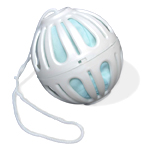
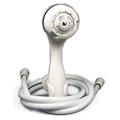
Simple: Test the source water for bacteria and other contaminants such as heavy metals such as lead and copper, chlorine levels, hardness, etc. A person can either contract out w/ a certified water laboratory for such analysis of they can use a home drinking water test kit to find out if they need to invest in a Shower Head Water Filter, Countertop Water Filtration Unit, or Whole House Water Filtration System.


water quality meters
  • Water Testing Meters — Precise measuring tools for testing all sorts of different water testing parameters. Often times a lot more expensive per test, but if accuracy of results matters, then one can easily justify spending a few more dollars.

  • water quality test strips
  • Water Testing Strips — Fast, convenient and economical testing method for a wide range of critical water quality parameters. From chlorine to chromium, pH to pesticides, and a whole host of other important water parameters, test strips provide rapid, on-the-spot testing solutions at reasonable per test prices.
  • “OK, so I got my test results and now I want a shower filter… Now what?”

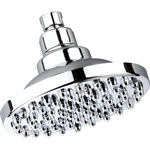
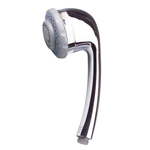
    With water test results in hand you can now begin the search for the appropriate shower filter for your source water. Below you will find links to several different options offered by Filter Water:

    Shower and Bath Water Filters

    Shower and Bath Water Filters

    Shower and Bath Water Filters

    Shower and Bath Water Filters

    Shower and Bath Water Filters

    Shower and Bath Water Filters

    Shower and Bath Water Filters

    Shower and Bath Water Filters

    Shower and Bath Water Filters

    Shower and Bath Water Filters


    Shower and Bath Water Filters

    Sep
    18

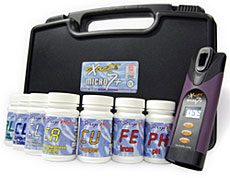
    eXact Micro 7+ Water Testing Meter Tests for 36 Different Water Parameters

    Water Testing BlogBromine, Chlorine, Chlorine Testing, Copper, DPD, DPD ReagentStrip, eXact Strip DPD, Fluoride, Free Chlorine, Hardness, Home Water Testing, Iron, Metals, Nitrate, Nitrite, Ozone, Peroxide, pH, Testing Devices, Total Chlorine, Water Test Kit, Water Testing

    eXact Micro 7+ Water Testing Meter

    No one in their right mind would argue that testing water for drinking, use in a pool, watering crops, etc. has to happen. One might, however, argue that using test strips and liquid test kits which require the user to match colors can lead to approximations and assumptions regarding critical water parameters such as pH, chlorine/bromine/sanitizer levels, alkalinity, total hardness, heavy metals, etc.

    We all know what assumptions can lead to: Making an a## out of you and me.

    No one wants to get sick from dirty or polluted water so when accuracy matters most, you may want to put down the test strips and liquid test kits and opt for a verstile water testing meter such as the eXact Micro 7+ which tests for NINE critical water parameters using direct read measurements and an additional TWENTY-SEVEN other important water parameters with the use of a conversion chart.

    Features of the eXact Micro 7+ Water Testing Meter:

    • Tests for 36 parameters in total

    • Nine direct read parameters — Total Alkalinity, Bromine, Calcium Hardness, Free Chlorine, Total Chlorine, Copper, Ozone, Permanganate, and pH

    • Twenty-Seven parameters using a conversion chart: Ammonia, Chloride (as NaCl), Chlorine Dioxide (DPD-1), Chromium Hexavalent, Cyanuric Acid, Fluoride, Hydrazine, Hydrogen Peroxide (Low, Mid and High Range), Iodine (DPD-1), Iron (Fe+2), Total Iron (Fe+2/Fe+3), LR Total Hardness (as CaCO3), Magnesium, Manganese, Nitrate (as NO3), Nitrite (as NO2), pH (Acid and Alkali), Potassium, Protein (as BSA), Sulfate, Sulfide, and Turbidity

    • USEPA Compliant meter for Free & Total Chlorine — 0.01 ppm (mg/L) precision

    • Built-in, permanent cell — no loose glass or plastic cells to lose

    • Easy fill testing — Simply fill or dip meter into water

    • Automatic countdown timer for accurate timing of testing

    • 140 test memory — saves 20 tests per menu item

    • Incorporates eXact® Strip technology — safe & reliable reagent dispersion

    • No-slip grip housing — ideal for wet testing conditions

    • Lightweight — weighs only 6 ounces w/ batteries installed

    • Waterproof — IP-67 Rated and meter will float if dropped into water

    • Easy-to-read LCD display — no color matching required

    • Environmentally friendly — recyclable parts & uses 60% less reagents than 10mL sample tests

    • Proprietary optics — allows for accurate testing without cap

    • CE certification

    Interested in learning how this device works? Check out the image below as it takes you through the steps of how to test w/ the eXact Micro 7+ Water Testing Meter.

    eXact Micro 7+ Poolside Demonstration

    Sep
    18

    Filters to Remove Fluoride From Drinking Water

    Water Testing BlogFluoride, Water Filter

    Fluoride (F+) exists in nature in many different forms and places. For the purpose of this discussion, though, we weill focus only upon the fluoride added to public drinking water by municipal water treatment plants. Many scientists and health officials believe fluoride aids in prevention of tooth decay.

    The addition of fluoride to the public water supply, though, has stirred up quite a lot of debate. Some people can have a life threatening allergic reaction to fluoride and in all but on European country, laws label fluoride as a poison.

    Earlier we mentioned that fluoride can help ward off tooth decay but in concentrations greater than 5 ppm it can damage the structure of teeth. While municipal water systems do not add that amount of fluoride to drinking water, waste water from glass, steel, and aluminum manufacturing facilities can sometimes contain greater than 5 ppm.

    “Can the average person remove fluoride from their drinking water?”

    For those with allergies to fluoride and/or people who simply just don’t know what to believe when it comes to fluoride in drinking water and want to remove fluoride from their drinking water, they have two options: Reverse Osmosis Filtration Systems or specially designed cartridge filters.

    Below you will find links to various water filters designed to remove fluoride from drinking water.

    filters to remove fluoride from drinking water
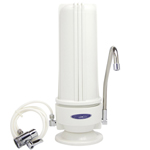
    Countertop

    filters to remove fluoride from drinking water
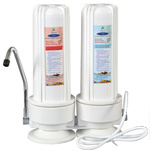
    Dual Filter

    filters to remove fluoride from drinking water
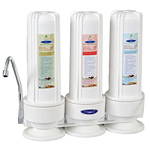
    Triple Filter

    filters to remove fluoride from drinking water
    Inline

    filters to remove fluoride from drinking water
    + Nitrate Filter

    filters to remove fluoride from drinking water
    Single Filter

    filters to remove fluoride from drinking water
    Dual Undersink Filter

    filters to remove fluoride from drinking water
    Triple Undersink Filter

    filters to remove fluoride from drinking water
    Whole House Filter

    Sep
    17

    Using Moss to Clean Up Pool Water?

    Water Testing BlogBacteria, Environmental, Pool Water, Water Filter

    Sphagnum Moss

    Sounds like a ridiculous idea, does it not? The idea of taking a plant that grows in damp, dirty areas of the planet and using it means of cleaning up bacteria and biofilm in pool water sounds… downright preposterous!

    If you think about it, though, how much more ridiculous does this idea seem than tossing algae-eating catfish into pools in the yards of foreclosed homes in Florida?

    A young company in Minnesota called Creative Water Solutions has developed a line of products which make use of a specific species of Sphagnum Moss which has demonstrated anti-bacterial properties as part of wound dressings in combat situations.

    “In that issue there was a single page article about the use of Sphagnum moss in WWI to treat battle wounds. The Germans and the English found that if they packed their soldiers wounds in a special species of Sphagnum Moss that they survived in higher numbers than if they packed the wounds in cotton. The author postulated that the effect was due to the amazing absorbency of the moss. Being an expert in wound healing, a trauma surgeon, and knowledgeable about wounds and infection, I postulated that this moss must have an effect on bacterial growth.” ( source )

    All fine and dandy for folks with gaping wounds caused by heavy artillery, shrapnel, and/or gunfire, but what the HECK does this Sphagnum Moss stuff do for the purity and clarity of water?

    “I remembered our canoeing experiences in the Boundary Waters Canoe Wilderness in Northern Minnesota. I remembered the clear water that I could drink from the middle of the lakes and made the connection that maybe that crystal clean water was due to the huge area of bogs that condition the water of those lakes. I decided to get some moss from the lab and see if it would work its magic in my swim spa. I bought a paint strainer bag from Home Depot, filled it with the moss plants that had been sterilized, and threw it in the pool. Within one week the water was improved and by two weeks it didn’t smell and was crystal clear.” ( source )

    Sometimes a little curiosity and a willingness to try something new can take a person, or in this case a company, quite far. Nine years after first experimenting with Sphagnum Moss, Creative Water Solutions has brought their product to market in the form of a water treatment tool for pools and spas: SpaNaturally and PoolNaturally.

    While the company has not yet announced any plans to enter the drinking water market with their product, the fact that Nature has used Sphagnum Moss as a water purifier successfully since the dawn of time leads us to believe someone has already begun developing a Sphagnum Moss home water filtration unit.

    - – - – - -

    Test for: bacteria in water, nitrites and nitrates in pool water, copper in pool water, iron in pool water and total hardness in pool water.

    Sep
    17

    Nestle Waters’ Chlorine Kills Trout Fry

    Water Testing BlogChlorine, Chlorine Testing, Environmental, Ground Water, Max Contaminant Level, Total Chlorine, Water Testing, Well Water

    No, we don’t mean a cloud of chlorine gas emitted from a Nestle Waters bottling facility descended upon a group of people enjoying a meal consisting of fried trout. We DO, however, mean that Nestle Waters accidentally killed off an entire pond’s worth of baby trout with chlorine… which did, most likely, take away somebody’s fried trout dinner in the future.

    We took the following directly off of the Nestle Waters in the Northwest Pacific Web Site:

    The City of Cascade Locks and the Oregon Department of Fish and Wildlife (ODFW) are investigating a water exchange that would enable the hatchery to use city well water in addition to spring water for its operations at the Oxbow site. In return, the city would have spring water to sell to Nestlé Waters North America (NWNA) for bottling purposes.

    As part of the due diligence, ODFW has asked NWNA to demonstrate that the city well water is suitable for raising fish. A year-long test was designed, and began yesterday, September 3. Water from a city well was piped into a test pond with rainbow trout fry purchased from a private hatchery. Unfortunately, an ineffective check valve from the city’s chlorination system accidentally allowed chlorinated water to be pumped into the test pond. As a result, all the fish perished. Chlorine, often used as a disinfectant in public water systems, is fatal to fish in very small quantities.

    NWNA is working closely with ODFW and private consultants to conduct a complete assessment of the pumping equipment and system to ensure there are adequate protections to avoid this, or other potential problems, in the future.

    Both NWNA and ODFW agree that additional testing will not be completed until both are confident it can be safely implemented. At this point, we don’t know when that will be. Please check back at this site for updates. ( )

    So, as if bottle water opponents really needed more ammunition to use against the bottled water industry, Nestle Waters kills a pod full of baby trout. Not just fish, but trout — and BABY trout at that.

    “Why did you post this article on the death of baby fish?”

    Simple: While the USEPA has ruled that drinking water dispensed by public water systems may contain no more than 4.0 ppm free chlorine and no more than 4.0 ppm total chlorine (see free chlorine vs. total chlorine to learn the difference), it only takes trace elements of chlorine in discharge water to kill fish and plant life in the environment.

    If we kill all the fish and aquatic plant life in our waterways we will not only have nothing to eat at fish fry events, but we will also lose a valuable part of the planet’s Oxygen Cycle. We need plants not just because some of them taste good, but also because they play a key role in keeping the proper balance of O2 (oxygen), CO (carbon monoxide), CO2 (carbon dioxide) in our atmosphere.

    Ask any aquarium enthusiast how they feel about the removal of chlorine from water they use in their tanks and you will undoubtedly hear a horror story about the one time they didn’t get all the chlorine out of water they added to a tank — and how much money it cost them to replace the fish and plant life they killed.

    Now picture that same situation on a global scale. Hmmmmm….. Scary.

    “How can the average person test for chlorine?”

    The three main ways to test for chlorine levels in water involve the use of:

    Sep
    16

    Fire Hydrant Flushing Can Cause Rust Colored Water

    Water Testing BlogCity Water Test, Home Water Testing, Iron, Metals, Municipal Water Test, Water Quality Testing, Water Testing

    Total Iron Test Kit for Drinking Water

    Do we have any Harvard Haters in the house today? If so, you will take great delight in the knowledge that students at Harvard University in Cambridge, Massachusetts got to cope with brown, dingy water from their faucets and in their toilets for a while recently.

    And no, we don’t mean some MIT students, known rivals of the Harvard students, broke into the local water treatment plant and poured rust colored food coloring into the water supply.

    Instead, members of the local fire department tested and flushed fire hydrants near one of the Harvard University housing units.

    Hydrant testing may disturb the sediment that naturally occurs in the water piping system. Water from your faucets and toilet may appear rust colored from this disturbance. Rust discoloration may last for several hours after the tests have been completed. Discolored water does not usually present a health hazard, however; it is recommended that anyone who has doubts about the rust colored water should not drink it. If you do not have bottled water, you may wish to store tap water in your refrigerator for the day of the test.

    We also suggest that dorm residents check their water before doing laundry because the discolored water may stain clothes. If you would like to know when the hydrants are being tested in your area, please review the schedule shown below or call the FMO Fire Safety Services at 617- 496-4075 for daily test locations. If you have any questions on water quality Jim Cullity at 617-894-6841. Locations: River Area | Date: Tuesday September 15, 2009 ( source )

    “OK, but what if a person has rust colored drinking water at times other than when the fire department test and/or flushes the hydrants?”

    Situations like that require immediate water testing and we suggest having the water analyzed by a certified water testing laboratory. If not possible to have that testing done right away we suggest at the very least testing the water with an at-home drinking water test kit.

    When confronted by rust colored water most people immediately think their drinking water contains iron and purchase a test kit for iron in drinking water.

    A good idea, yes, but some people do not know the differeence between free dissolved iron and total iron and inadvertently purchase a test kit that does NOT test for total iron.

    So therefore, always make sure you test for total iron and not just free dissolved iron when worried about iron contamination in drinking water.

    Sep
    15

    Study Finds Chlorinated Pool Water May Increase Allergy and Asthma Risk in Children

    Water Testing BlogChlorine, Chlorine Testing, Combined Chlorine, Free Chlorine, Pool Water, Sanitizer, Total Chlorine, Water Quality Testing, Water Test Kit, Water Testing

    Several years ago researchers (we don’t recall from where) announced similar findings. Their research focused more on chloramine gas, a product of the reaction between free chlorine and organic contaminants such as sweat, body oils, etc. Additionally, the previous research also focused more on indoor pools where the chloramine gas could more easily build up as a result of poor ventilation.

    The results of this more recent study, which broadened its focus to include children who swam in outdoor pools, indicate that children exposed to chlorinated pool water stand a much greater chance of developing allergies and asthma than children who swam in pools using alternate sanitizers such as silver/copper ionizers, which use far less chlorine.

    MONDAY, Sept. 14 (HealthDay News) — Swimming in pools disinfected with chlorine may increase the odds that a child will develop asthma or allergies, new research suggests.

    The study found that teenagers who spent more than 1,000 hours swimming in chlorinated pools, either indoors or outdoors, had more than eight times the risk of having asthma than did teens who primarily swam in pools using a copper-silver disinfecting method.

    “Chlorinated pool attendance has a very significant impact on the prevalence of allergic diseases in the studied population,” said lead author Alfred Bernard, a professor of toxicology and research director at Catholic University of Louvain in Brussels, Belgium. ( source )

    Does this mean all pool owners with chlorinated ought to run out into their backyards, drain their pools, and/or toss in a few pounds of chlorine neutralizer? ABSOLUTELY NOT!

    Thus far the evidence indicates that proper usage of chlorine as a pool water disinfectant remains safe. The problems start, it seems, when chlorine levels get ‘too high’ in the water and when chlorine gases build up in the air above and around swimming pools.

    “When used properly, [chlorine] is an efficient and safe disinfectant for swimming pools. However, when too much chlorine is added to water or builds up in the air of indoor pools, there is unavoidably some irritation of the organs of the bather in contact with the water and air,” he explained. “There is now increasing evidence that these irritating effects may be detrimental to the airways of regular swimmers, especially the children who are the most vulnerable and the most frequent attendees of chlorinated pools.” ( source )

    So what can the average pool owner do to minimize the risks presented by their chlorinated pool? Simple: Test chlorine levels, and other vital water parameters, often and make sure not to use more chlorine than necessary to keep the water properly disinfected.

    Bernard said that if you have a backyard pool, you should use as little chlorine as you can to safely disinfect the pool. He said that many people over chlorinate their pools to get clear blue water. But, he said, “chlorine is a disinfectant, not a cleaning agent.” ( source )

    Indoor pool owners need to follow the preceding advice AND make sure their pool enclosure area has proper ventilation. Water in indoor pools typically has a higher temperature and thus tends to evaporate and also give off chlorine gas at a faster rate than cooler water.

    “How can I test the chlorine level in my swimming pool?”

    Swiiming pool test kits come in three basic forms, for the most part: Liquid Test Kits, Test Strips, and Pool Testing Meters.

    Pool Testing Meters
    Pool Testing Meters

    Liquid Reagent Pool Testing Kits
    Liquid Pool Testing Kits

    Pool Test Strips
    Pool Test Strips

    After reading this article you may find yourself thinking, “I will switch to a copper-silver ionizer and say ‘goodbye’ to chlorine forever!” Sorry, but that last part will most likely not happen.

    Many copper-silver ionizer pool water systems suggest maintaining low residual levels of free chlorine in pool water. Often times the suggested free chlorine levels will fall below the detection level of most test strips, liquid test kits and even some meters.

    To monitor such low levels of free chlorine in pool water we suggest the Pool Check Low Chlorine 3-in-1 Test Strip which can detect free chlorine levels as low as 0.05 ppm.

    Sep
    14

    Space Station Water Testing Method (New)

    Water Testing BlogArsenic, Bacteria, Coliform, Copper, Home Water Testing, Iron, Lead, mercury, Metals, Testing Devices, Water Quality Testing, Water Testing

    Researchers at the University of Utah devised a new on-the-spot testing method for water quality and recently the technology found its way into the hands of astronauts stationed on the International Space Station.

    The new test, which only takes about two minutes to complete, is reportedly able to identify perils associated with poorly treated water, though the chances of some reaching the ISS are extremely small. The new technique developed at the UU has just begun a six-month trial period aboard the ISS. “Now they bring water back on the space shuttle and analyze it on the ground. The problem is there is a big delay. You’d like to be able to maintain iodine or silver [disinfectant] levels in real time with an onboard monitor,” UU Professor of Chemistry and Chemical Engineering Marc Porter explains.

    According to its developers, the new method is simple, effective and cheap. Water is sampled from the galley aboard the ISS, and then forced by a syringe to pass through a chemically imbued disk. The membrane modifies its color depending on the chemicals inside the water. The differences between the original hues and the new ones can be read with a commercially available color sensor, such as the one regularly used to assess the brightness and glossiness of car paint.

    “Our focus was to develop a small, simple, low-cost testing system that uses a handheld device, doesn’t consume materials or generate waste, takes minimal astronaut time, is safe and works in microgravity,” Porter adds. Another bright side of the new technique is that it is currently being adapted for use back on Earth as well, where it could detect dangerous arsenic concentrations in drinking water. This type of tests could come in handy in places such as the US and Bangladesh, where the arsenic concentration is something to be reckoned with. ( source )

    As the article stated, the odds of contaminated water ever reaching the space station in the first place are slim to none, but picture, if you will, a person floating around in near-zero gravity either throwing up all over the place or trying desperately to hold in explosive diarrhea… and you will quickly understand the importance of clean drinking water in space.

    “So how does this help ME keep my drinking water clean and pure?”

    At this time it does not, but the following items can help you monitor bacteria, lead, arsenic, chromium and other critical water parameters right here on Earth:

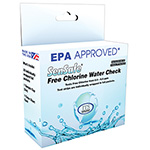
    Free Chlorine Water Check Test Strips

    Free Chlorine Water Test

    Bacteria Check Water Test Kit

    Bacteria Check Test Kit

    Paint Home Test Kit for Lead

    LEADQuick for Paint
    Home Test Kit

    Test Strips for Mercury in Water

    Mercury Check
    Water Test Kit

    Total Hardness Test STrips

    Total Hardness Test Kit

    Water Metals (Heavy) Test Kit

    Water Metals Test Kit

    Water Quality Test Kit

    Water Quality Test Kit

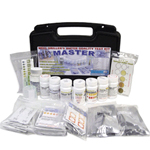
    Well Driller Test Kit: Master

    Well Drillers
    Master Test Kit

    Well Driller Test Kit: Standard

    Well Drillers
    Standard Test Kit

      Manganese Check Water Test Kit, 24 Strips

    Manganese Check
    Water Test Kit

     
    Sep
    12

    Winter Covers Keep Pool Water Cleaner

    Water Testing BlogPool Water

    With the arrival of Fall, many pool owners have started thinking about closing their pools. Unfortunately for some, though, their Winter Cover from last year has seen its last days and they need a new one.

    Why invest in a good winter cover? Simple: Keeping grass, leaves, debris, animals, wind blown trash, and dead bugs out of your pool water over the Winter means you will need fewer chemicals in the Spring and spend less time getting your pool back in shape for the swimming season.

    Swimming pool covers come many different sizes, colors, thicknesses, and warranties.

    Sizing: Buying too small a cover may result in water weight pulling the cover edge in — which means all leaves, bugs, and other debris will end up in your pool. A real mess!

    Color: Many pool cover manufacturers color code their winter covers. Each color signifies a manufacturer’s cover grade and corresponding warranty.

    Thickness: As a general rule, the thicker the cover the longer it will last and the longer the warranty it will come with. Increased winter cover thickness means increased cost.

    Warranties: Pretty much all pool covers come with a warranty and the thicker the cover, the longer the warranty. Usually a longer warranty will mean a higher cost for the cover. Expect that a pool cover manufacturer will have a pro-rated warranty, not a full replacement policy.

    COVERS FOR ABOVE GROUND POOLS:

    Above Ground Pool Cover

    COVERS FOR INGROUND POOLS:

    inground pool covers

    By keeping unwanted yard debris and dead animals out of your pool over the Winter you drastically reduce the number and amount of pool chemicals and pool stain removers you will need in the Spring.


    click here for more details
    Part Number: W1050

    Winterizing Pool Chemical Winterizing Chemical Kit

    The ultimate swimming pool winterizing chemical kit includes pool closing instructions and all the pool chemicals you need to keep your pool algae-free. Swimming pool chemicals at In The Swim. Your Cost: $54.99


    click here for more details
    Part Number: W1035

    Pool Chemical Winterizing Kits: Super Kit

    Chlorine-free pool winterizing chemical kit includes pool closing chemicals safe for all chlorine swimming pools and step by step pool closing instructions. Pool closing chemicals from In The Swim. Your Cost: $41.99

    Winterizing Algaecide    |    Winterizing Antifreeze

    Sep
    1

    Water Test Results Not Always Released by Cities

    Water Testing BlogCity Water Test, Municipal Water Test, Water Quality Testing, Water Testing

    The title of this blog probably caught you attention because now you want to know what cities have tested, what cities found in their water, and what cities have not reported what they found in their water.

    Here’s the list of metropolitan areas, with the number of pharmaceuticals detected and some examples of specific drugs that were found, or where tests were negative, not conducted or awaiting results:

  • Albuquerque, N.M.: tests negative
  • Arlington, Texas: 1 (unspecified pharmaceutical)
  • Atlanta: 3 (acetaminophen, caffeine and cotinine)
  • Austin, Texas: tests negative
  • Baltimore: no testing
  • Birmingham, Ala.: no testing
  • Boston: no testing
  • Charlotte, N.C.: no testing
  • Chicago: no testing
  • Cincinnati: 1 (caffeine)
  • Cleveland: no testing
  • Colorado Springs, Colo.: no testing
  • Columbus, Ohio: 5 (azithromycin, roxithromycin, tylosin, virginiamycin and caffeine)
  • Concord, Calif.: 2 (meprobamate and sulfamethoxazole)
  • Dallas: results pending
  • Denver: (unspecified antibiotics)
  • Detroit: (unspecified drugs)
  • El Paso, Texas: no testing
  • Fairfax, Va.: no testing
  • Fort Worth, Texas: no testing
  • Fresno, Calif.: no testing

  • Honolulu: no testing
  • Houston: no testing
  • Indianapolis: 1 (caffeine)
  • Jacksonville, Fla.: no testing
  • Kansas City, Mo.: no testing
  • Las Vegas: 3 (carbamazepine, meprobamate and phenytoin)
  • Long Beach, Calif.: 2 (meprobamate and phenytoin)
  • Los Angeles: 2 (meprobamate and phenytoin)
  • Louisville, Ky.: 3 (caffeine, carbamazepine and phenytoin)
  • Memphis, Tenn.: no testing
  • Mesa, Ariz.: no testing
  • Miami: no testing
  • Milwaukee: 1 (cotinine)
  • Minneapolis: 1 (caffeine)
  • Nashville, Tenn.: no testing
  • New Orleans: 3 (clofibric acid, estrone and naproxen)
  • New York City: no testing
  • Northern New Jersey: 7 (caffeine, carbamazepine, codeine, cotinine, dehydronifedipine, diphenhydramine and sulfathiazole)
  • Oakland, Calif.: no testing
  • Oklahoma City: no testing
  • Omaha, Neb.: no testing

  • Orlando, Fla.: no testing
  • Philadelphia: 56 (including amoxicillin, azithromycin, carbamazepine, diclofenac, prednisone and tetracycline)
  • Phoenix: no testing
  • Portland, Ore.: 4 (acetaminophen, caffeine, ibuprofen and sulfamethoxazole)
  • Prince George’s and Montgomery counties, Md.: no testing
  • Riverside County, Calif.: 2 (meprobamate and phenytoin)
  • Sacramento, Calif.: no testing
  • San Antonio: no testing
  • San Diego: 3 (ibuprofen, meprobamate and phenytoin)
  • San Francisco: 1 (estradiol)
  • San Jose, Calif.: no testing
  • Santa Clara, Calif.: no testing
  • Seattle: no testing
  • Southern California: 2 (meprobamate and phenytoin)
  • Suffolk County, N.Y.: no testing
  • Tucson, Ariz.: 3 (carbamazepine, dehydronifedipine and sulfamethoxazole)
  • Tulsa, Okla.: no testing
  • Virginia Beach, Va.: tests negative
  • Washington, D.C.: 6 (carbamazepine, caffeine, ibuprofen, monensin, naproxen and sulfamethoxazole)
  • Wichita, Kan.: no testing.

  • About the study:

    At least one pharmaceutical was detected in tests of treated drinking water supplies for 24 major metropolitan areas, according to an Associated Press survey of 62 major water providers and data obtained from independent researchers.

    Only 28 tested drinking water. Three of those said results were negative; Dallas says tests were conducted but results are not yet available. Thirty-four locations said no testing was conducted.

    Test protocols varied widely. Some researchers looked only for one pharmaceutical or two; others looked for many.

    Some water systems said tests had been negative, but the AP found independent research showing otherwise. Both prescription and non-prescription drugs were detected.

    Because coffee and tobacco are so widely used, researchers say their byproducts are good indicators of the presence of pharmaceuticals. Thus, they routinely test for, and often find, both caffeine and nicotine’s metabolite cotinine more frequently than other drugs.

    Source: The Associated Press ( our source )

    So naturally the question many people may have at this time sounds a lot like, “OK, well can we test for these pharmaceuticals and other things ourselves?” Sadly, we report that we do not know of any at-home test kits for complex molecules such as pharmaceuticals.

    You can, however, contact an independent water testing laboratory if you have concerns about the possibility of these items existing in your drinking water.

    You can get the names and contact information for State Certified Laboratories in your area by calling 1-800-426-4791 or visiting http://www.epa.gov/safewater/labs/index.html.