About
Do you know what's in YOUR water? Learn about water quality, water quality testing, and water quality testing products that can help you make informed, educated decisions regarding the water treatment options for your home, office, swimming pool... and life.
Contact Us
Got a question about water quality? Want to share a water quality article or water quality article with others?

Visit our Contact Us Page to ask a water quality question or submit water quality information.

RSS Feed
Get the most recent water quality posts and comments by subscribing to the Water Testing Blog RSS Feeds.
Subscribe to RSS! Subscribe to RSS Comments!

Archive for October, 2010

Oct
19

Fluoride Testing Questions — eXact Micro 7+ Meter

Water Testing BlogCity Water Test, Fluoride, Municipal Water Test, Water Quality Testing, Water Test Kit, Water Test Meters, Water Testing

Today we received an inquiry from ‘Tom’ who wanted to know more about, we assume, the eXact Micro 7+ Meter’s fluoride testing ability.

Want to use to determine if a water sample has flouride and is likely city water vs ground water. Site lists lots of chemicals but steers away from Flouride. What is the range of flouride the instrument will detect? Will the presence of other chemicals associated with drinking water efect result? How often is calibration needed and can user complete cal?

eXact Micro 7+ Meter
0.1ppm to 1.1ppm Fluoride Testing

With all of the publicity that fluoride in drinking water has gotten over the years it does not surprise us that we keep getting questions about fluoride in drinking water, its effects on people’s health and how to test for it in drinking water.

Until a few years ago fluoride in water testing required ‘sophisticated’ laboratory glassware and used chemical reagents not readily available to the public. Either that or you needed very expensive laboratory grade equipment and a degree in chemistry to operate it.

Now, however, companies like Industrial Test Systems, Inc., a US based manufacturer of water quality testing products have come out with hand held meters like the eXact Micro 7+ Water Testing Meter which uses proven SPADNS chemistry to detect levels of fluoride between 0.1 ppm and 1.1 ppm. See page 18 of the eXact Micro 7+ Meter’s Manual for more information or call the meter’s manufacturer at 1-800-861-9712.

How much fluoride does tap water contain?

While concentrations of fluoride in tap water will vary by location, A 1994 World Health Organization expert committee suggested a level of fluoride from 0.5 to 1.0 mg/L (milligrams per litre), depending on climate. ( source )

We would guess that most municipal water supplies fall somewhere in the range specified by the World Health Organization.

Oct
18

Faucet Filter With 5 Stages of Filtration

Water Testing BlogPersonal Water Filter, replacement water filter

About a month ago we wrote about an easily installed faucet filter made by Brita — Brita on Tap — and since that time we have received at least half a dozen emails from people asking if Crystal Quest, another leading manufacturer of water filter units, also had a faucet filter.
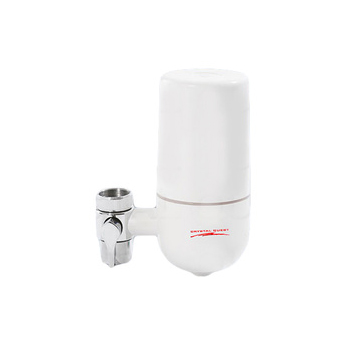
Crystal Quest Faucet Filter
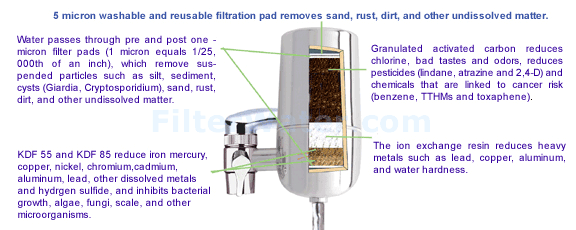
5 Stages of Filtration

As it turns out, we discovered that they manufacture a Faucet Filter w/ 5 Stages of Filtration that uses granular activated carbon designed to meet NSF Standards 42, 53 and 58 test protocols, and a proprietary blend of KDF filtration media composed of materials (Eagle Redox Alloy 6500 and Eagle Redox Alloy 9500) meeting NSF/ANSI Standards 42 and 61.

The unit also boasts pre and post one micron filters made by an ISO 9001 manufacturer that remove undissolved matter such as silt, sediment, cyst, sand, rust and dirt.

Crystal Quest Model Numbers: CQE-FM-00500 (white housing) and CQE-FM-00501 (chrome housing)

What makes this filter different?

Many other faucet filters use only 3 stages of filtration while the Crystal Quest Faucet Filter uses a total of FIVE filtration stages.

Stages 1 and 5 — Pre and post one-micron filter pads remove suspended particles from the water.

Stage 2 — Granulated Activated Carbon (GAC) reduces bad tastes and odors while also reducing and/or eliminating potentially 100′s of chemicals (i.e. pesticides, VOC’s, etc.) linked to increased cancer risk.

Stage 3 — An ion exchange resin reduces levels heavy metals such as lead, copper and aluminum while also reducing the water’s hardness level (calcium & magnesium).

Stage 4 — A special blend of KDF 55 and KDF 85 reduce levels of iron, mercury, copper, nickel, chromium, cadmium, aluminum, lead, other dissolved metals while also reducing dissolved hydrogen sulfide (rotten egg smell) levels. The chemical and physical nature of these materials prevents the growth of bacteria, algae, fungi, scale, and other microorganisms in the filter… and therefore this unit requires no bactericidal components such as silver.
Access to unfiltered water?

If for some reason you have a need for unfiltered water, the unit comes equipped with a knob that allows users to switch between filtered and unfiltered water very easily.

Oct
16

Replacement Media for Water Filter Systems

Water Testing BlogArsenic, Fluoride, hydrogen sulfide, Iron, manganese, Water Filter, Water Testing

‘Tanya1975′ asked…

We bought a house that has a system for water filtering in it and we think the earlier owners were kinda’ nasty and probably did not change the stuff in the system. Ever. And it looks like it’s been here a while. Do you know where we can get new filter stuff for out filter?

First of all, yes we know where you can get replacement water filter media, but we have no idea if they carry the right type of filter media for your filter. You will have to determine what type of filter you have (i.e water softener, iron/manganese removal system, fluoride removal system, arsenic removal system, general water filter, etc.) and what type of filter media it contains.

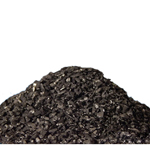
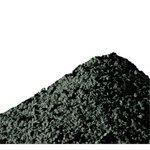
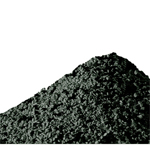
Filter Water: Granulated Activated Carbon
Granulated Activated Carbon
Replacement Filter Media

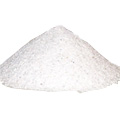
Filter Water: Acid Neutralizing Media
Acid Neutralizing
Replacement Filter Media

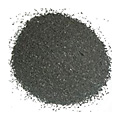
Filter Water: Arsenic Removal Media
Arsenic Removal
Replacement Filter Media

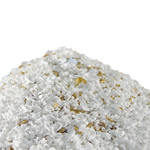
Filter Water: Fluoride Removal Media
Fluoride Removal
Replacement Filter Media

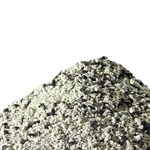
Filter Water: Iron & Hydrogen Sulfide Removal Media
Iron & Hydrogen Sulfide
Replacement Removal Media

Filter Water: Iron & Manganese Removal Media
Iron & Manganese Removal
Replacement Filter Media

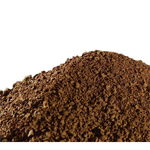
Filter Water: Manganese Greensand Media
Manganese Greensand Media
Replacement Filter Media

Filter Water: KDF Filter Media Blend
KDF Filter Media Blend
Replacement Filter Media

Filter Water: Sediment Removal Filter Media
Sediment Removal Filter Media
Replacement Filter Media

Filter Water: Manganese Greensand Media
Manganese Greensand Media
Replacement Filter Media

So, as you can see, a number of different replacement water filter media types exist… each with its own unique set of physical and chemical characteristics which make it ideal for its intended filtering purpose.

Always make sure you check with your water filter’s manual before purchasing replacement water filter media. Otherwise you might accidentally order a whole bunch of something you don’t need, and worse yet, can’t use!

Oct
14

Water Filter Pitchers and Temperature

Water Testing BlogBacteria, Chlorine, Coliform, Copper, Hardness, Iron, Lead, mercury, Metals, Pesticide, replacement water filter, THM, Water Filter

Everyone loves the taste of fresh, clean filtered drinking water, but not everyone likes their water ice cold or as cold as it gets when stored in a refrigerator. How do we know this? Simple: Martha wrote in and asked,

I’m thinking of getting a water filter pitcher. Must it be kept in the refrigerator in order for the filter to work? I prefer room temp. water.

Thanks, Martha


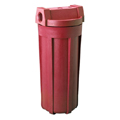
Hot Water Filter Housings

We knew that hot water posed a problem for certain types of filters and filter housings — hence the need for special hot water filters & housings — and we knew that frozen water would not work all that well, either (obviously!), but as for whether or not a filter would perform all that much differently at room temperature versus the temperature of a refrigerator, we never gave that a whole lot of thought.


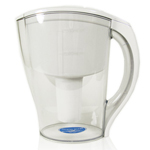
Crystal Quest Pitcher Filter

Until now.

Our quick research has determined that water filter pitchers ought to work just as well at room temperature as they would in a refrigerator. We do, however, suspect that one could possibly need to replace the filters more frequently since warmer temperatures in the filter would make an excellent breeding ground for bacteria. We suspect that water pitcher filters that use certain blends of KDF Media may prove more resistant to bacterial growth than filters that do not use KDF Media.

The Crystal Quest Pitcher Water Filter does something that similar products made by other leading water pitcher filter manufacturers do not. It uses a total of FIVE stages of filtration.


Crystal Quest Pitcher
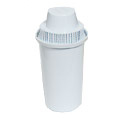
Replacement Filter

  • A one micron sediment pre-filter takes out dirt, rust, sediment and any other large particles.

  • In filter stages 2 & 3… Blends of KDF55 and KDF85 resin media reduce dissolved metals (i.e. iron, mercury, copper, nickel, chromium) and harmful bacteria. As we mentioned before, KDF resin media also has properties which help to prevent the growth of bacteria in the filter.

  • In the fourth stage of filtration a bed of ion exchange resin further reduces heavy metals including lead, copper and aluminum. This stage also reduces water hardness (calcium and magnesium).

  • The fifth stage of filtration contains granulated activated carbon (GAC) reduces chlorine (99.9%), bad taste and odors. It also reduces pesticides and chemicals that science has linked to increased cancer risks in humans (i.e. VOC’s, benzene, TTHMs and toxaphene).
Oct
13

Test Kits for Water Filter Salespeople

Water Testing BlogHome Water Test Kits, Home Water Testing, Reverse Osmosis, Testing Devices, Water Filter, Water Quality Testing, Water Test Kit, Water Testing

It took a little while, but we finally had someone ask us if we knew of a place that sold products that a water filter salesperson could use when showing a prospective customer the benefits of installing a water filter system in a home or business.

After a little research we found several water filter demonstration kits on the market and readily available: One for Reverse Osmosis Demonstrations, one for Water Softener Demonstrations, and one for both Water Softener & Reverse Osmosis Demonstrations.

Water Softener Demo Kit
Water Sofftener Demo Kit

RO System Demo Kit
RO System Demo Kit

RO & Softener Demo Kit

Oct
12

Water Filter Companies Not Affiliated With City or State

Water Testing BlogCity Water Test, Home Water Test Kits, Home Water Testing, sensafe, Water Filter, Water Quality Testing, Water Test Kit, watersafe

We have written several times about businesses calling on residents of different towns and cities in the past and offering free water testing services as part of an (alleged) authorized city/state water testing program… and today we will write about it again.

This time not to blast the potentially, and most likely unethical business practices of some water filter companies, but rather to compliment the folks who put the following article together which not only warns people about the possibility of scam artists in their area, but also gives people ways to access the most recent Annual Consumer Confidence Report for their local water company.

Residents in Auburn and Opelika are currently being contacted by private companies offering to provide free water testing services. These companies are not affiliated with any local government or water provider. These companies offer the free water testing services in an effort to persuade residents to purchase water treatment systems.

The Water Works Board of the City of Auburn (AWWB) and Opelika Utilities provide water service in the Auburn and Opelika area. The water provided to residents in Auburn and Opelika is safe to drink and does not require additional treatment. Additionally, the water provided to residents in Auburn and Opelika is tested on a routine basis and meets all state and federal water quality standards. Water quality information presented in the Annual Consumer Confidence Report for the AWWB can be found at www.auburnalabama.org/wrm-water under the Annual Reports tab. Water quality information presented in the Annual Water Quality Report for Opelika Utilities can be found at www.owwb.com under the Water Quality Report tab.

For more information regarding water quality in Auburn, please contact the Water Resource Management Department at 334-501-3060. For more information regarding water quality in Opelika, please contact Opelika Utilities at 334-705-5500. ( source )

It does not matter where you live. If some stranger shows up on your doorstep claiming to represent the local Health department or your local water company and they don’t seem to have proper credentials, call the police immediately and do NOT allow them entry to your home.

Legitimate parties will remain at your door until the officers arrive. Scam artists and phonies will high tail it out of your yard in a heartbeat.

In-Home water test demonstrations?

First of all, remember that the person, hopefully from a reputable water treatment system company, coming out to your home had one goal in mind: To sell you a water filter system. In other words, they don’t make any money if you don’t buy a water filter system.

With that said, we suggest you do a little prep work before your appointment with the rep from the water filter company:

1) If on city or tap water, request and read the Consumer Confidence Report issued by your local water company.

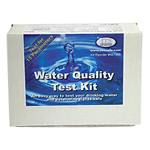
2) Pick up an at-home water test kit such as the WaterSafe All in One or Water Quality Test Kit made by SenSafe and test your own water for a few basic parameters.

Arming yourself with a little bit of knowledge before the water filter company’s representative starts bombarding you with ‘facts and figures’ that may or not have a basis in reality may allow you to quickly determine whether or not the person has come to your home to blind you with BS so they can sell you a water filter — regardless of your actual, real water quality needs.

Filter Water: Water Quality Test Kit
Water Quality Test Kit

Filter Water: WaterSafe Well Water Test Kit
WaterSafe Well Water Test Kit

Filter Water: WaterSafe All in One Test Kit
WaterSafe All in One Test Kit

Oct
11

Free Water Testing in Illinois

Water Testing BlogArsenic, Arsenic in Water, Bacteria, Coliform, Lead, Metals, sensafe, Water Quality Testing, Water Testing, watersafe

The Courts in Illinois will play host to a series of lawsuits alleging that a Rohm & Haas facility allowed a carcinogenic compound known as vinyl chloride to escape into the environment and contaminate the aquifer from which local residents pull their drinking water.

Wikipedia.org has this to say about vinyl chloride: “This colorless compound is an important industrial chemical chiefly used to produce the polymer polyvinyl chloride (PVC). At ambient pressure and temperature, vinyl chloride is a gas with a sickly sweet odor. It is highly toxic, flammable and carcinogenic.” ( source )

More than 300 McCullom Lake residents have signed up to get their wells tested for carcinogenic vinyl chloride at Rohm and Haas’ expense.

Of 515 surveys sent out last month by village government, 325 came back wanting the free test, while only 11 responded no, Village President Terry Counley said. Rohm and Haas offered in August to pay for it, more than four years into a series of lawsuits blaming pollution from its Ringwood plant for causing a brain cancer cluster.

“I’d say it’s a very good sign. We’re all in this boat together over here, and we need the answers,” Counley said.

Counley must select a water testing company from a list of firms accredited by the Illinois Environmental Protection Agency. Only people who signed up will get their wells tested, and Counley said he would like to get it done before winter.

Three former village next-door neighbors diagnosed with brain cancer filed the first lawsuits in April 2006, alleging that decades of seepage from a closed 8-acre waste pit fouled their air and groundwater with vinyl chloride and other chemicals.

Thirty-two lawsuits as of today blame the pollution for brain and pituitary tumors in McCullom Lake and the Lakeland Park subdivision in McHenry. ( source )

Thankfully the residents of that region in Illinois have banded together and taken a stand on the matter of well water pollution. With any hope these folks will find some answers from the testing… and after that we hope other communities will band together and investigate possible sources of suspected well water contamination.

Can the average person test their own well water?

While the task of testing well or ground water for the presence of compounds such as vinyl chloride will remain in the hands of certified water testing experts such as National Testing Laboratories, the average person CAN test for other, more common drinking water contaminants.

Companies such as SenSafe and WaterSafe make easy-to-use, accurate at-home water test kits for a number of critical drinking water parameters such as arsenic in water, lead in water, bacteria in water, and heavy metals in water, etc.

Consumers have the option of purchasing drinking water test kits for individual parameters or in multi-parameter test kits such as the Water Quality Test Kit from SenSafe and the All in One test Kit from WaterSafe.

Oct
8

Arsenic Test Kits for Science Fair Projects

Water Testing BlogArsenic, Arsenic in Water, Arsenic Test, Home Water Test Kits, sensafe, Testing Devices, Water Quality Testing, Water Test Kit, Water Testing

Now that school has started many students and parents have realized that a science fair looms in the near future… and the SMART ones have started looking for ideas already. The rest will wait until the last minute and wind up putting a bunch of ants in a jar and say they started an ant farm.

We recently received an email from a parent whose son and friend want to perform arsenic testing on a number of water samples in their area and chart the results.

My question: My son and a co-student are wanting to do a science fair project on arsenic in the ground water. We wanted to check many samples. However, the cost of the kits are prohibitive. Is there a way that the cost of the kits may be reduced for such an endeavor?? (we wanted to use the 100 sample kit.) We would love to use your product and have it on display for the project. Please let us know if this is a possibility.. thank you so very much.

It pleases us to hear that some youngsters have taken an interest in doing a lot of ground water testing for arsenic using an Arsenic Quick Test Kit… but to tell the truth, we don’t actually MAKE that test kit OR physically sell it. The kit gets manufactured by a company called Industrial Test Systems, Inc. ( www.sensafe.com/home.php ).

Having spoken with members of that company’s staff on numerous occasions, we can assure you that other people have successfully used versions of their field-ready arsenic test kit in science fairs in the past and done quite well.

As for whether or not they will cut you a special deal, we cannot say. Last we heard they did have special pricing available for educators so it may prove useful to give them a call and see what they say: (800) 861-9712

Don’t forget to tell them Water Testing Blog sent ya’! ;)

Miniature arsenic test kits for spot testing?

In addition to full-sized arsenic test kits, Arsenic Quick also has a line of smaller test kits that come with either 2 or 5 tests.


Part Number: 481297-2
<2, 4, 6, 8, 10, 12, 15, 18, 24, 30, 40, 45 & >50ppb
2 Tests

Part Number: 481396-2
0, 5, 10, 20, 50, 100, 200 & >500 ppb
2 Tests

Part Number: 481303-5
<1, 2, 3, 4, 5, 6, 7, 8, 10, 13, 20, 25, 30, 40, >50, >80, >120, >160 ppb
5 Tests

Part Number: 481300-5
0, 0.3, 0.7, 1.0, 1.5, 2, 2.5, 3, 3.5, 4, 5, 6, 8, 10, 13, 20 & >20 ppb
5 Tests

Part Number: 481396-5
0, 5, 10, 20, 50, 100, 200 & >500 ppb
5 Tests

Part Number: 481301-5
<0.5, 1.0, 1.5, 2, 3, 4, 5, 6, 7, 8, 12, >20, >30, >50 ppb
5 Tests

If memory serves us right, a student won some sort of National Award using an Arsenic Quick test kit.

Other water test kits for science fair projects?

Not all students have access to well water or surface water… but that does NOT mean they can’t use water testing as the basis of their science project. Why? Because even tap water varies from place to place and in some places its quality may vary on a daily basis.

WaterSafe Science Fair Test Kit
Test 4 Water Sources

Test 10 Water Sources

WaterSafe Science Project test kits allow students of all ages to participate in educational, hands-on activities related to water quality. Avaliable in two sizes, 4-packs and 10-packs, the WaterSafe science project test kits come with all the supplies needed to test for Lead, Bacteria, Pesticides, Nitrates, Chlorine, Hardness and pH.

Each kit also comes with step-by-step instructions, an outline for the water testing project, and a convenient data sheet to record the results.

Oct
7

Manual Testing Required With Automatic Chemical Feeders?

Water Testing BlogChlorine, pH, Pool Water, Water Quality Testing, Water Testing

We received a second inquiry from ‘Michael’ regarding an indoor swimming pool, ORP readings and Taylor Test Kit readings. Details of the email below:

Should a pool be checked daily using The Taylor Kit and Chemtrol unit , while the pool is closed because of a chemical imbalance reading from the Chemtrol unit? The ORP reading was (456), 7.4 Ph, the Taylor Kit reading was .5/? 7.2 Ph Or should we wait a day or so and then check the chlorine levels again and hope the chemical levels have risen back to normal.

Thank you for your service and time, it is greatly appreciated.

First things first: We don’t know of ANYplace where daily testing, if not HOURLY testing, of pool water quality does not get mandated by the local health department… so your question about whether or not you should test water quality daily kind of confuses us.

Regarding the readings taken by the ‘Chemtrol’ unit, we would always suggest performing periodic manual testing just to make sure the sensors in the automatic unit have not gone out of calibration. Chemical dispensing units rely upon the readings taken by the automatic sensors to help them determine how much sanitizer or other water balancing chemical to add. Therefore, keeping an eye on the automatic sensors’ accuracy makes a whole lot of sense!

Waiting a day for levels to stabilize?

Depending upon the strength and efficiency of the pool’s circulation system, you may not have to wait an entire day. As a general rule you can retest the quality of the pool water at any time, but it makes a lot more sense to retest after the water has ‘turned over’ fully after setting the chemical feeder’s levels and/or adding chemicals.

Calcium Hypochlorite Feeder w/ Electronic Controller
Calcium Hypochlorite Feeder w/ Elec Controller

pH Automatic Feed System w/ 15 Gallon Tank

Oct
6

Taylor Test Kit Readings… Free & Total Chlorine in a Swimming Pool

Water Testing BlogChlorine, Chlorine Testing, Combined Chlorine, Free Chlorine, Pool Water, Total Chlorine, Water Quality Testing, Water Testing

We received an email recently from ‘Michael’ who asked us a question about pool water. He asked,

What does .25/.25, and .5/1, in the free/total column from the Taylor Test Kit represent in a pool log, are these levels safe for swimming. If not what levels from the Taylor Test Kit would be normal. What ORP level is considered to dangerous for swimming. I’m sorry I forgot to mention this is an indoor public pool.

Taylor K 2006 Pool Water Test Kit
Taylor K2006 Pool Water Test Kit

For legal reasons we cannot tell you that your pool water definitely meets all the necessary criteria for getting labeled as ‘safe’, but we cannot assist you with interpreting the data in the log book.

First, we suggest you take a look at an earlier blog posting we did called Free Chlorine, Combined Chlorine, Total Chlorine. The information in that posting will help you to understand the differences between the three basic ‘types’ of chlorine. You will also find some very useful information on Pool Water Testing Blog’s entry entitled Free Chlorine and Combined Chlorine — in a Swimming Pool.

Getting back to your question about the readings in the log book, the entry of “.25 ppm free chlorine & .25 ppm total chlorine” indicates that all of the chlorine in the pool has got converted into chloramines (combined chlorine) and you had no free chlorine, your pool’s main sanitizing agent, available to ‘kill’ any unwanted biological contaminants in the water.

The second entry, “.5 ppm free chlorine & 1.0 ppm total chlorine”, indicates that you had 0.5 ppm free chlorine available in the pool to wipe out any unwanted biological contaminants… and for the record, most pool experts agree that water in a swimming pool ought to contain between 1.0 ppm and 3.0 ppm free chlorine — assuming the pool does not use an alternative sanitizer system (i.e. Baquacil).

By the same token, most pool experts also agree that swimming pool water ought to contain as few chloramines (combined chlorine) as possible. Elevated chloramine levels can contribute to added eye irritation and foul tastes and smells in the water.

What do ORP levels mean?

We freely admit that we do not know a whole lot about ORP and that many people have different ideas as to its usefulness as a means of judging a body of water’s relative safety, but we do know that many water experts believe a properly pH balanced pool (readings between 7.2 and 7.6) with an ORP reading greater than 700 means that the hypochlorous acid (free chlorine) will work effectively as a sanitizing agent.

Michael said he has an indoor pool?

In the case of indoor pools, you will DEFINITELY want to keep combined chlorine counts to minimum because the fumes can build up to noxious levels very quickly. Indoor pools tend to have warmer water temperatures (which increase chlorine off gassing) and less air movement across their surfaces.

Michael said it’s a public pool?

Consult with your local health department and find out what THEY want to see in terms of pool water chemistry because in the end, when they stop by to perform an inspection, their word, and ONLY their word, will determine whether or not your pool stays open that day.

OTO & pH Test Kit for Residential Pools
Total Chlorine & pH Test Kit

FAS-DPD Test Kit
FAS-DPD Test Kit

Complete Service DPD Test Kit