About
Do you know what's in YOUR water? Learn about water quality, water quality testing, and water quality testing products that can help you make informed, educated decisions regarding the water treatment options for your home, office, swimming pool... and life.
Contact Us
Got a question about water quality? Want to share a water quality article or water quality article with others?

Visit our Contact Us Page to ask a water quality question or submit water quality information.

RSS Feed
Get the most recent water quality posts and comments by subscribing to the Water Testing Blog RSS Feeds.
Subscribe to RSS! Subscribe to RSS Comments!

Archive for the ‘sensafe’ Category

Apr
21

Question: Instruction Manual for Ammonia Test Kits?

Water Testing BlogAmmonia, eXact Micro 7+ Meter, Home Water Test Kits, sensafe, Water Quality Testing, Water Testing, watersafe

Today’s question comes from ‘Gordon’ and he had a question about replacement (updated) manuals for ammonia test kits. From the sounds of things the test procedure may have changed and his older manual lacks the added steps for the testing.

Unfortunately, as you will see, Gordon neglected to tell us which ammonia test kit he purchased, though we suspect he has one of the eXact Micro 7+ meters from the makers of SenSafe and WaterWorks water testing products.

I have revision 08/26/09 booklet and have just pouchased some ammonia test kits but my instructions do not cover the use of the added liquid, how can I get an up to date insrtuction booklet.

Thanks

If we guessed correctly, then Gordon needs to take a look at this page because it contains a link to the newest version of the manual for the eXact Micro 7+.

Take a look at page 12 in particular, Gordon. Best of luck in all your water testing adventures!

Chlorine Photometer
eXact Chlorine Photometer

eXact Micro 7+
Standard eXact Micro 7+ Meter

eXact Micro 7+ for Pools

Apr
1

Replacement Manual for Water Test Kit

Water Testing BlogHome Water Test Kits, Home Water Testing, sensafe, Water Quality Testing, Water Test Kit, Water Testing, watersafe

Ever purchase something, get great use out of it for a while, put it in storage for a while, take it out again for another season’s use and discover that evil Gremlins from the Planet Zingledorf have broken into your garage and stolen a critical part?

Water Quality test Kit
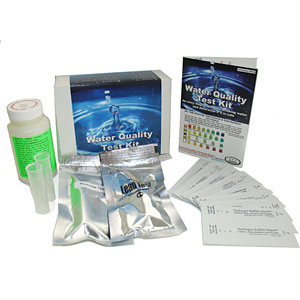
Water Quality Test Kit

Download Instructions Here

If so, then you and ‘Anne’ have some thing in common. Those evil little part stealing cretins stole Anne’s instructions for her test kit!

I had ordered the test kit a year back or so.
Now want to use the 2nd, duplicate set.

Unfortunately, stupid me, I misplaced (threw out?) the instructions.

Can you please forward instructions?
Thank you!

Anne

We would love to help you, Anne, but honestly we don’t have a clue as to which test kit you purchased or from what company you bought it. We would guess, though, that since you mentioned ‘second set’, that you may have purchased the Water Quality Test Kit from SenSafe.

If so, then you will find a link to that particular kit’s instructions and color charts under the image above. We hope this helps!

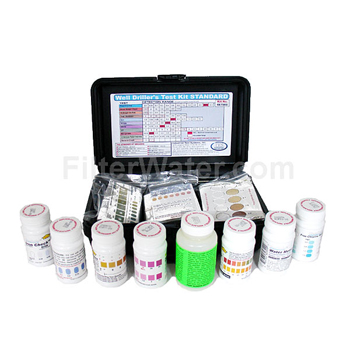
Well Water Test Kit
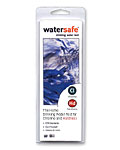
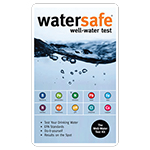
WaterSafe Well Water Test Kit

Looking for a water test kit?

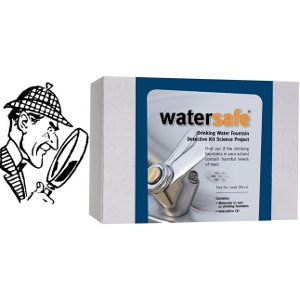
We know of several reputable online merchants who carry reliable and affordable water quality test kits manufactured by industry leaders like SenSafe and WaterSafe.

Below you will find a few of the more popular water test kits offered on several of the sites listed above. These represent but a small fraction of the water quality test kits available these days so in our opinion, if anyone says, “I can’t find the right test kit”, they really haven’t looked for one.

Arsenic in Water Test Kit

Filters Fast: Coliform Bacteria Test Kit
Coliform Bacteria Test

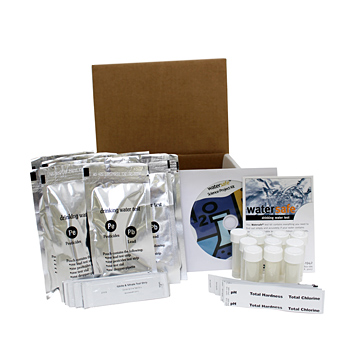
WaterSafe All in One Water Test Kit
WaterSafe 8 Parameter Test Kit

Dec
30

Chromium Found in Drinking Water — Water Systems Not to Blame

Water Testing BlogHome Water Test Kits, Home Water Testing, Lead, mercury, Metals, Municipal Water Test, Reverse Osmosis, sensafe, Water Quality Testing, Water Test Kit, Water Testing

Water Metals (Heavy) Test Kit
Water Metals Test Kit

Ordinarily when a water treatment facility’s product tests positive for too great a concentration of a heavy metal such as lead, copper, iron, mercury, etc. all sorts of people — especially environmental watchdog groups — lay the blame on the doorstep of the water treatment facility.

But not this time. Environmental Working Group (EWG), a lobbying group hailing from Washington, D.C., regards the finding of hexavalent chromium in several public water supplies as a problem, yes, but not necessarily all the fault of local water treatment facilities.

Instead, EWG would like for people to place the blame with the sources of chromium contamination.

Makes perfectly good sense to us. Stopping the flow of pollutants from entering the water supply sure would take a lot of the burden off of water treatment plants and ultimately off of the end user… AKA: All of us in the general public.

A Washington D.C. based environmental group says it’s not trying to put blame on local cities for contamination of hexavalent chromium. A single sample taken an Avion Water Company customer’s tap was one of 35 taken across the country that showed levels in excess of what the State of California is proposing as a public health standard. “This is an upstream pollution problem that needs to be stopped at the source. We need better water source protection and while we do advocate all utilities do their own testing for this and let their all their customers know the results, this doesn’t mean that they’re the ones responsible for the pollution.”

Leanne Brown with the Environmental Working Group says the only consumer level filtering system that can remove this chemical is a reverse osmosis system. Hexavalent chromium can come from manufacturing, pulp mills, and leather tanning. ( source )

So where does that leave average people like us? In the exact same place as before this result… in charge of making sure we have safe, clean drinking water going into our glasses.

Obviously a problem with chromium-6 pollution exists in this country and we, as end users, will not know whether or not we personally have chromium-6 (hexavalent chromium) in our own water supplies unless we perform testing on a periodic basis.

Chromium (Chromate) in Water Test Strips
ITS Part Number: 480047
Chromium in Water Test Kit

How to test for chromium-6 (hexavalent chromium) in your water

As usual, nothing beats laboratory testing of your water by a certified water testing laboratory (i.e. National Testing Labs)… but that does not mean each and every test needs to get shipped off to a lab.

Periodic testing for chromium-6 using at-home drinking water test kits between annual (or more frequent) lab testing provides continual piece of mind and does not cost a fortune.

SenSafe manufactures a simple dip-n-read test strip for hexavalent chromium (chromium-6) that provides results in under 2 minutes… and 50 tests costs somewhere in the neighborhood of around $17.00 (just $0.34 per test!).

Detection Levels for the SenSafe product: 0.1, 0.25, 0.5, 1, 2.5, 5, 10, 25, 50 mg/L (parts per million).

If we found one metal, might there be more?

No one can answer that question honestly… without conducting additional testing. A home or business owner might assume that the presence of chromium or other heavy metals such as lead, mercury, etc. also exist in their water supply, but as we said, without additional testing no one will know for sure.

A good way to test for metals commonly found in drinking water?

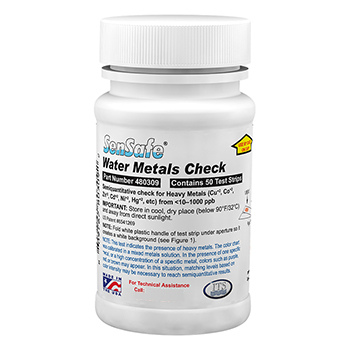
If you want a fast and inexpensive testing method for metals in drinking water that will tell you if you have a dissolved metals concentration greater than 10 parts per billion in your water, take a look at the Water Metals Check Test Strips.

While this product will not tell you exactly WHICH metal(s) your water contains, it will allow you to quickly and easily determine whether or not you will want to opt for other, more ion specific testing.

Filter Water: Manganese in Water Test Strips
Test Strips for Manganese

Filter Water: Lead in Water Test Kit
Lead in Water Test Kit

Filter Water: Mercury in Water Test Strips
Mercury in Water Test Strips

Dec
27

Locating a Hanna Checker HC Photometer for Free Chlorine

Water Testing BlogChlorine Testing, DPD, DPD ReagentStrip, eXact Strip DPD, Free Chlorine, sensafe, Testing Devices, Total Chlorine, Water Quality Testing

Hanna Checker HC Chlorine Photometer
Hanna Checker HC
Chlorine Photometer

Every once in a while we get requests from foreign countries asking for pricing and availability of specific products.

Unfortunately we do not know a whole lot about the International market and what products exist in countries outside of the United States and Canada, but we generally assume that interested parties can acquire the same stuff we can, just at a higher cost due to import taxes and shipping fees.

Having said that, though, today’s international inquiry comes from ‘Zahid Afzal’ in Pakistan who asked who wants to know, specifically, about places to purchase a product called the Hanna Checker HC Photometer for Free Chlorine

Dear Sir/Madam,

Can you please give us the price for the “Hanna Checker HC Photometer for Free Chlorine” for our project in the Flood affected areas of Pakistan.

Regards,

Zahid Afzal

Thanks for the inquiry, Zahid. We really don’t know all that much about the “Hanna Checker HC Photometer for Free Chlorine“… except that a swimming pool supply company ( In the Swim ) began carrying this product at some point last Summer.

Having said that, do you really want to use a pool water testing device to test drinking water?

Granted we have said over and over again that doing ANY testing of drinking water in an area recently affected by flood waters makes more sense than performing no testing at all, but we would suggest looking into other meters… or possibly even into simpler testing methods that do not rely upon chemical reagents (i.e. DPD powders, DPD tablets, DPD reagentstrips, DPD liquids, etc.)

Filter Water: WaterWorks 2 Free & Total Chlorine Test Strips
WaterWorks 2 Free & Total Chlorine Test Strips

Filter Water: EPA Approved Free Chlorine Test Strips
EPA Approved SenSafe Free Chlorine Test Strips

Dec
10

Clean Water for Christmas — 15 Parameter Test Kit

Water Testing BlogColiform, Home Water Test Kits, Home Water Testing, sensafe, Water Quality Testing, Water Test Kit, Water Testing

SenSafe Water Quality Test Kit
Tests for 15 Water Contaminants/Parameters

Looking for a unique present with a purpose that won’t break the bank AND may help to save a loved one’s life? Many people simply will NOT go out and buy a drinking water test kit regardless of how much time has passed since anyone tested their water… so therefore WE believe a test kit like the SenSafe Water Quality Test Kit would make a GREAT gift for Christmas.

Think of it this way: You could spend all day wandering around an overcrowded shopping mall hunting for a gift that would, um, well… hopefully make the person happy OR you could get them a gift that has meaning.

We fully concede the fact that opening a nicely wrapped package and finding a water test kit may not exactly ‘wow’ anyone, but just think of the gratitude a person would show if the water testing gave them insight into problems they have wondered about for a long time… and what about if the testing alerted them to problems that could adversely affect the lives of anyone who consumes the water?

Think of the gratitude THEN!

What does the kit test for?

Free Chlorine, Total Chlorine, Chloride, pH, Total Alkalinity, Total Hardness, Nitrate, Nitrite, Iron, Sulfate, Hydrogen Sulfide, Copper, Lead, Pesticide, and Bacteria.

In conclusion

If you need another reason to order the SenSafe Water Quality Test Kit… we saw that the Filter Water Web Site has the kit, which comes with two tests for each water parameter except the bacteria test, on sale for $32 (down from the usual price of $36).

Nov
26

Dangerous Levels of Lead Found in School’s Brass Valves

Water Testing BlogHardness, Home Water Testing, Lead, manganese, Metals, sensafe, Water Quality Testing, watersafe

Since we started this blog articles about ‘new’ dangers posed by lead in water have come up from time to time… and we have posted articles about them as soon as we became aware of them. Does that make us sensationalists or couriers of messages and news intended to make people cognizant of potential dangers posed by the possibility of lead in their drinking water?

Filters Fast: WaterSafe Lead in Water Test Kit
WaterSafe Lead in Water Test Kit

Filter Water: SenSafe Water Metals Test Kit
SenSafe Water Metals Test Kit

Filters Fast: Manganese in Water Test Kit
Manganese in Water Test Kit

You will have to answer that question for yourself, and while you ponder that query, please also take a moment to think about the possibility that any number of manufacturing errors could possibly result in the improper distribution of lead in brass fittings — as alleged by researchers investigating alarmingly high levels of lead found in water produced by water fountains after technicians took several steps to make them lead-free.

Hidden elements in drinking-water lines can shed large amounts of lead, a toxic heavy metal. And it’s quite legal, even if it does skirt the intent of federal regulations.

University researchers, who uncovered this problem the hard way, have published a case study on the offending hardware in the November issue of the journal of the American Water Works Association.

Lead adds ductility to brass, making it easier to bend or machine into desired shapes. To limit the risk of lead poisoning, U.S. law prohibits new brass plumbing parts in drinking water lines from containing more than 8 percent lead by weight. Yet two shut-off valves containing only about 6.5 percent lead leached toxic amounts of the metal into drinking fountains at the University of North Carolina.

What happened: During manufacturing, the lead did not uniformly distribute throughout the brass, but ended up preferentially settling at or near the surface. As a result, the outside of affected valves—the side visible when looking at a water line (see photo)—slightly exceeded the lead limit. That shouldn’t have posed a health problem, since this surface doesn’t touch water. However, the valves’ interior surface, which does, contained at least 18 percent lead by weight. ( source )

After reading that, and seeing how careful steps taken by knowledgeable people failed to get rid of all the lead in the plumbing of water fountains on a college campus, would you still think us alarmists by giving the topic a few minutes of publicity?

What levels of lead in water pose a danger?

The United States Environmental Protection Agency has ruled that public water systems may not contain more than 15 ppb of dissolved lead and that any system found to have that amount or greater in the water it distributes must take immediate steps to remedy the situation.


Total Hardness
Water Test Kit

While that sounds like a great plan, the fact remains that pretty much all lead found coming out of faucets in people’s homes entered the water at some point after the water left the water treatment facility. Old water service lines, fittings in people’s homes, and older solder used to join pipes all could contribute lead (and other metals) to the water they come in contact with — especially if the water has aggressive tendencies.

Aggressive tendencies? Water can have a bad attitude and start fights? Well, no, but throwing water on someone in a bar or dance club will put them in a bad mood and possibly start a fight.

When we say water has aggressive tendencies, we mean it has low total hardness and/or a low pH; both of which would make the water want to pull elements (metals and other things) out of any surfaces it comes in contact with.

And in conclusion…

Enough evidence exists out there pointing to the fact that dissolved metals in water have a probability of causing health problems that we do not know WHY anyone would not want to test their drinking water (note: tap water and well water can both can contain dangerous concentrations of dissolved metals) for the presence of metals periodically.

Nov
23

Who Should Pay for Well Water Testing?

Water Testing BlogGround Water, Home Water Test Kits, Home Water Testing, sensafe, Water Quality Testing, Water Test Kit, Water Testing, watersafe, Well Water

Areas affected by drinking water contamination where the majority of homeowners have their own private wells face a unique set of circumstances. Why? Quite simply, the law states that owners of private well owners bear sole responsibility for the quality of the water produced by their respective wells.

WaterSafe Well Water Test Kit

Accordingly, any testing deemed necessary — for ANY reason — gets done at the sole discretion of the well owners… typically at the EXPENSE of the well owners.

Your well, your water, your problem, right? Not when the government wants information about aquifer contamination in the area.

In cases where health officials suspect widespread contamination of the aquifers feeding local residents’ wells, and they want to figure out the extent of contamination and/or where the contaminants came from, a disagreement over who should pay for residents’ private wells to get tested will definitely occur.

Experts will want the testing done in a scientific, methodical manner — so that any results obtained can get admitted as evidence in a court of law, if needed — and that would mean a whole lot of testing done by certified water testing labs.

Testing of ANY kind costs money… and since the government wants the testing done, some feel the government should foot the bill.

But, um, wait… The government gets its money from taxes — which we, the people, pay each and every day. So… if a person opts NOT to participate in the testing, why should they have to pay for the testing through their taxes?

Residents of Stamford, CT have a situation very similar, if not totally identical to the one described above going on in their community right now.

STAMFORD — City officials are considering passing an ordinance that would subsidize well water testing for Stamford residents in another effort to determine the origin and extent of pesticide contamination in North Stamford.

The proposed ordinance, which is in its infancy, would require the city to provide residential well water testing for homeowners upon request, said Board of Representatives president Randy Skigen, D-19. Residents would be asked to contribute $100 towards testing costs; the city would pay the difference.

City officials are hoping subsidizing testing will help shed light on the extent of residential well contamination in North Stamford, Skigen said. In order to receive the subsidy, residents must agree to share their test results with the city. ( source )

In the end, though, the responsibility for private well water testing will almost always remain in the hands of the well owner. We suspect that if a private well owner refused to participate in Stamford’s testing program, no Court could compel them to change their mind.

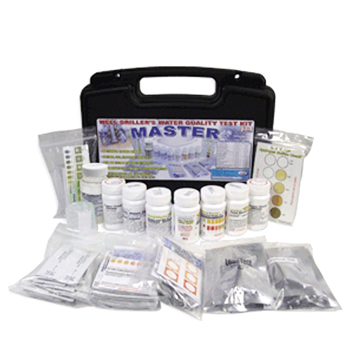
Well Water Test Kit (Master)

Our conclusion

The testing needs to get done. Period. Something has contaminated the water and someone needs to figure out the identity of that source.

We wish you the best of luck, Stamford, as you attempt to figure out the source of your well water troubles.

Please share with the rest of us how you sort out the matter of who will pay for the testing… when you finally figure it out.

Nov
11

Coliform & E.Coli Bacteria Test Kit

Water Testing BlogBacteria, Coliform, sensafe, watersafe

Sensafe EZ Coliform Cult E.Coli Test Kit

Many times you have seen us post articles urging private well owners to test for the presence of bacteria in their wells on a regular basis — ‘cuz no one else will ever volunteer to do it for them. We have even given links to a basic bacteria in water test kit from two different companies (SenSafe & WaterSafe) and to a more advanced bacteria test kit from SenSafe that lets a person find out not only if they have coliform bacteria present in their water, but also if they have E. Coli present.

Today we have information about the ‘tools’ required to take full advantage of the advanced bacteria test kit from SenSafe and how to properly use them to test for the presence of coliform bacteria in water samples.

How to use the Sensafe EZ Coliform Cult E.Coli Test Kit

  • First of all, make sure to keep the test kit dry and in temperatures of 15-27 C (59-81 F).

  • Wash hands thoroughly with soap and water before gathering your water sample. Dry hands completely.

  • Carefully remove the bottle cap from the Sensafe EZ Coliform Cult E.Coli Test Kit.

  • Add 100 milliliters of sample water but make sure not to overfill.

  • Quickly put the cap back on the test bottle and secure it tightly.

  • Shake test bottle vigorously until all of the media (solids inside the bottle) dissolve. Solution should turn a clear yellow color at this point. Turbid samples will have a less clear appearance.

  • Either incubate the sample for 24 hours at 35 deg C/95 deg F — or — for 48 hours at 25 deg C/77 deg F.

  • At the end of incubation period, look at the color of the sample. A yellow color indicates a lack of coliforms while a bluish green color indicates the presence of coliforms.

For those who wish to learn if their water sample contains E. Coli, two options exist:

  1. Shine a UV light with wavelength 365nm from the bottom of the sample. If bright blue fluorescence occurs, the sample contains E. Coli. Where can you obtain a UV light source to perform this test? WaterFilters.Net carries the Sensafe NVF-4 Handheld UV Light.

  2. Addition of Sensafe Kovacs Indole Reagent will also let you know if the sample contains E. Coli. Unfortunately we do not, at this time, have specific information regarding how this process works.
Oct
30

The Water Tastes Funny in…

Water Testing BlogHome Water Testing, Salt, sensafe, Water Quality Testing, Water Testing


Test for Chlorides
in Drinking Water

If you have clicked on this blog entry, then we would guess that you believe your drinking water has a funny taste to it — and you hoped that we had some revealing news about a potential reason for that funny taste.

Sorry to report, though, that unless you live in the Camden, Ohio area, this blog entry will not contain any information about your water supply.

It will, however, contain information about drinking water test kits and a certified drinking & well testing service that people can use to get a professional opinion regarding the quality and relative safety of their drinking water.

Remember… The first step towards making sure you have safe drinking water begins with water testing!

For right now, though, we will quote an article talking about the salty tasting drinking water in Camden, Ohio:

Many residents of Camden village in Ohio had been complaining about the taste of their drinking water, and for good reason, as testing revealed that one of the village’s three drinking water wells has high salt levels.

OEPA located several large piles of road salt believed to be the source of the village’s contaminated drinking water. The agency also believes that runoff from these piles poses a threat of contamination to surface waters in the area.( source )

Sounds pretty nasty, right? We cannot think of ANYone that would want salt water coming out of their faucet and while the salty taste in Camden’s water supply may have come from highway department salt piles, if you have a salty taste in YOUR water, where did IT come from?

Watercheck Test Kit
Watercheck Test Kit
National Testing Laboratories

Can the average person test for salt (chlorides) in their tap or well water? Yes. SenSafe manufactures a chloride test strip with a detection range of 0.05 to 80 ppm (mg/L) and a total test time under 1 minute.

Keep in mind, though, that laboratory testing of your drinking water by a certified water testing organization such as National Testing Laboratories will provide a more thorough cross-sectional view of contaminants in your water — including chlorides.

While the presence of chlorides in drinking water may not cause a terrible amount of harm in most instances, it may indicate presence of other, more harmful drinking water contaminants not easily detected by human senses — and for that reason we suggest seeking the assistance of a certified water testing lab if the taste of your drinking water ever becomes salty or otherwise begins to taste ‘funny’.

Oct
21

Deceptive Water Filter System Sales Practices

Water Testing BlogHome Water Testing, Personal Water Filter, sensafe, Water Filter, Water Quality Testing, Water Test Kit, Water Testing, watersafe

Do you know what contaminants your water contains? If not, then please allow us to come into your home and scare the pants off of you so we can sell you a water treatment system that you may or not need.

Sounds ridiculous and unethical, right? We think so, too, but obviously some folks in the Minnesota area think that plan sounds absolutely wonderful… and profitable.

Thankfully some folks up that way did the right thing and notified local authorities so they could put out a statewide alert detailing the actions and intents of those shady water filter sales cretins.

The Minnesota Department of Health (MDH) is reminding Minnesota residents to beware of false claims, deceptive sales pitches, and scare tactics being used by some water treatment companies to sell expensive and unnecessary water treatment systems.

High profile investigations of groundwater contamination in Washington County and elsewhere in the state have resulted in a noticeable increase in the number of complaints regarding such deceptive sales activities.

While the sales pitch varies, the salesperson nearly always:

– Recites a list of recent groundwater contamination problems across the state, regardless of whether the contamination actually affects the resident or not.

– Conducts a series of water quality “tests” that the salesperson claims indicate the presence of contamination, when in fact they may simply indicate the presence of naturally occurring minerals in the water.

– Misrepresents state and federal drinking water standards, claiming the resident’s water exceeds those standards, and implying the water is unsafe to drink.

– Offers a “one-time only” offer of a water treatment system at a “greatly reduced” price, when in fact the systems are being sold at grossly inflated prices.

In some of the worst instances, the salesperson has implied or said that he is working with the city’s water utility or the state health department. In most cases, the systems are being sold for thousands of dollars more than they would cost if bought through a reputable water treatment company.

Anyone who believes they have been provided false or misleading information or that they have been subjected to unfair or high-pressure tactics in the course of a sales visit should contact the Minnesota Attorney General’s office Consumer Complaints division at 651-296-3353 or 800-657-3787 or online at http://www.ag.state.mn.us/Consumer/Complaint.asp.

Additional information about drinking water and home water treatment systems is available on the MDH website at:

http://www.health.state.mn.us/divs/eh/wells/index.html and

http://www.health.state.mn.us/divs/eh/water/factsheet/com/pou.html.( source )

Now don’t get us wrong. Not ALL water filter salespeople use deceptive and underhanded sales tactics. Many water filter companies adhere to strict codes of conduct and actually PREFER to work with an educated and informed customer base. You can find companies of this type listed on the Water Quality Association and NSF web sites.

Watercheck Test Kit
Watercheck Test Kit
National Testing Laboratories

Educate yourself before talking to a water filter salesperson?

Absolutely! By definition the salesperson wants to SELL you something, not teach you things that will cause him or her to lose a sale!

First line of defense against shady sales tactics: Educate yourself on water quality issues potentially affecting people in your area by contacting your local health department. They will gladly provide you with the information you request.

Second line of defense against shady sales tactics: Have your water tested by an independent, certified company such as National Testing Laboratories or an independent lab recommended by you local health department.

If nothing else, you can always test your water for the basic water quality parameters using a test kit from companies like SenSafe and WaterSafe.

WaterFilters.Net: SenSafe Complete Water Test Kit
SenSafe Complete Water Test Kit

WaterFilters.Net: WaterSafe All in One Test Kit
WaterSafe All in One Test Kit