About
Do you know what's in YOUR water? Learn about water quality, water quality testing, and water quality testing products that can help you make informed, educated decisions regarding the water treatment options for your home, office, swimming pool... and life.
Contact Us
Got a question about water quality? Want to share a water quality article or water quality article with others?

Visit our Contact Us Page to ask a water quality question or submit water quality information.

RSS Feed
Get the most recent water quality posts and comments by subscribing to the Water Testing Blog RSS Feeds.
Subscribe to RSS! Subscribe to RSS Comments!

Archive for the ‘Testing Devices’ Category

Nov
12

Water Testing Kits for Use in Local Testing

Water Testing BlogBacteria, Coliform, Home Water Test Kits, Home Water Testing, Testing Devices, Water Quality Testing, Water Test Kit, Water Testing

An old saying goes, “No matter where in the world you go, there you are.”

We believe that saying has quite a lot of significance in the world of water testing, too, because water supplies all over the world could potentially have contamination issues… so testing the water locally will always make sense in our minds.

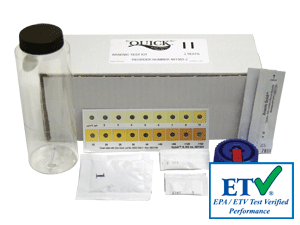
Coliform Bacteria in Water Test Kit
48 Hour Test, No Incubation Required

Having said that, today’s question comes to us from a gentleman named ‘Dan’ who wrote, “i live in a village in Haiti, about 30 minutes from Les Cayes. I need to test the water supply that the locals use. We suspect ground water contamination. What do you recommend?”

First of all, Dan, what sort of contamination do you suspect? More than likely we think you mean ‘bacterial contamination’ based upon the information we have read about the sanitary conditions in parts of Haiti so we will operate under that assumption.

With that in mind, take a look at products such as EZ Coliform Cult Bacteria Water Test Kit which make it possible for pretty much anyone to test for the presence of coliform bacteria in a water sample without the need for expensive lab equipment or incubation ovens. Additionally, with the use of a battery powered portable UV light source at the end of the testing period a person can positively identify E.Coli if present in the sample.

Simple things besides bacteria to test for?

The list of potential drinking water contaminants stretches on for miles and could, from estimates, possibly even circle the globe a few times!

Don’t let that daunting number dissuade you from performing due diligence by testing for some of the simpler, easier to detect and ‘definitely-worth-knowing-about’ contaminants. We will now list a few of the ones that spring to our minds right away, but please do not take this list as the final word in ‘simple’ drinking water contaminants most people can easily test for.

Filter Water: Test for Nitrates/Nitrites
Test for Nitrates/Nitrites

Filter Water: Test for Pesticides
Test for Pesticides

Filter Water: Test for High Levels of Mercury
Test for High Levels of Mercury

Filter Water: Test for Lower Mercury Levels
Test for Lower Mercury Levels

Filter Water: Broad Spectrum Test for Metals
Broad Spectrum Test for Metals

Filter Water: Lead in water Test Kit
Lead in water Test Kit

Filter Water: Arsenic in Water Test Kit
Test for Arsenic in Water

Filter Water: Test Kit for Iron
Test for Iron in Water

Now some of you may look at that collection of test kits and say, “Wow! That’s a lot to deal with!” but don’t worry, we would also like to take a moment to list for you some combination test kits that keep everything organized, provide easy-to-follow instructions and allow user to test for a number of water quality parameters.

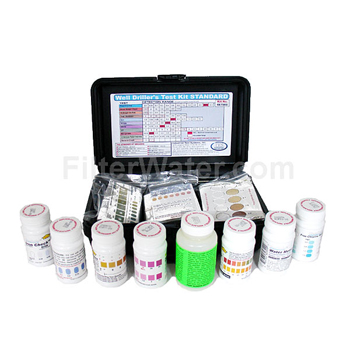
Filter Water: Well Driller Standard Test Kit
Well Driller Standard Tests for
10 Water Quality Parameters
on as Many as 50 Samples

Filter Water: Well Driller Master Test Kit
Well Driller Master Tests for
14 Water Quality Parameters
on as Many as 50 Samples

Oct
2

How Can I Check to See if My Water Filter is Working?

Water Testing BlogBacteria, Chlorine, Chlorine Testing, Coliform, Combined Chlorine, Ground Water, Hardness, Home Water Test Kits, Home Water Testing, Iron, Lead, mercury, Metals, TDS, Testing Devices, Total Chlorine, Water Quality Testing, Water Test Kit, Water Testing

Anyone that has taken the initiative to install a water filter or water purification device/system in their home deserves a bit of praise… and those that continue to take an interest in the quality of their water after installing a water treatment system deserve even MORE for their efforts.

As an example, ‘J. Mampilly’ from India installed a system and now seeks to determine if he has installed the correct unit. He asked,

I would like to know about how i can confirm the effectiveness of my water purifier. Labs in India that can certify and throw light on the camparative quality of water before and after using a water purifier. Thank You

Unfortunately we do not have familiarity with water testing laboratories in India and cannot directly assist with this situation. We can suggest, however, that you contact your local health department and ask them for a list of certified water testing laboratories in your area.

Coliform Bacteria Test Kit

Before…

In order to know what type of filter or what filtering capabilities you should purchase, invest (yes, we said invest) in a thorough water analysis performed by a qualified water testing laboratory. Here, again, we suggest contacting your local board of health and asking them, for a list of certified drinking water testing labs. Alternatively, or if no labs exist in your immediate vicinity, you can use the services of accredited water testing companies such as National Testing Labs.

No matter what, though, always have your water tested BEFORE deciding on a water treatment system. Oh, and one more thing: Don’t think for one second that a salesperson doing an in-home water test has the same water testing tools or qualifications as a reputable water testing laboratory. Remember: 99% of all salespeople attempt to sell things and not accurately analyze a situation — especially if accurately diagnosing a situation could cost them a sale!

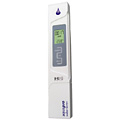
Water Purity Tester
Simple Test Kit for
Total Dissolved Solids

And after!

As ‘J. Mampilly’ has done, we should ALL take an interest in comparing the quality of water that comes out of our water filter systems. Only then will we know if the money we invested in (not spent on!) a quality drinking water filter system performs as expected.

Testing water quality beforehand gives us not only an idea of what we need to filter out of our water, but also a checklist of water quality parameters to monitor post-filtration. Should follow up water testing reveal that these ‘issues’ did not get corrected or suddenly show up months after the installation of a water system, perhaps the water filter has stopped working or never really worked properly in the first place and needs service of some sort.

And in conclusion…

Many people go through life ‘deaf, dumb and blind’ when it comes to the quality of their water — until an (initially) unexplainable health problem pops into their life. Then, and unfortunately sometimes too late, those same people get very interested in the quality of their water and want to punish or otherwise penalize others for allowing them to consume tainted, polluted and/or contaminated drinking water.

Although we feel much sympathy for the victims of poor quality drinking water, most of us here in the United States have the ability to at least once every great while perform basic testing for critical water quality parameters such as heavy metals (i.e. lead, mercury, copper, iron, etc.), coliform bacteria, pesticides (i.e. atrazine and simazine), chlorine levels (free and/or total), total hardness, total dissolved solids, and many others.

Many times the contaminants in a water supply will have no taste, carry no odor and not appear before the naked eye. Only testing will alert you to their presence.

Sep
16

Popular Water Testing Topics

Water Testing BlogChlorine, Chlorine Testing, Combined Chlorine, DPD, Fluoride, Fracking, Free Chlorine, Hardness, Home Water Test Kits, Home Water Testing, sensafe, Testing Devices, Total Chlorine, Water Quality Testing, Water Test Kit, Water Testing, watersafe

Every so often we receive questions from readers who ask something along the lines of, “What do most people ask about?”

Seemed odd at first (several years ago), but after getting asked the same thing so many times we eventually came to the conclusion that a good number of people really and truly don’t know what questions they ought to have about the quality of their drinking water.

Therefore, for your reading pleasure we will now give a list of the 10 most popular topics on Water Testing Blog for the month of August (2011):

  1. Free Chlorine, Total Chlorine and Combined Chlorine
     
  2. Testing for Fluoride in Water
     
  3. Converting Hardness: Grains per Gallon to Parts per Million
     
  4. What is DPD?
     
  5. Chlorine Testing: Drinking Water vs. Pool Water
     
  6. Simple Chlorine Testing Meter
     
  7. Dirty Pool Water Can Make You Very Sick
     
  8. Testing for Chlorine in Drinking Water
     
  9. Lead in Soil
     
  10. Private Well Water and Natural Gas Drilling

In no way does the above list begin to scratch the surface of what curious folks read on our site, but it may help you decide what questions YOU want answered… and if you come up with a question or topic you’d like us to address, send it to us using our submit a comment/question form.

It did, however, kind of shock us that hydraulic fracturing (aka: fracking), a means of extracting natural gas from shale buried deep beneath the Earth’s surface, came in so low on the list given the amount of (bad) publicity hydraulic fracturing has received in the past few years.

We also found it somewhat odd that bacteria in water did not make a single appearance in the list but then again, most folks in the United States have city/municipal water and make the assumption that city/municipal water couldn’t ever contain something as common as bacteria — and that, friends, can sometimes become a dangerous assumption to make!

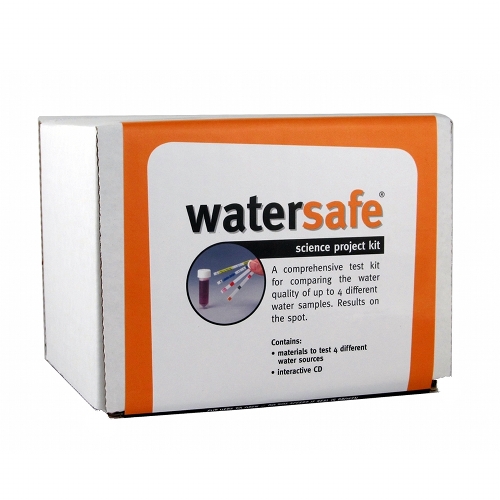
Science Project Water Test Kit 10-Pack
Science Project
Water Testing Kit

Free & Total Chlorine Test Kit
Free and Total Chlorine
in Water Test Kit

Nitrates and Nitrites in Water Test Kit
Nitrates and Nitrites
in Water Test Kit

Pesticides in Water Test Kit
Pesticides in Water
Test Kit (Atrazine/Simazine)

Heavy Metals in Water Test Kit
Heavy Metals
in Water Test Kit

Bacteria in Water Test Kit
Coliform Bacteria
in Water Test Kit

Sep
7

Reader Disagrees With Radon Information, So Let’s Discuss This

Water Testing BlogHome Water Test Kits, Home Water Testing, Radioactivity, Radon, Testing Devices, Water Quality Testing, Water Test Kit, Water Testing

Unlike many sites out there who shy away from posting opinions that differ from their own, we prefer to embrace the difference of opinion as one of two things, or both:

Electronic Radon in Air Detector
UL61010B-1:2003 Issued: 1/24/03 Ed: 1
CSA C22.2 NO 1010.1-92

  1. As a chance to learn more about a topic and alter our views if necessary because we found out new information.

  2. As a chance to learn more about a topic and provide additional information we may not have already known about the topic here on the Water Testing Blog.

Today’s difference of opinion came to us from a gentleman by the name of ‘Keith’ who wrote, “You stated ‘Radon gas in homes can wipe out whole families and the victims never even know the gas existed before it happens. ‘ This is total B.S. I have studied Radiation effects in people since 1969 and there is no known case of this ocurrance. Prove it.”

First of all, thank you, Keith for contacting us.

Upon reading our own statement, perhaps we may have over-dramatized things a tiny bit, but then again, perhaps not. According to a page on the United States Environmental Protection Agency web site (www.epa.gov/radon/pubs/citguide.html), “Radon is estimated to cause about 21,000 lung cancer deaths per year, according to EPA’s 2003 Assessment of Risks from Radon in Homes (EPA 402-R-03-003).”

Radon Responsible for an Estimated 21,000 Deaths Each Year (Lung Cancer)
The numbers of deaths from other causes are taken
from the Centers for Disease Control and Prevention’s
2005-2006 National Center for Injury Prevention
and Control Report and 2006 National Safety Council Reports.

The EPA’s web site goes on to say, “Radon is estimated to cause many thousands of deaths each year. That’s because when you breathe air containing radon, you can get lung cancer. In fact, the Surgeon General has warned that radon is the second leading cause of lung cancer in the United States today. Only smoking causes more lung cancer deaths. If you smoke and your home has high radon levels, your risk of lung cancer is especially high.”

So, while radon doesn’t run up into homes with both barrels of a shotgun blazing as it takes human life, it does seem to kill quite a few people — with both the USEPA and Surgeon General of the United States in agreement that radon poses a significant health risk to humans.

Test Products: Radon in Air & Water Test Kit
Radon in Air & Water Test Kit

Test Products: NJ Radon in Air & Water Test Kit
NJ Radon in Air & Water Test Kit
State Testing Fees Included

Test Products: Industrial Radon in Air Monitor
Industrial Radon in Air Monitor

Sep
1

Test Kit for Fluoride

Water Testing BlogeXact Micro 7+ Meter, Fluoride, Home Water Test Kits, Home Water Testing, Personal Water Filter, Testing Devices, Water Filter, Water Quality Testing, Water Test Kit, Water Test Meters, Water Testing

Today’s inquiry came from ‘Bill’ and it seems as though Bill has a bit of a bone to pick with fluoride in his drinking water and wants to do two things, both of which nearly bring tears to our eyes:

  1. Bill wants to test the fluoride level in his water before it goes into his water filter. As awe have said time and time again, without a baseline scan of your water’s quality you will undoubtedly run the risk of selecting the incorrect tools for cleaning up your water.

  2. Then, Bill wants to test the fluoride levels in the water after it leaves his water filter to make sure the filter did its job. Continual monitoring of one’s filtered water quality gives real-time performance data on one’s chosen water improvement device(s).

Enough of our words, though, and let’s here from Bill himself: “I am looking for a fluoride test–I am installing a filter to remove fluoride–and want to know what levelis presecn Please advise–the page on your website says to use the eXact Micro 7+ Water Testing Meter but the product description says nothing about it being used for fluoride”


eXact Micro 7+ Meter
Does Test for Fluoride

None of us here at Water Testing Blog have control over the content posted on the sites of merchants who sell the eXact Micro 7+ water testing meter… but we can assure you that the meter does have the ability to test for fluoride in drinking water.

As a direct result of your inquiry, Bill, we checked on the meter manufacturer’s web site for the current version of the eXact Micro 7+ water testing meter manual and on page 19 of the document you will find instructions on how to use their meter to test fluoride levels in drinking water.

As of 8/17/11, the date contained in the manual’s file name, the eXact Micro 7+ detects levels of fluoride in water as low as 0.1 ppm and as high as 1.1 ppm. As with any test procedure, use of proper dilution techniques would allow for the quantification of higher fluoride levels if needed.

Keep in mind, though, that the basic eXact Micro 7+ kit does not come with the necessary fluoride reagent strips. You will find those, along with many other optional reagentstrips for testing a bunch of other water quality parameters listed on the eXact Micro 7+ ReagentStrip page.

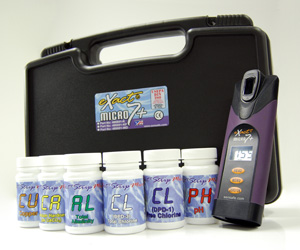
Filter Water: eXact Micro 7+
eXact Micro 7+
Basic Test Kit

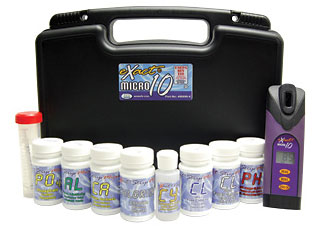
Filter Water: eXact Micro 10
eXact Micro 10
Basic Test Kit

Filter Water: National Testing Labs Fluoride Test Kit
National Testing Labs
Fluoride Test Kit

Aug
29

Water Testing for Industry

Water Testing BlogBacteria, hydrogen sulfide, Nitrate, sensafe, Testing Devices, Water Quality Testing, Water Test Kit, Water Testing

Most days we entertain questions from folks who want to make sure industrial facilities have not somehow contaminated or otherwise altered the quality of their water. Today’s question, however, deals with testing water before it gets used in a manufacturing operation.

Hi.

We are a detergent manufacturing company here in Malta and we need to make regular checks on water that is used in the manufacturing process especially for nitrates, bacterias, sulfide and others. What you can suggest me ?

Thanks and Regards

Jesmond F.

Thank you, Jesmond, for your inquiry. Given the items you wish to test for, we have a few suggestions:

  • SenSafe manufactures a product it calls ‘Water Quality Test Kit‘ and we believe it contains tests for all of the items you mentioned.

  • Another kit made by SenSafe called the Well Driller Test Kit includes tests for all of the tests you asked about and will make it possible for you to test quite a few water samples — up to 50 samples in some cases.

  • No if you’d rather use a meter to perform testing, naturally we suggest the eXact Micro 7+ Meter which, according to the latest information we’ve read, can test for Ammonia, Bromine, Chloride/Salt, Chlorine Dioxide, Chromium (Hexavalent), Copper, Cyanuric Acid, Fluoride, Iodine, Iron, Low Range Total Hardness, Manganese, Nitrate, Nitrite, Ozone, Acid pH, Alkali pH, Potassium, Sulfate, Sulfide, and Turbidity. Granted the meter cannot test for bacteria, but you can always pick up tests for bacteria separately.

  • Speaking of separately, simple dip-n-read test strips exist for the purpose of testing each of the tests you asked about — with the exception, of course, of bacteria which uses a presence/absence ‘mug’ test procedure if you wish to test down to drinking water standards: Bacteria, Sulfides (as hydrogen sulfides) and Nitrates.

Hopefully one or more of the options above will suit your water testing needs.


Water Quality Test Kit


Well Driller Test Kit


eXact Micro 7+

Aug
23

Chlorine Not Staying in Pool Water?

Water Testing BlogChlorine, eXact Micro 7+ Meter, Test Strip, Testing Devices, Water Quality Testing, Water Test Kit, Water Test Meters, Water Testing

Earlier this Summer we discussed this same topic and we feel quite certain that we will discuss it many more times in the future. Today’s inquiry comes to us from ‘JerseyGuy82560′ who asked,

Sas your answer regarding chlorine not lasting long with the answer being that liquid chlorine without a stablizer was probably the problem. I’m using powdered shock and put 2 pounds in last night at 10 PM. This morning at 6 AM, there was just a trace of chlorine. I don’t want to empty the pool in the middle of the season, so can I use conditioner to make the chlorine last longer? Thank you.

Thank you for your question, JerseyGuy. Many of the powdered (also called granular) shocks on the market have calcium as their base and do not possess stabilizer. For that reason the situation you described where 2 pounds of shock literally vanished overnight makes sense… providing you have not added chlorine stabilizer to the water at some point.

Chlorine Stabilizer, AKA: Cyanuric Acid
Chlorine Stabilizer Powder
AKA: Cyanuric Acid

If you have not added any stabilizer (cyanuric acid) this year, then certainly putting some in now should help you maintain a healthy chlorine residual in your pool water.

If, on the other hand, you have added chlorine stabilizer and still cannot maintain a healthy chlorine level, you either have an abundance of contaminants in the water that require your chlorine’s immediate attention or you may not have enough chlorine stabilizer in the water.

Testing for Chlorine Stabilizer?

Several different test methods for cyanuric acid exist: 1) Wet Kits; 2) Test Strips; 3) Water Testing Meters.

  • Wet Kits for Stabilizer Testing: Test kits of this nature use a chemical reagent that reacts with chlorine stabilizer to create a white substance in test samples which makes the water turbid and difficult to see through. Analysts then measure chlorine stabilizer levels as a function of turbidity.

  • Test Strips for Stabilizer Testing: Test kits of this sort use a small piece of chemically impregnated cloth which changes color in the presence of cyanuric acid. Analysts then measure chlorine stabilizer levels as a function of change in color.

  • Meters for Stabilizer Testing: These devices typically use the same principles as wet kits for determining cyanuric acid levels in pool water samples except the meter interprets turbidity levels instead of analysts taking the measurements. Given the very subjective nature of quantifying turbidity in a sample, meters generally tend to give more accurate and repeatable results.

So, JerseyGuy, if you have clear water at this time and still cannot maintain a proper chlorine residual, first we suggest determining if you have any stabilizer already in your water. Then we suggest bringing the level up to around 30 or 40 parts per million.

We hope this helps!

In the Swim: Cyanuric Acid Test Kit
Cyanuric Acid Test Kit

In the Swim: 6 Way Test Strip w/ Cyanuric Acid Test
6 Way Test Strip w/ Cyanuric Acid Test

eXact Micro 7+ Pool Testing Meter
eXact Pool Testing Meter

Jul
29

Is Your Family’s Health Worth $6 per Month?

Water Testing BlogBacteria, Coliform, Home Water Test Kits, Home Water Testing, Testing Devices, Water Quality Testing, Water Test Kit, Water Testing, Well Water

We believe more people need to ask that question — especially if they have well water in their homes or rely upon municipal water systems that may have older, potentially damaged water mains to deliver water to their homes. In both scenarios bacteria could suddenly, and without warning introduce itself to water supplies and put the health of entire families at risk.

Filters Fast: EZ Coliform Cult Bacteria Check
EZ Coliform Cult Bacteria Check

So… What can $6 a month do to help? Simple: For around just $6 per month homeowners can now perform testing for coliform bacteria at home using a test kit such as the WaterWorks EZ Coliform Test Kit which uses an EPA Compliant test procedure to test for the presence of coliform bacteria in drinking water and, with assistance of a UV light source, will positively identify E. Coli, a particularly unpleasant type of coliform bacteria associated with fecal matter, if present in the water.

Boil Water Advisories….

If you found yourself saying, “I don’t need to worry about bacteria in my water supply. My city/town/village issues ‘boil water advisories if a problem exists in the water supply.”

Very true since the law requires public water systems to issue public warning in the event of a water main break or other noticeable problem with the system that could possibly allow unwated contaminants (like bacteria) to infiltrate the water supply.

Problem: What if officials don’t KNOW about a cracked line miles away from the water treatment plant on a low pressure leg of the water delivery system that runs under an area where a bit of added moisture in the ground really wouldn’t catch anyone’s attention?

Problem: What if the pipes connecting your home or business to the public water supply have somehow become damage?

Not too Likely but Still a Potential Problem: What if the folks assigned to take care of water testing in your local water treatment plant decided to skimp on testing because of budgetary constraints — or just plain laziness — and a contamination issue caused by a failing check valve goes unnoticed for a period of time.

Moral of the story?

No one but YOU has ultimate responsibility for the purity and safety of the water that you and your family consume and as you can clearly see, that applies to folks on municipal water supplies as well as folks on private wells.

Conducting a simple $6 test every month on your water could potentially keep you and your family from suffering the ill effects of E. Coli contamination.

Filter Water: Well Water Test Kit
Well Water Test Kit
Includes Bacteria Test Kit

Filter Water: Water Quality Test Kit
Water Quality Test Kit
Includes Bacteria Test Kit

Jul
1

Chlorine Testing Meter for Swimming Pool?

Water Testing BlogChlorine, Chlorine Testing, DPD, DPD Tablets, Free Chlorine, Pool Water, Testing Devices, Total Chlorine, Water Quality Testing, Water Test Meters, Water Testing

As we expected, the number of questions we received recently about swimming pool water has definitely increased. Today’s inquiry comes from a Water Testing Blog reader who hails from Pakistan and he/she asked:

Dear Sir/Madam,
hope you will be fine.i need some information regarding digital chlorine tester for swimming pool water .i read about extech cl200 testing metre.kindly send me the literature and price for it .
thanks
an early response is appreciable
farhan

Now before any of you go and criticize this person’s grammatical skills when typing in English, think more about the person’s commitment to keeping a proper chlorine level in swimming pool and the time it took to submit a question to this site.

ExTech CL200
ExTech CL200 Total Chlorine
Testing Meter for Water

ExTech CL203 ExStik Total Chlorine Test Reagent Tablets
ExTech CL203 Total Chlorine
Test Reagent Tablets

WE commend ‘Farhan’ for his/her efforts and for transcending the language barrier to ask a question about proper chlorine testing in pool water.

On the topic of the “Extech 1200C” for chlorine testing in pool water, we took a look at the ExTech web site and did not find a meter in the chlorine/fluoride in water detection called the ‘Extech 1200C’… so we found ourselves a bit puzzled by your question.

We DID, however, see the ExTech CL200 Chlorine Testing Meter which uses Extech (CL203) Exstik ExTabâ„¢ Chlorine Reagent Tablets, a undoubtedly a proprietary blend of DPD-1 & DPD-3 reagents, to test for ONLY total chlorine concentrations in water.

The obvious problem we see with this meter for pool water testing, despite its USEPA credentials for total chlorine testing (in waste water), deal with the meter’s INability to test for free chlorine concentrations in water.

Proper Pool Water Testing Requires Free AND Total Chlorine Testing!

That heading said it all. Proper pool water care requires both free AND total chlorine testing.

Why? Quite simply, it does little good for the sanitation of a pool to have an in-range total chlorine reading with a very low, or non-existent, free chlorine reading. When that happens the pool contains mostly, if not entirely, chloramines (aka: combined/used chlorine molecules) which possess very little (limited) oxidizing power… and limited oxidizing power means limited sanitizing capabilities.

Improperly sanitized pool water can EASILY become a home in which various bacteria, parasites and viral ‘issues’ which will flourish, breed and infect swimmers if left unchecked.

Repeated Moral of the Story

Invest in a meter that test for both total chlorine concentrations AND free chlorine concentrations.

We suggest using a meter like the eXact Micro 7+ Pool & Spa Meter because it tests for not only free AND total chlorine, but also for Total Alkalinity, Bromine, Calcium Hardness, Copper, Ozone, Permanganate, and pH… all with the same meter!

Earlier we talked about the Extech’s USEPA credentials so naturally we figure you want to know if the eXact Micro 7+ Meter has credentials, too — and it does! When used with DPD chemistry (and the appropriate procedures, of course) the meter qualifies as an EPA Compliant device for testing free an total chlorine in drinking water.

“But Wait! There’s More!” Screamed the Announcer

As an added bonus, the eXact Micro 7+ Pool Meter also has the ability to test for Ammonia, Chloride/Salt, Chlorine Dioxide, Chromium Hexavalent, Cyanuric Acid, Iodine, Iron, Low Range Total Hardness, Manganese, Nitrate, Nitrite, Acid pH, Alkali pH, Potassium, Sulfate, Sulfide, and Turbidity — when operated in ‘% Transmission’ mode with the appropriate eXact Micro 7+ Reagent Strips.

Filter Water: eXact Micro 7+ Pool Testing Meter
eXact Micro 7+ Pool Testing Meter

Filter Water: eXact Micro 7+ ReagentStrips
eXact Micro 7+ ReagentStrips

Jun
30

Harmful Bacteria in Swimming Pools?

Water Testing BlogBacteria, Coliform, Pool Water, Testing Devices, Water Quality Testing, Water Test Kit, Water Testing

While we all would LOVE to believe swimming pool water contains no harmful bacteria, in reality many swimming pools — despite the apparent presence of chlorine odors — actually DO contain harmful bacteria.

Bacteria Test Kit for Pool Water
Bacteria Test Kit for Pool Water Provides
Results You Can Trust in Just 20 Minutes

Granted the levels of contaminants often pose no danger to swimmers, also called bathers (hence the term ‘bather load’ rather than ‘swimmer load’ when discussing a pool’s usage), but for people with compromised immune systems, the elderly and/or the extremely young these levels may pose a health risk.

In other swimming pools, however, the levels do sometimes become dangerous for the general population and waterborne bacterial and/or viral contaminants may spread from bather to bather without anyone knowing until later on when the contaminant has worked its way into bloodstreams, reproduced and starting causing stomach pains, cramping, diarrhea, etc.

Some cases of bacterial contamination by swimming pool have resulted in hospitalization and, in rare instances, even deaths.

So… Can the average person (or pool operator) perform some sort of test on their pool water that could help to determine if the pool water sanitizer has effectively killed off any potentially harmful water bacteria?

Of COURSE someone makes a test kit for bacteria in swimming pools!

The WaterSafe Rapid Bacteria Test Kit provides reliable positive/negative results for ‘popular’ pool water contaminants such as Pseudomonas, Aeromonas, E.coli, species of Salmonella, Shigella, Enterobacter, Klebsiella, and other Coliform and non-Coliform bacteria.

If you want more information on this product, you can find it on FilterWater.Com.


AquaChek 7-Way Test Strips


AquaChek Pro II for CyA, TDS & Hardness