About
Do you know what's in YOUR water? Learn about water quality, water quality testing, and water quality testing products that can help you make informed, educated decisions regarding the water treatment options for your home, office, swimming pool... and life.
Contact Us
Got a question about water quality? Want to share a water quality article or water quality article with others?

Visit our Contact Us Page to ask a water quality question or submit water quality information.

RSS Feed
Get the most recent water quality posts and comments by subscribing to the Water Testing Blog RSS Feeds.
Subscribe to RSS! Subscribe to RSS Comments!

Archive for the ‘THM’ Category

Jul
16

Bottleless Water Cooler w/ 4 Stages of Filtration

Water Testing Blogatrazine, Bacteria, Bottled Water, Chlorine, Hardness, Personal Water Filter, Pesticide, replacement water filter, simazine, THM, Water Filter

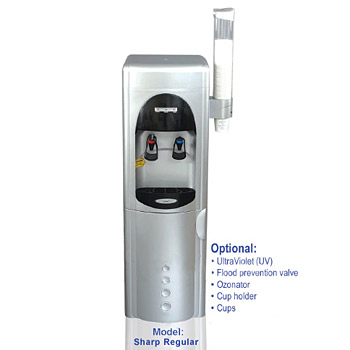
Looking for a way to supply your office or home with safe, clean drinking water… but don’t want the hassle of changing bulky, heavy and otherwise cumbersome 5 gallon tanks all the time?

If so, then the Sharp Ultrafiltration Bottleless Water Cooler may solve your dilemma. It contains four replaceable filters that have an average lifespan of approximately 2 years and hooks up directly to the cold water line in your home or office.

Able to provide an office of thirty people with a continuous supply of safe, clean and thoroughly filter hot and cold water, this unit works well, looks good, and will NOT require you to sign any monthly or yearly service contracts with water delivery companies. Also keep in mind that monthly service contracts will run upwards of $50 per month and you will have change the heavy 5 gallon jugs each time one runs dry. Each jug weighs approximately 50 pounds. Not fun!

The Sharp Ultrafiltration Bottleless Water Cooler can provide freshly purified hot water for teas and other warm drinks on command… something many water coolers using bottles simply cannot do!

4 Stages of Water Filtration

In this unit drinking water travels through 4 separate water filters, each designed to remove specific contaminants. This intense amount of filtration produces crystal clear, fresh and tasty water on a continuous basis – with no bottles to buy!

  • Stage 1 – A sediment filter which removes 99.99% of microbiological cysts, cryptosporidium, giardia, and ‘particles’ from the water.

  • Stage 2 – A granulated activated carbon (GAC) cartridge effectively absorbs a wide variety of organic contaminants such as volatile organic compounds (VOCs), chemicals linked to cancer (such as THMs and benzene), pesticides (like atrazine and simazine), herbicides, PCBs, and chlorine (removes 99.9%).

    The activated carbon cartridge also reduces MTBEs and removes bad taste and odor from drinking water.

  • Stage 3 – An UltraFiltration (UF) membrane removes synthetic organic compounds ranging in size from 0.0001 to 0.005 microns in size, bacteria, viruses, colloids, and waterborne parasites. This stage also removes and/or greatly reduces salts and water hardness.

  • Stage 4 – A multi-stage filter which removes hundreds of other potentially harmful or aesthetically displeasing contaminants (if present in the water) and puts a final ‘polishing’ on the water.

Additional Details About This Water Cooler

Before shipping to a customer, each unit gets tested for a period of 72 hours, the unit as a whole carries a 1-year manufacturer’s warranty (excluding replaceable filter cartridges), the unit’s compressor carries a 3-year warranty, and the unit comes with a set of filter cartridges.

With regard to replacement costs for the filter cartridges, as of the date we posted this blog entry a full set of replacement cartridges, which ought to last 2 or more years, cost approximately $160 for a complete set of 4.

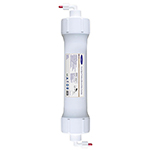
Filter Water: Sediment Cartridge
Sediment Cartridge

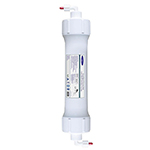
Filter Water: GAC Cartridge
GAC Cartridge

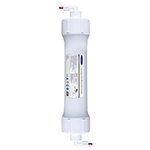
Filter Water: UF Membrane
UF Membrane

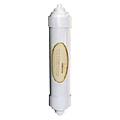
Filter Water: Multi-Stage Cartridge
Multi-Stage Cartridge

Jul
5

Water Filter to Remove VOC’s, Oils and Hydrocarbons

Water Testing BlogChlorine, Hardness, hydrogen sulfide, Iron, Lead, Pesticide, THM, Trihalomethane, Water Filter, Water Quality Testing

Undersink Hydrocarbons Water Filter

With all the talk about oil washing up on the shores as a result of the BP oil platform disaster, some people have started to ask a very smart question:

Could some of that oil somehow end up in my well water if I live close to the shore?

At this point no one can answer that question definitively, but rest assured plenty of people would prefer to err on the side of caution and have a water filter system capable of removing any trace elements of the BP disaster that may find their way into their water supply.

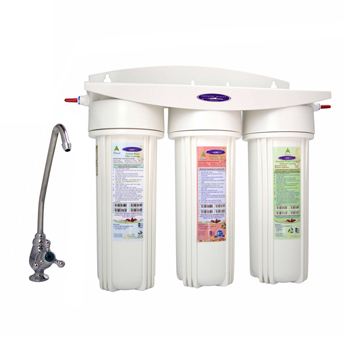
The Crystal Quest Mega Triple Undersink Water Filter, known by manufacturer’s part number CQE-US-00309 and good for proper filtering of up to 10,000 gallons of drinking water, uses a combination of three separate filter chambers:

  1. Water flows through a sediment filter cartridge that removes sediment, silt, sand and dirt. This helps to extend the life of water softener and water filters and prevent damage to control valves and/or pumps.

  2. In the second filter chamber, water flows through pre one – micron filter pads which remove suspended particles such as silt, sediment, cyst (Giardia, Cryptosporidium), sand, rust, dirt, and other undissolved matter.

    It then flows through a bed of media made of a special high-purity alloy blend of two dissimilar metals — copper and zinc (Eagle Redox Alloy® 6500 and Eagle Redox Alloy® 9500) — that works using electro-chemical and spontaneous-oxidation-reduction (REDOX) principles. At this stage chlorine gets instantaneously and almost inexhaustibly oxidized iron and hydrogen sulfide get oxidized into insoluble matter which attaches to the filter media, heavy metals such as lead, mercury, copper, nickel, chromium, cadmium, aluminum, and other dissolved metals also get removed by the electrochemical process.

    In the next stage, water flows through the ion exchange resin, further reducing heavy metals such as lead, copper, aluminum, and water hardness.

    Next, water passes through granulated activated carbon (GAC), a compound universally recognized and widely used as an effective adsorbent for a wide variety of organic contaminants such as chlorine (99.9%), chemicals linked to cancer such as THM’s and benzine, pesticides, herbicides, insecticides, volatile organic compounds (VOC’s), PCB’s, MTBE’s and hundreds of other chemical contaminants potentially found in drinking water. It also works to greatly reduce and/or eliminate bad taste and odors in drinking water.

    The last section of this filter chamber contains another one-micron filtration pad for further reduction of undesirable particles.

  3. In the third filtration chamber water travel through a solid carbon cartridge designed to remove remaining volatile organic carbon compounds (VOC’s), insecticides, pesticides and industrial solvents.

Need replacement cartridges for the Crystal Quest Mega Triple Undersink Water Filter?

Filter Water: 10-Inch Ultrafiltration Filter Cartridge
10-Inch Ultrafiltration Filter Cartridge

Filter Water: Carbon Block Filter
Carbon Block Filter

Filter Water: 6 Stage Filter Cartridge
6 Stage Filter Cartridge

Mar
15

Question: Is Well Water Better Than City (Tap) Water?

Water Testing BlogChlorine, City Water Test, Disinfection Byproducts, Ground Water, Home Water Testing, Municipal Water Test, THM, Trihalomethane, Water Quality Testing, Water Testing, Well Water

We recently received an email from Emma in North Carolina and she wrote,

We’re building a new house right on the edge of where the local water plant stops delivering water and want to know if we will be better off hooking up to the water line or having well put in. Some people say we’re lucky to have a choice, but really it’s just one more decision we have to make and we already have so many! Can you help? Thanks!

Emma

As Emma implied, sometimes having a choice makes for a lot more work – if you choose to research the options properly.

Bacteria Check Water Test Kit

Hooking up to city water offers the security of knowing that the city has to test its water routinely before distribution and must inform you if it has experienced any ‘incidents’ which may put you in danger. On the flip-side, though, you will receive a bill each month to cover the expense of testing, monitoring, filtering and purifying the water going into your new home.

Investing in a well for your new home will rid you of that pesky water bill each month, but it will also make you 100% responsible for the quality and safety of water it produces once it passes an initial test done by the well drilling company.

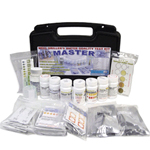
Well Driller Test Kit: Master

We honestly do not have an answer, Emma, because some well water comes up cleaner and more pure than any water company could ever distribute… and other well water comes up nastier than backwoods swamp water and/or containing potentially dangerous chemical compounds whose origin even the best scientists in the World have trouble locating.

Pretty much all city water contains some form of disinfectant which can create unpleasant tastes and odors in drinking water. It can also irritate skin, bleach clothing, etc. and some water systems contain obnoxious (and smelly) levels of chlorine which can make water taste absolutely wretched.

While on the topic of chlorine, the most widely used disinfectant for public water systems, produces trihalomethanes (THM’s), a potentially carcinogenic disinfection byproduct, when chlorine molecules attack organic contaminants in water.

Getting back to the well water, commonly occurring events in the environment can change the quality of well water on a daily basis. Heavy rains, a lack of rain, temperature and even air pressure can radically alter the nature of water pulled from well – and let us not forget about pollution from industry which can seep into the ground 100’s of miles away from a well and still, somehow, make its way into that water that well produces at some point.

So, Emma, in the end, and if you want to make the best possible decision regarding where you will get your drinking water, we suggest you have a sample of water drawn from the aquifer your proposed well will access and have it tested by a certified water testing laboratory such as National Testing Laboratories. Contact the well drilling company you think you may use to drill, if you go that route, and ask them for advice on getting sampling and testing done. Do make sure they submit the sample to a certified water lab, though, and not do the testing themselves!

Then contact the local water company and ask for a copy of their latest water quality report, usually referred to as a Consumer Confidence Report and abbreviated as CCR.

With both reports in hand, weigh the pros and cons of each and remember that no matter which option you choose, you may STILL want to consider having a Whole House Water Filter System installed and/or purchasing point-of-use water filter devices for the shower, faucet and countertop.

Feb
3

Question: Do They Make a Portable Multi-Stage Filter for Travel?

Water Testing BlogBottled Water, Chlorine, Metals, Pesticide, Portable Water Bottle, THM, Trihalomethane, Water Filter

Suzanne from Temecula, CA wrote in and asked,

Shortly before leaving me, my ex-husband installed a monstrosity of a water filter for the whole house that he claimed would remove 99% of this, that and the other thing. He said we needed it. Too bad I still have to pay it off… But anyways, I now travel a lot and have noticed that the water tasted funny everywhere I go — and i really don’t like it very much at all. I’ve started carrying bottles and 1 gallon jugs of water with me on my trips but I think there has to be a better option. Do they make a travel-sized whole house filter? Thanks for your time and I look forward to reading your response. — Suzanne

We thank you for your question, Suzanne, and sorry you got stuck paying for that ‘monstrosity’ of a whole house filtration system. At least you have safe, clean, and good tasting water at home, though, right?

We completely understand your not wanting to carry jugs of bottled water around in your car, assuming that you drive everywhere. Although one can usually pick up gallons of purified water for small amounts of money from the local grocery store, the inconvenience of lugging them around all the time definitely sounds like a miserable experience.

You could pick up travel-sized sport water bottles with built-in filtration units, but those typically work better for short trips, hiking trips, etc. and that does not sound like what you want. It sounds to us like you want a portable version of the ‘monstrosity’ you have at home.

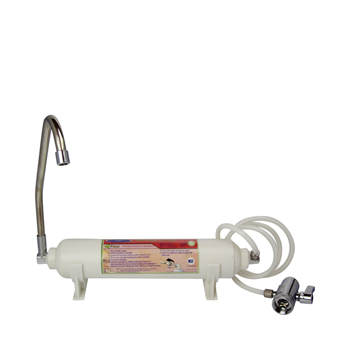
Crystal Quest Portable Countertop Water Filter

After doing a little research, we came across a Countertop Portable Water Filter made by Crystal Quest. It has multiple filtering stages (like your monstrosity at home) and claims to remove hundreds of contaminants (like your monstrosity at home most likely does).

Stage 1 — Water passes through a 5 micron filter pad which remove suspended particles such as silt, sediment, cyst (Giardia, Cryptosporidium), sand, rust, dirt, and other un-dissolved matter.

Stage 2 — Water passed through a specially blended bed of high purity media known commercially as KDF-55D ®, and KDF-85D ®. This media uses an oxidation-reduction process to effectively neutralize chlorine and remove metals.

Stage 3 — Water passes through through granulated activated carbon (GAC), a compound known for its ability to adsorb a wide variety of organic contaminants such as chlorine (99.9%), chemicals linked to cancer such as trihalomethanes (THM’s) and benzine, pesticides, herbicides, insecticides, volatile organic compounds (VOC’s), PCB’s, MTBE’s and many of other chemical contaminants which if present in water may also cause bad taste and odor.

Stage 4 — Water passes through a final 5 micron filter pad to filter out suspended particles such as silt, sediment, cyst (Giardia, Cryptosporidium), sand, rust, dirt, and other un-dissolved matter.

Unlike the ‘monstrosity’ you have not, yet finished paying for, the Crystal Quest Portable Countertop Water Filter has a pretty good price (around $70) and will supposedly last for up to 5,000 gallons.

Compare that to paying $1 per gallon for purified water from the store…

($5,000 + Carrying Jugs Around) vs. ($70 + Filter Weighs Only a Few Pounds)

Worried about a time-consuming installation? From the looks of things, the Crystal Quest Portable Countertop Water Filter attaches to a common sink faucet via an adapter that screws into where the aerator goes. Should take less than a few minutes, though instinct tells us you may want to carry a pair of pliers in your travel bag — in case no one has removed the aerator in your cabana, cabin, or hotel room in a while.

Nov
6

Question: What is EPA Limit for Trihalomethanes in Drinking Water?

Water Testing BlogChlorine, Chlorine Testing, Combined Chlorine, Disinfectant, Disinfection Byproducts, Free Chlorine, Haloacetic Acid, Max Contaminant Level, Sanitizer, THM, Total Chlorine, Trihalomethane, Water Quality Testing, Water Testing

We’d like to thank “Trinity” for asking the following question about trihalomethane levels in drinking water:

“In school we recently learned that chlorine added to drinking water by water treatment facilities reacts with organic contaminants in the water and forms harmful compounds called trihalomethanes. Does the EPA have a guidleine which limits the amount of trihalomethanes are considered safe?” — Trinity in Washington

First of all, we want to clarify something in Trinity’s question: Not all forms of chlorine added by water treatment facilities will cause trihalomethanes to form. Adding ‘free chlorine’ to water containing organinc contaminants will result in the formation of thrihalomethanes while adding ‘combined chlorine’, also referred to as chloramines, to water containing organic contaminants will not.

Unsure of the difference between free chlorine and total chlorine? The following Water Testing Blog postings will help:

Getting back to Trinity’s question, though, prior to 2004 the EPA set the maximum contaminant level (MCL) for trihalomethanes in drinking water at 100 parts per billion (ppb). In 2004 the EPA lowered the MCl for trihalomethanes in drinking water to 80 ppb. ( source )

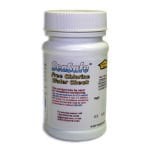
Filters Fast: SenSafe Free Chlorine Water Check
SenSafe Free Chlorine
Water Check

Filters Fast: WaterWorks 2 Free & Total Chlorine Test Strips
WaterWorks 2 Free & Total Chlorine Test Strips

Test
SenSafe Total Chlorine
Water Check

Apr
7

THM’s May Affect Pregnant Women and Their Unborn Children

Water Testing BlogChlorine, Chlorine Testing, City Water Test, Combined Chlorine, DBP, Disinfectant, Disinfection Byproducts, Free Chlorine, HAA5, Haloacetic Acid, Home Water Test Kits, Home Water Testing, Municipal Water Test, THM, Total Chlorine, Trihalomethane, Water Quality Testing, Water Testing

Not many people actually enjoy the taste or smell of chlorinated drinking water, but did you know that recent studies have unofficially linked birth defects to chlorinated drinking water? It seems as though a pregnant woman’s exposure to chlorine byproducts called trihalomethanes (THMs) in drinking water, bath water, etc. may play a part in causing serious health problems for her unborn child:

“Expectant mothers can expose themselves to the higher risk by drinking the water, swimming in chlorinated water, taking a bath or shower, or even by standing close to a boiling kettle, say researchers.

The finding, based on an analysis of nearly 400,000 infants, is the first that links by-products of water chlorination – chemicals known as trihalomethanes, or THMs – to three specific birth defects.

Exposure to high levels of THMs substantially increased the risk of holes in the heart, cleft palate and anencephalus, which results in the absence of a major portion of the brain, skull, and scalp.” ( source )

Most water systems chlorinate the water they provide in an effort to eliminate parasites and bacteria in drinking water which could lead to waterborne ailments and illnesses.

Not sure if your water contains THMs? Maybe the next few statements will help:

  • Public water supplies that use free chlorine as their primary disinfectant (instead of chloramines) may contain THMs. The compounds form when free chlorine molecules lock horns with a biological contaminant during the disinfection process.
  • Public water supplies that use chloramines as their primary disinfectant (instead of free chlorine) typically do not contain THMs. However it should be noted that these water systems do periodically ‘burn’ their water lines with free chlorine in an effort to get rid of any biofilm that has formed and THMs do result from those ‘burn’ sessions.

Still unsure as to whether or not your drinking water may contain THMs? You have three options:

  1. Call your local water authority and ask them if they use free chlorine as the primary disinfectant or chloramines. If so, then your water most likely contains chloramines.
  2. Have your water tested by a certified water testing professional.
  3. Use reliable drinking water test kits for both free chlorine AND total chlorine.
Mar
26

Acceptable TDS Meter Readings Do Not Guarantee Safe Drinking Water

Water Testing BlogChlorine, DBP, Disinfection Byproducts, Haloacetic Acid, Home Water Testing, TDS, THM, Trihalomethane, Water Quality Testing, Water Test Kit, Water Testing

In a recent article by Andrew Zeigler in Water Conditioning & Purification Magazine, we found the following statement intended for dealers of drinking water treatment systems which we certainly do agree with:

“Stop using the TDS (total dissolved solids) meter as the only measurement of water quality. Disinfection Byproducts like Trihalomethanes, Volatile Organic Compounds, METHYL tertiary-butyl ether, chlorine, chloramines, cysts and lead are the primary contaminants to Public Water Systems. They have no impact on the conductivity of the water. Yet these do not register on a TDS meter. And public water systems primarily supply from surface water that tends to have low TDS levels.” ( Water Conditioning & Purification Magazine, March 2009, page 42 )

While TDS does play a large part in the determining whether or not your water will leave deposits on your fixtures, it alone does not indicate the relative safety and purity of your water. As always Water Testing Blog suggests that people get their water tested by Certified Water Analysis Laboratories if they suspect a serious health risk.

For all other water testing needs, simple at home drinking water test kits used in conjunction with TDS meters ought to work just fine. you can find more information about home drinking water test kits on this page. You can also find more information about home drinking water test kits by using the links below:

Arsenic in Water and Soil: Arsenic QuickTM

Bacteria in Water: Bacteria Check

Chlorine Residual (Free): SenSafeTM Free Chlorine Water Check

Chlorine Residual (Total): SenSafeTM Total Chlorine Water Check

Lead in Water: Lead in Water Test Kit

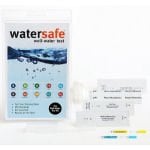
Multi Parameter (6 Parameters): Well Water Check

Multi Parameter (11 Parameters): Well Driller Standard Water Test Kit

Multi Parameter (13 Parameters): COMPLETE Water Test Kit

Multi Parameter (15 Parameters): Water Quality Test Kit

Nov
19

Tests Find Bottled Water No Cleaner Than Tap Water

Water Testing BlogArsenic, Arsenic in Water, Bacteria, Bottled Water, Chlorine, City Water Test, DBP, Disinfection Byproducts, HAA5, Haloacetic Acid, Home Water Test Kits, Home Water Testing, Metals, Municipal Water Test, THM, Trihalomethane, Water Quality Testing

What happened to the days when you could TRUST a company not to misrepresent a product they touted as ‘pure’?

Our opinion: Those days died with the dinosaurs or they never really existed!

Looking for ways to cut back in these tough economic times? An environmental group suggests skipping the bottled water and drinking from the tap. It might even be healthier.

The Environmental Working Group says its tests how 10 popular U.S. bottled water brands contain mixtures of 38 different pollutants, including bacteria, fertilizer, Tylenol and industrial chemicals, some at levels no better than tap water.

Wal-Mart’s Sam’s Choice at several locations contained contaminants exceeding California’s bottled water quality standards and safety levels for carcinogens under the state’s Safe Drinking Water and Toxic Enforcement Act, according to the group’s laboratory tests. Giant Foods’ Acadia brand consistently retained the high levels of cancer-causing chlorination byproducts found in the suburban Washington DC tap water from which it is made.

Overall, the group says the test results strongly indicate that the purity of bottled water cannot be trusted.

“It’s buyer beware with bottle water,” said Jane Houlihan, Vice President for Research at EWG. “The bottled water industry promotes its products as pure and healthy, but our tests show that pollutants in some popular brands match the levels found in some of the nation’s most polluted big city tap water systems. Consumers can’t trust that what’s in the bottle is anything more than processed, pricey tap water.”

“For years the bottled water industry has marketed their product with the message that it is somehow safer or purer than tap water,” said Wenonah Hauter, executive director of the non-profit consumer advocacy group Food & Water Watch. “This new report provides even more evidence that the purity of bottled water is nothing more than a myth propagated to trick consumers into paying thousands times more for a product than what it is actually worth.”

EWG said that laboratory tests it commissioned at one of the country’s leading water quality laboratories found 38 contaminants in ten brands of bottled water purchased from grocery stores and other retailers in nine states and the District of Columbia.

The pollutants identified include common urban wastewater pollutants like caffeine and pharmaceuticals, an array of cancer-causing byproducts from municipal tap water chlorination, heavy metals and minerals including arsenic and radioactive isotopes, fertilizer residue and a broad range of industrial chemicals. Four brands were also contaminated with bacteria.

Unlike tap water, where consumers are provided with test results every year, the bottled water industry does not disclose the results of any contaminant testing that it conducts, EWG said.

Americans paid $12 billion to drink 9 billion gallons of bottled water last year alone, EWG said. Yet, the tests show several bottled waters bore the chemical signature of standard municipal water treatment–a cocktail of fluoride, chlorine and other disinfectants whose proportions vary only slightly from plant to plant. In other words, some bottled water was chemically almost indistinguishable from tap water.

The only striking difference, the group says, is the price tag. The typical cost of a gallon of bottled water is $3.79–1,900 times the cost of a gallon of public tap water. (source article)

So what can YOU do to help make sure the water you consume does not contain harmful chemicals? Simple: Learn everything you can about the source your water comes from. If it comes from a bottle, read the bottle label and research the company that did the bottling. By law they must divulge the source of their water and you may find out that they merely take water from their own local (municipal) water supplier, run it through an activated carbon filter, bottle it, and ship it to you.

Sep
22

Choosing a Water Filter: Distiller

Water Testing BlogArsenic, Arsenic in Water, Arsenic Test, Copper, DBP, Disinfection Byproducts, HAA5, Haloacetic Acid, Home Water Testing, Lead, Metals, THM, Trihalomethane, Water Filter, Water Quality Testing, Water Test Kit, Water Testing

Today we will continue to explore the different drinking water filtration systems available to the general public by discussing briefly the specifics of a drinking water filtration system known as a Distiller.

  • One part of a distillation system boils drinking water into steam and a second part recondenses the ‘purified’ steam back into water.
  • Distillation systems may take the form of countertop models and point-of-entry (whole house) systems.
  • Distillation systems work quite well for people whose unfiltered/untreated drinking water contains heavy metals and elements such as copper, cadmium, chromium, lead, mercury, arsenic, selenium, barium, fluroide and sodium.
  • Some people opt to combine a distillation systems with an activated carbon system for more complete drinking water purification. Adding the activated carbon drinking water filter to the purification systems allows it to remove bad tastes and odors and a well-rated activated carbon filter will filter out many hazardous contaminants such as heavy metals, disinfection byproducts (i.e. haloacetic acids and trihalomethanes to name a few), chlorine, radon, volatile organic chemicals, parasites, and pesticides.
Sep
17

Choosing a Water Filter: Activated Carbon Filter

Water Testing BlogChlorine, Coliform, Copper, DBP, Disinfection Byproducts, HAA5, Haloacetic Acid, Iron, Lead, Metals, Pesticide, THM, Trihalomethane, Water Filter

Many have asked the difference between the different types of drinking water filters they could use in their homes, at work, or at school.

Activated Carbon Filter:

  • Positively charged and highly absorbent carbon media in the filter attracts and traps many drinking water impurities.
  • You will typically find these drinking water filter systems on countertops, as point-of-use faucet filters, and under the sink.
  • A good system for eliminating bad tastes and odors and a well-rated activated carbon filter will filter out many hazardous contaminants such as heavy metals, disinfection byproducts (i.e. haloacetic acids and trihalomethanes to name a few), chlorine, radon, volatile organic chemicals, parasites, and pesticides.