About
Do you know what's in YOUR water? Learn about water quality, water quality testing, and water quality testing products that can help you make informed, educated decisions regarding the water treatment options for your home, office, swimming pool... and life.
Contact Us
Got a question about water quality? Want to share a water quality article or water quality article with others?

Visit our Contact Us Page to ask a water quality question or submit water quality information.

RSS Feed
Get the most recent water quality posts and comments by subscribing to the Water Testing Blog RSS Feeds.
Subscribe to RSS! Subscribe to RSS Comments!

Archive for the ‘Water Test Kit’ Category

Feb
22

Who Do I Contact for Well Water Testing?

Water Testing BlogHome Water Test Kits, Home Water Testing, sensafe, Water Quality Testing, Water Test Kit, Water Testing, watersafe, Well Water

Most ‘health’ issues stemming from contaminated well water did NOT have to happen so we really like hearing from people interested in getting their well water tested — hopefully BEFORE anyone has gotten sick from the water.

National Testing Labs 97 Parameter Water Test Kit
National Testing Labs 97 Parameter
Drinking Water Test Kit

Today we heard from ‘Ilija S’ who asked, “Who do we contact to get well water tested?

Hello, Ilija, and thank you for your inquiry.

When it comes to well water testing we suggest contacting a certified well water testing laboratory in your area. Your Local & State Health Departments should have a list that they can send.

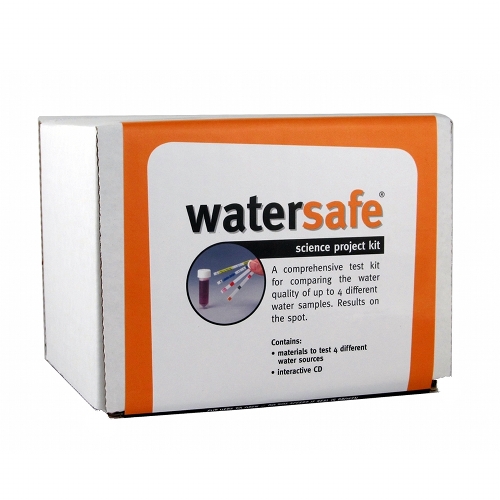
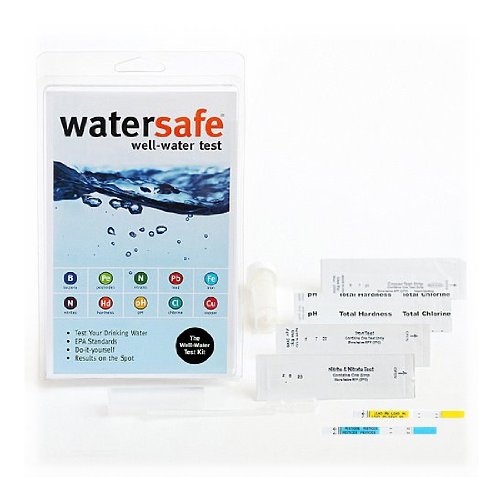
WaterSafe Well Water Test Kit
WaterSafe Well Water
Test Kit

Please keep in mind that if you have reason to suspect well water contamination, you should always defer to the expert testing services of a qualified, certified water testing laboratory; preferably one in your immediate area since their staff will know more about the intricacies of your local water situation than a laboratory located in a different city, county or state.

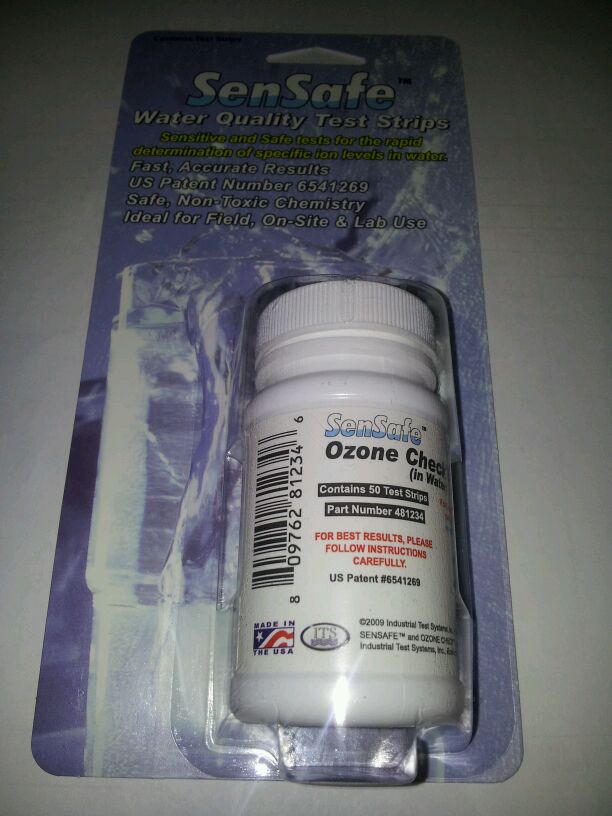
For spot testing of basic water quality parameters, test kits such as the WaterSafe Well Water Test Kit or SenSafe Water Quality Test Kit work quite well… but they do not test for more complex, man-made chemicals such as VOC’s (volatile organic compounds).

If you want a more thorough analysis that includes things like pesticides and volatile organic compounds, you may want to take a look at test kit options like the National Testing Labs Mail-In Water Testing Kit that includes a number of commonly found pesticides and different VOC’s.

We hope this has helped at least a little bit!


EPA & NSF Recognized Sanitizer
for Water Softeners


Inline Sediment Filter for Washing Machine

Feb
20

Arsenic Levels Found in Well Water Deemed Unsafe

Water Testing BlogArsenic in Water, Arsenic Test, Metals, Reverse Osmosis, Water Quality Testing, Water Test Kit, Water Testing, Well Water

Yesterday we touched on water quality issues in California involving unsafe levels of Chromium-6, a known carcinogenic compound, in well water. Today we sadly report that the same region of the country, Coachella Valley, California, also has troubles with higher than desired concentrations of arsenic in well water.

In addition to high levels of chromium-6 found across the Coachella Valley, residents in east valley also cope with high well-water concentrations of another naturally occurring element: arsenic.

Thousands of residents live in areas that contain hazardous levels of arsenic in their groundwater, a problem that would cost millions to remedy.

In January 2010, Riverside County environmental health officials knew of wells at 19 mobile home and RV parks that had tested positive for dangerous levels of arsenic ranging from 12 to 91 parts per billion, a Desert Sun probe found.

Studies have linked arsenic, a naturally occurring tasteless and odorless element, to risks of cancer when ingested over decades at levels of more than 10 parts per billion, according to state and federal health officials. Children are even more susceptible because of their low body weight.

Federal health officials used to consider any levels of arsenic above 50 parts per billion unsafe. In 2000, they lowered the standard to 10 parts per billion, based on new studies. ( source )

For those who do not already know, “The USEPA has determined that ingesting arsenic in too high a quantity can make a person very ill and possibly even cause death. Throughout history, and possibly even in some countries today, you can find arsenic listed as an ingredient in mouse and rat poison. Additionally, the USEPA classifies arsenic as a carcinogenic compound.” ( source )

Testing for Arsenic?

As usual we will bring up one of our favorite water test kit lines, the Arsenic Quick line of home, field and industrial water testing kits for As+3 and As+5 dissolved in water.

We like this product Arsenic Quick product line for several reasons including, but not limited to, its use of food grade reagents for improved safety, its fast and easy testing procedures, its ability to detect very low concentrations w/o the use of a meter, and its affordability.

For under $20 the average person can get a test kit that will let them know if their well water contains unsafe levels of dissolved arsenic and the testing won’t take more than around 15 minutes.

Filter Water: Arsenic Quick -- 2 Tests
Arsenic Quick — 2 Tests
Detection Range: 5 ppb up to 500
Dissolved Arsenic in Water

Filter Water: Arsenic Quick II -- 2 Tests
Arsenic Quick II — 2 Tests
Detection Range: 1 ppb up to 160 ppb
Dissolved Arsenic in Water

For those in need of more definitive and potentially more legally defensible water testing options, contact your local health department for a list of local laboratories certified to perform the sort of water testing you require. And, as always, if no local labs exist, companies like National Testing Laboratories offer comprehensive water testing packages that include tests for a large number potential of water quality contaminants and critical water quality parameters.

Reducing Arsenic levels in Water?

Few methods for point-of-use arsenic reduction/removal exist for homeowners except for units such as the Pentek RO-3500 Reverse Osmosis System which bears NSF 58 Certification for the reduction of unwanted drinking water contaminants such as Pentavalent Arsenic, Barium, Cadmium, Copper, Hexavalent & Trivalent Chromium, Cyst, Fluoride, Lead, Nitrate/Nitrite, Radium 226/228, Selenium, TDS and Turbidity.

Other, more robust 4 and 5 stage reverse osmosis systems such as the Goldline 5-Stage Reverse Osmosis System also bear the NSF 58 mark and include additional features such as pre and post carbon block filters for additional water polishing.


Pentek RO-3500 Reverse Osmosis Water System


Goldline 5-Stage Reverse Osmosis Water System

Feb
19

Chromium in Well Water a Reality in California

Water Testing BlogChromium, Home Water Test Kits, Home Water Testing, Metals, Personal Water Filter, Reverse Osmosis, sensafe, Water Quality Testing, Water Test Kit, Water Testing, Well Water

We continually find articles these days that report about well water test samples containing unwanted heavy metal contaminants such as Chromium-6… and yet many private well owners still won’t get their own water tested on a regular basis.

Today’s Chromium-6 well water finding comes to us from the Coachella Valley region of California known and the detected levels of Chromium-6 in the water greatly exceed California’s public health goal.

Hexavalent chromium, a potentially cancer-causing heavy metal made famous by activist Erin Brockovich, is found in drinking water supplies throughout most of the Coachella Valley at 150 to more than 1,000 times above California’s public health goal, a Desert Sun review of local water agencies’ well-testing results found.

The National Toxicology Program of the U.S. Department of Health and Human Services concluded in 2008 that hexavalent chromium, or chromium-6, in drinking water shows “clear evidence” of causing cancer in laboratory animals. And a 2010 draft toxicological review by the EPA found the contaminant in tap water is “likely to be carcinogenic to humans.”

But scientific study on chromium-6 is ongoing, and some recent findings call into question at what levels and under what circumstances ingesting the metal may cause cancer.

California’s public health goal for chromium-6 levels is not a regulatory standard, only a step in the process of establishing one. State and federal regulators have yet to set a maximum allowable drinking water contaminant level for the metal, but work toward one is under way. ( source )

Regardless of whether or not California or the USEPA has established an official safety limit (i.e. Maximum Contaminant Level) for Chromium-6 in drinking water, none of us here at Water Testing Blog would want to drink water that contained that high a concentration of Chromium-6.

Testing for Chromium-6 in water?

You may pick up an easy-to-use test kit for chromium made by SenSafe/WaterWorks in our online water testing store.

As an alternative, yo can use a test called Heavy Metals Water Check Test Strip, a product also manufactured by SenSafe. It detects Chromium-6 but the product will not differentiate between Chromium-6 and the other metals it can detect. But, in all honesty, any heavy metals detected in one’s drinking water should make a person want to take action.

Removing or reducing Chromium-6?

A company called ZeroWater manufactures point-of-use water filters & water pitchers using NSF Certified (NSF 42 & NSF 53) technology that supposedly reduce the number of Total Dissolved Solids in drinking water to zero.


ZeroWater ZD-018 Refrigerator
Water Filter Dispenser (23 cup)


ZeroWater ZD-013 Water Filter Pitcher (8 cup)

For those who in search of a water filter system capable of producing quality drinking water out of the tap rather than a pitcher or dispenser, the NSF 58 Certified Goldline Reverse Osmosis System which carries the WQA Gold Seal installs under the sink (i.e. out of sight) and produces just under 11.5 gallons of purified drinking water per day.


NSF 58 Certified RO System for the Reduction of Barium, Chromium III & VI, Fluoride,
Lead, Nitrate, Nitrite, Radium, Selenium, and TDS Levels

Feb
10

Where Did the Arsenic (in Juice) Come From?

Water Testing BlogArsenic, Arsenic in Juice, Arsenic in Water, Environmental, Ground Water, Home Water Testing, Personal Water Filter, Water Quality Testing, Water Test Kit, Water Testing, Well Water

Many people have asked us about the recent study that found higher than expected — and desirable — levels of arsenic in popular brands of juice… but not very many people have asked the question that weighs heavily in OUR minds: Where did the arsenic COME from?

Arsenic Test Kit

Arsenic Test Kit -- 2 Tests

Thus far we suspect that either water used to irrigate the apple orchards contained trace elements of arsenic or the arsenic came from residuals of pesticides that contained arsenic. While laws currently prohibit the use of pesticides that contain arsenic now, no such laws existed 10 or 20 years ago and the possibility that residuals from those pesticides still may linger in some of the trees and soil around the trees certainly exists.

Testing ground water for arsenic?

Well water experts and health officials suggest having one’s well water tested for basic drinking water quality parameters — including arsenic — at least once a year.

As environmental conditions change (i.e. seasons change, heavy amounts of rainfall, low amounts of rainfall, etc.) the aquifer levels change, as well. Those level changes can result in previously undisturbed pockets of arsenic buried deep in the ground finding their way into the water supply.

Disposable Counter Top Arsenic Filter

One can have a certified laboratory like National Testing Labs analyze their water for a wide range of potential well water contaminants (including arsenic), have a local lab come out and grab a sample for testing, or use one of the Arsenic Quick Water Test Kits.

Removing and/or reducing arsenic levels in water?

The average person can install a water filter in their home or business that can remove or reduce arsenic levels in their source water. Typically one can install a counter top, under sink or whole house system but make certain the model you select will work for your specific water quality situation before making a purchase.

Some water filters for arsenic (and many other water contaminants) may have performance problems if certain other water quality parameters like pH, alkalinity, total hardness, iron, copper, manganese, chlorine, etc. have strayed too far out of expected ranges.


Crystal Quest Undersink Replaceable
Triple Arsenic PLUS Water Filter System


Crystal Quest Whole House
Multi/Softener/Arsenic 2.0 Water Filter System

Feb
1

Kansas Residents Concerned About Bad Smelling Well Water

Water Testing BlogEnvironmental, Ground Water, Home Water Test Kits, Home Water Testing, Personal Water Filter, Water Filter, Water Quality Testing, Water Test Kit, Water Testing, Well Water


Pentek US-1500 Water Filter System
NSF/ANSI STANDARD 053 for VOC Reduction

Many people believe well water cannot become tainted by contaminants because it typically comes from locations far beneath the surface. Water Testing Blog strongly suggests that you DO NOT BUY INTO THAT LINE OF THOUGHT.

We ‘yelled’ that last bit for a reason. Unwanted and potentially harmful contaminants can find their way into well water regardless of how far below the surface it comes from.

Hence the reason why well water professionals and health officials suggest having one’s well water tested yearly.

Today’s story about well water contamination came from Kansas where residents of Butler County have had to all but abandon the use of their drinking water wells because of an unpleasant chemical smell.

Specifically, the water coming out of the private wells has a gasoline like odor to it.

A bad odor and taste in the well water has some residents in a neighborhood east of Andover concerned. The Kansas Department of Health and Environment and a water testing lab are working to find the source of the problem, but residents in the area are becoming frustrated.

Eric and Brittney Hauck say the well water at their house in Butler County smells terrible and they fear it could be unsafe.

“There was the smell of gasoline, kind of a paint-thinner kind of smell,” said Brittney Hauck.

The Haucks immediately stopped drinking the water and contacted the KDHE. Ash Creek Associates out of Portland, Oregon came out to their house and tested the water.

Last week, the Haucks received the results which showed elevated levels of benzene and other contaminants. The testing company gave the Haucks bottled water and installed a charcoal filter at no charge.

A week later, the family and many other neighborhood residents are still waiting for answers from the KDHE about what’s causing their water to become contaminated. KAKE News attempted to contact both the testing company and KDHE but could not get a response because the offices were closed for the Martin Luther King Jr. holiday.

Some residents suspect the contamination may be coming from a petroleum pipeline that runs through their neighborhood. Until they can get some definitive answers about the safety of their well water, residents say they’ll continue to use bottled water for drinking, cooking and bathing. ( source )

We feel very bad for the Haucks and all the other folks in that area affected by the suspected contamination of the aquifer from which they draw their well water. Hopefully the KDHE will determine the source of the well water contamination quickly and make it so the Haucks and their neighbors can once again perform simple tasks like cooking and bathing with their well water.

Testing for benzene in drinking water?

The average person cannot obtain an off-the-shelf test kit capable of testing for the presence of benzene in drinking, tap or well water. That sort of testing must get done in a laboratory using advanced analytical techniques and equipment.

AS usual at this point we suggest contacting your local water department or board of health to see if they can provide you with a list of certified water testing laboratories. For those wishing to use a mail-in water testing service, you may want to take a look at the 83 water quality parameter test package offered by National Testing Laboratories.

National Testing Labs: 83 Water Quality Parameters
National Testing Labs Water Test Kit
for 83 Drinking Water Parameters
[ Most Popular Testing Option According to FilterWater.Com ]

National Testing Labs: Fluoride in Water Test Kit
National Testing Labs Water Test Kit
for Fluoride in Water

National Testing Labs: Iron Bacteria Water Test
National Testing Labs Water Test Kit
for Iron Bacteria

Jan
31

Liquid Reagent Turns Yellow in Presence of Chlorine

Water Testing BlogChlorine, Chlorine Testing, Combined Chlorine, DPD, Free Chlorine, Home Water Test Kits, Home Water Testing, Testing Devices, Total Chlorine, Water Test Kit, Water Testing

Today’s inquiry came to us from ‘Kishore’ who asked a question about a liquid test reagent that turned yellow when added to a sample of water containing chlorine-based water disinfection tablets.

Dear Sir, I mixed chlorine tablets(water purification Tablets) in water. my friend taken water in Test tube. mixed one drop of liquid then water color changed in yellow. what is name of that liquid. how to by that.please can sent details.

Hello, Kishore, and thank you for the inquiry about a liquid test reagent that turns yellow in the presence of chlorine. Based upon your description we suspect your friend used a chemical called ‘OTO’ to perform the testing. OTO stands for Orthotolidine dihydrochloride. It test for total chlorine (free chlorine plus combined chlorine collectively).

Pool test kit for total chlorine and pH
Pool Test Kit for Total Chlorine & pH
Using OTO and Phenol Red

You can find OTO in most pool supply stores, as it normally comes in the more basic pool water testing kits for total chlorine and pH, the two most commonly tested pool water quality parameters.

Many companies also sell the two reagents separately since they do tend to ‘go bad’ after a year once opened and exposed to air.

If you want to perform more precise chlorine concentration testing for free chlorine, the compound most people have the most interest in (usually) when attempting to determine if water has had the proper amount of disinfectant added to it, you will want to invest in a drinking water test kit that uses DPD-based reagents. ( What is DPD? )

For an even simpler means of testing the chlorine levels in water samples you may want to consider a product such as the SenSafe Free Chlorine Water Check, an EPA Approved method for determining free chlorine concentrations in drinking water, or the WaterWorks 2 Free & Total Chlorine product that uses the same free chlorine testing method as the SenSafe Free Chlorine Water Check and also includes a separate test area for total chlorine.

Want to know more about the differences between free and total chlorine? Check out an article called Free Chlorine, Combined Chlorine, Total Chlorine.

One more thing about OTO before we go: We have heard that some countries have outlawed its use due to scientists having evidence that it may cause cancer in humans… so check local laws before making a purchase!

We hope this helps!

Jan
27

Deeply Discounted Water Testing in Stamford, CT

Water Testing BlogGround Water, Home Water Testing, Reverse Osmosis, Water Filter, Water Quality Testing, Water Test Kit, Water Testing, Well Water

In the past we wrote about water quality issues in Stamford, CT possibly resulting from contaminants buried beneath a local field. Suspected contaminants include pesticides and volatile organic contaminants.

Hundreds of Stamford residents have registered for the health department’s new water testing program scheduled to launch early next month, leaving about a third of the tests budgeted for this fiscal year available.

Officials are encouraging Stamford homeowners to sign up for the public service, which is mandated under a new city ordinance the Board of Representatives approved late last year. The Health Department will share the data it gathers with state health and environmental agencies in an effort to better understand the scope of water contamination in the area of Scofieldtown Park.

The park is the site of a former landfill and had been thought for years to be the source of potentially cancer-causing chemicals discovered in nearby wells in 2009.

Premier Laboratory in Dayville won a competitive bid to perform the testing at a rate of $89.50 per test, Murray said. Homeowners will be charged a flat $100 fee, which will cover the cost of the test itself as well as mailing, printing and logistical expenses associated with the program. Murray said the public service is a good deal for Stamford residents, who would likely pay between $200 and $300 to have their well water tested privately. ( source )

Granted the testing will still cost residents $100, but one has to admit that the fee definitely ranks as a pretty decent bargain considering the alternative: full price. Local officials encourage residents to take advantage of this water testing deal and so do we.

A problem with well water clearly exists in that area and only a properly implemented (thorough) testing of well water in the region surrounding the suspected contamination site will allow officials to get a real good look at the scope and magnitude of the problem.

Removing and/or reducing VOC’s in drinking water?

Naturally the question that follows the discovery of contaminants in one’s drinking water has to do with how to remove or reduce them to ‘safe’ levels. In the article one family had a carbon block filter of some sort installed. Below you will find an example of a carbon block filter hooked up to the Pentek RO-3500 currently offered by numerous online water filter systems vendors like WaterFilters.Net and FiltersFast.Com.


Pentek US-1500 Under Sink Water Filter System certified to
NSF/ANSI Standard 42 for the reduction of Taste and Odor, Chlorine, and Particulate Class I as well as Standard 53 for the reduction of Lead, Mercury, VOC, Cyst, Asbestos, and Turbidity

Jan
24

Science Fair Project: Testing for Arsenic in Apple Juice?

Water Testing BlogArsenic in Food, Arsenic in Juice, Arsenic in Water, Arsenic Test, Home Water Test Kits, Testing Devices, Water Test Kit

With so many news outlets discussing recent findings of arsenic in bottles of apple juice bearing brand names it comes as no surprise to us that we would receive an inquiry like the one we just got from ‘Hadiah’ who asked, “I would like to know exactly what arsenic testing kit i could use for my daughters science fair project. She is testing for arsenic in apple juice.

Arsenic in Water Test Kit 0, 5, 10, 20, 50, 100, 200 & >500 ppb (481396-2) 2 Tests, Results in 12 Minutes
Arsenic Quick™
0, 5, 10, 20, 50, 100, 200 & >500 ppb

Thus far in our limited research we have found only one kit that we THINK may have the ability to perform testing on various juices: Arsenic Quick. Why do we think this kit may have promise? Quite simply, its design (hanging the test pad reaction area above the liquid getting tested and relying solely upon arsenic gas liberated by a small quantity of food grade acid) means the color of the juice ought not interfere with reading the resultant color of the test pad after at the completion of the test.

Food grade acid? Liberated arsenic gas? Is this test SAFE?

Having performed the test numerous times ourselves, we can assure you that the test procedure and required testing reagents pose little to no harm to people performing the tests.

Food Grade Acid – Instead of using more caustic and potentially dangerous acids like other kits, the Arsenic Quick Test Kit uses tartaric acid, an acid commonly found in various ingredients used in foods most of us eat on a daily basis.

Liberated Arsenic Gas – While the directions for the Arsenic Quick Test Kit instruct testing personnel to perform testing in a well-ventilated area, the amount of gas generated by such a small sample should pose no risks.

But, just the same… open a window in the kitchen and turn on the stove exhaust fan (if you have one), test in the garage w/ the door open, or take some other precaution that will keep fresh air coming into the test area.

Proper precaution in any testing environment, even if the testing environment seems safe, always pays off!

Arsenic in Water Test Kit 0, 5, 10, 20, 50, 100, 200 & >500 ppb (481396-2) 2 Tests, Results in 12 Minutes
Arsenic Quick™
5 Tests

Arsenic in Water Test Kit <0.5, 1.0, 1.5, 2, 3, 4, 5, 6, 7, 8, 12, >20, >30, >50 ppb (481301-5) 5 Tests, Results in 12 Minutes
Arsenic Low Range Quick™ II
5 Tests

Arsenic Quick -- 100 Tests
Arsenic Quick™
100 Tests


Arsenic in Water Test Kit <2, 4, 6, 8, 10, 12, 15, 18, 24, 30, 40, 45 & >50 ppb (481297-I) 50 Tests, Results in 12 Minutes
Low Range Arsenic Quick™
50 Tests

Jan
4

Quick Testing Method for Fluoride in Water

Water Testing BlogFluoride, Home Water Testing, Personal Water Filter, Reverse Osmosis, Testing Devices, Water Filter, Water Quality Testing, Water Test Kit, Water Test Meters, Water Testing

Today’s question came to us from ‘Malli’ who asked, “tell me simple method to find out the flourine percentage .Thanque”

For the sake of this article, and because it would make his/her inquiry make more sense, we will assume that Malli intended to ask for a method of testing for FLUORIDE levels in water.

Regretfully we have not heard of any ‘new’ methods a person can use to detect fluoride levels in drinking water since we last addressed this topic. Therefore we will continue to suggest using a meter such as the eXact Micro 7+ Water Testing Meter that uses Fluoride (SPADNS) Reagent to detect fluoride levels in water as low as 0.1 ppm and as high as 1.1 ppm.

One could also use the mail-in fluoride testing services of a company called National Testing Laboratories to determine how much, if any fluoride their drinking water contains.

eXact Micro 7+ Water Testing Meter

Fluoride Test Reagent

So, Malli, once you determine if your water contains fluoride, next you will need to decide if you wish to remove or reduce that fluoride level… assuming you have fluoride in your water to begin with.


Pentek / US Filter RO-3500
Removes 90.5% of Fluoride

Removing/Reducing Fluoride Levels in Drinking Water?

When it comes to finding an effective means of reducing fluoride levels in drinking water, thus far our ‘research’ always points us down the same path… towards reverse osmosis water filters. The unit you see on the right, the Pentek RO-3500, has gone through testing and gotten certified by NSF/ANSI to Standard 58 for the reduction of Pentavalent Arsenic, Barium, Cadmium, Copper, Hexavalent & Trivalent Chromium, Cyst, Fluoride, Lead, Nitrate/Nitrite, Radium 226/228, Selenium, TDS and Turbidity.

Though definitely NOT the most expensive unit on the market, this filter has successfully passed third party testing, can produce nearly 8 gallons of crystal clear, filtered drinking water per day, and does so while reducing fluoride levels by more than 90%.

Moral of the story?

You will never know exactly how much fluoride, iron, copper, manganese, chlorine, salt, or other unwanted contaminants your water contains until you perform the appropriate tests on your water. Then, and only then, will you have the ability to make an educated decision regarding water treatment options.

Dec
12

Testing for Arsenic in Juice

Water Testing BlogArsenic, Arsenic in Water, Arsenic Test, Home Water Test Kits, Home Water Testing, Personal Water Filter, sensafe, Water Quality Testing, Water Test Kit, Water Testing, watersafe

We knew that this question would come along sooner or later. ‘Lisa’ wrote in and asked, “can my daughter use the arsenic water testing kit on juice? can you recommend any ideas for a science fair project?”


Arsenic Quick — 5 Tests
Detects <0.5 ppb to >50 ppb
Inorganic Arsenic (As+3 & As+5)

While we have no evidence to support the notion that Arsenic Quick Test Kits will function properly with juice as the test specimen rather than water, we have used the kits extensively and know that the color of the juice ought not affect the results since the test pads react with ‘arsenic gas’ liberated from the sample inside the reaction vessel and not the actual water sample.

Note: We contacted the makers of Arsenic Quick Test Kits about the effectiveness of their Arsenic Quick Test Kits with juice as samples and will most certainly share any definitive information we learn.

Getting back to the topic of using Arsenic Quick Test Kits, at first the process may sound a bit complex — but trust us when we say it really does not take a rocket scientist to perform the testing. Hence the reason why a number of people, including folks at the USEPA and other high profile government (as well as non-profit) agencies, have recommended this kit as a viable and useful field testing option when faced with situations where a water source may contain inorganic arsenic as a contaminant.

At this point you may find yourself asking, “Wait, didn’t you say the test liberated arsenic gas?”

Water Test Kit for Science Projects
WaterSafe Water Test Kit
for Science Projects

Yes, Arsenic Quick Test Kits do liberate small amounts of arsenic gas in the test vessel but the amounts generated should not pose a problem as long as the testing takes place in an area with proper ventilation. In other words, open a window, test in the garage w/ the door open or perform your testing outdoors.

Arsenic Quick Test Kits do not require typical controlled laboratory environments in order to yield quality results.

What about the science projects?

So glad you asked! Depending on where you live, Lisa, and how many bodies of water you have access to for sampling purposes, you could have quite a few really cool science projects for your daughter to work on.

A company called Water Safe manufactures a test kit called the Science Fair Project Test Kit which gives young (or old!) experimenters the ability to test up to 10 bodies of water for the following important drinking water parameters:

Bacteria None
Lead Below 15 ppb
Pesticides Below 3ppb (atrazine), Below 4ppb (simazine)
Nitrite Below 1.0 ppm
Total Nitrate/Nitrite Below 10.0 ppm
pH 6.5 to 8.5
Total Chlorine Below 4 ppm
Total Hardness 50 ppm or less

Do other options exist for more testing? Of course they do… but the WaterSafe Science Fair Project Test Kit offers a good sampling (8 parameters for 10 bodies of water) of tests for a reasonable cost — around $80. If that option does not suit your budget, WaterSafe also makes the same kit in a smaller size that tests up to 4 bodies of water for the same water quality parameters for around $40.

Got bigger testing plans?

If you believe you will want to perform long-term testing and will need 25 to 50 tests per water quality parameter, SenSafe manufactures a par of kits called the Well Driller Standard and Well Driller Master test kits which both come with plenty of testing supplies to keep testing projects of longer duration well-stocked.

Filter Water: Well Driller Standard Test Kit
Well Driller Standard Test Kit

Filter Water: Well Driller Master Test Kit
Well Driller Master Test Kit