About
Do you know what's in YOUR water? Learn about water quality, water quality testing, and water quality testing products that can help you make informed, educated decisions regarding the water treatment options for your home, office, swimming pool... and life.
Contact Us
Got a question about water quality? Want to share a water quality article or water quality article with others?

Visit our Contact Us Page to ask a water quality question or submit water quality information.

RSS Feed
Get the most recent water quality posts and comments by subscribing to the Water Testing Blog RSS Feeds.
Subscribe to RSS! Subscribe to RSS Comments!

Archive for September, 2010

Sep
24

No Cause Found for Neighborhood’s High Cancer Rate

Water Testing BlogArsenic, Arsenic in Water, Home Water Test Kits, Home Water Testing, Radon, sensafe, Water Quality Testing, Water Test Kit, Water Testing, watersafe

Earlier this year we wrote about a residential neighborhood called the Acreage in Florida because of the unusually high incident rate of cancer and tumors in children living in the area.

At one point residents and officials suspected that radon may have played a part in making people ill (Radon a Suspect in Florida Tumor and Cancer Cases). Outcry in the community prompted the State of Florida to launch an investigation (State of Florida Agrees to Environmental Testing in Acreage Homes Area).

Test Products: Long Term Test
Radon in Air (Long Term Test)

Test Products: Short Term Test
Radon in Air (Short Term Test)

Test Products: Radon in Water
Radon in Water Test
(Short or Long Term)

Now, after meeting with residents in the area, going over their histories, testing their water and testing their soil… the Centers for Disease Control and Prevention, Florida Department of Health has concluded that living in the Acreage has nothing to do with the unusually high number of brain and central nervous system cancer cases in the area.

In a nutshell, the State of Florida can’t find anything to explain the rash of illnesses.

ACREAGE – The State Health Department’s cancer cluster investigation in the Acreage is coming to an end, with no answers for the hundreds of residents desperate to know why their area is experiencing a higher than usual rate of cancer.

A report released today indicates testing on water and soil samples is over.

Following countless hours of review and concurrence from the Centers for Disease Control and Prevention, Florida Department of Health officials say there’s nothing they can definitively point to as a source of the pediatric brain and central nervous system cancers in the community.

They also determined that having a longer residency in the Acreage posed no higher risk for brain tumors among its children.

Health experts analyzed the history and lifestyle of 13 Acreage families, whose children and teenagers have been diagnosed with cancer.

The group formed to keep an eye on the suspected cancer cluster disbanded just last week. ( source )

So what does Water Testing Blog think about the situation in Acreage? Quite frankly it SCARES us in ways we cannot explain.

Not to sound like the Twilight Zone, but imagine, if you will, that your children and your neighbors’ children have all developed serious and potentially life threatening conditions… and no one can figure out why.

Hopefully someone will figure out why those poor people have gotten sick because in all honesty, if such a ‘random and unexplainable’ spike in cancer can occur there, what would stop it from happening where WE or YOU live?

Plan of action for the rest of us?

In all honesty, we can never truly test for every possible contaminant that could find its way into our drinking water. We can only test for the things most likely to show up on a regular or semi-regular basis and have a ‘full’ analysis performed by a certified water testing lab at set intervals.

The average person has a number of options when it comes to testing their own water. The easiest way, aside from having someone else do the testing, usually involves the use of a test kit from companies like SenSafe and WaterSafe.

You will find several examples of popular home water testing kits from each manufacturer below:

WaterSafe All in One Water Test Kit
All in One Water Test Kit
from WaterSafe

WaterSafe: Well Water Test Kit
Well Water Test Kit
from WaterSafe

WaterSafe: Chlorine and Hardness Test Kit
Chlorine and Hardness Test Kit
from WaterSafe

Water Quality Test Kit

Water Quality Test Kit
from SenSafe

Water Metals Test Kit

Water Metals Test Kit
from SenSafe

Arsenic Water Test Kit -- 2 tests

Arsenic Quick Test Mini-Kit
from SenSafe

In the end, though, and as we ALWAYS suggest, if you have serious reason to suspect your well water or municipal/public water supply may have become contaminated, seek the expertise of a certified water testing laboratory such as National Testing Laboratories.
Sep
23

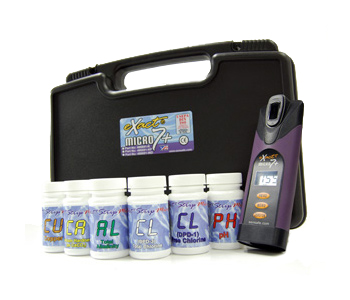
Does the eXact Micro 7+ Meter Test for Fluoride?

Water Testing BlogHome Water Test Kits, Home Water Testing, Testing Devices, Water Quality Testing, Water Test Meters

We recently received an email from ‘Tyler’ who asked…

It looks like your Tester will test for Fluoride but on the actual page it doesn’t say that it Does? I specifically want a Device that measure Fluoride levels. Do you have this or does this 199$ machine do this?

This question, we believe, came in response to the following blog entry: EPA Compliant Chlorine Testing Meter

In that entry we mentioned that the eXact Micro 7+ Water Testing Meter has the ability to test for a number of things… including fluoride.

After checking the Filter Water page for the eXact Micro 7+ Water Testing Meter we also noticed that it did not specifically mention fluoride testing… EXCEPT in the final bullet point which reads, “Can test for 25 parameters: with use of test-specific reagents and conversion chart: Ammonia, Bromine, Chloride/Salt, Chlorine Dioxide, Chromium Hexavalent, Copper, Cyanuric Acid, Fluoride, Iodine, Iron, Low Range Total Hardness, Manganese, Nitrate, Nitrite, Ozone, Acid pH, Alkali pH, Potassium, Sulfate, Sulfide, and Turbidity.”

The kit, as sold, does not come with the reagents (Hach SPADNS replacements, to be exact!) to test for fluoride, but you can get them on the meter manufacturer’s web site: www.sensafe.com. Click on the word ‘fluoride’ in the list and it will take you to the exact (no pun intended) place on their site where you can order the product you need for approximately $13.

For instruction on how to use the meter for fluoride testing, please refer to page 18 of the eXact Micro 7+ Meter User’s Manual.

Sep
22

Chemicals Found in PA Well Water…. Fracking to Blame?

Water Testing BlogEnvironmental, Fracking, Ground Water, Home Water Testing, Water Quality Testing, Water Testing, Well Water

Over the past month or so we have posted a few blog entries talking about the practice of ‘fracking’ (hydraulic fracturing) and what some people believe it could do to the quality of water in surrounding areas.

Past ‘Fracking’ Articles

Today we present an article detailing the findings of recent water testing in Pennsylvania that may cause some people — especially in Pennsylvania — to wonder if fracking makes any fracking sense.

While the article does not say that fracking definitely caused contamination of ground water near drilling sites, it certainly does, in our opinion, provide probable cause for more in-depth testing.

(CNN) — Water testing by a private environmental engineering firm has discovered toxic chemicals in wells in a township in Susquehanna County, Pennsylvania.

Victoria Switzer, a resident of the northeastern Pennsylvania township of Dimock, revealed the results of the water tests from her well this week at an Environmental Protection Agency hearing on hydraulic fracturing in Binghamton, New York.

Hydraulic fracturing, or “fracking,” is a controversial process used to extract natural gas from deep underground. Critics say chemicals used in the process can be injected into groundwater.

Farnham & Associates confirmed that ethylene glycol, propylene glycol and toluene were present in her water, Switzer said.

The tests, which were verified by three certified laboratories, found chemicals in the majority of samples taken from water wells in Dimock, said Daniel Farnham, president of Farnham & Associates, based in Scranton, Pennsylvania.

“For anybody to say this was occurring prior to drilling is ludicrous,” Farnham said Friday. “The water was not like this before.”

In 2008, Farnham was contracted by Cabot Oil and Gas Corp., the company working in the Dimock area, to perform pre-drilling tests on numerous wells in Susquehanna County, he said, adding that he did not test for nor discover ethylene glycol, propylene glycol and toluene.

Despite his latest findings, however, Farnham said he cannot reach any conclusions about the source of the chemical compounds found in the drinking water wells.

“Unfortunately no one can say that right now, until there is a way to track frac fluids,” he said. “And I think the gas companies know that.”

Ethylene glycol, propylene glycol and toluene are on the list posted on the Pennsylvania Department of Environmental Protection’s website of chemicals used by hydraulic fracturing companies in the state.

But George Stark, a spokesman for Cabot Oil and Gas Corp., said his company does not use the chemicals discovered by Farnham & Associates.

“When we look at the ingredients we use in fracking and completing of wells, these chemicals are not found. Toluene is not at all used,” Stark said. “If you look at what Dan said, he found these and he can’t trace these to fracking.”

“The fact is that we don’t use these chemicals,” Stark said.

The chemicals have a number of common applications and appear in products ranging from toothpaste to antifreeze, Farnham said. But they can be toxic in higher concentrations.

The Department of Environmental Protection is conducting its own water tests across Dimock, spokesman Tom Rathbun said.

“We want to see if our findings agree with Farnham,” Rathbun said. “We want to see if we can duplicate it.”

Department water tests in April across Dimock for ethylene glycol and propylene glycol were negative, and the agency is testing for “toluene and a host of other constituents,” he said. ( source )

It strikes us as odd and peculiarly coincidental that a toxic chemical like toluene could find its way into an aquifer around the time that fracking took place in that area… and yet the drilling company claims they do not use toluene in their drilling operations… and yet, still, the Pennsylvania Department of Environmental Protection has publicly posted toluene as a chemical used in hydraulic fracturing.

What is ‘fracking’?

The practice of hydraulic fracturing involves drilling vertically and then horizontally into shale formations thousands of feet below the ground and pumping large amounts of water mixed with sand and chemicals into the well using a lot of high pressure. The pressure of the material pumped into the well fractures the shale around the drilled well and allows natural gas to flow freely and get pulled (or some would say pushed) up to the surface for collection.

Ways to test at home?

Unfortunately the chemicals used in the fracking process…

That almost sounds obscene, does it not?

… cannot get detected by the average person at home unless they possess sophisticated equipment and have some sort of laboratory set up in their basement, back room or garage.

The average homeowner can, however, test basic water parameters whose values might change if contaminants have gotten into the aquifer supplying water to their well as a result of . The parameters include pH, Alkalinity, Total Dissolved Solids (TDS), Chlorides and Heavy Metals.

Changes in levels of the aforementioned water quality parameters would indicate that a change has taken place withing the aquifer, but those changes would not directly point a finger in any direction… though simply noticing and reporting significant changes possibly occurring as a result of fracking could get folks with more sophisticated equipment to take a closer look things.

We’ve said it once, we’ve said it a million times: It’s your water, your health… and ultimately your LIFE. Think of it like this… If you don’t care enough to spend a few minutes of your time each day/week test your well water, then why should someone else invest their time and energy?


pH & Total Alkalinity Test Kit


Chloride Check Water Test Kit

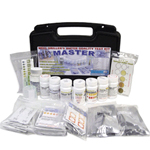
Well Driller Test Kit: Master

Well Drillers Master Test Kit

Test Strips for Mercury in Water
Mercury Check Water Test Kit
Total Hardness Test STrips
Total Hardness Test Kit
Water Metals (Heavy) Test Kit
Water Metals Test Kit

In the end, though, and as we ALWAYS suggest, if you have serious reason to suspect your well water or municipal/public water supply may have become contaminated, seek the expertise of a certified water testing laboratory such as National Testing Laboratories.

Sep
21

Inexpensive Countertop Fluoride Filter

Water Testing BlogArsenic, Arsenic in Water, Chlorine, Copper, Fluoride, Hardness, hydrogen sulfide, Iron, Lead, mercury, Metals, Pesticide, Water Filter, Water Testing

No Cartridge Fluoride Filter

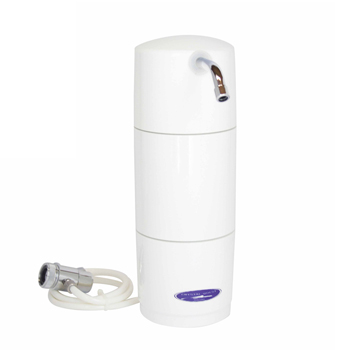
While the jury has not come back with a decision on whether or not fluoride in drinking water poses a serious health risk to people who drink water spiked with it, if you don’t want it in your water Crystal Quest has recently come out with a convenient, easily installed countertop water filter for fluoride — and many other unwanted potential drinking water contaminants.

Crystal Quest manufactures a product called the Countertop Disposable Single Fluoride Multi PLUS Water Filter System which installs in seconds and effectively removes fluoride AND hundreds of drinking water contaminants — if present in the water to begin with.

Water travels through a series of seven filtration stages in this unit. You will find detailed information on those stages below:

Pre and Post One-Micron Filter Pads: Used in stages 1 and 7, this filtration method removes suspended particles including silt, sediment, cyst (Giardia, Cryptosporidium), sand, rust, dirt, and other undissolved solid matter.

Fluoride Removal Cartridge: Used as the second stage of filtration, water flows through a fine mesh synthetic aluminum oxide absorbent media which has an extremely high affinity for fluoride, lead and arsenic. Through a combination of adsorption and chemical reaction the media effectively removes metals over a wide pH range.

How much fluoride can the filter hold before it needs servicing? The filter will reduce 10ppm feeds to 0.2ppm for a total of 6,000ppm fluoride removed.

KDF Media Bed: The third and fifth stages of filtration feature proprietary blends of high-purity KDF resins (KDF-55D and KDF-85D) which work using electrochemical and spontaneous oxidation-reduction (REDOX) principles. In these stages compounds such as chlorine get neutralized. Laboratory testing has shown that combination KDF/GAC cartridges can remove more than 99% of chlorine from greater than 20,000 gallons of water.

During these stages iron and hydrogen sulfide also get oxidized and become an insoluble substance that attaches to the surface of the media. Additionally, heavy metals such as lead, mercury, copper, nickel, chromium, cadmium, aluminum, and other dissolved metals get removed from the water by an electrochemical process at this point.

Ion Exchange Resin: The fourth stage of filtration uses an ion exchange to further reduce/remove heavy metals such as lead, copper and aluminum. This stage also acts a water softener by reducing calcium and magnesium levels (aka: total hardness) in the water.

Granulated Activated Carbon (GAC): The sixth stage of filtration makes use of granulated activated carbon, a material universally accepted as a highly effective means of eliminating a wide range of unwanted contaminants such as chlorine, potential carcinogens (i.e. THM’s, benzene, etc.), pesticides, herbicides, insecticides, volatile organic compounds (VOC’s), PCB’s, MTBE’s and many more chemical contaminants that may show up in water. Many of these compounds create a ‘bad’ color, taste and/or odor in drinking water, but not all.

Important note regarding carbon filters… Some manufacturers use a lesser grade of carbon, but this filter uses a highly porous, and therefore more useful, carbon derived from coconut shells.

How do I know if I need a water filter like this one?

If you have concerns regarding fluoride in your drinking water, contact your local water department and ask for a copy of the most recent drinking water report. Some water districts have made their annual reports available online so you may want to look on your water district’s web site first.

If your concerns deal with potential water contaminants that may have entered your water supply after it left the water treatment plant — bacteria, lead, heavy metals, etc. — then at-home drinking water test kits like the following may work just fine for you.

WaterFilters.Net: Chlorine, Iron, Nitrates and Hardness Test Kit
Culligan TK-2 Water Test Kit

WaterFilters.Net: WaterSafe All in One Test Kit
WaterSafe All in One Test Kit

WaterFilters.Net: WaterSafe Well Water Test Kit
WaterSafe Well Water Test Kit


WaterFilters.Net: Complete Home Water Test Kit
Complete Home Water Test Kit

WaterFilters.Net: WaterSafe Science Fair Project Kit
WaterSafe Science Project Kit

WaterFilters.Net: Well Drillers Test Kit
Well Drillers Test Kit


WaterFilters.Net: Arsenic in Water Test Kit
Arsenic in Water Test Kit

WaterFilters.Net: Bacteria in Water Test Kit
Bacteria in Water Test Kit

WaterFilters.Net: Water Cooler Bacteria Test Kit
Water Cooler Bacteria Test Kit


WaterFilters.Net: Radon in Water Test Kit
Radon in Water Test Kit


Keep in mind, though, that if you have serious reason to suspect drinking water contamination, you should seek the assistance and expertise of a certified water testing laboratory.

WaterFilters.Net: National Testing Labs 27 Parameter Test Kit
National Testing Labs
27 Parameter Test Kit

WaterFilters.Net: National Testing Labs 83 Parameter Test Kit
National Testing Labs
83 Parameter Test Kit

WaterFilters.Net: National Testing Labs 97 Parameter Test Kit
National Testing Labs
97 Parameter Test Kit

Sep
20

Why Add Ultraviolet to Your Water Cooler?

Water Testing BlogBacteria, UV Sterilizer

Ultraviolet light disrupts the DNA structure of bacteria and other living organisms (aka: organic contaminants) sometimes found in drinking water. Cooler temperatures in water storage tanks contained in water coolers can create ideal conditions for biofilms and other types of ‘slime’ to build up and reproduce — especially since the water also contains no sort of disinfectant or sanitizing agent (i.e. chlorine).

UV sanitation stops biological contaminants from reproducing if present in drinking water. Granted nothing SHOULD have had a chance to get into the ‘guts’ of your water cooler in the first place, but if it did, the fact that the crystal clear, pristine water you expect that machine to produce contains nothing to prevent a colony of bacteria from breeding makes inside your water cooler a great place to live, breed and raise a family.

UV water sterilizers for home use?

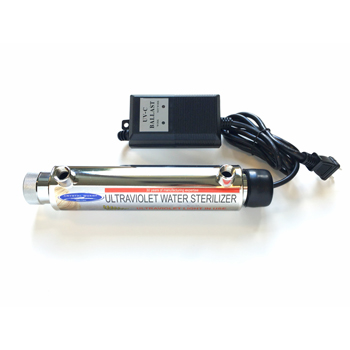
The simplest UV systems for home use typically function as inline water filters. As an example, Crystal Quest manufacturers an easy-to-install home uv water sterilizer available in three sizes, each with a different flow rating: 6, 8 and 12 gallons per minute.

Many people choose to add an ultraviolet water sterilizer to existing whole house water filter systems or any other filtration system where bacteria could possibly exist.

A good number of folks with well water also choose to install a UV sterilizer system in their homes. After all… well water does come from an unfiltered, untreated source that could very easily become with bacteria.

Other places where a UV sterilizer would work well?

The hard glass germicidal lamps in UV sterilizer systems provide a 99.99% reduction of bacteria, virus and protozoa. They accomplish that feat without the use of potentially harmful chemicals. Environments such as health care facilities (i.e. doctor offices, hospitals, dental offices, etc.) and residences with small children, elderly or immunocompromised individuals can also definitely benefit from the use of UV sterilization on their water supply.

Sep
18

Lead and Copper Testing in Polk County, Georgia

Water Testing BlogCity Water Test, Copper, Home Water Testing, Lead, Metals, Municipal Water Test, Water Quality Testing, Water Testing

Pretty much every State Health Agency has specific rules governing the frequency and volume of lead in water testing and copper in water testing that local (municipal) water departments must follow — or face stiff penalties often accompanied by large fines which continue to accrue until the local water department comes into compliance.

As an example, in the State of Georgia, local water departments must conduct lead in water and copper in water testing in a select number of customer homes every three years.

The Polk County Water Authority will be sending out letters this week to homeowners it wants to participate in its water-testing program, according to an authority official.

Authority Manager Jack Damron said the effort is to get back into compliance with the Georgia Environmental Protection Division.

Polk County is required to submit water samples from inside homes of randomly selected properties every three years. The testing is to monitor lead and copper, according to Damron.

The county missed the last testing period. However, Damron said no fine was issued.

“Our position is the state never sent us the bottles to use,” Damron said, referring to the specific sampling bottles needed.

Damron, who has been in his position for about two months, said the issue is one of testing compliance and not of water pollution.

“If we believed there was a more serious issue with water itself, we would have sent out a different notice,” he said. ( source )

As always we applaud any government agency’s efforts to ensure citizens have safe, clean drinking water. In this case, though, we give only half a clap.

Why only half a clap? Simple: The excuse of ‘the state never sent us the bottles to use’ does not hold much water. Pardon the pun.

Officials in Polk County KNEW testing needed to get done and KNEW, we imagine, the phone number of the State Agency responsible for distributing the required test vessels for the lead and copper testing. For them to say they should absorb no blame for the testing not getting done rubs us the wrong way.

Thankfully (for them) none of us live in Polk County, Georgia… and thankfully the average person has easy access to copper in water test kits and lead in water test kits.

Filter Water: Copper in Water Test
Copper in Water Test

Filter Water: Lead in Water Test
Lead in Water Test

Filter Water: Water Metals
Metals in Water Test

Sep
17

Iron, Manganese and Hydrogen Sulfide: Testing & Removal

Water Testing BlogHome Water Test Kits, Home Water Testing, hydrogen sulfide, Iron, manganese, Pesticide, Test Strip, Water Filter, Water Quality Testing, Water Testing

While neither iron, manganese nor hydrogen sulfide pose a ‘serious’ health risk in most cases when found in drinking water, they certainly do fall in the nuisance family. Iron and manganese can ruin loads of laundry, clog plumbing and leave stains on fixtures. Hydrogen sulfide in water just plain… stinks like rotten eggs.

Filter Water: Hydrogen Sulfide Test Kit
Hydrogen Sulfide Test Kit

Filter Water: Manganese Test Kit
Manganese Test Kit

Test Products: Visual Iron Test Kit
Visual Iron Test Kit

Note: When choosing a test kit for iron in drinking water, keep in mind that you may commonly found iron in one of two forms in water: Ferric and/or Ferrous. Some test kits only test for one type… but the visual iron test kit above manufactured by SenSafe has a detection range of 0ppm to 5ppm total iron (ferrous & ferric).

What do I do if I find iron, manganese or hydrogen sulfide in my water?

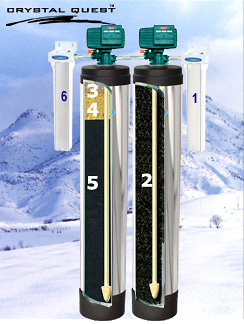
If you’ve tested your water and found one (or more) of those three contaminants, you probably want to know if someone makes a filter to remove them. Conveniently, a Filter Water recently started carrying a whole house dual filter system designed to remove iron, manganese and hydrogen sulfide.

While some filters for manganese, iron and hydrogen sulfide do not address the issue of other possible water contaminants, the Crystal Quest Dual Filter Iron, Hydrogen Sulfide and Manganese Filter System contains a 20″ solid carbon cartridge made with high-grade granulated activated carbon which puts a final polishing touch on the water by removing volatile organic carbon compounds (VOC’s), insecticides, pesticides and industrial solvents — if present in the water.

Quite frankly, this filter system uses a number of different filtration components to get the job done”

A 20″ sediment filter cartridge removes sediment, silt, sand and dirt which would otherwise clog up the other filtration elements and shorten their lifespans.

A (large) special manganese, iron and hydrogen sulfide removal mineral tank does… well, exactly what its name says it does.

In the second large tank, a series of beds containing ERA-9500 media, ERA-6500 media and Granular Activated Carbon remove hundreds of contaminants if they exist in the water.

In the last stage, the 20″ solid carbon cartridge mentioned previously takes out volatile organic carbon compounds (VOC’s), insecticides, pesticides and industrial solvents — if present in the source water.

What about when the filter gets ‘full’? What then?

The Crystal Quest Dual Filter Iron, Hydrogen Sulfide and Manganese Filter System comes equipped with an electronic microprocessor that keeps track of filter life and automatically initiates backwash cycles when needed.

Will I need to replace the media?

Even with scheduled backwashing/recharging of the different media types the various filtration elements will need replacing.

  • The 20″ sediment filter cartridge has an expected life expectancy of 6 to 8 months.

  • The 20″ carbon filter has an expected life expectancy of 6 to 8 months.

  • The iron/manganese/sulfur filtration media has an expected life expectancy of between 5 and 8 years depending upon contaminant concentration levels.

This means a properly installed unit will provide homeowners with quality water for long periods of time without the homeowners needing to perform any sort of maintenance.

Replacement cartridges readily available?

One thing that really irritates most folks… Buying a product and then hot having the ability to locate necessary replacement parts or components. You won’t have that problem with this Crystal Quest Iron/Manganese/Sulfur Filter System because it uses industry-standard filter cartridge sizes (20″ x 2.5″) and the filtration media can easily get replaced.

Sep
16

Fracking Oil Well Springs Unexpected Leak — Ground Water Getting Tested

Water Testing BlogEnvironmental, Ground Water, Water Quality Testing, Water Testing, Well Water

Though it may get redundant, we will continue to post articles about water quality and a technique called hydraulic fracturing (also known as ‘fracking’) used to drill for oil. Many people have grave concerns that the process may cause permanent and irreparable damage to the environment.

Some folks in North Dakota know all too well that bad things could possibly happen as a result of fracking because an oil well in their area recently developed a crack in its casing which caused 2,500 barrels of liquid to spew up from he well before workers could seal the well completely using a ‘heavy mud’ and cement plugs.

Diagnostic testing will begin today on an oil well that was breached early Wednesday morning 2½ miles southwest of Killdeer.

One state official says preliminary tests on water samples look good.

During a high pressured oil extraction phase involving water and chemicals, a process known as hydraulic fracturing, a mechanical failure caused a breach in the oil well’s 9.5-inch and a 7-inch casing, both surrounded by cement.

After the breach, the well known as Franchuk 44-20, began leaking oil and other liquids at the surface.

The leaking fluids were confined to the location, and all recoverable fluids were removed by vacuum trucks, according to a Denbury Resources Inc. press release.

A heavy mud and later three cement plugs were pumped into the well, at a depth of about 7,200 feet to 9,200 feet, creating a successful plug Friday, according to the release.

More than 2,500 barrels of liquid were gathered, including 2,255 barrels of frac fluid and 251 barrels of oil, according to the release.

State health department officials are involved as the well was drilled through the Killdeer Aquifer and sits near Spring Creek.

Dennis Fewless, director of the state’s Department of Health water quality division, said of the five wells sampled Thursday, preliminary results show “everything is normal.”

Fewless said the state laboratory will continue analyzing and testing samples through the weekend. ( source )

All of us here at Water Testing Blog hope the workers at that well escaped without injury when the well casing broke and all that nasty fluid came charging to the surface.

We also hope that the crews assigned to cap the well and clean up afterward did as thorough and complete a job as possible.

Water filter to remove hydrocarbons & oil from drinking water?

Yes. Such a product does exist. All the discussions about whether or not hydraulic fracturing (fracking) will have adverse effects on the quality of drinking water in surrounding areas have pushed some people previously on the fence about buying a water filter in the direction of investing in a water filtration system — and naturally they want to purchase a water filter capable of removing hydrocarbons and oils from drinking water.

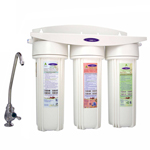
Lucky for them, and you, that a leading manufacturer of home water quality improvement systems by the name of Crystal Quest came out with an 8-stage undersink water filtration system that has the ability to remove the following hundreds of contaminants, including hydrocarbons, oil, volatile organic compounds (VOC’s) and organic contaminants such as bacteria and viruses.

Using advanced technologies in membranes, blended coconut granulated carbon w/ several grades of REDOX media and other water purification techniques such as ultrafiltration, the Crystal Quest Undersink Triple Filter produces water whose quality rivals that of reverse osmosis water — without the tank and without any waste water.

  • Three filter chambers provide 8 stages of water filtration. See below for details.

  • Filter in the first chamber uses an ultrafiltration membrane to remove contaminants larger than 0.01 micron… which includes a wide range of organics such as bacteria and viruses, proteins, parasites, various forms of bacteria, pesticides and herbicides.

  • Filter in the second chamber uses a custom blend of granulated activated carbon derived from coconut shell to remove volatile organic carbon compounds (VOC’s), insecticides, pesticides, and industrial solvents. This chamber also adsorbs the taste and odors associated with chlorine.

  • Filter in the third chamber uses a 6-stage cartridge which removes hundreds of contaminants from the water.

Another advantage of using an undersink filter like this one: It installs quickly and easily and takes up no valuable counter space.

Looking for an oil removal filter for a ‘Big Blue’ housing?

Pentek (also known as Ametek & US Filter) manufactures the Big Blue Filter for Oils & Hydrocarbons which fits most standard 20″ Big Blue filter housings.

Sep
15

Ordering Chlorine Test Strips

Water Testing BlogChlorine Testing, Free Chlorine, sensafe, Test Strip, Total Chlorine, Water Quality Testing, Water Test Kit

We get inquiries like this one all the time… and this time we decided to post our ‘normal’ response for everyone to see because we feel strongly that more people should test chlorine levels in their drinking water — especially in countries or areas where the water supply may very well (accidentally) not contain enough chlorine to make it safe!

Quote for Chlorine test strips required

K/Attn: The Manager (International Sales)

Dear Ms/Sir,

We have the following requirement for Chlorine Test Strips having the following specifications:

   1. Range: 0, 1, 3, 5, 10 ppm
   2. Total qty: 1000 sticks
   3. Packing required: Bottles of 25 or 50 sticks each.

Important: Before choosing a test strip (stick) for chlorine, make sure you know whether you need to test for free chlorine or test for total chlorine, as different products exist for each!

To answer this person’s inquiry directly, though, the following links will take you to places where you can purchase test strips for both free and total chlorine concentration testing in water.

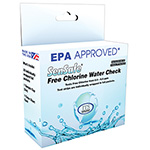
Filter Water: SenSafe Free Chlorine Test Strips
EPA Approved Free Chlorine Test
0 – 6.0 ppm

Filter Water: Free & Total Chlorine Test Strips
Free & Total Chlorine Test
0 – 6.00 ppm

Filter Water: Ultra High Range Free Chlorine Test Strips
Ultra High Range Free Chlorine
0 – 2,000 ppm

Total Chlorine
Total Chlorine Test Strips
0 – 10 ppm

Mid-Range Free Chlorine
Free Chlorine Test Strips
0 – 25 ppm

High Range Free Chlorine
Total Chlorine Test Strips
0 – 120 ppm

Sep
14

Big Blue Filter for Oils and Hydrocarbons

Water Testing Blogreplacement water filter, Water Filter

In response to all of the accidents and incidents involving oil spills many people have started asking about ways to filter oil and other hydrocarbons out of their drinking water supply.

Does anyone make a big blue oil filter?

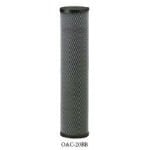
Big Blue Oil Removal Water FilterAs a matter of fact, a company by the name of Pentek manufactures a product called the Pentek OAC-20BB Oil Absorbing Filter which fits conveniently in a standard 20 inch Big Blue housing.

The Pentek OAC-20BB Oil Absorbing Filter uses a modified cellulose-based filter that attracts and chemically bonds with specific hydrocarbons and pollutants such as dissolved oils in water. This filter cartridge also has the part number 155596-03 associated with it.

This product provides instant absorption of up to 90% of total hydrocarbons in a single pass, can operate at high flow rates, result in low pressure drop, and can hold 250% to 300% of its own weight in hydrocarbons.

Where might the Pentek OAC-20BB Oil Absorbing Filter come in handy?

This filter would benefit anyone wishing to remove oils and hydrocarbons from water. Examples of locations where one might expect to find hydrocarbons in water include:

  • Around gas and oil facilities
  • Bilge water entering/exiting ships
  • Surface/Rain water runoff from truck stops, airports, parking lots, major roadways, etc.
  • Near automobile/truck service & repair shops
  • In areas near machine shops
  • Regions surrounding facilities housing industrial processes
  • Runoff from car and truck wash bays

Specifications of the Pentek OAC-20BB Filter

  • Overall Dimensions of 20″ x 4.5″
  • Inner Core Diameter of 1.110″
  • Rated for a Max Temp of 125 F
  • Rated for a Flow Rate of 5 to 10 GPM
  • Pressure Drop Range of 0.2 to 1.0 psi